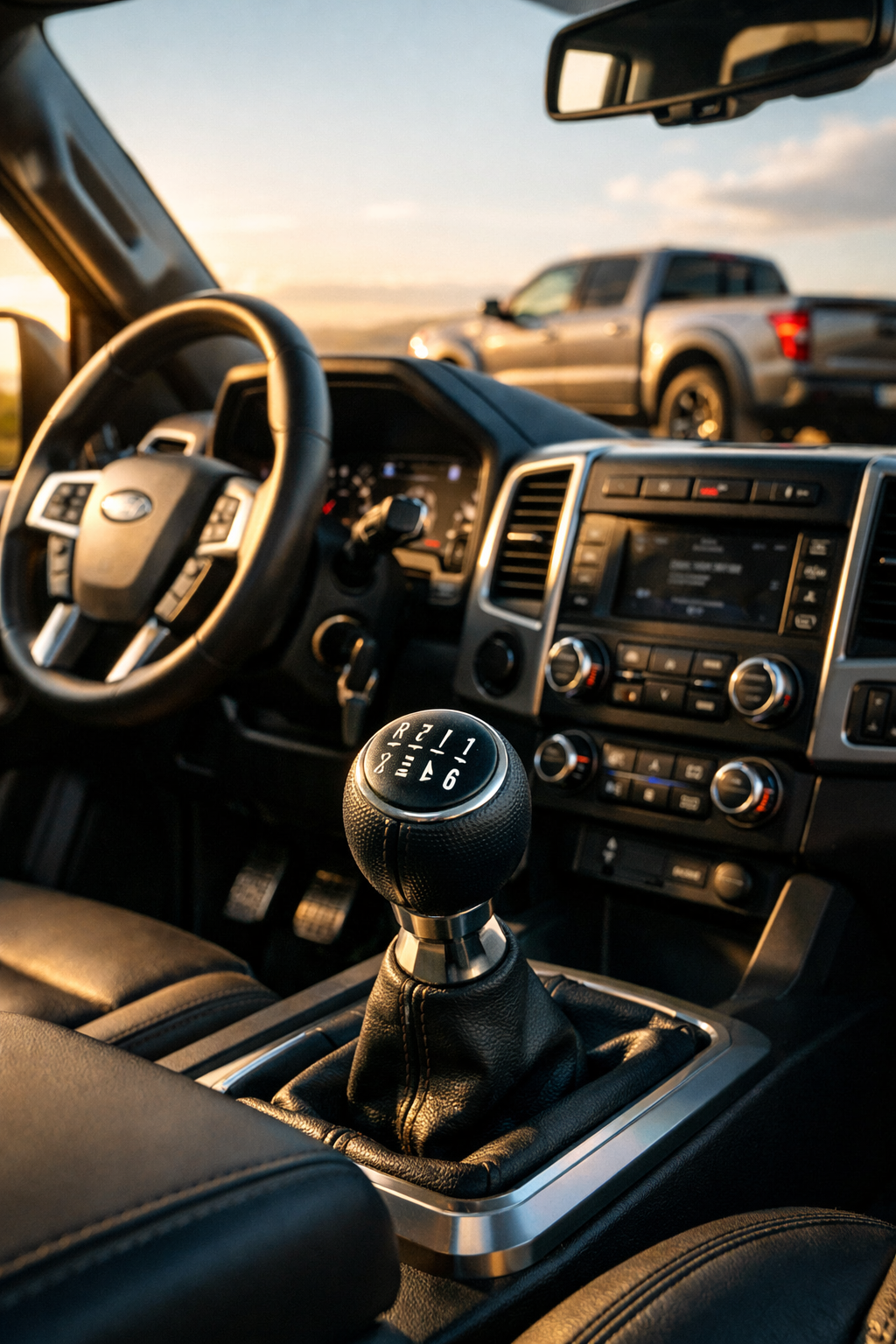

Here’s a pub argument that shouldn’t be controversial but somehow is: manual trucks are nearly extinct, and the people killing them don’t actually use trucks. Walk into a 2026 dealership and ask for a stick shift pickup, and you’ll get the same look as if you’d asked for a carburetor or a cassette deck. This matters right now because once they’re gone, they’re gone—no software update is bringing back clutch pedals.
I’ve driven dozens of pickups over the last 15 years, from workhorse base models to $80,000 leather-lined behemoths, and the disappearance of the manual isn’t just nostalgia whining. It’s about control, durability, and a kind of mechanical honesty that modern trucks claim to sell but rarely deliver. When we lose manual trucks, we lose a whole layer of driving engagement that actually matters off-road, on job sites, and yes, even on a twisty back road.
The irony is delicious: trucks have never been more powerful—400 hp is basically entry-level now—yet they’ve never felt more distant. And before the PR departments start chanting “consumer demand,” let’s talk about who actually benefits from killing the stick shift, and why you should care even if you daily-drive an automatic.
Why manual trucks Are Vanishing
The official line is efficiency and emissions, which sounds sensible until you look closer. Modern automatics have 8, 10, sometimes 12 gears, and yes, they can eke out 1–2 mpg more on the EPA cycle. But that test cycle is about as real-world as a Top Gear Africa special, and manuals still win on simplicity, weight, and long-term durability.
The real reason is cost and liability. Automatics are easier to sell, easier to warranty, and easier to hand to someone who’s never towed a trailer in their life. Corporate planners would rather delete the manual than explain to a buyer why stalling on a hill isn’t a warranty issue.
The Short List: What You Can Still Buy
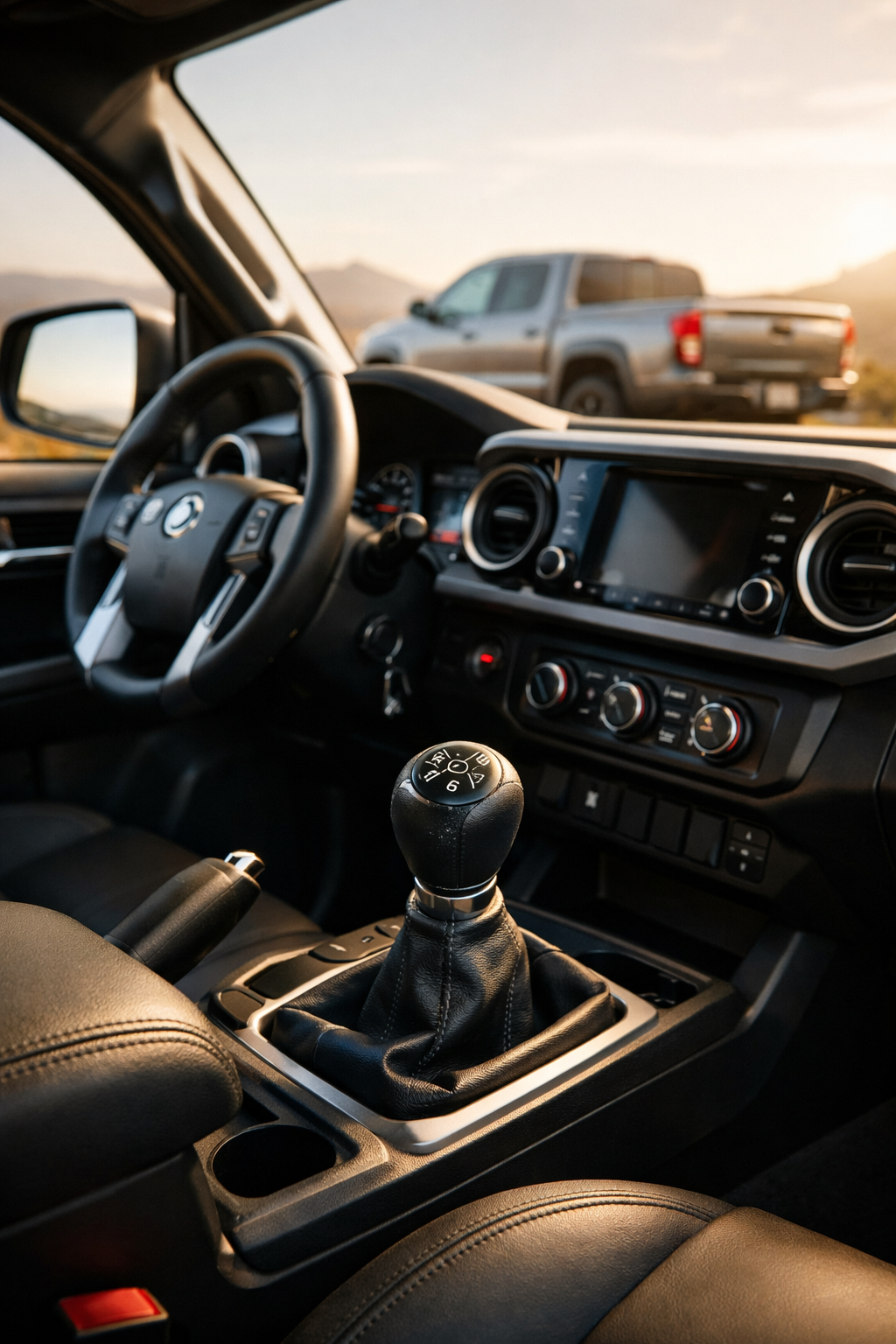
As of 2025–2026, the list of stick shift pickups is painfully short. The Toyota Tacoma offers a 6-speed manual with the turbocharged 2.4-liter four-cylinder, making 270 hp and 310 lb-ft, starting around $32,000—check the manufacturer website for latest pricing. Jeep still sells the Gladiator with a manual, though it’s increasingly niche and slower than continental drift to 60 mph at roughly 7.9 seconds.
That’s basically it. Ford killed the manual Ranger, Chevy won’t even discuss one for the Silverado (see our 2026 Chevrolet Silverado review), and RAM has gone full automatic-only like it’s a luxury brand. For deeper Tacoma context, this breakdown on why manual transmission trucks survive: Tacoma is required reading.
The Driving Engagement Nobody Talks About
Here’s the controversial hot take: a manual Tacoma is more engaging to drive than a $75,000 automatic luxury truck with massaging seats. Rowing your own gears on a gravel road gives you throttle modulation automatics still struggle with, even with fancy off-road modes. It’s the difference between playing a guitar and pressing “play” on Spotify.
Off-road, manuals let you hold a gear, manage engine braking, and crawl without relying on software that panics when a wheel lifts. Chris Harris has said similar things about engagement versus outright speed, and he’s right—control beats convenience when traction is scarce.
Corporate Buzzwords vs Reality
“Customer preference” is the buzzword I love to hate here. Dealerships don’t stock manuals, so buyers never see them, so sales numbers look bad, so manuals get killed—round and round we go. It’s the same logic behind touch-sensitive climate controls that everyone hates but accountants adore.
This trend mirrors what we’ve seen across the industry, where perceived luxury trumps usability. If you want a broader view, our piece on the new cars luxury shift and what enthusiasts lose nails exactly why this feels so hollow.
Automatics Are Faster—So What?
Yes, automatics are quicker. A modern automatic Tacoma hits 0–60 mph in about 7.0 seconds, roughly half a second faster than the manual. But since when did anyone buy a midsize pickup for drag races?
Manual trucks trade outright speed for predictability. Throttle response isn’t filtered through a torque converter, and there’s no gear-hunting when towing 4,000 pounds up a grade. I’ll take that over a transmission that shifts like it’s consulting a focus group.
The Economics Nobody Mentions
Manuals are cheaper to build and cheaper to fix. A clutch replacement might run $1,500–$2,000, whereas a modern 10-speed automatic failure can easily crest $6,000 once you’re out of warranty. That matters if you plan to keep your truck past the lease period—remember those?
Fuel economy differences are marginal. According to FuelEconomy.gov, the EPA gap between manual and automatic midsize trucks is often just 1 mpg combined. That’s not exactly civilization-ending.
Safety, Regulations, and the Myth of Progress
Another excuse is safety tech integration. Automakers claim it’s harder to integrate advanced driver aids with manuals, which is partly true and mostly lazy. Europe manages just fine, and the NHTSA doesn’t ban manuals—check NHTSA.gov yourself.
This isn’t about safety; it’s about simplifying production lines. Fewer powertrain combinations mean fewer headaches, even if it means alienating buyers who actually use their trucks.
The Cultural Cost of Losing manual trucks
Here’s what really stings: manuals teach mechanical sympathy. You learn how an engine makes torque, how gearing works, and why traction matters. Kill the manual, and you turn trucks into appliances—very capable appliances, but soulless ones.
Doug DeMuro loves quirks, and the manual is the ultimate quirk in 2026. It’s a reminder that driving can still be participatory, not just supervised by software engineers.
Pros
- Greater driving engagement and control
- Lower long-term repair costs
- Better off-road modulation
- Mechanical simplicity
Cons
- Limited availability in 2025–2026
- Slightly slower acceleration
- Dealers rarely stock them
The bottom line is simple: manual trucks aren’t dying because they’re bad; they’re dying because they don’t fit the narrative. If you care about control, durability, and the joy of driving, buy one while you still can. Because once the last clutch pedal leaves the showroom, the truck world will be quieter—and not in a good way.
Frequently Asked Questions
Are manual trucks still available in 2026?
Yes, but barely. The Toyota Tacoma and Jeep Gladiator still offer manuals in 2025–2026, with starting prices around $32,000 and $38,000 respectively—check manufacturer websites for latest pricing.
Why are manual trucks being discontinued?
Automakers cite low demand, emissions efficiency, and production complexity. In reality, automatics are easier to sell and standardize across global platforms.
Do manual trucks get better fuel economy?
Not significantly. EPA data shows manuals are usually within 1 mpg of automatics, according to FuelEconomy.gov.
Are manual trucks safer or less safe?
They’re not inherently less safe. Manuals meet the same NHTSA safety standards as automatics but may lack some advanced driver aids.