
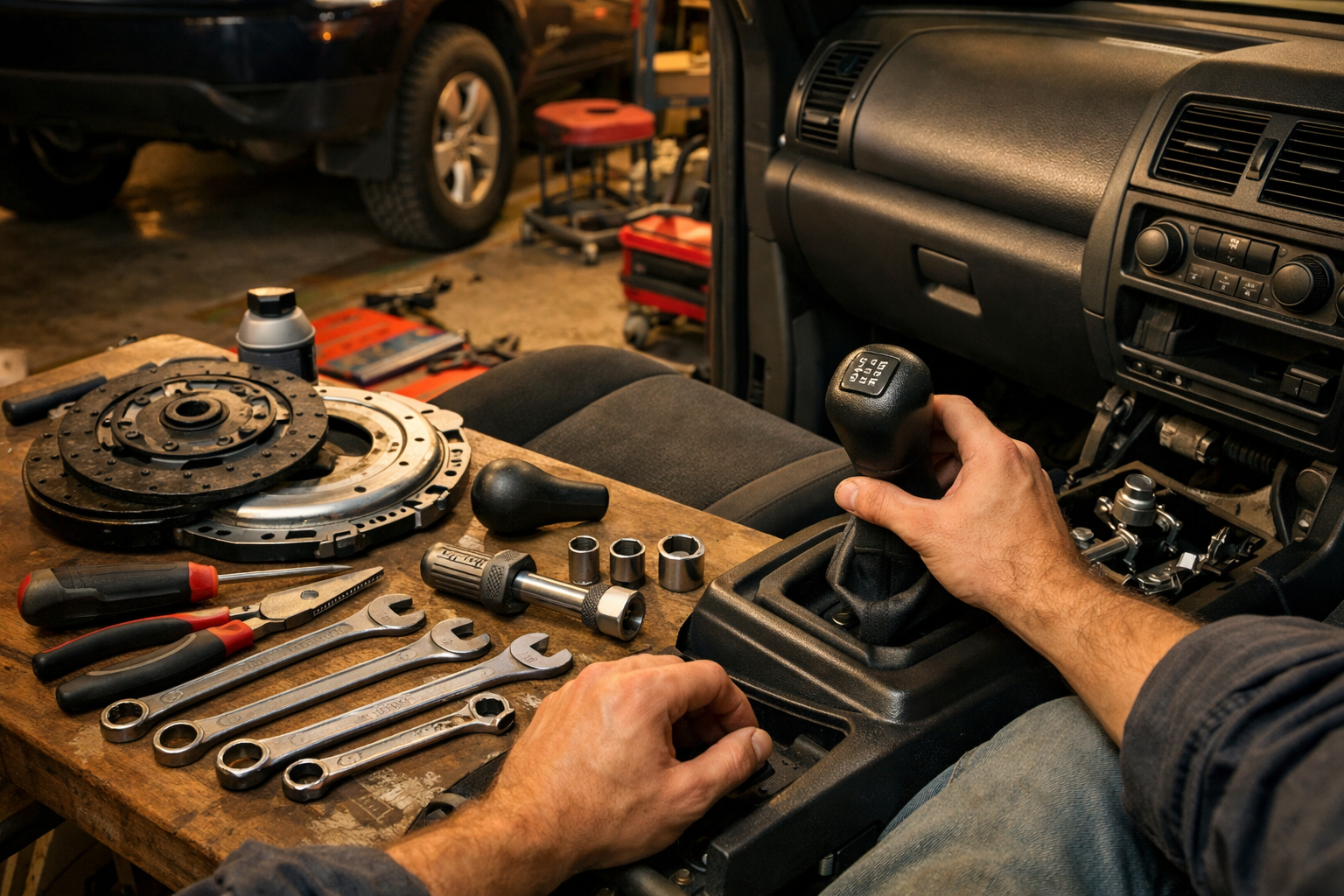
You’re scrolling listings at midnight, coffee in hand, and you spot it — a manual SUV. Third pedal. Six-speed. Actual fun in something with ground clearance. Your heart says “heck yes,” but your brain’s whispering, “Is that even practical in 2026?”
I get it. The world’s going hybrid, CVT, and push-button everything. But there’s still something honest about rowing your own gears. In this guide, I’ll walk you through what to know before buying a stick shift SUV 2026 model (or used one), the real-world costs, and the manual transmission pros cons nobody at the dealership is going to spell out.
What You’ll Need
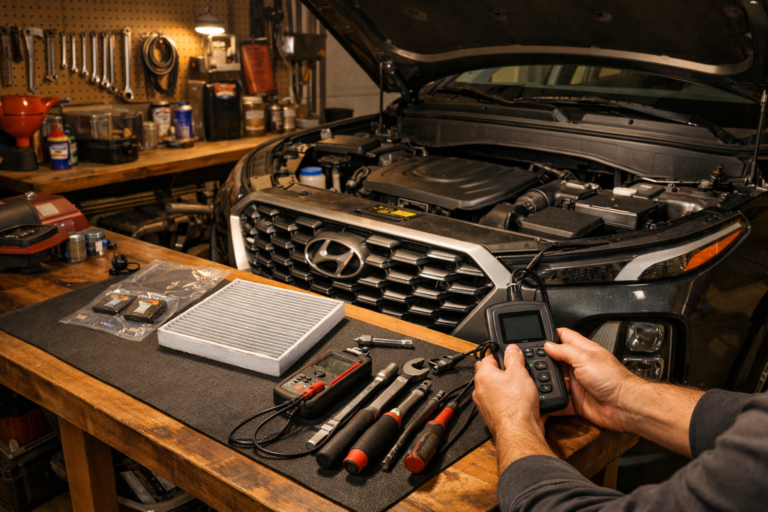
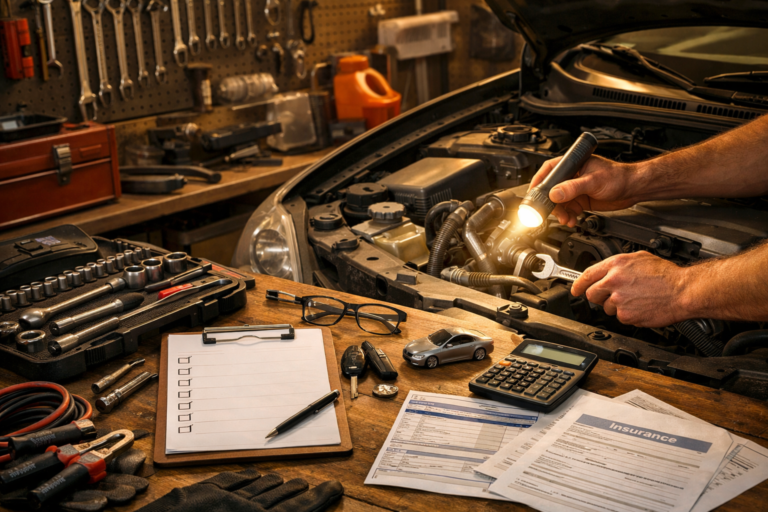
- Tools: Flashlight, OBD2 scanner ($40), 10mm socket (for battery disconnect if inspecting closely), notepad for service records
- Parts/Materials: Pre-purchase inspection ($120–$180), Carfax report ($40)
- Time: 1–2 hours for thorough test drive and inspection
- Difficulty: 🔧🔧 (Buying smart, not wrenching hard)
- Dealer Cost: $0 to “look” — but mistakes can cost $2,500 clutch job vs DIY awareness cost: $160 inspection — You Save: $2,340+
Why This Matters
A manual SUV isn’t just about fun. It changes maintenance costs, resale value, and even long-term reliability. Skip your homework, and you could inherit a smoked clutch or a transmission that sounds like a coffee grinder full of bolts.
Clutch replacement on most compact SUVs — think Subaru Crosstrek or Jeep Wrangler — runs $1,800–$2,500 at a dealer in 2025 pricing. Independent shop? $1,200–$1,800. DIY in your garage? About $400–$700 in parts — but that’s a full weekend and a transmission jack.
And here’s the thing: fewer stick shift SUV 2026 options exist every year. Subaru dropped manuals in most trims after 2023. If you’re hunting, you’re likely shopping used — which means condition matters more than badge.
Before You Start
⚠️ WARNING: If you’re test-driving, don’t “money shift” (accidentally downshift into too low a gear). I’ve seen engines over-revved and destroyed in under two seconds. That’s a $5,000 mistake.
Bring an OBD2 scanner. Plug it in before the test drive. Even if there’s no check engine light, stored codes can tell you how the previous owner treated it. You’d be surprised what’s hiding.
If the SUV has AWD (like most Subaru models), make sure all four tires match in brand and tread depth. Uneven tires can cook an AWD system — that’s a $1,500–$3,000 repair. If you’re considering Subaru specifically, check out our 2026 Subaru Baja preview to see where the brand’s heading.
Also, check for open recalls at NHTSA.gov. Takes two minutes with the VIN. Free fixes are the best kind.
Manual SUV: Pros and Cons You’ll Feel Every Day
Let’s talk real manual transmission pros cons — not brochure fluff.
Pros:
- More driver control off-road or in snow
- Typically lower purchase price (used market)
- No expensive CVT failures ($4,000+ replacement)
- More engaging to drive — period
Cons:
- Clutch wear every 80,000–150,000 miles depending on driver
- Harder resale (smaller buyer pool)
- Stop-and-go traffic can get old fast
In 20 years of wrenching, I’ve replaced dozens of failed CVTs. I’ve replaced plenty of clutches too — but clutches are wear items. A failed CVT often isn’t. Big difference in how I sleep at night.
Step-by-Step Guide
-
Start with a cold engine.
Get there early. A warm engine can hide hard starts or noisy bearings. Listen for rattles at idle. A little ticking? Normal. Loud knocking? Walk away. -
Check clutch engagement.
With engine running, press clutch fully and shift into first. It should slide in smoothly. If it grinds, synchros may be worn — that’s transmission rebuild territory ($1,500+). -
Test for clutch slip.
At 30 mph in 4th gear, floor the gas. RPMs should rise evenly with speed. If RPM jumps but speed doesn’t? Clutch is slipping. Budget $1,500 repair. -
Feel the shifter.
It should be tight, not floppy like a spoon in soup. Excess play can mean worn bushings (cheap fix, $50) or internal wear (not cheap). -
Inspect service records.
Manual transmission fluid should be changed roughly every 30,000–60,000 miles (check the manufacturer site like Subaru.com or Jeep.com for specifics). Fluid service costs $150–$250 at a shop, $60 DIY.
Pro Tip: If the seller says, “It’s always been easy highway miles,” that’s good. If they say, “My teenager learned on it,” inspect twice as hard.
Common Mistakes to Avoid
- Ignoring clutch smell: Burnt odor after a test drive means abuse. I’ve seen this turn into total clutch failure within months.
- Skipping AWD inspection: Mismatched tires destroy differentials. Seen it a hundred times.
- Assuming manuals are bulletproof: They’re strong — not invincible.
- Overpaying for rarity: Just because it’s the last stick shift SUV 2026 model on the lot doesn’t mean it’s worth $3,000 over book value.
When to Call a Professional
If you hear grinding in multiple gears, feel vibration through the clutch pedal, or see metal flakes in the transmission fluid — stop. Pay $150 for a pre-purchase inspection.
A fair inspection price in 2026 is $120–$180. If a dealer refuses an outside inspection? Red flag. If they say, “Manuals always grind a little”? Bigger red flag.
For broader buying context — especially with changing regulations — read our breakdown on EPA Emissions Repeal: What 2026 Buyers Need. Rules affect what sticks around in showrooms.
And if you’re cross-shopping something like a CX-5 but disappointed there’s no stick, check the 2026 Mazda CX-5 review so you know what you’re trading off.
Recommended Products
- BlueDriver OBD2 Scanner ($99): What I keep in my glovebox. Reads manufacturer-specific codes.
- Innova 5210 ($60): Budget option, reliable.
- LUK Clutch Kits ($400–$650): Solid OEM-quality replacement. I’ve installed dozens.
- Red Line MT-90 Gear Oil ($20/quart): What I use in my own garage for smoother shifting.
Do This
- Budget for a clutch eventually
- Verify tire matching on AWD models
- Check recall status at NHTSA
- Get a pre-purchase inspection
Don’t Do This
- Don’t ride the clutch in traffic
- Don’t overpay for “rare” trim hype
- Don’t skip fluid service
- Don’t assume manuals are maintenance-free
Buying a manual SUV in 2026 is a little like buying a cast-iron skillet in a world of microwaves. It takes more involvement, but it’ll last if you treat it right. Know the manual transmission pros cons, inspect it smart, and you can score something fun that won’t drain your bank account.
You can do this. Take your time, trust your gut, and don’t let a salesperson rush you. Drop your questions in the comments — I’ll help you sort through it.
Stay safe under there, and remember — a $20 repair manual saves a $2,000 repair bill.