
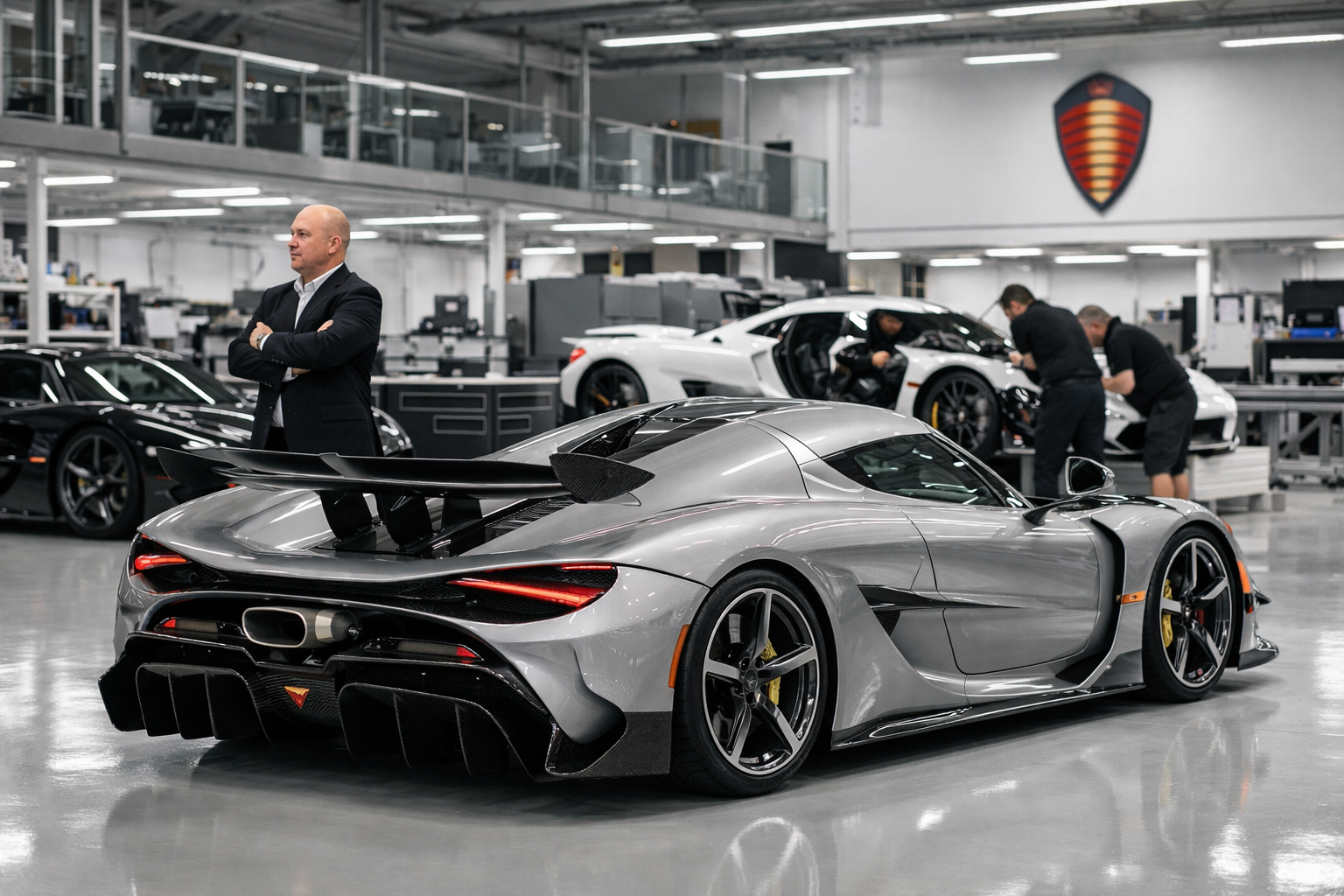
Koenigsegg is weighing a public listing for the first time in its 31-year history, according to multiple European financial outlets, raising the prospect of a Koenigsegg IPO that could reshape the economics of the hypercar business. Founder Christian von Koenigsegg confirmed on March 28, 2026, that the Swedish automaker is “evaluating strategic options, including a potential listing,” while stopping short of committing to a timeline.
This is not business as usual. Koenigsegg builds fewer than 50 cars a year at prices that routinely exceed $3 million. However, going public would signal ambitions well beyond boutique status—potentially funding supercar production expansion, new powertrain development, and deeper electrification in a market that’s getting more crowded and more regulated.
The Headlines
- What: Koenigsegg is evaluating a potential IPO to fund future growth
- Who: Koenigsegg Automotive AB and its shareholders
- When: Strategic review confirmed March 28, 2026
- Impact: Could accelerate production, electrification, and new model programs
- Key Number: Estimated annual output under 50 cars today
What Happened
Christian von Koenigsegg told Swedish business media that the company is in discussions with advisors about “long-term capital structure,” including a stock market listing. According to Reuters, bankers have been informally canvassing investor appetite for low-volume, high-margin automotive brands amid renewed interest in luxury assets.
Koenigsegg remains privately held, with von Koenigsegg and early backers controlling the majority stake. The company reportedly generates several hundred million dollars in annual revenue, though it does not publish detailed financials. Estimates from industry analysts peg gross margins significantly higher than mainstream automakers, reflecting $2–3 million price tags for models like the Jesko and Gemera.
Notably, Koenigsegg has already experimented with outside capital. In 2019, China’s National Electric Vehicle Sweden (NEVS) took a minority stake, and the companies formed joint ventures around electric technology. That partnership has since evolved, but it demonstrated Koenigsegg’s willingness to tap external funding when strategic.
Why It Matters
A Koenigsegg IPO would test whether public markets have an appetite for ultra-low-volume manufacturers in a higher interest-rate environment. Ferrari, which listed in 2015, now carries a market capitalization above $70 billion, according to Bloomberg. However, Ferrari delivers over 13,000 cars annually. Koenigsegg delivers a fraction of that.
Furthermore, electrification is expensive. Even niche players must comply with tightening EU emissions rules and safety regulations overseen by bodies such as the EPA and European equivalents. Koenigsegg’s in-house Light Speed Transmission and hybrid systems are technological marvels—but they require sustained R&D investment.
Meanwhile, the hypercar market is evolving. Buyers increasingly view these vehicles as exotic car investment assets, not just weekend toys. Auction houses report record hammer prices for limited-run models, and our guide on how to buy a car at auction reflects growing retail interest in this segment. Public capital could allow Koenigsegg to produce slightly higher volumes while maintaining exclusivity—a delicate balance.
The Bigger Picture
The hypercar market remains tiny—likely under 1,000 units globally per year—but disproportionately influential. Technologies pioneered here, from carbon fiber monocoques to hybrid torque vectoring, often trickle down over a decade. Having covered three product cycles, I can tell you this pattern is consistent: what starts as a $3 million experiment often becomes a $150,000 performance option later.
However, capital intensity has soared. Rimac raised hundreds of millions to fund electric hypercars and now controls Bugatti-Rimac, while Lotus tapped public markets via a SPAC merger. In contrast, McLaren has restructured multiple times amid cash flow pressures, according to filings covered by Reuters.
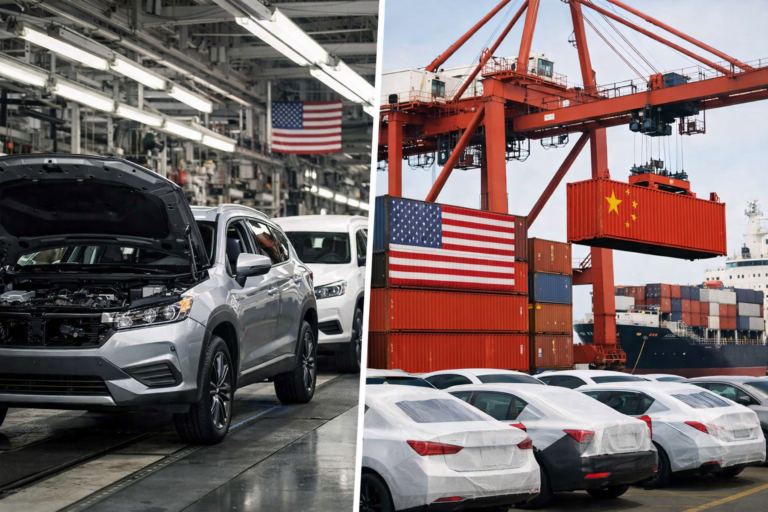
Additionally, global trade tensions complicate expansion. As we’ve detailed in Auto Tariffs 2026: U.S. Trade Shifts Hit Industry, shifting U.S. and EU policies can quickly alter import costs. For a company exporting most of its production, even minor tariff adjustments can materially affect margins.
The non-obvious insight: going public may be less about selling more cars and more about funding adjacent technology. Koenigsegg’s camless Freevalve engine technology has potential licensing applications beyond hypercars. Public capital could accelerate that diversification.
What the Competition Is Doing
Ferrari remains the benchmark. Since its IPO, it has steadily increased production while preserving pricing power, with operating margins above 25% per company filings. Importantly, Ferrari limits annual volume growth to maintain exclusivity—a strategy Koenigsegg would likely emulate.
Rimac, now intertwined with Bugatti, focuses heavily on electrification. The Nevera demonstrated 1,900+ horsepower electric performance, positioning Rimac as the EV technology leader in the hypercar market. Meanwhile, Pagani stays fiercely private and artisanal, producing around 40 cars annually and avoiding public scrutiny.
McLaren occupies the middle ground: higher volumes than Koenigsegg but lower margins than Ferrari. Financial strain forced ownership changes and capital injections in recent years. In contrast, Lamborghini benefits from Volkswagen Group backing, which provides scale advantages—as seen in broader corporate EV strategies like those outlined in Volkswagen 2026 Models: EV Push or Overload?.
If Koenigsegg goes public, it joins Ferrari and Aston Martin as listed luxury performance brands—though at far smaller scale. That comparison will be both opportunity and risk.
What It Means for You
For most readers, a Koenigsegg IPO won’t change what’s in your driveway. However, it could influence the broader performance ecosystem. Public funding might accelerate hybrid and synthetic-fuel development that trickles into mainstream sports cars over the next decade.
For high-net-worth buyers, increased production—if it happens—could slightly ease allocation bottlenecks. However, greater transparency might also moderate the speculative frenzy around limited builds. When financials become public, investors scrutinize residual values more closely.
Additionally, if Koenigsegg expands production from roughly 40–50 units to, say, 80–100 annually over several years, exclusivity dynamics shift. That doesn’t automatically depress values—Ferrari proves scale and scarcity can coexist—but it requires disciplined management.
What to Watch Next
First, watch for formal filings. A listing would require detailed disclosures, potentially through a European exchange. Second, monitor production guidance. Any mention of capacity expansion at the Ängelholm factory would signal strategic intent.
Moreover, pay attention to powertrain roadmaps. Will Koenigsegg double down on hybrid V8s, pursue full EVs to rival Rimac, or license technology externally? Finally, track macro conditions. Luxury IPOs tend to cluster when equity markets are strong and rates are stable.
The Upside
- Access to capital for R&D and supercar production expansion
- Greater financial transparency and brand credibility
- Potential technology licensing beyond hypercars
- Stronger positioning against Ferrari and Rimac
The Concerns
- Pressure to grow volumes could dilute exclusivity
- Public market volatility may constrain long-term bets
- Disclosure requirements expose financial risks
- Higher expectations from investors than niche scale supports
If a Koenigsegg IPO moves from exploration to execution, it would mark a pivotal shift for one of the industry’s most inventive players. The challenge will be preserving the mystique that justifies $3 million price tags while answering quarterly earnings calls.
Having watched Ferrari navigate that transition successfully—and Aston Martin struggle—I’d argue the outcome hinges less on demand and more on discipline. In the hypercar world, scarcity is currency. Public markets reward growth. Balancing those forces will define Koenigsegg’s next decade.
Disclosure: This article may contain affiliate links. If you make a purchase through these links, we may earn a small commission at no extra cost to you. This helps support RevvedUpCars.com. Learn more.