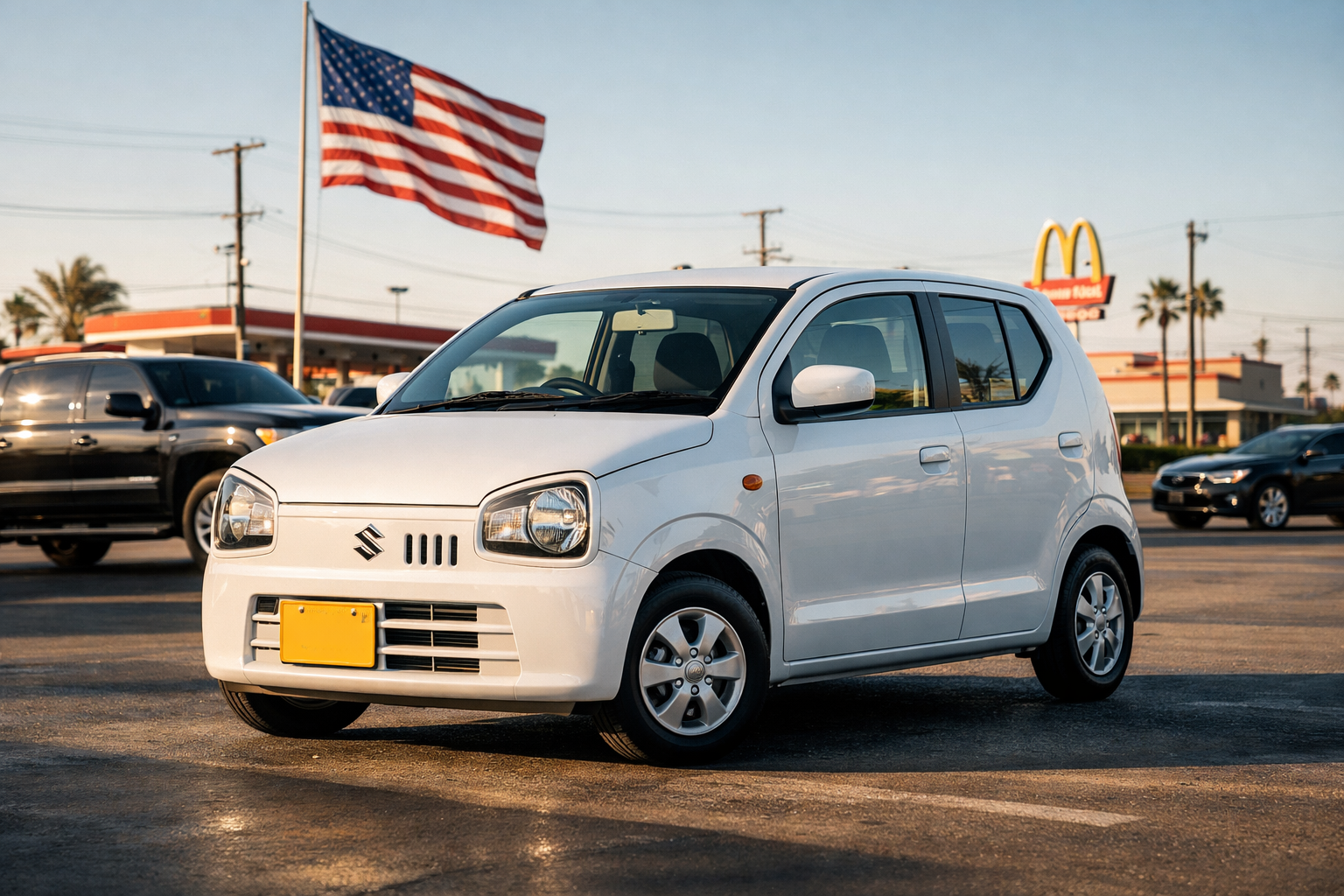

Here’s the uncomfortable truth nobody at an auto show wants to say out loud: kei cars USA sound brilliant until you actually try living with one on American roads. I love tiny cars—always have—but importing Japan’s shoebox heroes into a land of F-150s is like bringing a butter knife to a barbecue. Prices are rising, yes, but that doesn’t magically change physics, regulations, or American driving habits.
This matters right now because new-car prices are still hovering around $48,000 on average, and everyone’s hunting for an escape hatch. YouTube is full of starry-eyed takes about kei cars being the answer to bloated SUVs, and I get the appeal. But after 15 years of driving everything from a Suzuki Cappuccino to a Chevy Trax, I’m telling you the same thing I’d say over a beer: kei cars USA are a romantic idea that collapses on contact with reality.
The controversy? I don’t think Americans actually want cheap cars—they want cheap-looking prices with full-size expectations. That’s why the Mitsubishi Mirage, Nissan Versa, and Hyundai Venue exist, and why they still struggle. Let’s unpack why the kei dream doesn’t translate, even as wallets scream for mercy.
Regulations: Where kei cars USA Hit a Legal Brick Wall
Kei cars are engineered to fit Japan’s regulations: 660cc engines, about 64 horsepower, and dimensions tighter than a Tokyo parking spot. The moment you try selling one here, it has to meet US crash standards, emissions rules, and safety tech mandates. Suddenly, your $9,000 Honda N-Box turns into a $17,000 science project that still can’t pass NHTSA tests without gaining weight.
That extra structure kills the whole point. A kei car bloated to meet US standards ends up heavier, slower, and barely cheaper than a Nissan Versa starting around $16,000 (check manufacturer website for latest pricing). If you’re curious how safety rules shape design, NHTSA lays it out bluntly on NHTSA.gov.
Power: 64 Horsepower vs American Reality
I’ve driven kei cars flat-out, foot welded to the throttle, watching the speedometer climb like it’s thinking about it. Zero to 60 mph in roughly 15–17 seconds is fine in Osaka, less so when merging onto I-95 with a semi bearing down on you. That 64-hp cap works in dense cities, not in a country built around highways.
Compare that to a Chevrolet Trax with 137 hp, or even the maligned Mitsubishi Mirage at 78 hp. They’re not fast—0–60 in about 10–11 seconds—but they won’t make you fear for your life. My hot take: acceleration is a safety feature, and pretending otherwise is internet cosplay.
Size Isn’t the Problem—Perception Is
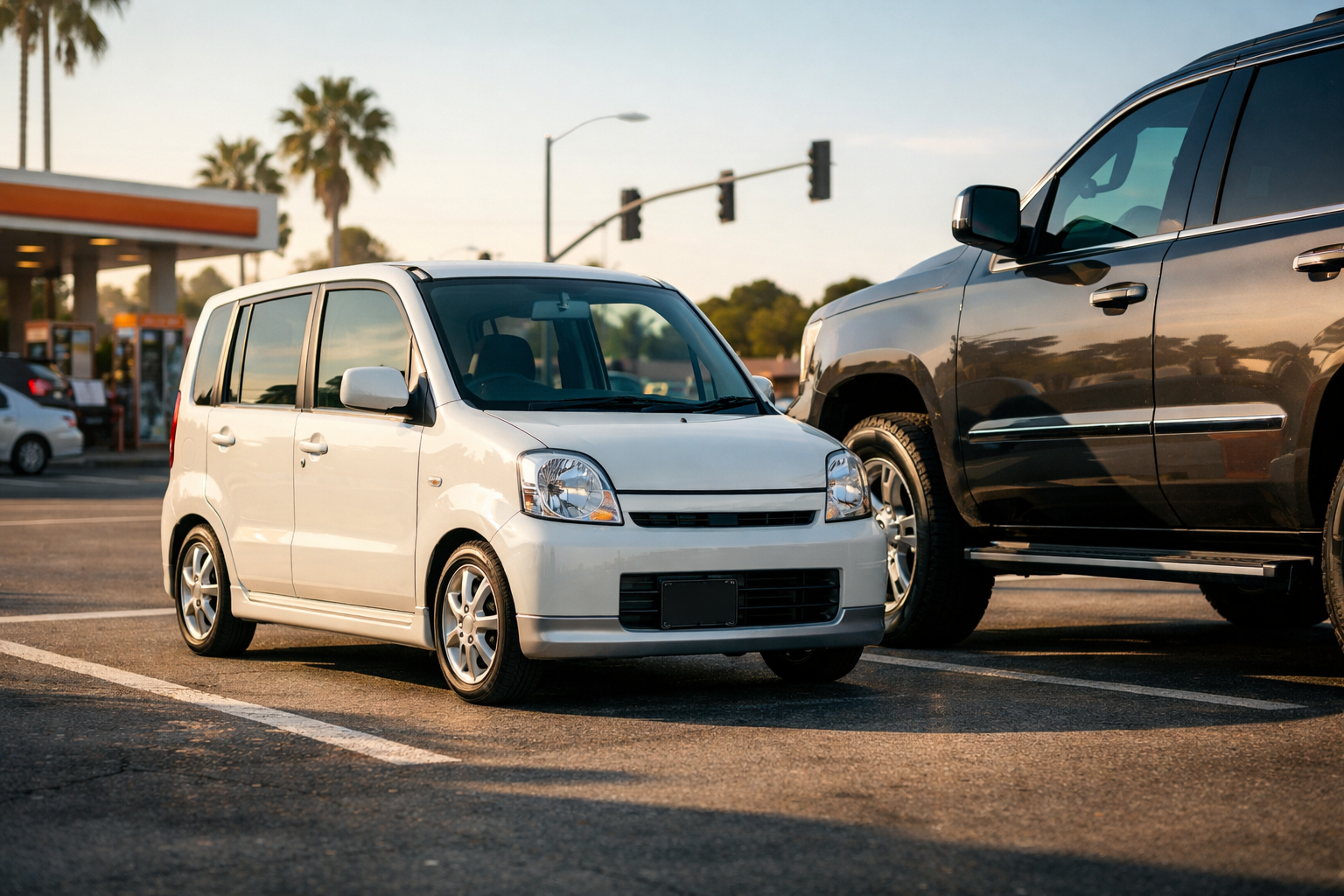
Americans will buy small cars when they feel “normal.” The Mini Cooper, Fiat 500, and Smart Fortwo proved that, briefly. But kei cars look tiny even next to a Corolla, and that visual mismatch matters more than enthusiasts admit.
I’ve written before about how buyers equate size with value, especially as everything shifts upscale—see our take on the luxury creep in new cars. A kei car parked next to a Ford Bronco looks like a rolling apology, and that’s a tough sell at $15,000-plus.
Fuel Economy: Not the Slam Dunk You Expect
Yes, kei cars sip fuel, but not dramatically more than modern subcompacts. Expect around 45–55 mpg equivalent in real-world driving, according to EPA-style testing. A Hyundai Venue manages roughly 29 city / 33 highway mpg, while offering more space, power, and safety.
You can cross-check realistic efficiency numbers at FuelEconomy.gov. The dirty secret? Aerodynamics and gearing matter more than size at highway speeds, and kei cars aren’t magic.
Cost Creep: The Price Problem Nobody Mentions
By the time you federalize a kei car—airbags, reinforced doors, emissions gear—you’re flirting with $18,000 to $20,000. That’s dangerously close to a Toyota Corolla starting around $22,000, which feels like a bargain by comparison. Suddenly, “cheap transportation” isn’t cheap anymore.
This mirrors what’s happening across the market, where value keeps evaporating. We broke that down in detail when asking whether luxury SUVs are pricing themselves into oblivion. Kei cars would face the same inflationary squeeze, just with thinner margins.
Culture Clash: How Americans Actually Use Cars
In Japan, a kei car is a tool. In America, a car is identity, road-trip machine, Costco hauler, and occasionally a rolling living room. A 6-foot driver, a week’s groceries, and a stroller will defeat most kei cars faster than a Cars & Coffee heckler.
Name a competitor that succeeds here: Nissan Versa, Kia Rio (RIP), Hyundai Accent (also gone). Even they’re on life support because Americans keep buying compact SUVs instead. Kei cars USA aren’t just fighting physics—they’re fighting habits.
The Enthusiast Exception (And Why It Doesn’t Scale)
I adore kei sports cars like the Honda S660 and Suzuki Cappuccino. On a twisty road at 45 mph, they’re hilarious, alive, and purer than most modern performance cars. But enthusiasts are loud and tiny in number, and they don’t pay the bills.
As Doug DeMuro would say, the quirks are charming until you live with them. As Chris Harris would add, fun doesn’t equal viable. And Jeremy Clarkson would just shout “POWER” and walk away.
Pros
- Excellent urban maneuverability
- Low fuel consumption
- Simple mechanicals
- Genuine charm for enthusiasts
Cons
- Poor highway performance
- Safety and regulation hurdles
- Minimal cost advantage in the US
My verdict is simple: kei cars USA are lovable misfits, not saviors. As prices rise, they’ll be dragged upward too, losing the very advantage that makes them special. Until America changes how it builds roads and buys cars, kei cars will remain a niche fantasy—fun to watch on YouTube, frustrating to own.
Frequently Asked Questions
Are kei cars legal in the USA?
Only limited cases. Most must be 25 years old to bypass federal regulations, or heavily modified to meet US safety and emissions standards.
Why don’t kei cars USA get better fuel economy?
At highway speeds, aerodynamics and gearing matter more than size. Many kei cars are optimized for city use, not sustained 70 mph driving.
How much would a new kei car cost in America?
After compliance costs, approximately $17,000–$20,000. That puts them close to larger, more capable subcompacts.
What are the best alternatives to kei cars?
Nissan Versa, Mitsubishi Mirage, and Hyundai Venue offer more power, safety, and space for similar money.