
You’ve been scrolling auction sites at midnight, staring at a boxy 1996 Toyota Land Cruiser Prado and thinking, “Why can’t we get the cool stuff?” If you want to import JDM Land Cruiser models legally into the U.S., there’s a right way, a wrong way, and a very expensive way. I’ve watched guys lose $8,000 because they skipped one form.
This isn’t just about bragging rights at Cars & Coffee. A properly imported vintage Toyota SUV can hold value like a savings bond — sometimes better. Do it wrong, and Customs can seize it faster than a dealership tries to sell you nitrogen in your tires.
In this guide, I’ll walk you through the 25 year rule, total costs, paperwork, shipping, and the pitfalls I’ve seen in 20 years around imported rigs. You’ll know what to budget, what to avoid, and how to keep Uncle Sam happy.
What You’ll Need
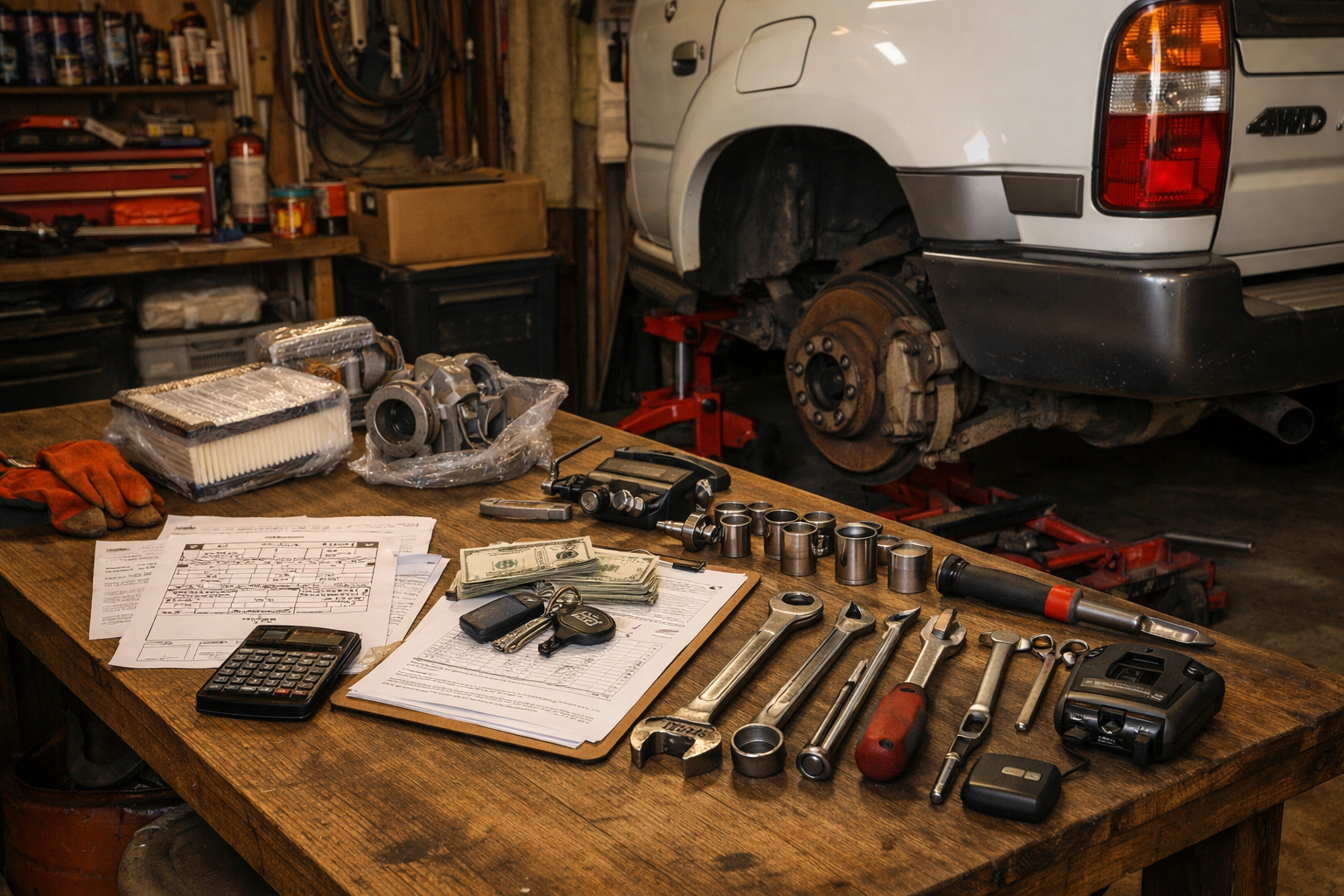
- Tools: VIN decoder app, flashlight, OBD2 scanner (for post-arrival check), 10mm socket set for inspection panels
- Parts/Materials: Shipping insurance ($200–$500), customs bond (~$100), potential maintenance parts ($300–$1,000)
- Time: 2–4 months total process; 5–10 hours paperwork/research
- Difficulty: 🔧🔧🔧 (3/5 — paperwork heavy)
- Dealer Cost: Import broker full-service $3,000–$5,000 vs DIY Cost: $800–$1,500 — You Save: $2,000+
Why This Matters
The 25 year rule is the big gatekeeper. In the U.S., vehicles 25 years or older are exempt from Federal Motor Vehicle Safety Standards. That means in 2026, you can legally import a 2001 model year vehicle.
If you try to bring in something newer without going through a Registered Importer, you’re staring at $10,000–$20,000 in compliance costs — sometimes more than the truck is worth. I’ve seen engines pulled apart for emissions testing. It’s ugly.
For a vintage Toyota SUV like the 70, 80, or Prado series, values are climbing. Clean 1995–1999 Land Cruisers from Japan run $12,000–$22,000 landed in the U.S. right now (2025 pricing). Skip paperwork, and Customs can deny entry. No refunds on shipping.
Before You Start (Import JDM Land Cruiser Checklist)
⚠️ WARNING: Never wire full payment to a seller without verifying export paperwork and auction sheet authenticity. Wire fraud in JDM imports is real.
Make sure the vehicle is at least 25 years old to the month of manufacture. Check the build plate, not just the model year. Customs cares about the production date.
Confirm it’s not on any U.S. recall or compliance hold. You can verify recalls later at NHTSA.gov.
When NOT to DIY: If you’re uncomfortable filing EPA Form 3520-1 and DOT HS-7 yourself, hire a licensed customs broker. Mess up those forms and the port will store your truck at $40–$60 per day.
Step-by-Step Guide
-
Confirm Eligibility Under the 25 Year Rule
Check production month/year. A February 2001 build becomes eligible February 2026. No exceptions unless you want compliance nightmares. -
Find a Reputable Exporter
Look for auction sheet grading (4 or higher is ideal). Ask for undercarriage photos — Japan uses road salt in northern regions. Think Midwest rust.
Pro Tip: Budget $1,000–$2,000 immediately for baseline maintenance once it lands. -
Understand Total Costs Before Bidding
Purchase price: $10,000–$18,000
Shipping (RORO): $1,500–$2,500
Marine insurance: $200–$500
Customs duty: 2.5% of vehicle value
Port fees & paperwork: $300–$800
State registration: varies ($200–$1,000)
Expect $14,000–$24,000 all-in for most 90s Land Cruisers. -
File EPA and DOT Forms
Complete EPA Form 3520-1 (Code E for 25-year exemption) and DOT Form HS-7 (Box 1). Submit to Customs with Bill of Lading and Japanese Export Certificate. -
Clear Customs
Pay 2.5% duty. Diesel Land Cruisers are also 2.5% (not the 25% “chicken tax” — that’s for trucks under certain classifications). Keep stamped forms. -
Post-Arrival Inspection
Change all fluids immediately: engine oil (5–8 quarts typical), transmission, transfer case, diffs, coolant. Consult Toyota specs.
Pro Tip: Replace timing belt on older 1KZ-TE diesels if history is unknown — $400 in parts beats a $4,000 engine. -
State Inspection & Title
Some states require VIN inspection. California is stricter — check EPA guidelines before buying if you live there.
Common Mistakes to Avoid
- Ignoring Rust: I’ve seen pristine-looking trucks with frames flaking like a croissant underneath. Structural rust can kill resale value fast.
- Skipping Insurance During Shipping: Containers tip. Ships get rough seas. $300 insurance can save a $15,000 loss.
- Forgetting Parts Availability: Some diesel-specific parts take weeks to source. Budget downtime.
- Assuming Odometer Accuracy: Verify auction sheet mileage. Digital clusters can be swapped.
- Not Budgeting Maintenance: Fluids, belts, hoses — I automatically plan $1,000. In 20 years of wrenching, I’ve seen neglected timing belts destroy otherwise bulletproof Toyota engines.
When to Call a Professional
If Customs flags paperwork, hire a licensed broker immediately. Expect $400–$800 to fix filing errors — cheaper than storage fees piling up.
If your state refuses to title it due to emissions confusion, contact a specialty importer familiar with your DMV. Fair broker pricing for full service import JDM Land Cruiser handling runs $3,000–$5,000.
Red flags at shops: “We’ll just adjust the VIN” or “Don’t worry about EPA forms.” Walk away. Fast.
Recommended Products
- BlueDriver OBD2 Scanner ($99): Great for post-import diagnostics.
- Mobil 1 or Rotella T6 Oil ($28–$35 per jug): Especially good for older diesels.
- OEM Toyota Timing Belt Kit ($350–$500): Don’t cheap out here.
- Fluid Film Rust Protection ($15 per can): Spray the frame yearly. Especially if you read our road salt protection guide.
If you’re importing for winter capability, remember AWD tech keeps evolving. Modern systems are impressive — check out our breakdown of best AWD systems for 2026 to see how these classics compare.
And if you’re cross-shopping newer rigs, you might be surprised how refined modern Toyotas are — we covered that in our Mazda CX-5 vs RAV4 comparison.
Do This
- Verify build date meets 25 year rule
- Budget $1,000+ for baseline maintenance
- Buy shipping insurance
- Keep copies of every stamped Customs form
Don’t Do This
- Wire money without documentation
- Assume “mint” means rust-free
- Ignore EPA and DOT paperwork
- Skip timing belt service
Here’s the bottom line: to import JDM Land Cruiser models legally under the 25 year rule, you need patience and paperwork discipline. It’s not mechanically hard — it’s bureaucratically picky.
You can do this. It’ll take a few months and some careful form-filling, but when that diesel clatter fires up in your driveway, it’s worth it. These vintage Toyota SUV rigs are built like cast iron skillets — simple, durable, and they last generations if you treat them right.
Got questions about a specific model or port? Drop it in the comments. Stay safe under there, and remember — a $20 repair manual saves a $2,000 repair bill.