
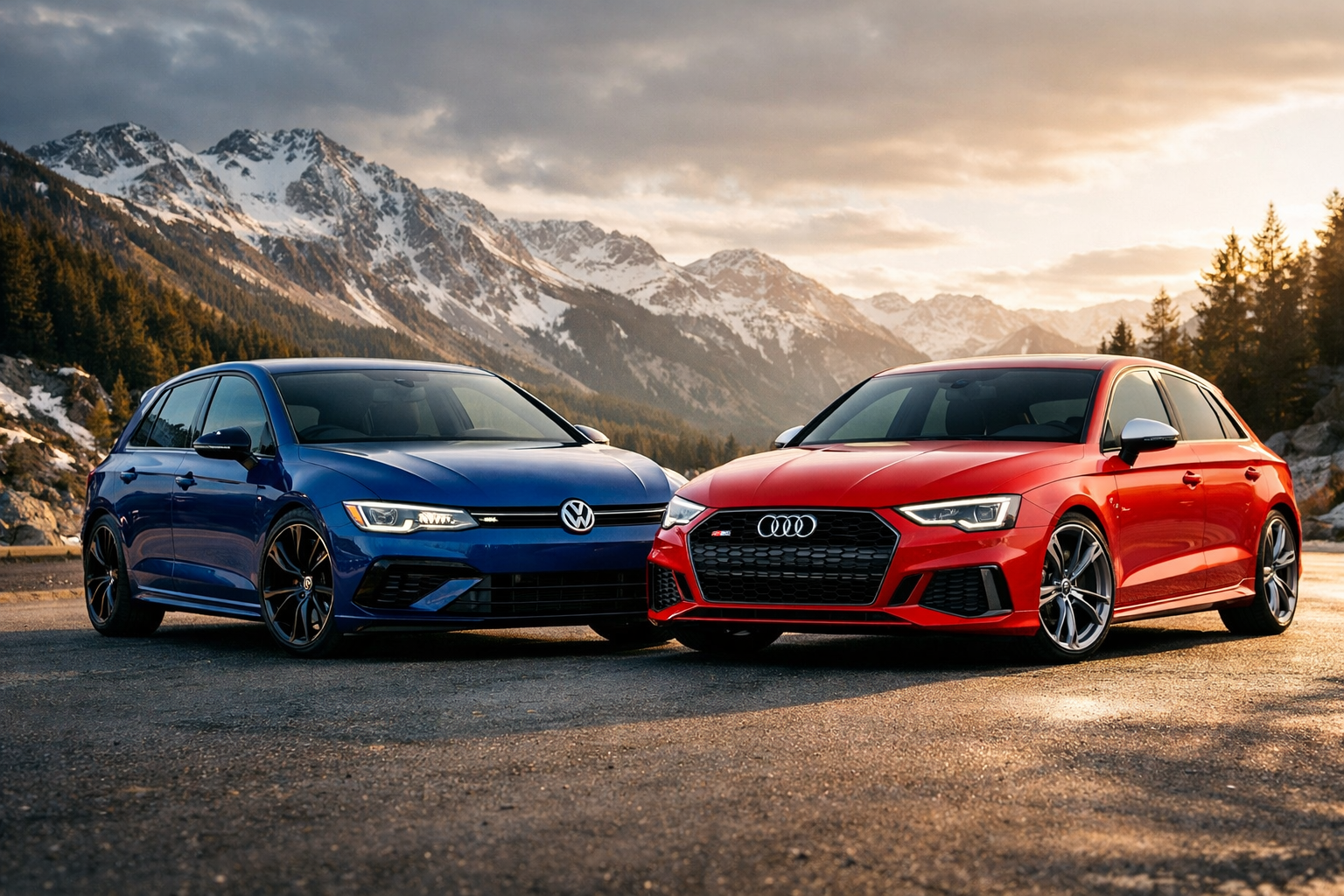
Here’s a spicy truth bomb to start a pub argument: the Volkswagen Golf R vs Audi S3 fight isn’t about speed anymore—it’s about which brand still remembers how to make a car feel alive. Both promise AWD grip, 300-plus horsepower, and “premium performance,” yet one of them has started to feel like it was signed off by a committee armed with buzzwords and oat milk lattes. I’ve driven both back-to-back, on real roads, not Instagram-perfect launch control strips, and the differences are bigger than the shared MQB bones suggest.
This matters right now because hot hatches are on borrowed time. Emissions rules are tightening, EVs are muscling into enthusiast budgets, and the likes of Ford Focus RS and Hyundai Veloster N are already ghosts. If you’re shopping a Golf R vs Audi S3 in 2026, you’re effectively choosing which interpretation of “last great AWD hot hatch” deserves your money before everything goes silent and beige.
And yes, they’re close relatives—same 2.0-liter turbo EA888, same AWD hardware lineage—but the way they deploy that hardware couldn’t be more philosophically different. One wants to be your daily driver that occasionally terrorizes a back road. The other wants to remind you, subtly and expensively, that you could’ve bought an A4 instead.
Quick Specs
- Starting Price: Golf R approximately $47,000 / Audi S3 approximately $49,000 (check manufacturer website for latest pricing)
- Engine: 2.0L Turbocharged Inline-4
- Power: 315 hp / 310 lb-ft (both)
- 0-60 mph: ~3.9 seconds (Golf R) / ~4.3 seconds (S3)
- Fuel Economy: ~22 city / 31 highway mpg
The Contenders: Same DNA, Different Personalities
The Golf R is the top-dog of Volkswagen’s hatchback world, sitting above the GTI like a bouncer who also runs marathons. For 2025–2026, it gets torque-vectoring AWD with a rear differential that can send nearly all the power to one wheel, a proper party trick that Doug DeMuro would absolutely lose his mind over. Audi’s S3, meanwhile, is the entry ticket to four rings performance, positioned as a “sport sedan” despite sharing more with the Golf than Audi marketing would ever admit.
Key rivals frame this battle nicely: BMW M235i xDrive, Mercedes-AMG CLA 35, and the scrappy Toyota GR Corolla. The BMW is faster in a straight line, the Merc is louder about being sporty, and the Toyota is rawer than sushi-grade tuna. But only the Golf R and S3 pretend they can do it all without annoying you on the commute.
Design Face-Off: Understated vs Underwhelming
The Golf R still nails the sleeper look. Quad exhausts, subtle blue accents, and just enough aggression to signal “don’t try me” without screaming midlife crisis. Park it next to a regular Golf and only enthusiasts will know, which is exactly the point.
The Audi S3 should look sharper, but here’s my controversial hot take: Audi’s current design language is coasting. The big grille feels obligatory rather than exciting, a problem I’ve already ranted about in our deep dive on Audi’s one-grille strategy. It’s handsome, sure, but it doesn’t make you look back after parking, and that’s a cardinal sin at this price.
Interior & Tech: Touchscreens vs Touchdown Passes
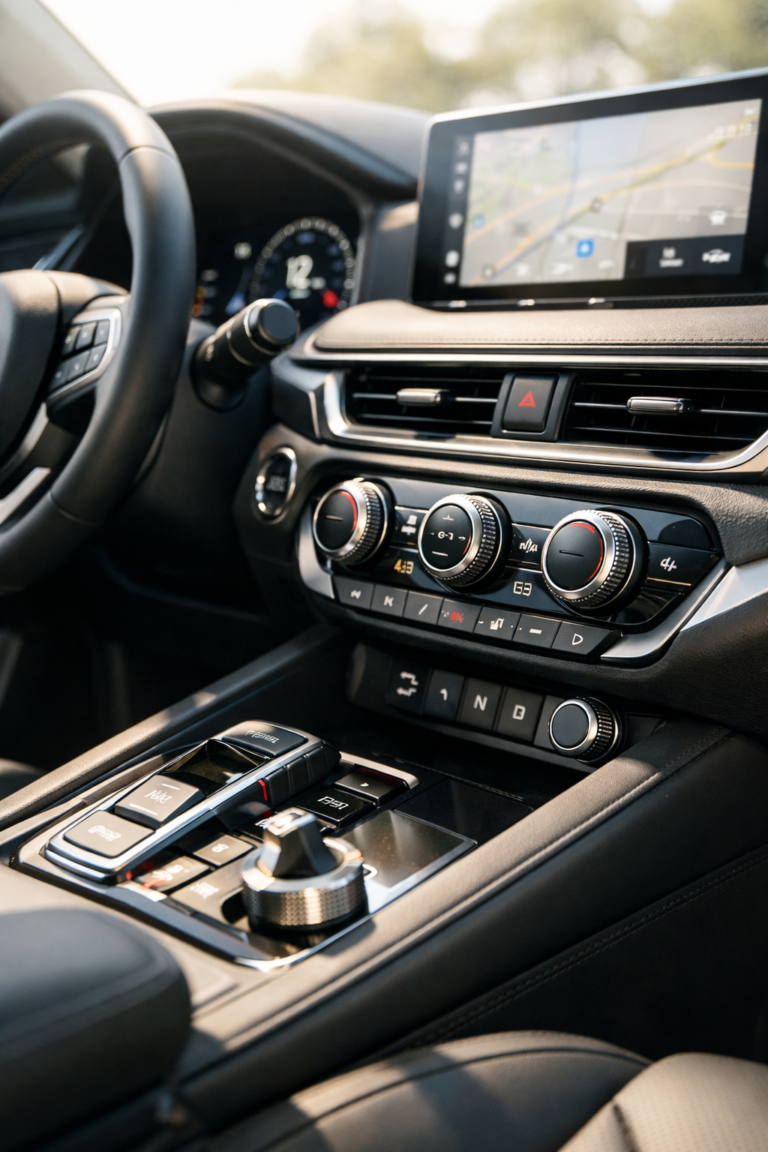
Step inside the Golf R and you’re immediately greeted by Volkswagen’s minimalist, haptic-heavy interior. The seats are superb—supportive without feeling like racing shells—but the touch sliders for climate control still feel like a cost-cutting prank. At night, when they finally illuminate, they’re tolerable; during the day, they’re about as intuitive as a YouTube tutorial filmed in portrait mode.
The Audi S3 counters with a more traditional layout, better materials, and physical controls that your muscle memory actually understands. The Virtual Cockpit remains one of the best digital gauge clusters in the business, and Audi’s infotainment is less likely to induce swearing. Still, you’re paying extra for vibes, not function, and if interior quality is your top priority, you should probably read our breakdown of luxury ownership costs before signing anything.
Performance: Where the Golf R Punches Back
On paper, both cars pack 315 hp, but numbers lie like politicians. The Golf R’s torque-vectoring rear diff transforms how it attacks corners, actively pushing the car around bends rather than dragging it through them. The result is a 3.9-second 0–60 mph run and a chassis that feels playful instead of polite.
The Audi S3 is quick—no doubt—but its AWD system is more conservative. It grips, it goes, it’s devastatingly efficient, yet it never quite eggs you on. Chris Harris would say it’s “competent,” which in journalist-speak is dangerously close to boring.
Real-World Driving: Pub Roads, Not Press Releases
I’ve driven dozens of AWD performance cars, and the Golf R is one of the few that still makes me laugh out loud on a damp B-road. The steering isn’t perfect, but it communicates enough, and the throttle response in Race mode is sharp rather than caffeinated-for-the-sake-of-it. It feels engineered by people who actually drive.
The S3 excels at being unflappable. Long highway runs? Effortless. Bad weather? See our AWD winter driving guide, because this thing shrugs off snow like it’s an inconvenience. But when the road gets interesting, the Audi keeps you at arm’s length, like a manager who doesn’t want to get drinks after work.
Fuel Economy & Running Costs: Reality Check
Both cars return roughly 22 mpg city and 31 mpg highway, according to FuelEconomy.gov, which is respectable given the performance. Insurance, however, will remind you these are not GTIs, especially if you live somewhere with enthusiastic traffic enforcement. Tires, brakes, and German service intervals add up quickly.
The Audi will generally cost more to maintain, partly because of brand tax and partly because dealerships know they can get away with it. If budget matters, and it should, the Golf R quietly makes more sense without feeling cheap.
Value Breakdown: Where the Money Goes
Starting around $47,000, the Golf R feels expensive until you realize how much hardware you’re getting. Torque-vectoring AWD, adaptive dampers, and standard performance features mean fewer boxes to tick. It’s also a hatchback, which means it can haul more than just your ego.
The S3 starts closer to $49,000 and climbs fast with options. You’re paying for the badge, the interior ambiance, and Audi’s image as a “grown-up” choice. If that matters to you, fine—but don’t pretend it’s the better performance value.
| Spec | Volkswagen Golf R | Audi S3 |
|---|---|---|
| Starting Price | ~$47,000 | ~$49,000 |
| Power | 315 hp | 315 hp |
| 0-60 mph | 3.9s | 4.3s |
| MPG | ~27 combined | ~27 combined |
| Cargo Space | ~19.9 cu ft | ~8.8 cu ft |
| Warranty | 4 yr / 50,000 mi | 4 yr / 50,000 mi |
Pros
- Exceptionally capable AWD system
- Explosive real-world performance
- Practical hatchback layout
- Strong value for the hardware
Cons
- Frustrating touch controls
- Interior lacks true premium feel
- Still pricey for a VW badge
The Winner: Heart vs Head
The Golf R vs Audi S3 debate ultimately comes down to personality. The Audi is the sensible, well-dressed option that never embarrasses you. The Golf R is the mate who convinces you to take the long way home because the road looks fun.
If you want polish, predictability, and a premium badge, buy the S3 and enjoy its quiet competence. If you want genuine thrills, practicality, and a hot hatch that still remembers its roots, the Golf R is the one to have before this segment disappears.
My final, possibly inflammatory thought: if this really is the last hurrah for gas-powered AWD hot hatches, the Golf R deserves to be remembered as the one that went out swinging. The Audi S3 will age gracefully—but the VW will be the one you miss.