
You don’t need $40,000 and a midlife crisis to have fun. Some of the best cars under 10000 are sitting in driveways right now — Miatas, Civic Sis, G35 coupes — just waiting for someone smart enough to grab them before they turn into clapped-out money pits.
I’ve watched too many folks buy “cheap fun cars” that turned into $3,000 transmission jobs and blown head gaskets. The goal here isn’t just to find something fast-ish and cool. It’s to find reliable sporty cars that won’t eat your savings alive.
In this used car buying guide, I’ll walk you through what models to target, what to avoid, how to inspect them like a mechanic, and how to keep from getting hosed by shady sellers. Let’s go hunting.
What You’ll Need
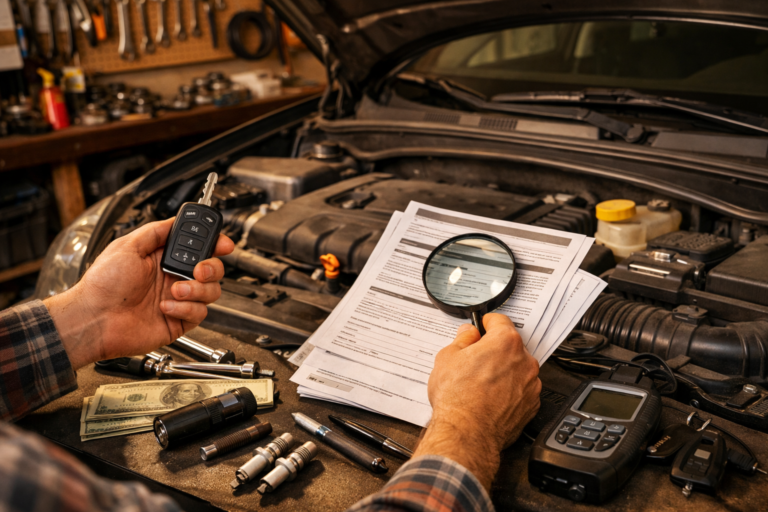
- Tools: OBD2 scanner ($25 Bluetooth), flashlight, small inspection mirror, paper towels, magnet, tire tread gauge
- Parts/Materials: Vehicle history report ($25–$40), pre-purchase inspection ($100–$150 at local shop)
- Time: 1–2 hours per car inspection (don’t rush it)
- Difficulty: 🔧🔧 (2/5 — patience required)
- Dealer Cost: $399 “inspection fee” vs DIY Cost: $40 — You Save: $350+
Why This Matters
The wrong $8,000 car can turn into a $15,000 mistake fast. I’ve seen timing chains stretch on neglected BMW 335is, Subaru EJ engines pop head gaskets, and automatic transmissions grenade on early 2000s Nissans.
Fun cars get driven hard. That’s the reality. Skipped oil changes and cheap mods are common. If you don’t inspect carefully, you’re buying someone else’s burnout history.
Shopping smart in the best cars under 10000 range means focusing on durability first, fun second. A slow car that runs is better than a fast car on jack stands.
Before You Start
⚠️ WARNING: Never crawl under a car supported only by a jack during a private-party inspection. If you need underneath access, use ramps or walk away.
Run the VIN through NHTSA recall lookup before you even meet the seller. Open recalls aren’t always deal breakers, but unrepaired safety recalls tell you how the owner treated the car.
Bring an OBD2 scanner. Even if the check engine light is off, stored codes tell stories. Misfire history? Walk away. Transmission codes? Budget $2,500–$4,000.
If you’re new to buying used, read this guide on how to avoid shady dealerships. Private sellers can be worse.
Step-by-Step Guide
-
Start with model research.
Look for proven platforms: 2006–2015 Mazda Miata, 2006–2011 Honda Civic Si, 2003–2008 Infiniti G35, 2005–2009 Mustang GT, 2004–2008 Acura TSX.
Check reliability data from Consumer Reports and manufacturer maintenance schedules.
Pro Tip: Stock cars beat heavily modified ones every time. -
Inspect cold start behavior.
Show up before the seller warms it up. Cold starts reveal timing chain rattle, piston slap, or blue smoke (oil burning).
Blue smoke = likely $1,500–$4,000 repair. -
Scan for codes.
Plug in your OBD2 scanner under the dash. Look for pending or stored codes, not just active ones.
Misfire codes (P0300 series) or transmission codes are red flags. -
Check fluids.
Oil should be brown to amber — not black sludge. Coolant shouldn’t look like chocolate milk (head gasket warning).
Transmission fluid should not smell burnt.
Pro Tip: Bring paper towels. Wipe and re-check levels. -
Look underneath.
Surface rust is normal. Structural rust on frame rails or subframes? Walk away.
Oil leaks around rear main seal or transmission bellhousing can mean $800–$2,000 repairs. -
Test drive smart.
Drive at city and highway speeds. Hard acceleration should be smooth. No grinding shifts in manuals. No flaring RPM in automatics.
Brake firmly — steering wheel shouldn’t shake. -
Budget realistically.
Even the best cars under 10000 will need catch-up maintenance: $500–$1,000 set aside for tires, fluids, brakes.
If you can’t afford that buffer, wait.
Common Mistakes to Avoid
- Buying someone’s “project.” I’ve seen this a hundred times. Missing parts become impossible treasure hunts.
- Ignoring maintenance records. No proof of timing belt on a V6 Honda? That’s a $900 job waiting.
- Falling for cheap German luxury. A $9,000 BMW 550i can have $6,000 valve stem seal issues.
- Skipping a pre-purchase inspection. $150 now saves $3,000 later.
- Financing an old fun car. Interest plus repairs equals regret.
When to Call a Professional
If you hear rod knock (deep metallic knocking that rises with RPM), stop. That’s engine rebuild territory — $4,000+.
If the car has accident damage with frame repair, have a body shop inspect it. Uneven tire wear or crooked steering wheels can signal bent suspension.
A fair pre-purchase inspection runs $100–$150 at an independent shop. Dealers may quote $250–$400. Call ahead and ask: “Do you check compression and scan modules?” If they dodge the question, go elsewhere.
And before signing anything, review broader car buying tips for 2026. The market shifts fast with tariffs and supply changes.
Recommended Products
- BlueDriver Bluetooth OBD2 Scanner ($99): What I use in my own garage. Reads manufacturer-specific codes.
- ANCEL AD310 ($35): Budget scanner that gets basic codes done.
- Milwaukee Rechargeable Flashlight ($79): Bright enough to spot leaks and rust.
- Vehicle History Report (Carfax or AutoCheck, $30–$40): Worth every penny.
If you’re debating hybrid options in this price range, read up on hybrid reliability in 2026. Some older hybrids are great deals — others have $2,000 battery surprises.
Best Cars Under 10000: My Shortlist
Here are my favorite budget enthusiast cars that balance fun and reliability:
- Mazda Miata (NC, 2006–2015): Simple, reliable, huge aftermarket. Watch for rust in northern states.
- Honda Civic Si (2006–2011): Bulletproof K-series engine. Check for 3rd gear grind.
- Infiniti G35/G37: Strong VQ engines. Avoid neglected automatics.
- Mustang GT (2005–2009): Cheap V8 fun. Inspect rear differential for whining.
- Acura TSX: Sporty sedan that lasts forever with maintenance.
These are consistently some of the best cars under 10000 because parts are cheap, forums are active, and engines are proven.
Do This
- Buy the cleanest, most stock example you can find
- Budget $1,000 for immediate maintenance
- Run VIN checks and OBD2 scans
- Get a pre-purchase inspection
Don’t Do This
- Don’t trust “just needs a tune”
- Don’t ignore transmission behavior
- Don’t buy sight unseen without inspection
- Don’t assume luxury equals reliability
Finding the best cars under 10000 isn’t about luck — it’s about patience and inspection. You can absolutely score a fun, reliable ride in that $5K–$10K window if you stay disciplined and avoid emotional decisions.
Take your time. Walk away if something feels off. There’s always another Miata.
Drop your shortlist or questions in the comments — I’ve probably wrenched on it. Stay smart out there, and remember — a $20 repair manual saves a $2,000 repair bill.