
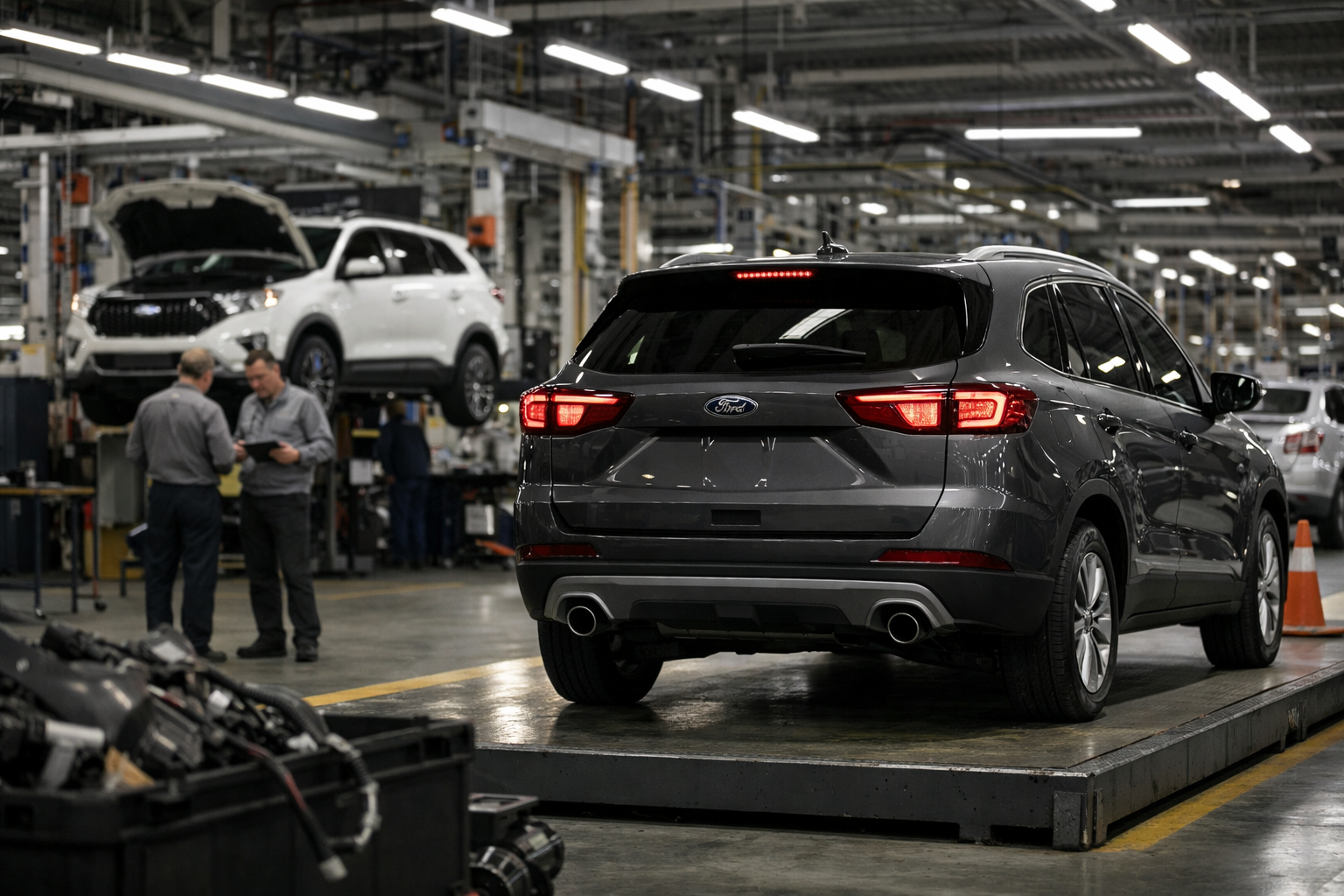
Ford has recalled 7.4 million vehicles in the U.S. so far this year, a staggering figure that puts Ford recalls 2026 at the center of the industry’s quality debate. According to filings with the National Highway Traffic Safety Administration (NHTSA), the total spans more than a dozen separate campaigns announced between January and mid-March 2026. That already exceeds Ford’s full-year 2025 recall volume.
However, raw recall numbers don’t tell the whole story. Some campaigns involve software updates fixable over-the-air, while others require dealer visits for potentially serious safety defects. Still, when one automaker accounts for nearly one-third of all U.S. recall actions year-to-date, according to Reuters reporting, it raises deeper questions about process control and product complexity.
Notably, this comes as Ford is trying to position itself as both a legacy truck powerhouse and a credible EV player with products like the F-150 Lightning and the upcoming affordable electric pickup. Quality headlines were not part of that plan.
The Headlines
- What: Ford has issued 7.4 million vehicle recalls in the U.S. in early 2026 across multiple safety campaigns
- Who: Ford Motor Company; oversight by NHTSA
- When: January–March 2026 announcements
- Impact: Millions of owners face potential repairs, software updates, and resale value concerns
- Key Number: 7.4 million vehicles affected
What Happened
The 7.4 million total covers a range of issues affecting 2022–2026 model-year vehicles, including F-150s, Explorers, Bronco Sport SUVs, and certain Mustang Mach-E models. According to NHTSA filings, the defects range from faulty rearview camera displays to potential fuel injector cracks that could increase fire risk.
In several cases, Ford classified the remedies as software recalibrations. Owners of some 2025–2026 models will receive over-the-air updates, while others must visit dealerships for hardware replacements. Ford said in a March 18 statement that it is “committed to continuous improvement in manufacturing and supplier quality.”
However, not all recalls are minor. One campaign covering over 1.2 million F-150 and Super Duty trucks involves brake master cylinder concerns, which NHTSA said could reduce braking performance under certain conditions. That moves the issue beyond inconvenience into core safety territory.
Reports indicate that supplier-related defects account for a significant portion of the campaigns. That’s consistent with broader auto recalls analysis trends showing increased reliance on complex global supply chains post-pandemic.
Why It Matters
Ford recalls 2026 isn’t just a headline problem; it’s a cost problem. Recalls can cost automakers hundreds of millions of dollars in warranty expenses, parts, and labor. In its most recent 10-K filing, Ford disclosed billions in annual warranty accruals, and elevated recall activity could pressure margins further in 2026.
Moreover, Ford has struggled with quality rankings in recent J.D. Power Initial Quality Studies, often landing below Toyota and General Motors. While GM has had high-profile recalls of its own, its 2025 recall volume was significantly lower than Ford’s, according to NHTSA data.
For consumers, the impact is twofold. First, inconvenience: service appointments, parts backorders, and potential downtime. Second, resale value. A vehicle with multiple open recalls can be harder to trade in, something we’ve covered in our Trade In Car Tips 2026: Maximize Your Used Car Value guide.
Additionally, high recall rates can erode brand trust at a time when monthly payments average over $800, according to industry data we analyzed in Why $800 Car Payment Is the New Normal. Buyers paying luxury-level prices expect Toyota-level reliability.
The Bigger Picture
The spike in Ford recalls 2026 reflects a broader industry tension: vehicles are becoming software-defined machines layered on aging mechanical architectures. As more features rely on code, connectivity, and advanced driver-assistance systems, the potential failure points multiply.
According to NHTSA data, total U.S. recalls have trended upward over the past decade, even as vehicle reliability surveys show mixed results. In fact, many modern recalls involve software glitches rather than catastrophic mechanical failures. That’s a subtle but important distinction.
However, software recalls bring their own risks. Over-the-air updates require robust cybersecurity protections, a topic we’ve explored in Vehicle Connectivity Explained: Protect Your Data Now. A rushed fix can introduce new vulnerabilities.
Historically, Ford has faced recall waves before—most notably in the early 2000s and again around 2022–2023 when it led the industry in total campaigns, according to Reuters auto industry coverage. The pattern suggests systemic process challenges rather than one-off mistakes.
What the Competition Is Doing
General Motors has focused heavily on software consolidation through its Ultifi platform, aiming to reduce fragmented electronic control units. Meanwhile, Toyota continues to prioritize incremental engineering changes and rigorous supplier vetting, which has historically kept its recall rate comparatively lower.
In contrast, Stellantis has battled quality perception issues while undergoing leadership changes, as seen in our coverage of Chrysler New CEO: What It Means for Dodge. Leadership turnover often disrupts quality control initiatives.
Notably, EV-focused brands like Tesla and Polestar handle many fixes via over-the-air updates, reducing dealership strain. Yet Tesla has faced its own large recall campaigns—often software-based—though the remedy process tends to be faster.
The competitive takeaway: manufacturers that integrate software early into vehicle architecture appear better positioned to manage defect fixes efficiently. Legacy automakers retrofitting digital layers onto traditional platforms face steeper learning curves.
What It Means for You
If you own a 2022–2026 Ford, check your VIN on NHTSA’s website or Ford’s recall portal immediately. Not all 7.4 million vehicles are affected by severe defects, but unresolved recalls can complicate insurance claims or resale transactions.
Additionally, don’t assume a recall equals a bad car. Some campaigns are preventative. However, repeated recalls on the same model year may signal deeper Ford quality issues that are worth factoring into long-term ownership plans.
If you’re shopping for a new truck or SUV, compare recall histories across brands. Toyota’s Tacoma and GM’s Silverado have not been immune to recalls, but their 2026 year-to-date volumes are lower. Therefore, reliability data should sit alongside price, incentives, and financing rates in your decision matrix.
What to Watch Next
First, watch Ford’s next quarterly earnings call. Analysts will likely press executives on warranty reserves and quality control reforms. A spike in recall-related expenses could narrow already tight EV margins.
Second, monitor whether NHTSA escalates any investigations into formal probes. Regulatory scrutiny can lead to consent orders or fines if systemic issues emerge.
Third, pay attention to supplier relationships. If multiple recalls trace back to a handful of parts suppliers, Ford may need to renegotiate contracts or shift sourcing—moves that can ripple across pricing and production schedules.
The Upside
- Many fixes are software-based and relatively quick to resolve
- Regulatory oversight improves long-term vehicle safety
- Increased transparency builds consumer awareness
- Pressure may accelerate Ford’s quality control reforms
The Concerns
- 7.4 million recalls signal systemic quality control weaknesses
- Potential financial strain from rising warranty costs
- Brand trust erosion in a hyper-competitive truck market
- Resale values could soften for affected models
Ultimately, Ford recalls 2026 is less about one faulty camera or brake component and more about execution in an era of unprecedented vehicle complexity. Having covered multiple product cycles, I’ve seen this pattern before: rapid tech integration outpaces manufacturing discipline.
If Ford turns this into a catalyst for structural reform, the company could emerge stronger by 2028. However, if recall headlines continue at this pace, competitors with cleaner quality records will seize the narrative—and potentially Ford’s market share along with it.
Disclosure: This article may contain affiliate links. If you make a purchase through these links, we may earn a small commission at no extra cost to you. This helps support RevvedUpCars.com. Learn more.