
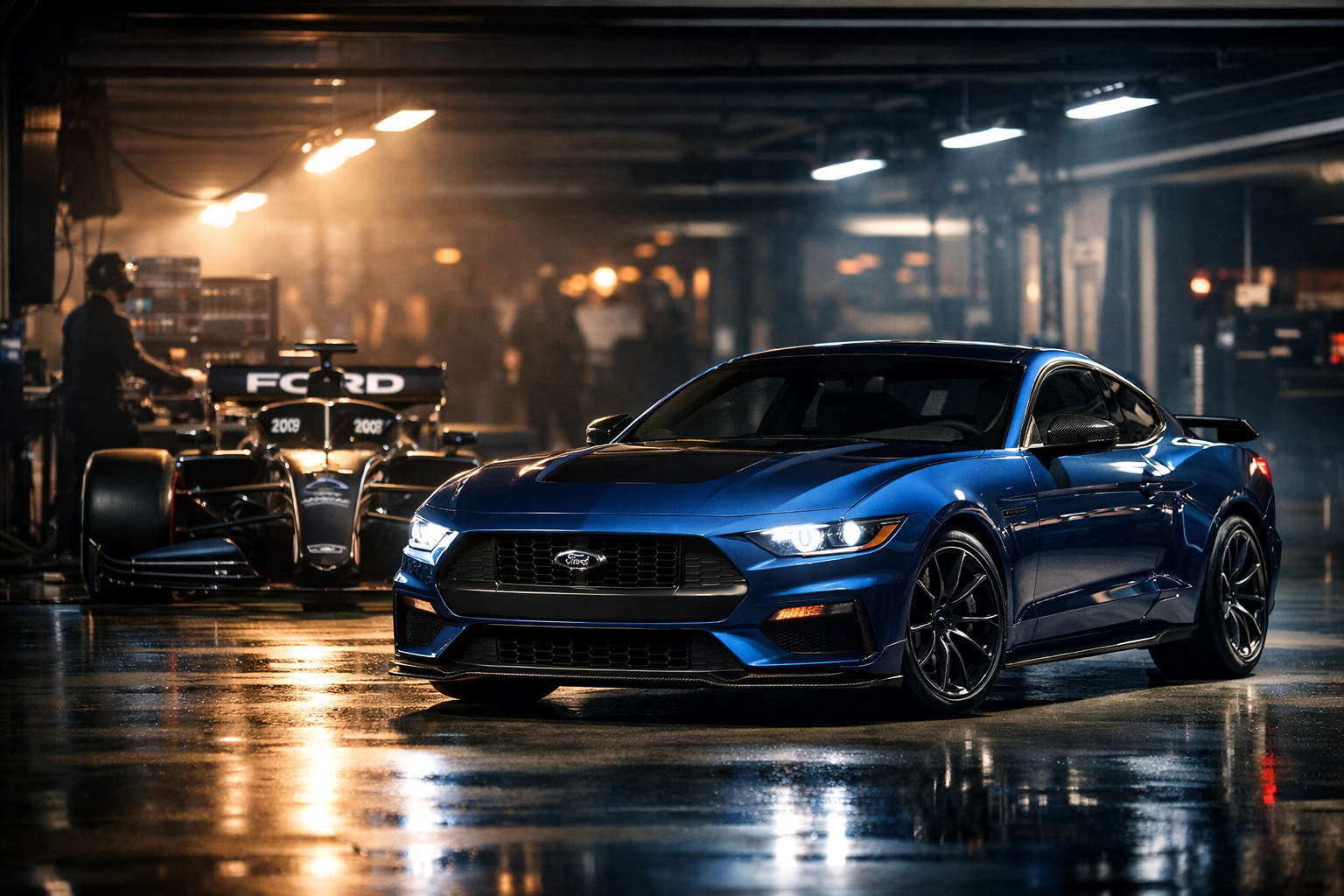
Here’s the spicy truth nobody in Dearborn marketing will put on a slide: Formula 1 isn’t about champagne and carbon fiber selfies anymore—it’s a rolling laboratory for hybrids. And Ford diving headfirst back into F1 isn’t nostalgia, it’s a calculated engineering land grab that could finally make your next hybrid feel less like an appliance and more like a proper machine. The reason you should care right now is simple: Ford F1 hybrid tech could fix the two things road-car hybrids still mess up—response and durability.
I’ve driven dozens of hybrids from Toyota, Honda, and Hyundai, and most are tuned to be efficient in the way beige paint is calming. Ford’s F1 partnership, openly championed by CEO Jim Farley, is about power density, thermal control, and software smarts learned the hard way at 10,000 rpm. If even 20 percent of that thinking trickles down to an Escape or F-150 Hybrid, Toyota should be nervously checking its spreadsheets.
This matters now because 2025 and 2026 are the years hybrids stop being a stopgap and start being the main event. EV adoption is wobbling, regulations aren’t, and buyers want efficiency without the charging faff. Ford F1 hybrid tech is Ford’s bet that racing can still make road cars better, not just louder.
Quick Specs
- Starting Price: starting around $33,000 (check manufacturer website for latest pricing)
- Engine: 2.5L Atkinson-cycle inline-4 + electric motor
- Power: approximately 200 hp / 155 lb-ft
- 0-60 mph: about 8.0 seconds
- Fuel Economy: 42 city / 36 highway mpg (EPA estimates)
Why Ford’s F1 Bet Isn’t About Lap Times
Modern F1 power units are 50 percent thermal efficiency monsters, squeezing absurd energy from fuel and waste heat. That’s not pub trivia—it’s exactly what road-car hybrids need to be better at when towing, climbing, or surviving Arizona summers. Ford isn’t chasing lap records; it’s chasing efficiency under abuse.
The hot take? This will help hybrids more than EVs in the next five years. Battery chemistry evolves slowly, but software, cooling, and energy recovery can leap forward fast, especially when F1 forces brutal reliability targets.
Ford F1 hybrid tech and the Jim Farley Factor
Jim Farley isn’t a suit who discovered cars via PowerPoint; he’s a genuine enthusiast with racing scars. He’s publicly framed F1 as a tech transfer program first and a branding exercise second, which already puts Ford ahead of rivals who treat motorsport like a logo-placement exercise. That attitude matters when engineers ask for budget.
Contrast that with Stellantis, where hybrids often feel like compliance cars, or even Mercedes, whose road hybrids are brilliant but eye-wateringly expensive. Ford wants scalable cleverness, not $120,000 science projects.
Energy Recovery: From MGU-K to Your Commute
F1’s MGU-K systems harvest energy under braking with surgical precision, something most road hybrids do with all the finesse of a nervous learner driver. The lessons here are about smoother regen blending and higher peak recovery without cooking components. Imagine regen that doesn’t feel like you’ve dragged an anchor.
This is where Ford can leapfrog Honda and Hyundai, whose hybrids are efficient but dynamically dull. For deeper nerdery on how this tech actually survives long-term use, bookmark our deep dive on F1 hybrid tech transfer.
Thermal Management: The Unsexy Game-Changer
Heat kills hybrids faster than mileage, and F1 is basically a PhD in thermal paranoia. Better cooling pathways, smarter heat reuse, and predictive software could mean Ford hybrids that don’t wilt after 150,000 miles. That’s real-world value, not brochure fluff.
If you’re worried about longevity, pair this with sensible upkeep like the advice in our hybrid maintenance guide, because fancy tech still hates neglect.
Software Is the New Camshaft
F1 hybrids live and die by software—energy deployment maps change corner by corner. Translate that to road cars and you get hybrids that anticipate hills, traffic, and driver intent. Toyota’s systems are robust, but conservative; Ford has a chance to be bolder.
The controversial bit? Software-defined drivetrains will matter more than raw horsepower numbers by 2028. Yes, I said it, and no, marketing departments aren’t ready for that conversation.
Who Should Be Worried: Toyota, Honda, and Mercedes
Toyota still builds the gold standard for reliability, Honda nails smoothness, and Mercedes flexes tech like a Silicon Valley startup with a lease plan. Ford’s angle is different: performance-informed efficiency at mass-market prices. If they get this right, a $40,000 Ford hybrid could embarrass a $60,000 luxury badge.
For context on how global manufacturing plays into this tech race, see our analysis of North American EV and hybrid production.
What This Means for 2026 Buyers
Expect quicker throttle response, better towing stability, and hybrids that feel less strangled when pushed. No, your Escape won’t sound like an F1 car, and thank God for that. But it might finally feel awake.
For official efficiency benchmarks as these models roll out, keep an eye on FuelEconomy.gov, and for Ford’s own roadmap, Ford’s official site is the place to check.
Pros
- Potential for sharper hybrid response and efficiency
- F1-driven focus on durability and thermal control
- Scalable tech for mass-market models
- Leadership that actually values motorsport engineering
Cons
- Tech transfer takes time—don’t expect miracles overnight
- Added complexity could raise repair costs if mishandled
- Marketing may oversell gains before they’re fully realized
The bottom line is this: Ford F1 hybrid tech isn’t about winning Sundays, it’s about making Mondays better behind the wheel. If Ford resists the urge to dilute the lessons with buzzwords and bean-counting, this partnership could finally make hybrids something enthusiasts tolerate—maybe even love. And that would be a win bigger than any trophy.