
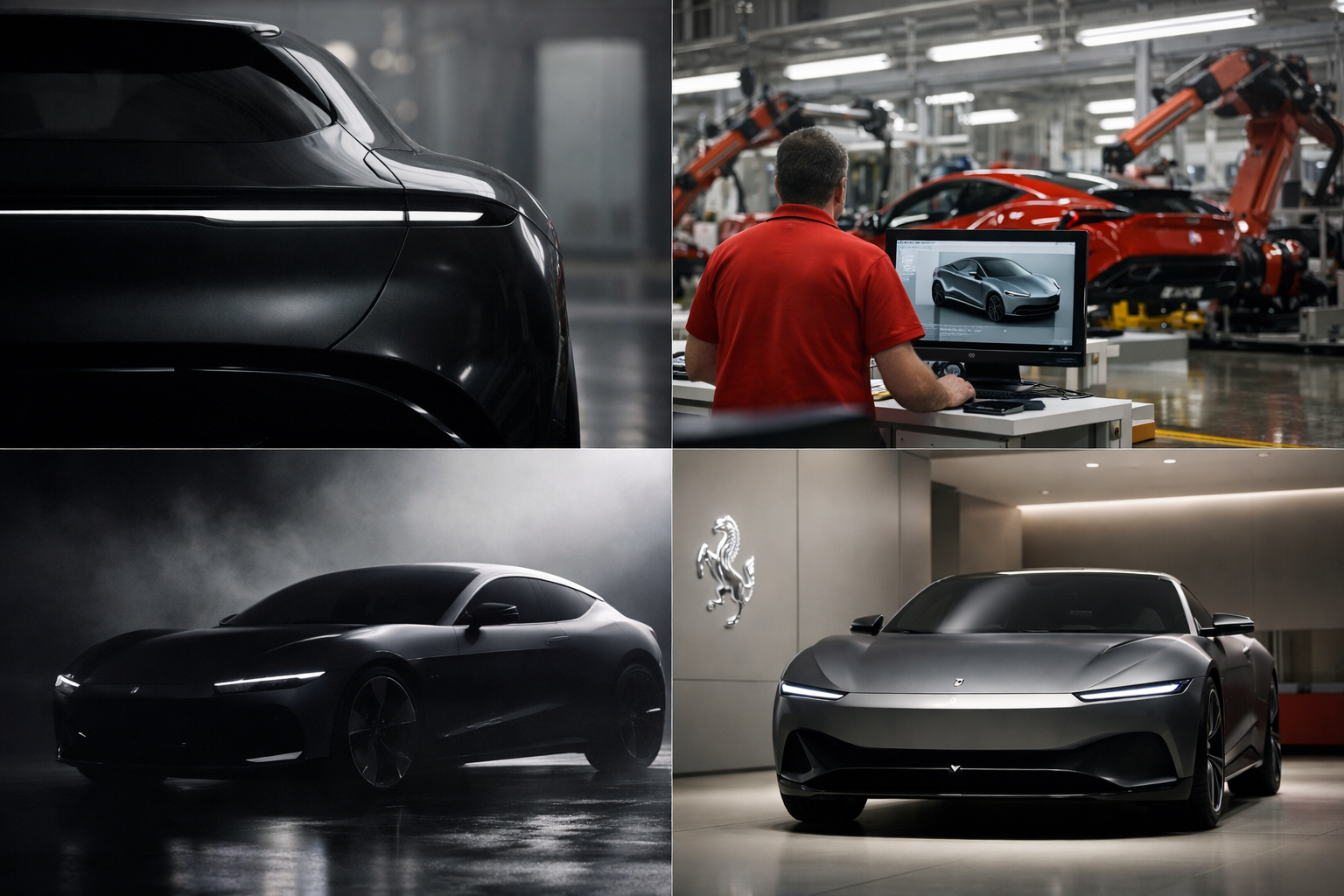
Ferrari pulled the wraps off its long-anticipated electric future on March 15, 2026, releasing the first official teaser of the Ferrari Luce EV ahead of a full debut expected later this year. The short video, published on Ferrari’s media site and social channels, reveals a low-slung grand tourer silhouette, a new lighting signature, and—most notably—an artificial soundscape developed in-house at Maranello.
This is not just another product launch. It marks Ferrari’s first fully electric production model in its 79-year history, a strategic pivot that CEO Benedetto Vigna first outlined in the company’s 2022–2026 industrial plan. According to Ferrari’s investor presentations and filings, EVs are targeted to make up 5% of sales in 2026, rising to 40% by 2030.
However, the teaser makes clear that Ferrari isn’t abandoning combustion overnight. Instead, the Luce appears positioned as a technological halo—one piece of a broader hybrid-heavy portfolio that still includes V8 and V12 engines. The question is whether Maranello can electrify without diluting the brand that commands average transaction prices north of €350,000, per company disclosures.
The Headlines
- What: Ferrari releases first teaser of its upcoming Luce electric vehicle
- Who: Ferrari N.V., led by CEO Benedetto Vigna
- When: Teaser published March 15, 2026; full reveal expected late 2026
- Impact: Signals Ferrari’s formal entry into the battery-electric supercar segment
- Key Number: 40% of Ferrari sales targeted to be electric by 2030
What Happened
The Ferrari electric car teaser runs just 90 seconds, but it’s packed with clues. The Luce—Italian for “light”—appears to be a four-door, four-seat grand tourer rather than a two-seat hypercar. Additionally, the proportions suggest a bespoke EV platform rather than a modified hybrid architecture.
Ferrari confirmed in a brief statement that the vehicle will be built at its new “e-building” facility in Maranello, inaugurated in 2024 and capable of producing ICE, hybrid, and electric models on the same line. According to Ferrari, the plant represents a €200 million investment aimed at increasing production flexibility.
CEO Benedetto Vigna has repeatedly emphasized software and sound as differentiators. In a 2025 interview with Reuters, Vigna said Ferrari would ensure its EVs deliver “unique driving emotions” rather than simply chasing range numbers. The teaser reinforces that claim with a synthetic yet unmistakably Ferrari-like soundtrack.
Notably absent from the teaser: battery capacity, range, horsepower, or pricing. Industry analysts cited by Bloomberg estimate the Luce could start above $500,000, positioning it above the SF90 Stradale and closer to limited-run models.
Why It Matters
The Ferrari Luce EV matters because Ferrari has more to lose than most automakers in the EV transition. Unlike mass-market brands, Ferrari sells fewer than 14,000 cars annually, according to its 2025 annual report. Scarcity and emotional appeal drive its margins—operating margins topped 25% in recent quarters, among the highest in the industry.
Therefore, an electric misstep wouldn’t just dent sales; it could undermine the brand’s pricing power. However, regulatory pressure is mounting. The European Union’s CO₂ fleet targets tighten through 2030, and while Ferrari benefits from low-volume manufacturer exemptions, those carve-outs shrink over time, per European Commission climate policy documents.
Additionally, global EV adoption is accelerating in key luxury markets. Europe EV registrations rose nearly 20% year-over-year in January 2026, according to our analysis in Europe EV Sales Surge: Nearly 20% in Jan 2026. China—where Ferrari has been expanding—remains the world’s largest EV market by volume.
In contrast, the ultra-luxury EV segment remains unproven. Rimac sells in tiny volumes. Lotus and Maserati are still ramping production. Porsche’s Taycan has seen fluctuating demand as pricing pressures intensify. Ferrari is entering a niche that is high-margin but also high-risk.
The Bigger Picture
Ferrari’s electrification roadmap has been gradual by design. In 2019, hybrids accounted for less than 10% of its mix. By 2025, that figure exceeded 50%, driven by models like the 296 GTB and SF90. The company plans for 40% EV, 40% hybrid, and 20% ICE by 2030.
However, this comes amid broader industry uncertainty. Lamborghini recently delayed its first EV, citing softer-than-expected demand in the high-performance electric segment, as we covered in Lamborghini EV Canceled: Supercar EV Demand Drops. That decision underscores a key risk: affluent buyers may not yet see electric power as aspirational in the same way as a V12.
Meanwhile, policy volatility adds another layer. U.S. and EU trade tensions and tariff discussions could affect battery sourcing and vehicle pricing, themes we’ve tracked in Auto Tariffs Buying Guide: Save on Car Prices 2026. Although Ferrari’s customers are less price-sensitive, supply chain costs still matter for margins.
Having covered three product cycles, I can tell you this pattern is familiar: Ferrari introduces new tech cautiously, limits early production, and then scales once exclusivity—and desirability—are assured. Expect the Luce to follow that playbook.
What the Competition Is Doing
Porsche remains the benchmark in performance EVs with the Taycan and upcoming electric 718. Porsche delivered over 40,000 Taycans globally in peak years, though 2025 volumes softened amid increased competition, according to company reports.
Meanwhile, Tesla continues to dominate EV mindshare, but it doesn’t compete directly at Ferrari’s price tier. The Model S Plaid offers extreme acceleration at under $100,000, but it lacks the craftsmanship and exclusivity Ferrari buyers demand. Still, Tesla sets expectations for software updates and charging infrastructure.
Additionally, Rimac’s Nevera proves electric hypercars can deliver 1,800+ horsepower and sub-2-second 0–60 mph times. However, Rimac’s annual production is measured in dozens, not thousands. Ferrari’s scale—roughly 14,000 units annually—gives it far greater brand visibility.
In contrast, Lamborghini is leaning heavily into hybrids before committing to full EVs later in the decade. Aston Martin plans its first EV in partnership with Lucid. Each brand is hedging differently, but all are watching how Ferrari’s first move lands.
What It Means for You
For most readers, the Ferrari Luce EV will remain aspirational rather than attainable. However, halo products shape technology that trickles down. Ferrari’s battery cooling, lightweight materials, and sound engineering will likely influence broader performance EV development over the next five years.
Additionally, ultra-luxury EV launches help normalize electric adoption among affluent buyers. That cultural shift matters. As we explain in Buying an EV 2026: Incentives, Range & Charging, infrastructure and incentives continue to evolve, and high-profile endorsements accelerate mainstream acceptance.
However, don’t expect Ferrari’s move to make EVs cheaper. If anything, it reinforces that electrification can command premium pricing when paired with brand equity and limited production.
What to Watch Next
First, watch for technical disclosures later in 2026: battery chemistry, supplier partnerships, and targeted range. Will Ferrari prioritize lightweight solid-state cells, or stick with high-performance lithium-ion packs? The answer will signal how aggressively it’s pushing the envelope.
Second, monitor order allocation strategy. Ferrari typically limits production to maintain exclusivity. If the Luce is capped at a few thousand units annually, it becomes a brand statement. If volumes approach 5,000 units per year, it becomes a strategic pillar.
Finally, pay attention to customer reception. Early reservation lists, resale values, and secondary market premiums will reveal whether collectors view the Ferrari Luce EV as the next Enzo—or as an interesting experiment.
The Upside
- Positions Ferrari for tightening global emissions standards
- Expands appeal in EV-forward markets like China and Northern Europe
- Leverages high margins to absorb battery development costs
- Reinforces Ferrari’s image as a technology leader
The Concerns
- Risk of alienating traditional V8 and V12 loyalists
- Uncertain demand for ultra-luxury EVs above $500,000
- High R&D costs with limited production volume
- Potential supply chain volatility for advanced battery materials
Ferrari doesn’t chase trends; it shapes them. The Ferrari Luce EV represents Maranello’s attempt to define what an electric supercar should feel like—not just how fast it accelerates. If Ferrari succeeds, it will legitimize EVs at the highest echelon of performance.
However, if buyers hesitate, expect rivals to double down on hybrids and delay full electrification. Either way, the next 24 months will reveal whether electricity can truly power the Prancing Horse into its next era without dimming its mystique.
Disclosure: This article may contain affiliate links. If you make a purchase through these links, we may earn a small commission at no extra cost to you. This helps support RevvedUpCars.com. Learn more.