
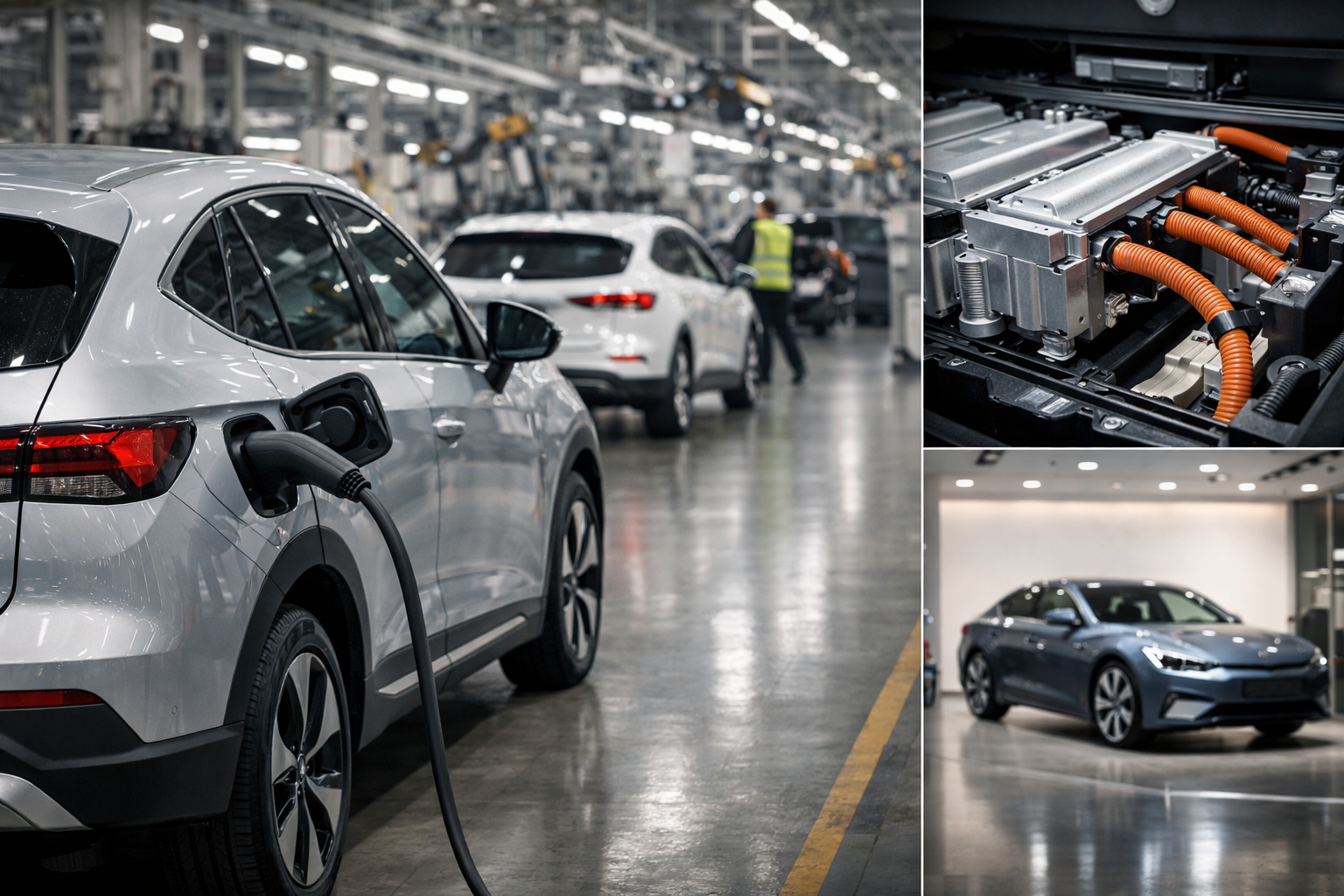
Europe’s electric car momentum is cooling. The Europe EV market share 2026 figure reached 18.8% in February, according to the European Automobile Manufacturers’ Association (ACEA), but growth has slowed sharply compared with the double-digit surges seen in 2023 and early 2024. That’s the headline from the latest ACEA February 2026 registrations data released in early April.
On paper, nearly one in five new cars registered in the EU is fully electric. However, year-over-year growth is now in the single digits in several major markets, and some countries are flat or declining. For an industry that promised an EV tipping point by mid-decade, this plateau raises uncomfortable questions about pricing, incentives, and consumer readiness.
The Headlines
- What: Battery-electric vehicles reached 18.8% of EU new-car registrations in February 2026
- Who: ACEA reporting on EU automakers including Volkswagen, Tesla, Stellantis, BMW
- When: February 2026 registrations, published April 2026
- Impact: EV growth is slowing despite a wave of new 2025–2026 models
- Key Number: 18.8% market share for BEVs in February 2026
What Happened
According to ACEA, battery-electric vehicles (BEVs) accounted for 18.8% of new EU registrations in February 2026, up modestly from roughly 18% a year earlier. Total BEV volumes rose slightly year over year, but far below the 30–50% annual growth rates seen during the post-pandemic rebound. Meanwhile, overall EU car sales were up approximately 6%, meaning EVs are no longer significantly outpacing the broader market.
Germany, Europe’s largest auto market, posted subdued EV growth following the abrupt end of federal purchase subsidies in late 2023. France saw incremental gains thanks to targeted incentives and local production support. In contrast, markets like Italy and Spain remain below the EU average for electric car adoption Europe, with infrastructure and affordability still major barriers.
Automakers had teed up 2025 and 2026 as breakthrough years. Volkswagen expanded its ID lineup, Stellantis rolled out lower-cost electric Peugeots and Fiats, and Renault launched updated Megane and Scenic EVs. Yet average transaction prices for BEVs in Europe remain higher than comparable internal combustion models, according to JATO Dynamics and Bloomberg reporting.
Why It Matters
The slowdown in Europe EV market share 2026 is not just a statistical blip. It signals that early adopters have largely bought in, and the next wave of mainstream buyers is more price-sensitive and infrastructure-conscious. Incentive fatigue is real: when Germany pulled its subsidies, BEV registrations dropped sharply the following months, as Reuters reported at the time.
Additionally, interest rates remain elevated compared with pre-2022 levels. Higher financing costs disproportionately affect EV buyers because sticker prices are typically €5,000–€10,000 above comparable gasoline cars. For many households, monthly payments matter more than long-term fuel savings—a reality we’ve explored in our guide to average new car payments in 2026.
Moreover, automakers face tightening EU CO₂ fleet targets in 2025–2027, which effectively require a higher mix of zero-emission vehicles. If consumer demand stalls, manufacturers may need to discount EVs aggressively or buy emissions credits, squeezing already thin margins.
The Bigger Picture
Europe remains ahead of the United States in EV penetration but trails China, where plug-in vehicles exceed 35% of new sales, according to the International Energy Agency. The European Union’s 2035 ban on new combustion-only cars still looms, backed by regulatory frameworks outlined by the European Commission. However, policy certainty has not fully translated into consumer urgency.
Historically, adoption curves flatten after initial rapid growth. Norway is the outlier, with over 80% BEV share, but it achieved that through sustained tax advantages and toll exemptions over a decade. In contrast, several large EU economies have scaled back incentives just as mass-market adoption was supposed to accelerate.
In fact, the broader auto sales analysis suggests that hybrid vehicles—especially mild and full hybrids—are capturing buyers who want efficiency without charging anxiety. Toyota and Hyundai have benefited from this middle-ground strategy, while pure-play EV brands face more volatility.
What the Competition Is Doing
Volkswagen Group, which controls roughly 25% of the EU market, continues to push its MEB-based EV platform but has signaled cost discipline after software delays and margin pressure. Its €25,000 ID.2all, due in 2026, aims squarely at the affordability gap. Meanwhile, Stellantis is leveraging its multi-energy platforms to offer electric and hybrid versions on the same production lines, hedging against demand swings.
Tesla, still a top-selling EV brand in Europe, has leaned on price cuts over the past two years to maintain volume. However, repeated discounting risks brand dilution and thinner margins, as highlighted in its earnings calls covered by Bloomberg. BMW and Mercedes, by contrast, are emphasizing premium EVs with higher transaction prices, betting that affluent buyers are less subsidy-dependent.
In contrast, Chinese brands such as BYD and MG are expanding in select European markets with competitively priced models. Trade tensions and potential tariffs could reshape that equation, echoing dynamics we’ve seen in other regions and covered in our analysis of China’s EV innovation and global impact.
What It Means for You
If you’re shopping in 2026, the cooling Europe EV market share 2026 growth could work in your favor. Slower demand often translates into dealer incentives, especially as automakers chase fleet emissions targets. However, not all brands discount equally—premium marques tend to protect pricing.
Additionally, check your national and regional incentives carefully. Some programs now include income caps or domestic production requirements. Before signing, it’s worth reviewing strategies to spot dealership pricing tricks and save money, especially as dealers juggle EV inventory.
Therefore, if you have reliable home charging and can secure a competitive finance rate, this may be a pragmatic time to buy. Conversely, if you rely on public charging and are highly price-sensitive, a hybrid may deliver better short-term value while the market stabilizes.
What to Watch Next
First, watch Germany. As the EU’s largest economy, its policy shifts disproportionately influence electric car adoption Europe. Any reinstatement of targeted incentives—or new corporate fleet mandates—could quickly move the needle.
Second, monitor the rollout of sub-€25,000 EVs from Volkswagen, Renault, and Stellantis between late 2026 and 2027. If these models hit promised price points without major compromises, they could reignite volume growth. However, production scale and battery sourcing will determine whether those targets are realistic.
Finally, keep an eye on interest rates and energy prices. Lower borrowing costs would immediately improve EV affordability, while volatile electricity prices could undermine one of the core economic arguments for going electric.
The Upside
- EVs now nearly one in five new cars in the EU
- More 2025–2026 models across price segments
- Potential for increased incentives and discounts
- Stronger charging infrastructure versus five years ago
The Concerns
- Growth slowing despite regulatory pressure
- Higher upfront prices and financing costs
- Inconsistent national incentives across EU markets
- Margin pressure could limit automaker investment
Having covered three product cycles, I’ve seen this pattern before: early momentum creates bold forecasts, then reality forces recalibration. The Europe EV market share 2026 data doesn’t signal failure—but it does mark the end of easy growth.
The next two to five years will test whether Europe can convert policy ambition into mainstream adoption. If affordable models and stable incentives align, 25–30% share by 2028 remains plausible. If not, automakers may find that electrification is less about dramatic surges—and more about grinding, incremental progress.
Disclosure: This article may contain affiliate links. If you make a purchase through these links, we may earn a small commission at no extra cost to you. This helps support RevvedUpCars.com. Learn more.