
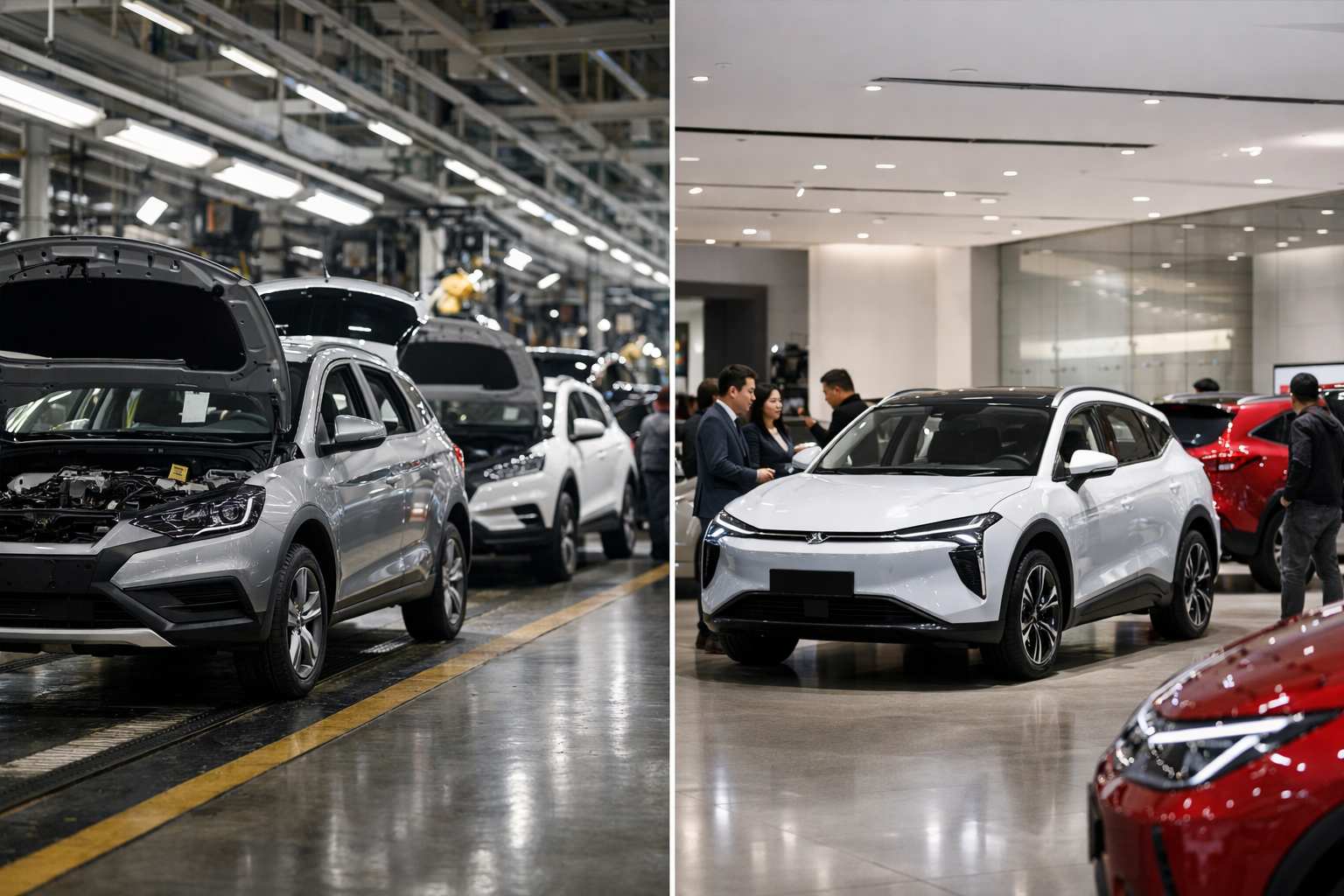
European automakers entered 2026 on shaky ground as Europe car sales 2026 data shows overall demand slipping while Chinese brands post double-digit gains. According to the European Automobile Manufacturers’ Association (ACEA), February registrations across the EU fell 3.2% year-over-year, marking the fourth consecutive monthly decline.
However, that headline masks a more disruptive shift: Chinese car brands Europe sales surged more than 35% in the same period, led by BYD, SAIC-owned MG, and Geely’s Volvo and Polestar affiliates, per Reuters. This isn’t just cyclical weakness. It’s a structural change in who wins European customers.
Notably, Dacia sales drop figures surprised analysts, with registrations down nearly 9% year-to-date despite its long-standing dominance in the budget segment. For a region that has relied on affordable small cars to stabilize volume, that’s a warning sign.
The Headlines
- What: EU car sales declined again in early 2026 while Chinese brands gained significant market share
- Who: ACEA, BYD, SAIC (MG), Geely, Dacia, Volkswagen Group, Stellantis
- When: February 2026 registration data released March 1, 2026
- Impact: Competitive pressure intensifies on Europe’s mass-market brands
- Key Number: +35% year-over-year sales growth for Chinese brands in Europe
What Happened
ACEA reported that total EU passenger car registrations reached approximately 900,000 units in February, down 3.2% from a year earlier. Germany and France both posted declines exceeding 4%, while Italy was roughly flat. Spain offered a rare bright spot with modest growth.
Meanwhile, Chinese automakers expanded aggressively. MG’s registrations rose nearly 40% year-over-year, according to ACEA data cited by Bloomberg. Additionally, BYD nearly doubled its European volume compared to early 2025, albeit from a smaller base.
Dacia, owned by Renault Group, saw a notable contraction. The Dacia sales drop was concentrated in the Sandero and Duster lines, long staples of Europe’s value segment. Renault executives acknowledged “intensifying competition in entry EVs and hybrids” during recent earnings commentary.
Furthermore, Volkswagen Group’s EV-heavy brands, including Cupra and Skoda, maintained stable volume but lost share in the sub-€25,000 category. Stellantis, which includes Peugeot, Opel, and Fiat, experienced mid-single-digit declines as it transitions several models to refreshed hybrid platforms.
Why It Matters
The Europe car sales 2026 slump is less about weak demand and more about redistribution. European buyers are still purchasing vehicles—but increasingly from new entrants offering aggressive pricing and longer standard equipment lists.
Chinese brands have leveraged lower battery costs and vertically integrated supply chains to undercut European rivals by €2,000 to €5,000 on comparable EVs. According to the International Energy Agency, Chinese battery pack prices averaged nearly 20% lower than European equivalents in 2025. That cost advantage translates directly to showroom pricing.
However, this isn’t purely about EVs. MG’s hybrid and gasoline crossovers have gained traction in southern Europe, where infrastructure gaps persist. In fact, many buyers appear less concerned about brand heritage and more focused on monthly payment affordability.
The Dacia sales drop underscores the pressure. For years, Dacia thrived by being the cheapest credible option. Now, Chinese brands are challenging that formula while offering more tech and longer warranties.
The Bigger Picture
Europe has seen competitive threats before—first from Japanese automakers in the 1980s, then Korean brands in the 2000s. Each wave followed a similar pattern: price-led entry, gradual quality gains, eventual normalization. Having covered three product cycles, I can tell you this pattern is familiar.
However, this time the scale is different. China is not just exporting cars; it controls significant portions of the global EV battery supply chain. Additionally, Europe’s tightening CO₂ regulations force local automakers to invest heavily in electrification, raising costs during a period of weak consumer confidence.
The European Commission has already launched investigations into Chinese EV subsidies, as reported by Reuters. Potential tariffs could reshape pricing dynamics, much like U.S. trade actions analyzed in our coverage of Supreme Court tariffs and car price impacts.
Meanwhile, consumer preferences are shifting toward hybrids amid charging concerns. Buyers worried about battery longevity are increasingly researching ownership costs, a topic we break down in hybrid battery life and replacement cost analysis. That trend benefits brands with efficient hybrid portfolios—an area where Toyota remains strong and Chinese brands are rapidly improving.
What the Competition Is Doing
Volkswagen Group is accelerating its €180 billion electrification plan through 2028, focusing on localized battery production in Germany and Spain. However, its ID-series pricing remains above many Chinese rivals in key markets.
Stellantis is leaning into cost-cutting and platform consolidation. The company aims to reduce EV production costs by 40% by 2027, according to investor presentations. Additionally, it’s expanding lower-cost Citroën and Fiat EV offerings to defend the entry segment.
Renault, facing the Dacia sales drop, is betting on the upcoming Renault 5 EV and affordable AmpR Small platform vehicles to regain share. Yet timelines matter—Chinese brands are already here, with dealer networks expanding across France, Germany, and the UK.
Toyota, notably, has avoided steep declines thanks to its hybrid dominance. In contrast, pure EV specialists like Tesla have seen European registrations fluctuate amid price adjustments and factory retooling.
What It Means for You
For European car buyers, competition is good news—at least short term. Increased supply and pricing pressure could translate into stronger incentives, particularly on outgoing 2025 model-year vehicles.
However, brand-new Chinese entries may carry resale-value uncertainty. Historically, new entrants experience steeper depreciation until brand trust stabilizes. Therefore, lease deals may offer lower risk than outright purchases for early adopters.
If you’re shopping in 2026, compare warranty terms carefully. Many Chinese brands offer 7-year coverage, outpacing some European rivals. Additionally, consider long-term software and parts support—areas where established automakers still hold advantages.
What to Watch Next
First, monitor the European Commission’s decision on potential anti-subsidy tariffs later this year. Even a 10–20% import duty could narrow Chinese pricing advantages significantly.
Second, track how quickly European automakers can launch sub-€25,000 EVs at scale. The Europe car sales 2026 trend suggests affordability will define winners through 2028.
Finally, keep an eye on dealer sentiment. As we’ve seen in U.S. markets with hesitation toward new entrants, explored in our dealer analysis of Chinese brands, retail networks can slow or accelerate adoption dramatically.
The Upside
- More competitive pricing across EV and hybrid segments
- Longer warranties and richer standard features
- Accelerated innovation from European incumbents
- Greater consumer choice in entry-level EVs
The Concerns
- Resale value uncertainty for new brands
- Potential tariff-driven price volatility
- Pressure on European jobs and suppliers
- Intensified price war squeezing automaker margins
The Europe car sales 2026 narrative isn’t just about a monthly dip—it’s about a competitive reset. European automakers still command engineering credibility and brand loyalty, but price discipline and speed to market will determine survival in the next five years.
Ultimately, this could mark the moment when Europe shifts from defending legacy dominance to fighting for relevance in its own backyard. The next 24 months will tell us whether this surge is a temporary spike—or a true turning point.
Disclosure: This article may contain affiliate links. If you make a purchase through these links, we may earn a small commission at no extra cost to you. This helps support RevvedUpCars.com. Learn more.