
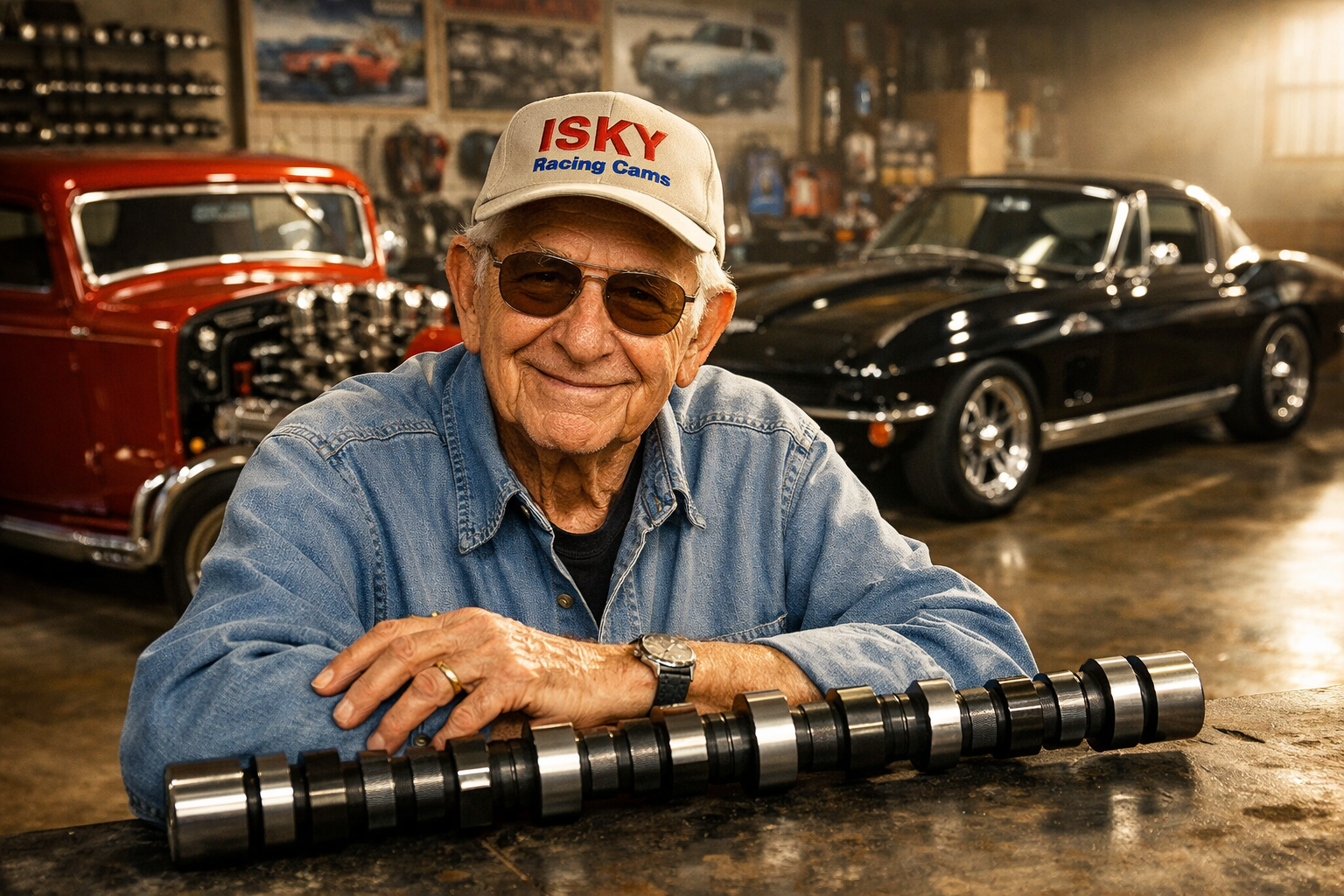
Hot take to start a bar fight: without Ed Iskenderian, your beloved V8 muscle car would rev like a lawn mower and make about as much drama. This isn’t romantic nostalgia either; it’s cold mechanical fact rooted in metal lobes, valve timing, and an obsessive Armenian-American hot-rodder who decided factory engines were embarrassingly timid. The legacy of Ed Iskenderian matters right now because even your 2025 Mustang GT or 2026 Camaro SS is still dancing to a rhythm he wrote decades ago.
I’ve driven dozens of performance cars, from 400-hp hot hatches to 700-hp super sedans, and the common thread isn’t turbo boost or software wizardry. It’s airflow, valve control, and engines breathing properly under load. Ed Iskenderian figured that out in the 1940s, when most automakers were still treating cams like afterthoughts and racers were desperate for cheap speed.
This is motorsports history with grease under its fingernails, not a corporate museum piece. While modern brands bang on about “holistic powertrain solutions,” Isky was in a shop grinding camshafts by hand, turning flathead Fords into dry-lakes weapons and accidentally creating the aftermarket performance industry as we know it.
Ed Iskenderian: The Camshaft Revolution Nobody Saw Coming
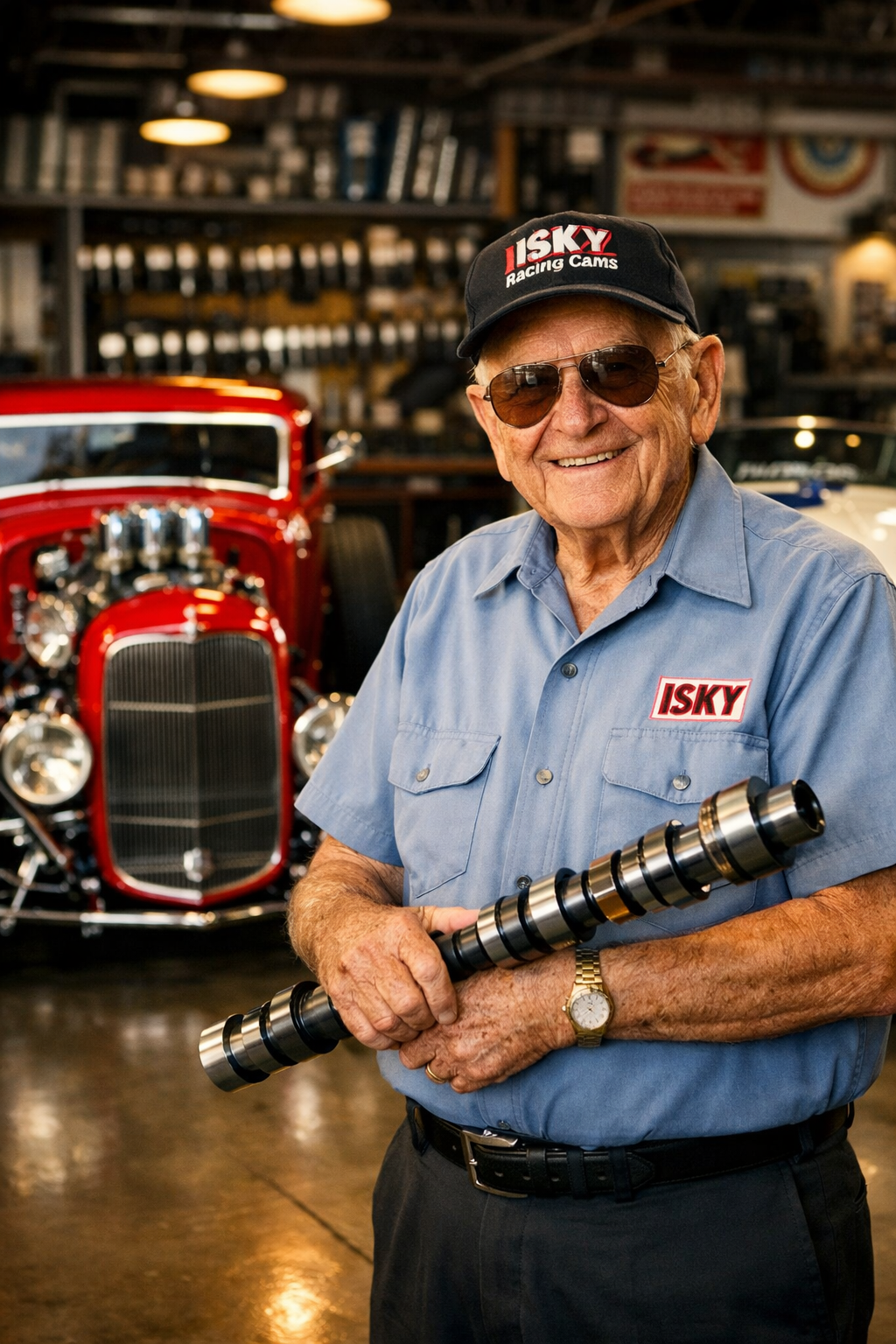
Back in the late 1940s, Ed Iskenderian looked at a flathead Ford and thought, “There’s free horsepower being left on the table.” His solution was brutally simple: regrind the camshaft to keep the valves open longer and higher, letting engines breathe above 4,000 rpm instead of wheezing themselves to death. Gains of 20–40 horsepower were common on engines barely making 100 hp to begin with, which is like adding 150 hp to a modern V8 overnight.
That’s why the nickname “Camfather” stuck. While competitors like Crower, Lunati, and later Comp Cams eventually joined the party, Isky was first, loudest, and most stubborn about doing it right. He wasn’t chasing marketing fluff; he was chasing lap times at Muroc Dry Lake and El Mirage.
Why Camshafts Matter More Than Horsepower Numbers
Here’s the part modern YouTube dyno charts don’t explain very well. A camshaft doesn’t just add power; it decides where and how an engine makes it. Isky cams transformed engines from torque-bound tractors into rev-happy animals that pulled hard past 6,000 rpm, long before overhead cams were common.
Even today, when a 2026 Corvette Z06 spins to 8,600 rpm, it’s obeying principles Iskenderian popularized. Valve overlap, lift, and duration are still the holy trinity, whether you’re tuning a small-block Chevy or obsessing over the future of combustion like we did in our deep dive on the V8’s survival. Software can’t fix bad breathing, no matter what a PR deck claims.
From Dry Lakes to Drag Strips: Motorsports History Forged in Steel
Isky’s fingerprints are all over American motorsports history. By the 1950s and ’60s, his camshafts were winning drag races, circle-track events, and Bonneville runs, often against better-funded factory-backed teams. When NHRA dragsters started cracking 200 mph, odds were there was an Isky cam controlling the chaos.
This wasn’t boutique racing either. These were parts you could buy for roughly $50–$100 back then, or around $300–$400 in today’s money, check Isky Camshafts’ official site for modern equivalents. That accessibility democratized speed, which is far more punk-rock than today’s locked ECUs and subscription horsepower.
The Aftermarket Industry Exists Because Isky Wouldn’t Shut Up
Here’s a controversial truth: OEMs didn’t lead performance innovation, they reacted to it. Iskenderian’s success embarrassed manufacturers into offering hotter factory cams, performance packages, and eventually entire sub-brands. Without Isky, you don’t get GM’s LS performance catalog or Ford Racing’s cams that add 40–60 hp with a Saturday afternoon install.
It’s the same cultural pressure that keeps cylinders alive today, which we explored in why V12 engines refuse to die. Enthusiasts push first, accountants follow later, usually kicking and screaming.
Old-School Grinding vs Modern CNC: Did We Lose Something?
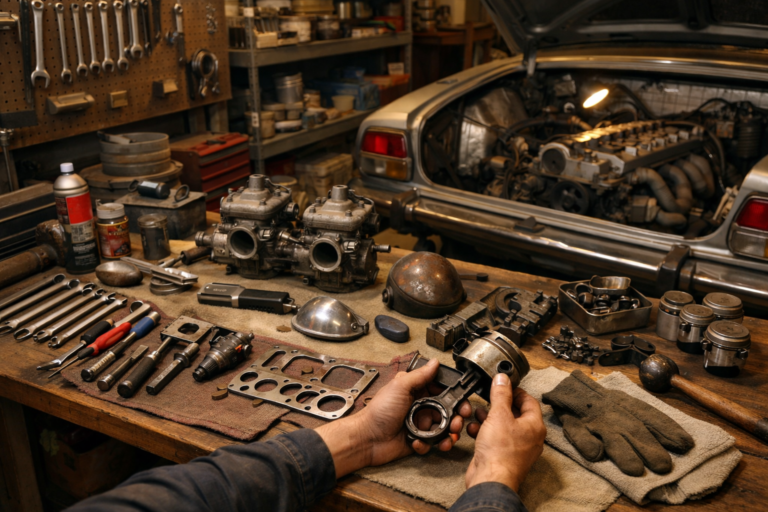
Modern camshafts are CNC-machined to absurd tolerances, and yes, they’re objectively better. But Isky’s old-school approach involved listening to engines, reading spark plugs, and tweaking profiles based on track results, not simulations. That human feedback loop is something we’ve quietly lost in the age of algorithm-led engineering.
Watch creators like Engine Masters or Richard Holdener, and you’ll see the ghost of Iskenderian in every cam swap test. The fundamentals haven’t changed, even if the tools have. The throttle still tells the truth, and bad cams still feel like a cat refusing to get off a warm sofa.
Ed Iskenderian’s Influence on Modern Performance Cars
Look at current performance heroes like the 2025 Mustang Dark Horse, the 2026 Porsche 911 GT3, or even AMG’s flat-plane experiments discussed in our Mercedes flat-plane V8 analysis. Aggressive cam profiles are central to their character, shaping sound, response, and top-end drama.
Manufacturers won’t admit it, but the emotional appeal of these cars comes from mechanical choices Isky normalized. Without that legacy, everything would feel turbo-smoothed and eerily competent, like driving an appliance with a loud exhaust.
The Man Himself: Stubborn, Brilliant, and Necessary
Ed Iskenderian lived past 100, and somehow that tracks. The man was famously stubborn, allergic to corporate nonsense, and deeply committed to hot-rodding as a craft. He didn’t chase trends; he set them, then watched the world catch up 20 years later.
That mindset is why his story still matters in 2026, when performance feels increasingly virtual. Hardware heroes like Isky remind us that speed starts with metal, math, and a willingness to break things until they’re faster.
Pros
- Revolutionized engine breathing and usable horsepower
- Made performance affordable and accessible
- Direct influence on modern OEM performance engines
- Enduring motorsports credibility across decades
Cons
- Old-school methods dismissed by modern engineers
- Hard to quantify influence in software-heavy cars
- Legacy often overshadowed by flashy modern tech
The final word is simple. Ed Iskenderian didn’t just change camshafts; he changed how we think about speed, effort, and mechanical honesty. Every time an engine snarls past 7,000 rpm and makes you grin like an idiot, you’re hearing an echo of the Camfather’s work.
Frequently Asked Questions
Who was Ed Iskenderian and why is he important?
Ed Iskenderian was a pioneering camshaft designer who helped create the aftermarket performance industry. His innovations boosted horsepower by 20–40% on early engines.
What did Ed Iskenderian invent?
He popularized high-performance camshaft regrinding, improving valve timing and airflow. This laid the groundwork for modern performance tuning.
How does Ed Iskenderian influence cars today?
Modern engines still rely on cam profiles based on principles he developed. Even 2025–2026 performance cars reflect his approach to airflow and RPM.
Are Isky camshafts still available?
Yes, Isky Camshafts still produces performance cams today. Availability and pricing vary by engine; check the manufacturer website for current details.