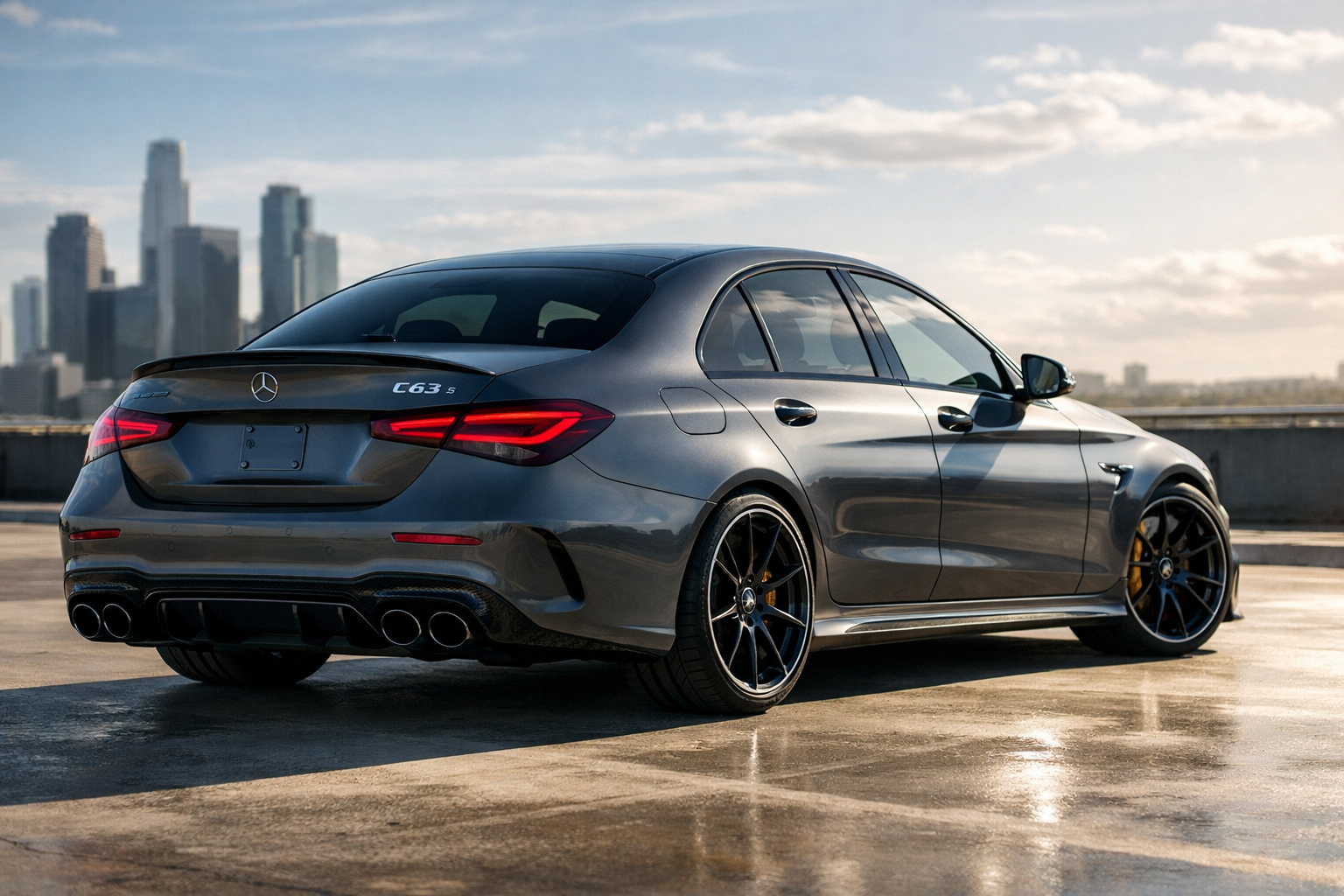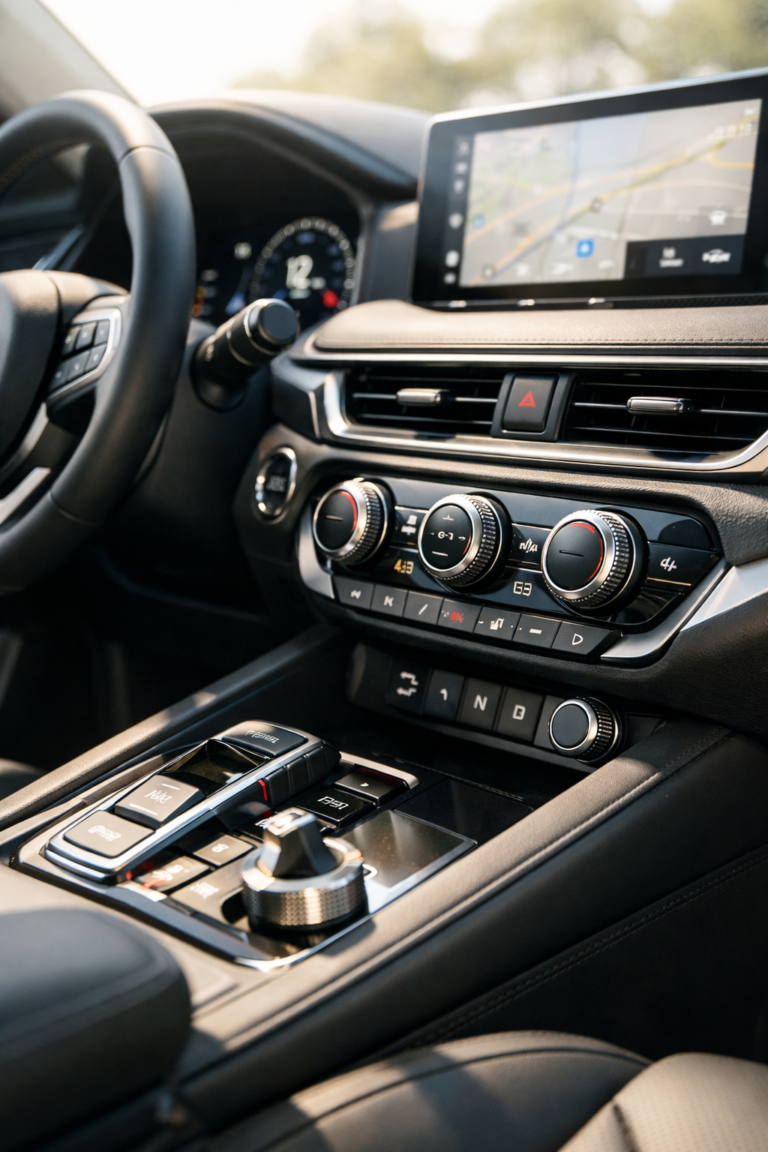

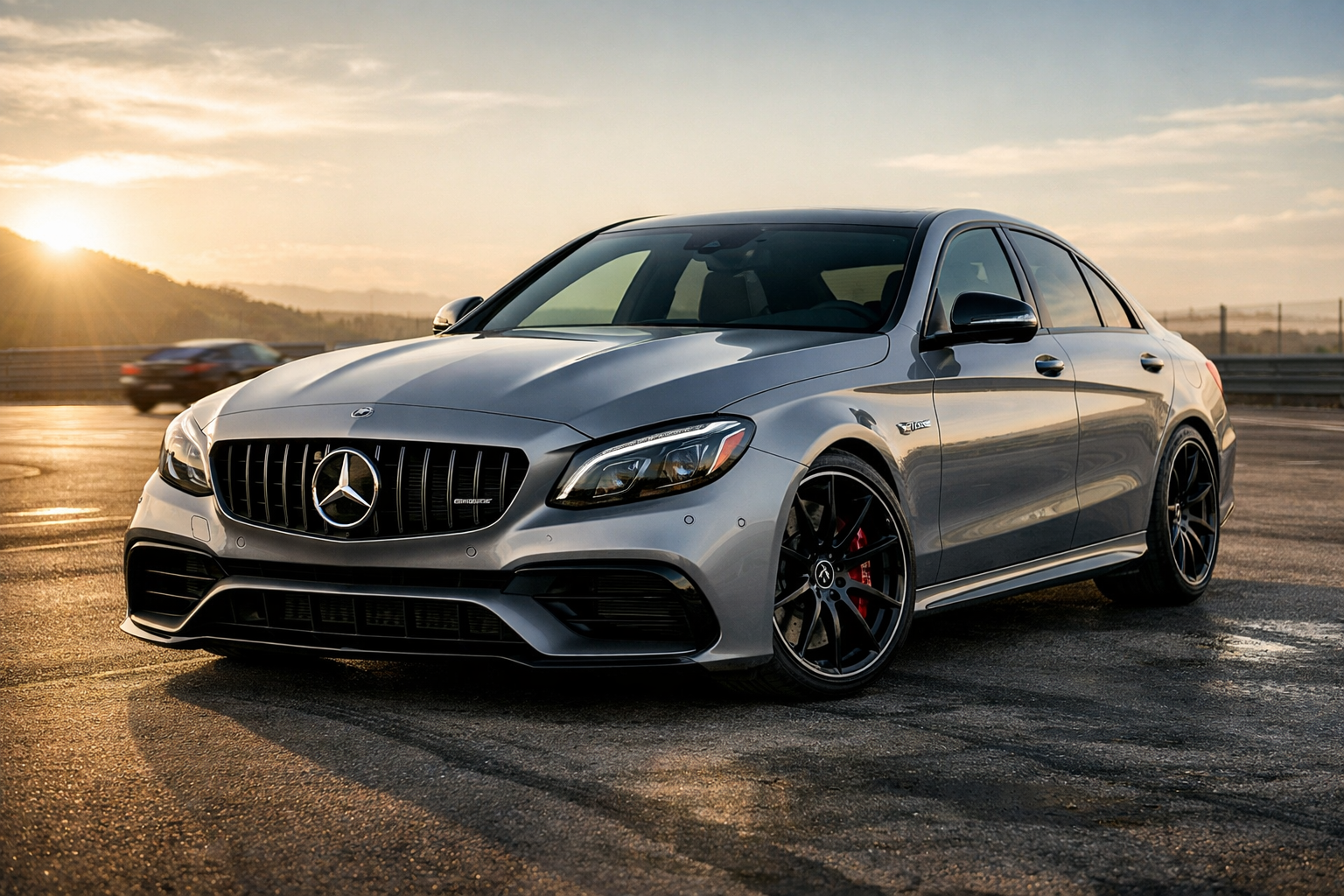
Mercedes built its reputation on stuffing thunderous V8s into sensible sedans. Then it decided the answer to tightening emissions rules was… a four-cylinder science experiment. The Mercedes C63 four cylinder wasn’t just a powertrain change; it was AMG poking its most loyal fans in the eye with a torque wrench.
This matters because the C63 has always been the hooligan in a tailored suit—the car bankers bought after watching too much Chris Harris. When Mercedes-AMG ripped out the V8 and replaced it with a turbocharged 2.0-liter hybrid setup for 2025 and 2026, it bet that horsepower numbers would drown out heartbreak. Spoiler alert: enthusiasts don’t buy AMGs with calculators.
Quick Specs
- Starting Price: Approximately $86,000 (check manufacturer website for latest pricing)
- Engine: 2.0L Turbocharged Inline-4 + Rear Electric Motor (PHEV)
- Power: 671 hp / 752 lb-ft
- 0-60 mph: 3.3 seconds
- Fuel Economy: Approximately 40+ MPGe / limited EV-only range
The Numbers Game That Missed the Point
On paper, the new C63 S E Performance is absurd. Six hundred seventy-one horsepower from a four-pot hybrid system is the sort of thing engineers brag about at Oktoberfest. It’s quicker to 60 mph than the old 503-hp twin-turbo V8 and nips at the heels of a BMW M3 Competition xDrive.
But here’s the problem: AMG customers didn’t wake up asking for a Formula 1-inspired battery pack. They wanted noise, drama, and that basso profundo V8 rumble that made Audi RS5 owners question their life choices. Numbers win drag races; character wins hearts.
Why the Mercedes C63 Four Cylinder Feels Like a Strategy Mistake
The Mercedes C63 four cylinder exists because of emissions targets and fleet averages, not because enthusiasts begged for it. AMG’s strategy was to showcase technical superiority—electric turbo, rear-axle motor, trick cooling systems—like a Doug DeMuro quirks video come to life. It’s clever, yes, but it feels engineered to impress regulators before drivers.
Meanwhile, BMW stuck with a 3.0-liter twin-turbo inline-six in the M3. Cadillac doubled down on a supercharged 6.2-liter V8 in the CT5-V Blackwing. Even Alfa Romeo’s Giulia Quadrifoglio clings to its Ferrari-derived V6 like it’s a family heirloom. Mercedes zigged while everyone else proudly zagged.
The Weight Problem Nobody Wants to Talk About
Here’s the dirty secret: the hybrid hardware makes the C63 a heavyweight. At roughly 4,650 pounds, it’s carrying around the mass of a small moon compared to the old V8 car. You feel it in tight corners, where the chassis works overtime to mask physics.
I’ve hustled performance sedans on track, and weight is the enemy of joy. The steering can be sharp, the rear-wheel steering clever, but you can’t cheat mass forever. It’s like watching a heavyweight boxer try ballet—impressive, but faintly ridiculous.
Sound and Fury, Signifying… Speakers
The old C63’s 4.0-liter biturbo V8 was a rock concert with license plates. The new car? It pipes augmented engine noise through the speakers and synthesizes emotion. If you’ve read our take on why touchscreens went too far in cars, you’ll know how I feel about replacing authentic sensations with software.
Yes, the four-cylinder is technically fascinating. But when a Hyundai Elantra N can make you grin with crackles and pops, a near-$90,000 AMG shouldn’t need a digital soundtrack. This is AMG, not a gaming PC.
AMG’s Identity Crisis in the EV Era
The Mercedes C63 four cylinder isn’t happening in isolation. Mercedes is pivoting hard toward electrification, as seen in the bonkers 1,000+ hp AMG Electric SUV. The writing’s on the wall: batteries are the future in Affalterbach.
And I get it. Regulations in Europe and China are brutal, and Mercedes needs to hit targets to avoid fines. But there’s a difference between evolving and amputating a core limb of your brand.
The Hot Take: This Isn’t About Cylinders
Here’s my controversial opinion: enthusiasts would have accepted fewer cylinders if the soul remained intact. Porsche went from flat-sixes to turbo flat-fours in the 718 and survived because the cars still felt alive. The issue with the Mercedes C63 four cylinder isn’t math—it’s emotion.
AMG used to be about excess. Loud pipes, smoky burnouts, and engines that felt slightly unhinged. Now it’s about kilowatts, battery cooling circuits, and corporate sustainability slides. Necessary? Probably. Inspiring? Not quite.
Value vs. the Competition
Starting around $86,000, the C63 undercuts some rivals but not dramatically. A BMW M3 Competition xDrive starts in the low $80,000s. The Cadillac CT5-V Blackwing hovers in the mid-$90,000 range but brings a 668-hp supercharged V8 and a manual gearbox. The Audi RS5 Sportback sits closer to $80,000 with a 444-hp twin-turbo V6.
On pure performance-per-dollar, the AMG looks strong. But cars like the Blackwing offer something rarer in 2026: authenticity. And in a world where even V12s are clinging to relevance—just look at our piece on the future of V12 engines—authenticity matters more than ever.
Pros
- Staggering 671 hp output from compact hybrid setup
- Blistering 0-60 mph in 3.3 seconds
- Advanced chassis tech with rear-wheel steering
- Improved efficiency versus old V8 (see FuelEconomy.gov)
Cons
- Significant weight gain dulls agility
- Synthetic exhaust note lacks character
- Alienates traditional AMG loyalists
What Mercedes Should Have Done
If I were in Affalterbach with a whiteboard and a strong espresso, I’d have kept the V8 for one more generation while developing a truly emotional EV replacement. Or offer both: a purist model and a hybrid tech showcase. BMW manages complexity; so can Mercedes.
The official specs and updates are always available on the Mercedes-Benz global website, but spec sheets don’t tell the whole story. Driving feel does. And right now, AMG feels like it’s arguing with its own heritage.
Conclusion: A Lesson in Listening
The Mercedes C63 four cylinder proves that more power doesn’t automatically mean more passion. It’s a technical masterpiece wrapped in a question mark. AMG misread its core audience by assuming enthusiasts would trade cylinders for complexity without mourning the loss.
This car isn’t bad—far from it. But it’s the first C63 that feels like it was engineered to win a boardroom debate rather than a pub argument. And that, more than the missing V8, is what stings.
Frequently Asked Questions
Why did Mercedes switch to a four-cylinder in the C63?
Primarily for emissions and fleet-average CO2 targets. The 2.0L hybrid setup allows Mercedes-AMG to meet stricter global regulations while still producing 671 hp.
How much horsepower does the Mercedes C63 four cylinder make?
The current C63 S E Performance produces 671 horsepower and 752 lb-ft of torque from a turbocharged 2.0L engine paired with a rear electric motor.
Is the new C63 faster than the old V8 model?
Yes. The hybrid C63 can hit 0-60 mph in about 3.3 seconds, making it quicker in a straight line than the previous 4.0L V8 version.
How does it compare to the BMW M3 and CT5-V Blackwing?
The C63 has more horsepower than both, but the M3 offers lighter weight and balance, while the CT5-V Blackwing delivers classic V8 character and an available manual transmission.