
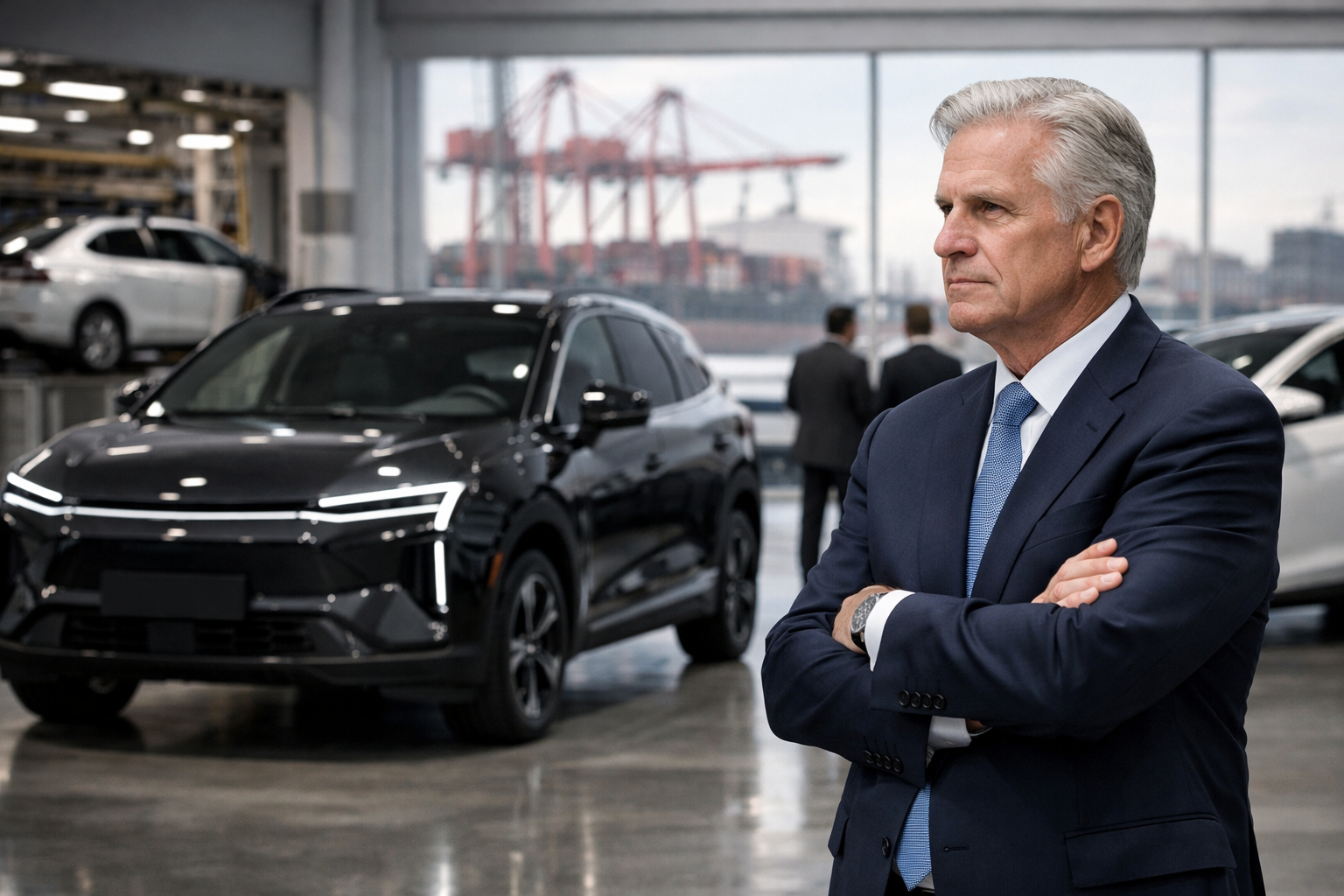
AutoNation, the largest dealership group in the country, says it is in no rush to put Chinese cars in US showrooms—even as lower-priced EVs from China reshape markets in Europe and Latin America. During its February 20, 2026 earnings call, executives signaled caution, citing tariffs, regulatory uncertainty, and brand trust as major hurdles.
That hesitation matters. AutoNation sold roughly 600,000 vehicles in 2025, according to company filings, and operates more than 300 stores across the U.S. If the biggest retail gatekeeper isn’t eager to embrace Chinese imports, it complicates any near-term expansion plans for brands like BYD, SAIC’s MG, or Geely-backed Zeekr.
Moreover, this isn’t just about one dealer group. It’s a window into how the broader U.S. auto retail sector views pricing pressure, political risk, and the rapidly evolving EV imports landscape in the US auto market 2026.
The Headlines
- What: AutoNation signals reluctance to retail Chinese-branded vehicles in the U.S.
- Who: AutoNation; Chinese automakers including BYD, SAIC, and Geely
- When: Comments made during February 20, 2026 earnings call
- Impact: Slows potential rollout of low-cost Chinese EV imports into mainstream U.S. dealerships
- Key Number: 100% — current U.S. tariff on Chinese-made EVs
What Happened
On its Q4 2025 earnings call, AutoNation CEO Mike Manley addressed analyst questions about whether the retailer would partner with Chinese automakers looking to enter the U.S. market. He emphasized that current trade barriers and “brand acceptance challenges” make such partnerships unlikely in the near term.
“We evaluate all opportunities, but today the economics and regulatory backdrop around Chinese imports make them difficult to justify at scale,” Manley said, according to a transcript reviewed by analysts.
Notably, the Biden administration’s 100% tariff on Chinese electric vehicles—announced in May 2024 and detailed by Reuters—remains in place as of early 2026. Additionally, battery components face separate duties, and vehicles assembled in China do not qualify for federal EV tax credits under current Treasury guidance.
Furthermore, NHTSA certification, dealer franchise laws, and state-by-state distribution rules add layers of complexity. According to NHTSA, any new entrant must meet Federal Motor Vehicle Safety Standards before retail sale, a process that can take years.
AutoNation’s stance echoes reporting we covered in our earlier analysis of dealer skepticism toward Chinese brands, where executives cited political risk and uncertain resale values as sticking points.
Why It Matters
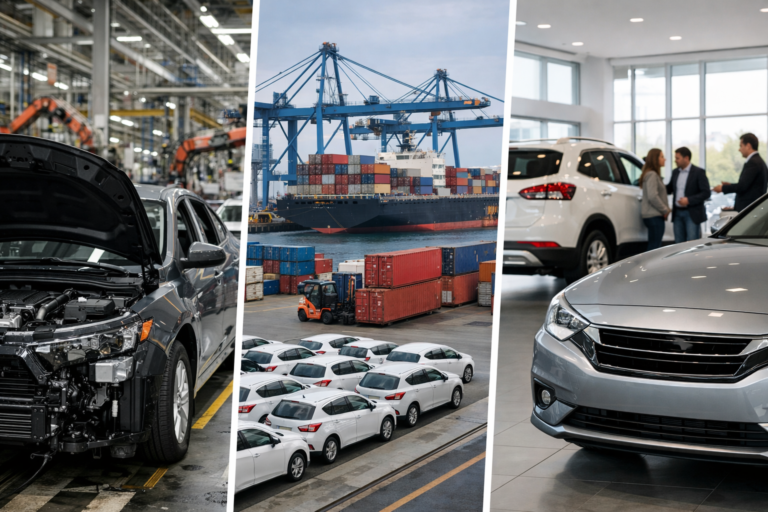
Dealers are the gatekeepers of the U.S. auto market. Unlike Europe, where direct-to-consumer models are more common, most states require franchised dealers. Therefore, without buy-in from groups like AutoNation, Penske Automotive, or Lithia Motors, scaling Chinese cars in US retail channels becomes exponentially harder.
Meanwhile, pricing is the elephant in the room. Chinese EVs have undercut competitors abroad by 15% to 30%, according to Bloomberg estimates. In theory, a $25,000 compact EV could disrupt a market where the average transaction price still hovers around $47,000, per Cox Automotive data.
However, once you layer in a 100% tariff, logistics costs, and dealer margins, that pricing advantage evaporates. A $25,000 vehicle becomes $50,000 before shipping and retail markup. As a result, the economic case weakens dramatically.
Additionally, dealers worry about residual values. Having covered three product cycles, I can tell you resale risk can make or break a new brand. If lenders won’t offer competitive lease terms, monthly payments spike—even if MSRP looks attractive.
The Bigger Picture
This debate unfolds against a shifting regulatory backdrop. The EPA emissions policy adjustments for 2026 have already created uncertainty around compliance strategies. Some automakers are doubling down on hybrids, as seen in models like the 2026 Honda Civic Sport Hybrid, while others reassess EV timelines.
Globally, Chinese automakers now account for more than 30% of worldwide EV sales, according to the International Energy Agency’s 2025 outlook. BYD alone sold over 3 million electrified vehicles in 2025, surpassing Tesla in global volume. In contrast, their U.S. footprint remains minimal, largely confined to buses and commercial fleets.
Moreover, geopolitics plays a decisive role. Trade tensions have intensified scrutiny of Chinese technology, including connected vehicle data security. Congress has floated additional restrictions on Chinese-made software in vehicles, a move that could further deter dealership groups.
In fact, the non-obvious insight here is that dealers may be less worried about competition and more worried about stranded investment. If policy shifts again after the 2026 election cycle, franchise partners could be left holding inventory they can’t move.
What the Competition Is Doing
While AutoNation pumps the brakes, other players are exploring alternative routes. Tesla continues to localize production in North America, insulating itself from China-specific tariffs despite its Shanghai exports. Meanwhile, Ford and GM are lobbying for domestic battery incentives while scaling back some EV capacity targets for 2026 and 2027.
Additionally, Hyundai and Kia—already established in the U.S.—have expanded U.S.-based EV production in Georgia to qualify for federal credits. That strategy avoids the tariff trap entirely.
In contrast, Chinese brands are pursuing indirect entry. Reports indicate some are considering Mexican assembly plants to leverage USMCA trade rules, though final regulatory interpretations remain unclear. If successful, that could bypass the 100% tariff, dramatically changing the math.
Therefore, the competitive chessboard isn’t static. The question isn’t whether Chinese automakers want in—it’s whether they can find a compliant, politically viable path.
What It Means for You
For consumers hoping that Chinese cars in US showrooms would trigger a price war, patience is required. In 2026, your choices remain dominated by domestic brands, established Asian automakers, and Tesla.
However, competitive pressure still matters. Even the threat of low-cost imports pushes incumbents to sharpen pricing and improve features. We’ve already seen more aggressive lease deals on compact EVs and hybrids as automakers chase volume.
If you’re shopping for an EV under $35,000, your best bets remain U.S.-built models that qualify for incentives. Additionally, consider hybrids if charging infrastructure or long-term battery durability concerns you.
What to Watch Next
First, monitor trade policy. Any reduction—or expansion—of tariffs will instantly reshape the viability of Chinese cars in US dealerships. Second, watch for Mexican or Southeast Asian production announcements from Chinese automakers aiming to sidestep direct tariffs.
Additionally, keep an eye on dealer sentiment. If Lithia or Penske signals openness to pilot programs, that would mark a significant shift. Finally, regulatory clarity from NHTSA and Treasury on software and sourcing rules could accelerate or stall entry timelines.
The Upside
- Protects domestic manufacturers and U.S. jobs in the short term
- Reduces sudden resale value shocks for consumers
- Gives regulators time to assess safety and data-security concerns
- Encourages local production investment
The Concerns
- Limits low-cost EV options for American buyers
- Reduces competitive pricing pressure
- Risks isolating U.S. market from global EV innovation
- Could provoke retaliatory trade measures
AutoNation’s caution signals that Chinese cars in US retail channels face more than consumer skepticism—they face structural barriers embedded in trade policy and franchise law. Unless tariffs ease or production shifts closer to home, the 2026 U.S. auto market will remain largely insulated from China’s EV surge.
Having covered multiple waves of “the next big import threat,” I’ve learned this: market entry is rarely about product alone. It’s about politics, partnerships, and patience. For now, the gatekeepers are holding the line.
Disclosure: This article may contain affiliate links. If you make a purchase through these links, we may earn a small commission at no extra cost to you. This helps support RevvedUpCars.com. Learn more.