
You’re standing on a dealership lot, staring at a shiny 2026 SUV with a window sticker that looks like a mortgage payment. The salesperson says, “It’s top-rated.” But rated by who? Understanding Consumer Reports car testing is how you separate real-world quality from marketing fluff.
I’ve had cars in my shop that were “award winners” and still ate transmissions at 60,000 miles. I’ve also seen boring sedans with sky-high reliability scores run 300,000 miles with basic maintenance. Today I’m going to break down how cars are tested, what those car reliability ratings actually mean, and how to use that info to keep thousands of dollars in your pocket.
What You’ll Need
- Tools: Laptop or phone, notebook, calculator (yes, old-school math helps)
- Parts/Materials: Access to Consumer Reports subscription ($39–$59/year)
- Time: 1–2 hours of research per vehicle
- Difficulty: 🔧🔧 (easy, but requires attention)
- Dealer Cost: Overpaying by $2,000–$5,000 on the wrong car vs DIY Research Cost: $59 — You Save: Potentially $4,941+
Why This Matters
Consumer Reports car testing isn’t about who has the flashiest touchscreen. It’s about long-term reliability, owner satisfaction, safety, and road-test performance. Ignore that, and you could end up financing a headache for 72 months.
In 20 years of wrenching, I’ve seen low-reliability SUVs rack up $3,500 in repairs before 100,000 miles. Transmission rebuild? $4,000. Turbo replacement? $2,200. Meanwhile, high-reliability models often just need oil, brakes, and tires.
Reliability data matters most if you plan to keep a car past 5 years or 60,000 miles. That’s when warranties expire and the real personality of a vehicle shows up. If you’re buying used, it matters even more.
Before You Start
Before you treat any score like gospel, understand what goes into it.
⚠️ WARNING: Don’t rely on a single number. A high overall score doesn’t automatically mean high reliability. I’ve seen buyers assume “90/100” means bulletproof — then they’re shocked when electrical gremlins hit.
Consumer Reports buys most of its test vehicles anonymously (not manufacturer freebies), runs instrumented track tests, emergency handling drills, braking distance checks, and fuel economy verification. They also survey hundreds of thousands of owners for real-world data. You can review their methodology directly at Consumer Reports.
Also cross-check safety recalls at NHTSA.gov. I don’t care how high the score is — multiple open recalls are a red flag.
Step-by-Step Guide
-
Start With Reliability History (Not the Overall Score)
Look at 3–5 model years back. If a 2026 model is redesigned, check the outgoing generation. New designs often have first-year bugs. Pro Tip: First-year redesigns are like beta-testing software — fun, but risky. -
Study the Trouble Spots
Consumer Reports breaks down issues: engine, transmission, electronics, climate system, suspension. A car might score high overall but show “red” in infotainment. That’s annoying. “Red” in transmission? That’s a $4,000 problem. -
Compare Road Test Scores
Braking distance, emergency handling, ride quality — these matter for safety. Shorter stopping distances can mean the difference between a close call and an insurance claim. -
Check Owner Satisfaction
Would owners buy it again? That question tells you what it’s like to live with. Numbers don’t lie — regret is expensive. -
Cross-Reference With Real-World Ownership Costs
Use EPA fuel economy at EPA.gov and compare insurance quotes. A sporty turbo SUV might cost $600 more per year in fuel alone. -
Use the Data as Negotiation Ammo
If a vehicle has average reliability ratings, that’s leverage. Combine this with my guide on Spot Dealership Pricing Tricks & Save Money and you’ll walk in prepared, not pressured.
That’s how you turn Consumer Reports car testing from trivia into a money-saving weapon.
Common Mistakes to Avoid
- Buying Based on Brand Reputation Alone
I’ve seen “reliable brands” put out bad years. Every manufacturer has an off season. - Ignoring Redesign Years
All-new powertrains can have teething problems. I’ve replaced enough first-year CVTs to pay for my kid’s braces. - Overvaluing Tech Scores
Fancy screens don’t equal longevity. Just look at how automakers are rethinking controls in articles like Ferrari physical buttons Return: Cost, Safety. - Skipping Recall Checks
Even high-rated models get recalls. Stay current — see trends in pieces like Ford recalls 2026: What’s Going Wrong?.
When to Call a Professional
If you’re buying used and the model shows below-average reliability for engine or transmission, pay $150–$250 for a pre-purchase inspection. That’s cheap insurance.
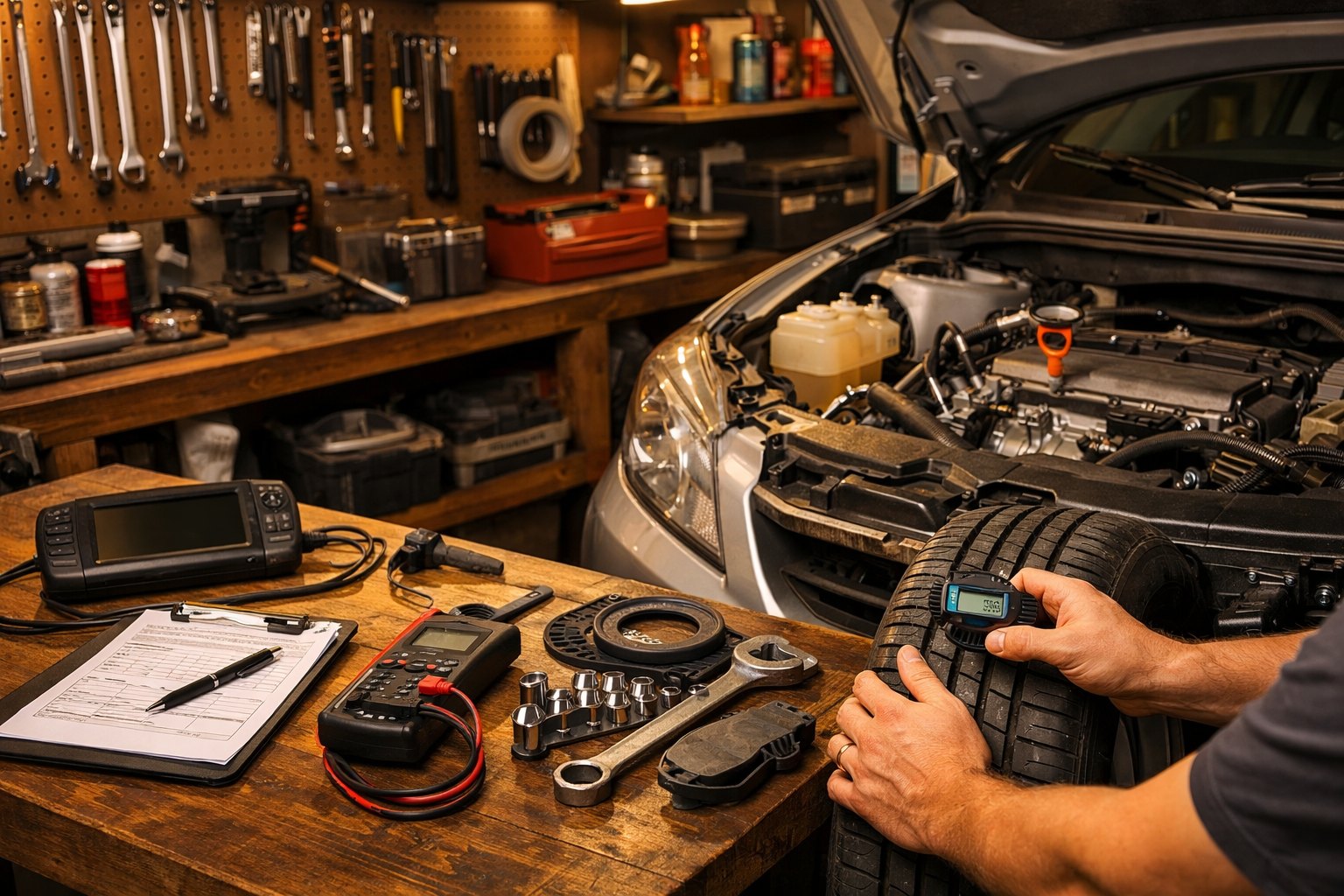
A fair inspection includes scanning for OBD2 codes, checking for leaks, measuring brake life, and looking underneath for rust or accident damage. If a seller refuses inspection? Walk away.
Ask the mechanic: “Are there common failure points on this year?” A seasoned tech will know. If they shrug, find another shop — preferably ASE-certified (verify at ASE.com).
Recommended Products
- Consumer Reports Digital Membership ($39–$59/year) — Pays for itself if it helps you avoid one bad car.
- OBD2 Scanner (BlueDriver, ~$120) — What I use in my own garage for quick health checks.
- Pre-Purchase Inspection ($150–$250) — Budget option: local independent shop. Premium option: dealer inspection ($300–$400).
- Vehicle History Report ($25–$40) — Not perfect, but better than guessing.
Do This
- Check 3–5 years of reliability history
- Focus on engine and transmission ratings first
- Verify recalls at NHTSA
- Use average scores as price leverage
Don’t Do This
- Buy a first-year redesign blindly
- Assume luxury equals reliability
- Ignore owner satisfaction data
- Skip a pre-purchase inspection
Here’s the bottom line: Consumer Reports car testing gives you the blueprint. But you’ve got to read it like a mechanic, not a marketer. Look past the shiny overall score and dig into reliability trends.
If you’re pairing smart research with solid negotiation, check out How to Buy or Sell Car 2026: Smart Tips. Stack good data with good strategy, and you’ll beat the system.
You don’t need to be a mechanic to buy a smart car — just a little patient and a little skeptical. Do the homework, trust the data, and don’t let a smooth-talking salesperson rush you. Drop your questions in the comments if you’re stuck between two models. Stay sharp out there — a $59 research subscription beats a $4,000 repair bill every single time.