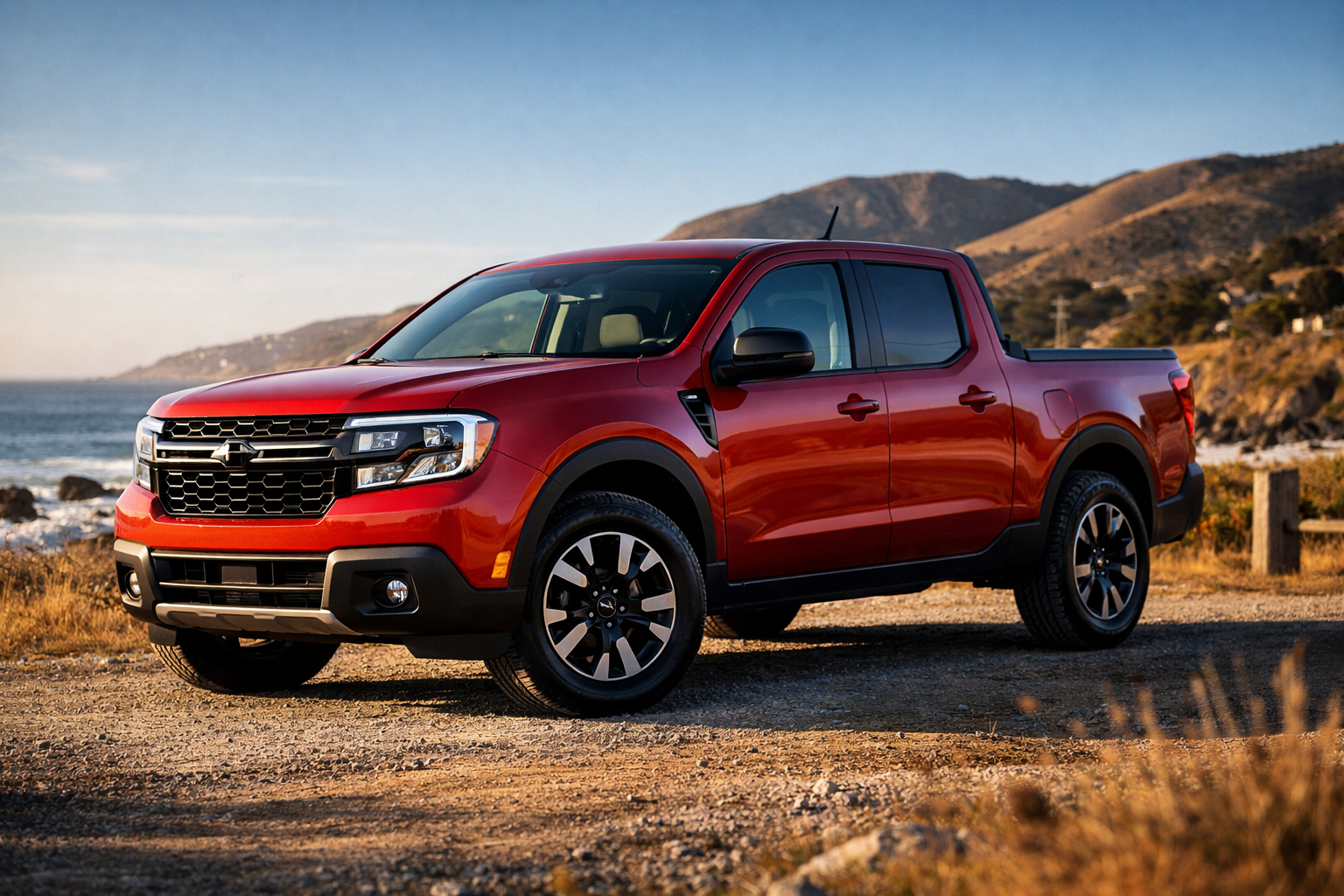

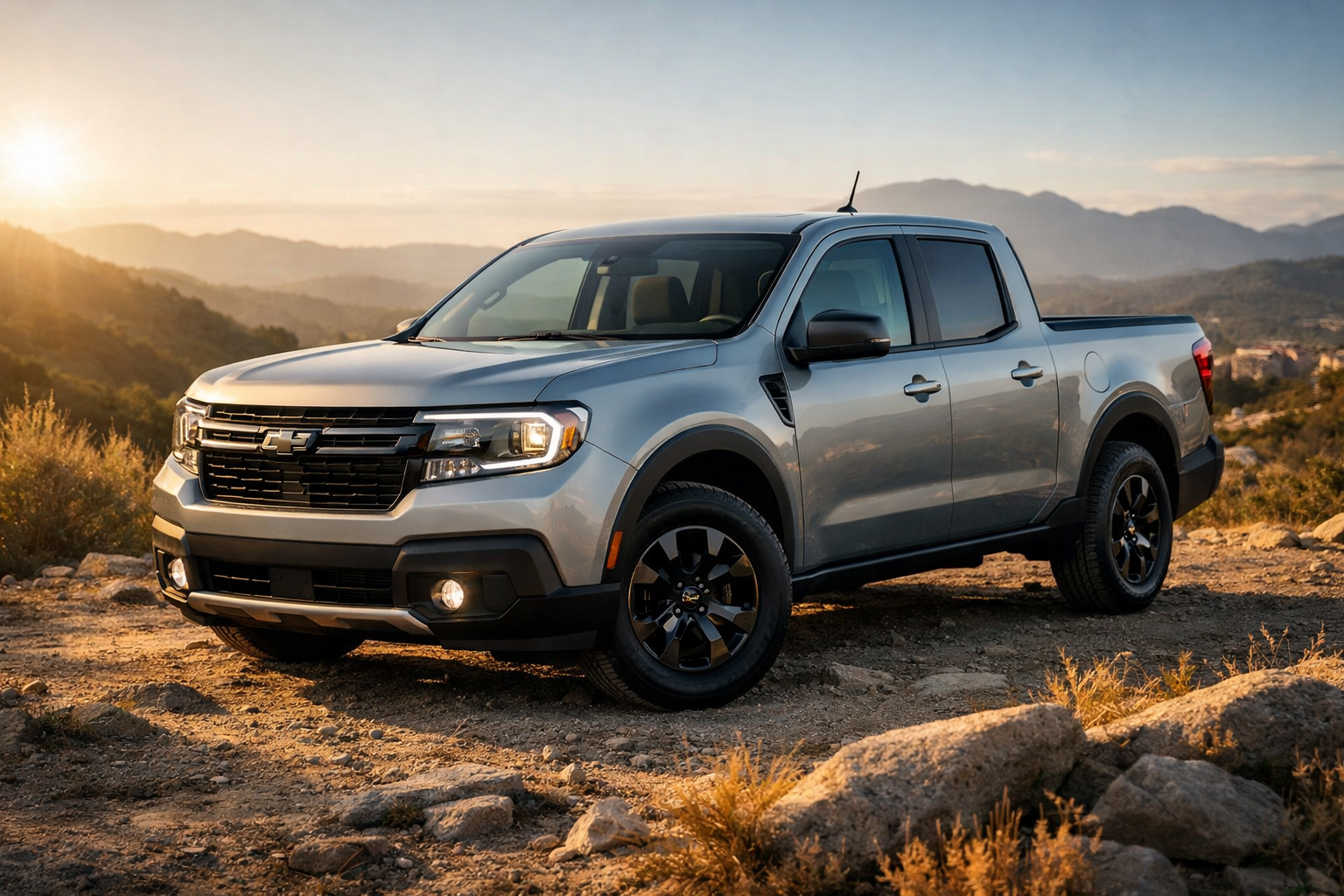
Here’s a fun fact: the average new full-size pickup in 2026 costs more than $60,000. That’s mortgage money for something most owners use to haul mulch twice a year. No wonder compact pickup trucks are storming back into the small truck market like a scrappy underdog with a point to prove.
The Ford Maverick, Hyundai Santa Cruz, and the incoming Toyota “Maverick fighter” have exposed a dirty little secret—most people don’t need 12,000 pounds of towing and a hood the size of Rhode Island. They need something affordable, efficient, and easy to park at Trader Joe’s. But before you rush to join the small truck market revival, let me be clear: these trucks are brilliant… for the right buyer.
Why the Small Truck Market Suddenly Makes Sense
I’ve driven everything from a Ram 1500 TRX to a kei truck that sounds like it runs on lawnmower fumes. And here’s the reality: modern half-tons have ballooned into luxury barges with beds. The Maverick starts around $24,000 (check manufacturer website for latest pricing), while a decently optioned F-150 can nudge $70,000 without breaking a sweat.
Fuel economy is the other mic-drop moment. The Maverick Hybrid delivers up to 42 mpg city according to FuelEconomy.gov, which makes a typical 20 mpg full-size truck feel like it’s drinking through a fire hose. For commuters who occasionally need a bed, that math is irresistible.
And as we’ve covered in our deep dive on midsize truck wars, even midsizers like the Toyota Tacoma and Chevy Colorado have grown more powerful—and more expensive. The small truck market is filling the gap below them.
The Poster Children: Maverick, Santa Cruz, and What’s Next
The 2025 Ford Maverick remains the benchmark. A 2.5-liter hybrid making 191 hp, 0–60 mph in about 7.6 seconds, and front-wheel drive as standard. Want more punch? The 2.0-liter EcoBoost cranks out 250 hp and 277 lb-ft, cutting 0–60 to roughly 6.0 seconds—hot hatch quick in a baby truck.
The Hyundai Santa Cruz is the stylish rebel. Its 2.5-liter turbo makes 281 hp and 311 lb-ft, hustling to 60 mph in about 5.7 seconds. That’s quicker than some “sporty” crossovers, including base versions of the Mazda CX-5 and Honda CR-V.
Then there’s Toyota. If you’ve read our take on the Toyota Maverick fighter, you’ll know it’s poised to shake the small truck market with hybrid credibility and Tacoma-lite toughness. Expect pricing to land in the high-$20,000 range to stay competitive.
Driving Experience: More Car Than Truck (And That’s Good)
Here’s the controversial bit: most compact pickup trucks drive better than midsize trucks. There, I said it. Unibody construction—shared with crossovers—means they ride like cars, not farm equipment.
The Maverick’s steering is light but accurate, the Santa Cruz feels genuinely athletic, and neither bounces around like an unloaded ladder frame Tacoma. Chris Harris would appreciate the composure; Jeremy Clarkson would complain they’re not “proper trucks.” I’ll take composure.
But hook up a 6,000-pound trailer and you’ll quickly find their limits. Towing tops out around 4,000 pounds in the Maverick with the tow package, and 5,000 pounds in the Santa Cruz. That’s jet ski and small camper territory—not skid steer and cattle trailer.
Practicality: The Bed Is Small—On Purpose
A Maverick’s bed measures 4.5 feet. That’s shorter than a Honda Civic. You’re not sliding in sheets of plywood without the tailgate down, and drywall runs will require planning worthy of a NASA launch.
But here’s what they nail: clever storage. Ford’s FLEXBED system, under-seat bins, 12-volt outlets in the bed—Doug DeMuro would spend 15 minutes geeking out over the quirks alone. These trucks understand their buyers live at IKEA and Home Depot, not a ranch.
For urban dwellers, compact dimensions are gold. At roughly 200 inches long, they’re 10–15 inches shorter than midsize trucks and a full two feet shorter than some full-size crew cabs. Parallel parking suddenly becomes possible without a spotter and prayer.
Running Costs: The Real Killer Feature
This is where compact pickup trucks quietly humiliate their bigger siblings. Insurance is typically cheaper, tires are smaller and less expensive, and that hybrid system can deliver 500-plus miles on a tank.
Maintenance is crossover-simple. No massive transfer cases or heavy-duty cooling systems unless you opt for AWD. And unlike some high-tech EVs plagued by over-the-air headaches—see our piece on EV software recalls—these trucks stick mostly to proven hardware.
Check safety ratings at NHTSA.gov, where both Maverick and Santa Cruz perform respectably in crash testing. They’re not penalty boxes; they’re genuinely well-rounded daily drivers.
Where They Fall Apart
Let’s not kid ourselves. Payload hovers around 1,500 pounds. Try loading a pallet of concrete and you’ll be shopping for new rear springs—or a chiropractor.
Rear-seat space is acceptable, not cavernous. If you’ve got three teenagers or regularly transport adults, a Honda Ridgeline or Chevy Colorado will feel far more generous. And if you actually need serious off-road hardware, the Tacoma TRD Pro and Colorado ZR2 will eat these alive.
Hot take: if you regularly tow more than 3,500 pounds or live on a muddy construction site, buying a compact truck is performative minimalism. It’s like wearing hiking boots to Starbucks—technically possible, fundamentally silly.
Value vs. The Alternatives
Let’s stack them up. A Maverick Hybrid starting around $24,000 undercuts a base Toyota Tacoma by roughly $8,000–$10,000. Compare that to a Honda Ridgeline starting in the mid-$30,000s or a Chevy Colorado pushing past $31,000, and the math is brutal.
Against crossovers like the Subaru Outback, Toyota RAV4, or Ford Escape? That’s where things get interesting. Many of those start around $28,000–$32,000 and offer similar fuel economy. But none give you an open bed for messy jobs.
If you never haul dirty gear, a crossover might make more sense. But if you’ve ever tried to stuff a muddy mountain bike into a carpeted cargo area, you’ll understand why the small truck market exists at all.
Pros
- Affordable starting prices around $24,000–$30,000
- Excellent fuel economy (up to 42 mpg city hybrid)
- Car-like ride and easy maneuverability
- Smart, flexible bed storage solutions
Cons
- Limited towing (4,000–5,000 lbs max)
- Short 4.5-foot beds restrict large loads
- Rear seat space tighter than midsize rivals
Verdict: Compact pickup trucks aren’t a compromise—they’re a correction. They fix the excess of modern full-size trucks and bring sanity back to the small truck market. But if your weekends involve serious towing or heavy-duty work, step up a class. For everyone else, this might be the smartest automotive trend of the decade.
Frequently Asked Questions
Are compact pickup trucks good for daily driving?
Yes. Models like the Ford Maverick Hybrid offer up to 42 mpg city and a smooth, car-like ride. They’re easier to park and more comfortable than most midsize trucks.
How much can compact pickup trucks tow?
Most max out between 4,000 and 5,000 pounds when properly equipped. That’s enough for small campers, jet skis, or utility trailers—but not heavy construction equipment.
Are compact trucks cheaper than midsize trucks?
Generally, yes. Starting prices hover around $24,000–$30,000, while midsize trucks like the Tacoma or Colorado often begin above $31,000.
Is the small truck market growing in 2026?
Absolutely. Strong sales of the Maverick and new competitors entering the segment show rising demand for affordable, efficient trucks.