
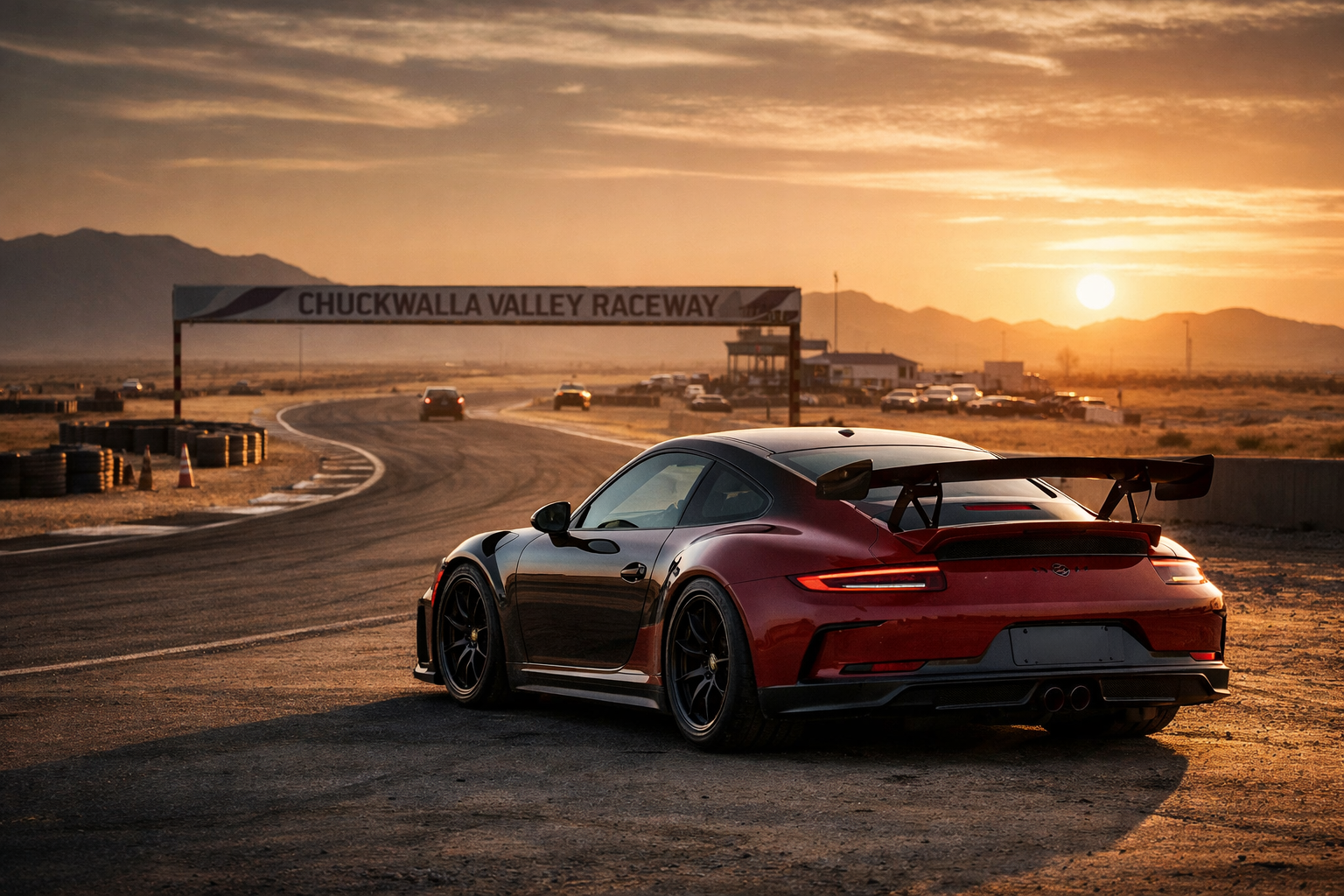
Here’s the uncomfortable truth nobody in a PR polo wants to say out loud: when a race track goes up for sale in California, it’s rarely because business is booming. The news that Chuckwalla Valley Raceway is on the market isn’t just real estate gossip—it’s a flare fired into the night sky of West Coast car culture.
I’ve spent more weekends than I care to admit baking in the desert, helmet hair intact, chasing tenths at Chuckwalla. It’s where first-time track rats learn what lift-off oversteer actually feels like, and where seasoned drivers quietly test whether their ego matches their talent. If this place disappears, it’s not just asphalt we lose—it’s an entry point to motorsport that California desperately needs right now.
This matters to you today because track days are the last legal, relatively affordable place to drive fast without lawyers getting involved. As California race tracks face mounting pressure from land values, regulations, and shifting priorities, the potential loss of Chuckwalla Valley Raceway asks a brutal question: are we watching the slow extinction of grassroots motorsports in the Golden State?
Chuckwalla Valley Raceway: Why This Sale Hits Different
Chuckwalla isn’t Laguna Seca with its corkscrew postcards, and it doesn’t have the haunted mystique of Willow Springs. What it has is space, runoff, and a layout that forgives mistakes without dulling the lesson—a 2.68-mile ribbon of tarmac designed by drivers, not accountants.
Unlike Buttonwillow, which feels like a choose-your-own-adventure book of configurations, Chuckwalla is simple and honest. You mess up Turn 9, that’s on you, not some weird decreasing-radius geometry. Selling a track like this is like selling a well-worn torque wrench: it means someone up the chain stopped valuing what actually works.
The Economics Are Brutal, and Nobody Wants to Admit It
Let’s talk money, because vibes don’t pay property taxes. Desert land that was “middle of nowhere” in 2010 is suddenly “strategic development opportunity” in 2026, and the numbers get silly fast when warehouses and solar farms come calling.
Operating a track in California means insurance premiums that rise faster than a Tesla Plaid hits 60 mph (1.99 seconds, approximately). Add environmental compliance, noise restrictions, and local politics, and suddenly a weekend full of $250 track-day entries doesn’t look like a sustainable business model.
Regulation Isn’t the Villain—Apathy Is
Here’s my controversial hot take: California regulations aren’t killing race tracks—car enthusiasts not showing up consistently are. It’s easier to rage-tweet about losing tracks than it is to book six track days a year and actually support them.
I’ve seen plenty of empty paddocks on “perfect” weekends, while YouTube comments are full of people mourning motorsports. If everyone who binge-watches Chris Harris slideshows or quotes Misha Charoudin’s Nürburgring lap times actually went driving, tracks like Chuckwalla Valley Raceway would be harder to sell.
The Ripple Effect on Track Days and Driver Development
Lose Chuckwalla, and Southern California drivers get funneled into fewer venues with higher prices. That means $300–$400 track days become normal, instruction gets scarcer, and newcomers decide autocross in a Costco parking lot is “close enough.”
This is how you end up with 500-hp cars driven by people who’ve never felt ABS chatter in anger. We already sell 2025 Mustangs with 486 hp starting around $30,000 (check manufacturer website for latest pricing), and we’re shocked when drivers don’t know where the limit is.
Why Affordable Sports Cars Need Places Like This
The unsung hero of modern car enthusiasm isn’t the 1,000-hp hypercar—it’s the lightweight, affordable stuff. Cars like the 2026 Mazda MX-5 Miata, which I’ve raved about in our Miata review, are engineered to teach, not intimidate.
Comparisons like MX-5 vs GR86 only matter if there’s somewhere to actually explore the difference between balance and brute force. Without tracks, these cars become fashion accessories with rev limiters.
Developers vs Drivers: The Cultural Tug-of-War
From a developer’s perspective, a race track is noisy, low-margin, and politically inconvenient. From our perspective, it’s sacred ground, like a pub that still pours proper beer instead of kombucha IPAs.
Laguna Seca survives because it’s historic and publicly owned. Willow Springs hangs on by sheer stubbornness. Chuckwalla sits in the middle—privately owned, beloved, but vulnerable—and that makes its sale a warning shot.
Is This the End of California Race Tracks? Not Yet
I don’t buy the doom-and-gloom narrative entirely. California still has more tracks than most states, and demand for performance cars hasn’t exactly collapsed—just look at how EVs are reshaping enthusiasm, something we explored when discussing the end of the Model S era.
But optimism without action is just daydreaming. If Chuckwalla Valley Raceway changes hands and survives as a track, it’ll be because the community proved it’s worth more alive than paved over.
What Enthusiasts Can Actually Do Right Now
Step one: stop treating track days like “special occasions.” Budget for them like you budget for tires—because they’re just as essential to the experience. Step two: bring friends, especially the ones who think 0–60 times are a personality trait.
And yes, make noise politically, but back it up with attendance. Tracks don’t run on petitions; they run on entry fees, instructors, and a paddock that looks alive instead of abandoned.
Pros
- Highlights the real economic pressures facing California race tracks
- Shows why Chuckwalla matters for driver development and safety
- Connects affordable sports cars to real-world driving education
- Offers actionable steps for enthusiasts, not just outrage
Cons
- No easy solutions to land value and insurance costs
- Relies on community action that may not materialize
- Doesn’t guarantee Chuckwalla’s sale ends positively
If Chuckwalla Valley Raceway disappears, California won’t suddenly stop loving cars—but it will forget how to drive them properly. And that, my friend, would be the real loss, far louder than any straight-piped exhaust echoing across the desert.
For more context on motorsport facilities and safety, visit NHTSA or Chuckwalla’s official site at Chuckwalla Valley Raceway.