
The truth bomb nobody at the luxury dealer wants to admit: most people who buy a $90,000 three-row SUV never use the third row, never tow anything, and still obsess over 0–60 times like they’re drag racing a Hellcat. And yet, here we are, because choosing one of these behemoths matters more than ever when prices, tech complexity, and egos are all ballooning. If you’re trying to choose three-row SUV glory without buyer’s remorse, pull up a stool and let’s talk Escalade excess, Navigator nuance, and the looming shadow of a rumored BMW mega-bruiser.
I’ve driven dozens of large SUVs over the last 15 years, from Yukon Denalis that float like cruise ships to German luxo-barges that think cupholders are optional. Right now, the segment is at a crossroads: old-school V8 swagger versus turbocharged efficiency theater and whispered promises of electrification. Spend wrong here and you’ll hate your car every single school run.
This guide isn’t about spec-sheet bragging at Cars & Coffee. It’s about how to actually choose three-row SUV sanity in 2026 when Cadillac Escalade, Lincoln Navigator, Mercedes GLS, Range Rover, Lexus LX, and the BMW X7 all claim they’re the best thing on four 22-inch wheels.
Quick Specs
- Starting Price: approximately $82,000 (check manufacturer website for latest pricing)
- Engine: 6.2L V8 or 3.0L Turbo Diesel
- Power: 420 hp / 460 lb-ft
- 0-60 mph: about 6.0 seconds
- Fuel Economy: 14 city / 19 highway mpg (gas)
Why Choosing a Three-Row Luxury SUV Is a Minefield
The problem with this segment is bloat—physical, digital, and philosophical. These SUVs now weigh over 6,000 pounds, have screens bigger than your living room TV, and cost more than a starter home deposit did a decade ago. When you choose three-row SUV today, you’re really choosing a brand’s worldview on luxury.
Cadillac believes more is always more, Lincoln believes calm is king, BMW believes physics can be negotiated with enough software, and Mercedes believes touchscreens can replace muscle memory. My controversial hot take: half these SUVs would be better cars if they deleted one screen and one trim level.
The Main Contenders You’ll Cross-Shop
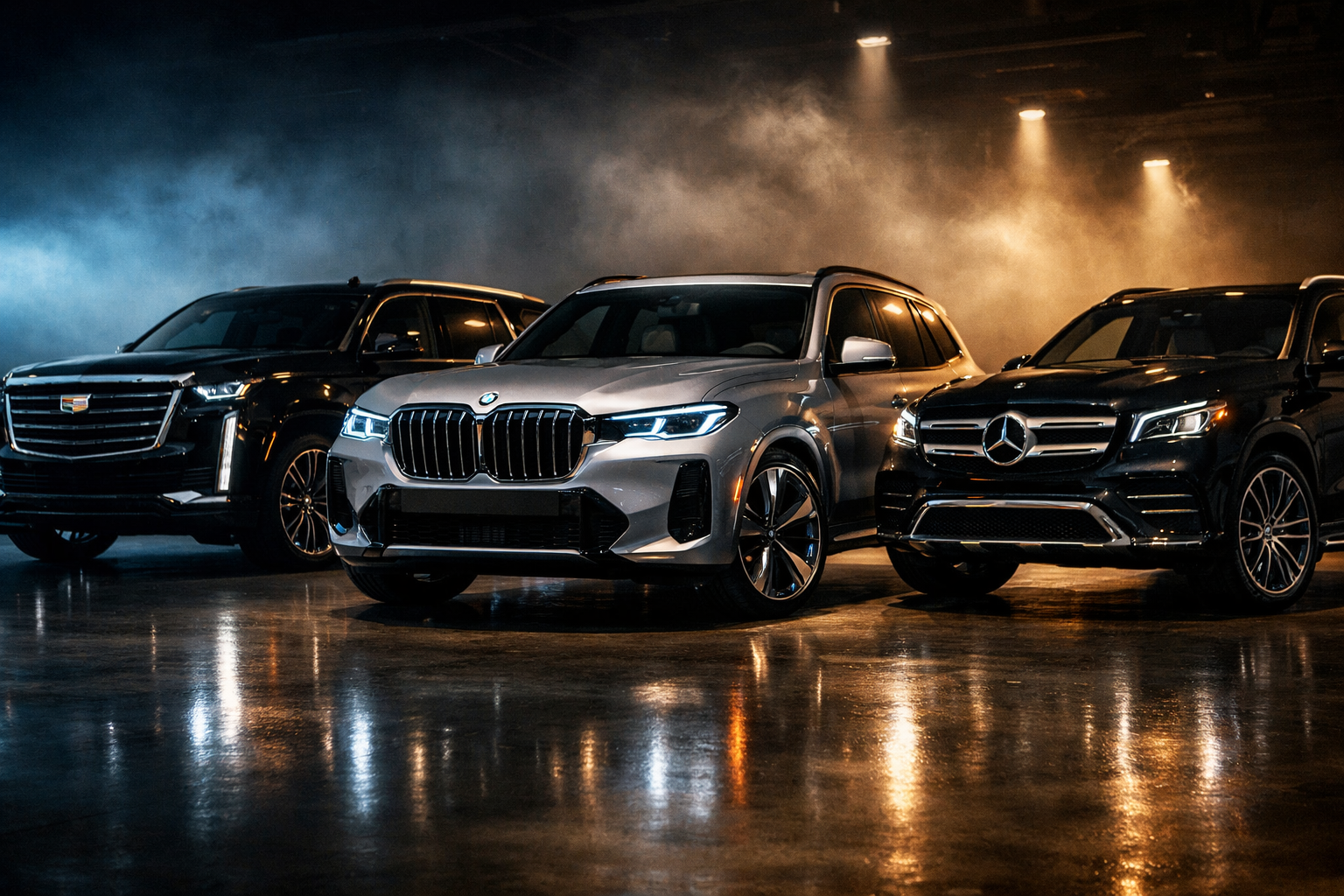
Let’s name names. Cadillac Escalade is the cultural icon, starting around $82,000 and soaring past $110,000 in Escalade-V territory with 682 hp because subtlety is dead. Lincoln Navigator hovers around $85,000 and leans into plushness over punch with a 440 hp twin-turbo V6.
BMW X7 starts near $80,000, tops out with the M60i’s 523 hp V8, and drives smaller than it has any right to. Mercedes-Benz GLS splits the difference at roughly $78,000, while Range Rover laughs at your budget starting around $90,000 and Lexus LX laughs at depreciation instead.
Design: Presence vs Pretension
The Escalade’s design is basically a middle finger to subtlety, and I mean that lovingly. It’s big, blocky, and unmistakable in your rearview mirror like a luxury freight train. Navigator is softer, more yacht-club chic, while the GLS and X7 are clean but dangerously close to anonymous.
Here’s my spicy take: Range Rover’s minimalist exterior is aging better than everyone else’s LED origami. BMW’s rumored larger X7 successor—basically a BMW X7 competitor turned up to Escalade size—better be careful not to look like a kidney-grilled office building.
Interior & Tech: Screens Don’t Equal Luxury
Step inside an Escalade and you’re hit with a 38-inch curved OLED display that looks like CES on wheels. It’s stunning, but also proof that Cadillac sometimes mistakes spectacle for usability. Lincoln’s Navigator counters with real wood, excellent seats, and tech that doesn’t shout.
BMW and Mercedes are sliding into iPad-on-dash territory, a trend even Audi designers have publicly questioned, as discussed in this deep dive on screen overload. Luxury isn’t how many pixels you have; it’s how relaxed you feel after three hours behind the wheel.
Driving Experience: The Lie of “Sporty” SUVs
No three-row luxury SUV is actually sporty, and anyone who tells you otherwise is selling something. That said, BMW X7 is the least dishonest, with rear-wheel steering and air suspension making it feel 1,000 pounds lighter. The Escalade is surprisingly composed, but physics still sends invoices.
Navigator prioritizes serenity, GLS tries to do everything, and Range Rover somehow manages to ride like a magic carpet while still towing 7,700 pounds. If driving joy matters, BMW wins; if effortlessness matters, Lincoln and Land Rover take the crown.
Fuel Economy & Running Costs Reality Check
Here’s where optimism goes to die. Expect 14–20 mpg combined for most gas models, with diesel Escalades nudging into the low 20s. Hybrid tech is conspicuously absent, despite the industry’s EV obsession outlined in our analysis of EV market shifts.
Maintenance isn’t cheap either. Tires are $400 a corner, brakes cost four figures, and extended warranties suddenly feel like a good idea. Check real-world numbers on FuelEconomy.gov before believing brochure promises.
Practicality: Third Rows, Towing, and Ego
Let’s be honest: Escalade and Navigator have the most usable third rows for actual adults. BMW X7 is fine for kids, while GLS and Range Rover split the difference. Cargo space with all rows up still isn’t great—minivans quietly laugh from the shadows.
Towing ranges from 7,700 pounds to about 8,400 pounds depending on configuration. If you tow once a year, don’t overbuy capability just for bragging rights. That’s how you end up with a $100,000 truck that hauls groceries and regret.
Value vs Badge Snobbery
Here’s my hill to die on: the Escalade is overpriced, but still good value if you want maximal presence and resale strength. Navigator offers the best luxury-per-dollar if you don’t need a V8 soundtrack. BMW X7 delivers the best driving experience but depreciates faster.
Range Rover is the emotional choice, Lexus LX the rational one. None are cheap, but some make you feel better about the money hemorrhage. Before buying, check safety scores at NHTSA.gov and configure carefully on the official Cadillac website.
Pros
- Massive presence and road-trip comfort
- Powerful engines with strong towing capability
- High-end materials and cutting-edge tech
- Excellent safety and driver-assistance features
Cons
- Poor fuel economy across the board
- Overcomplicated infotainment systems
- Eye-watering options pricing
Verdict: How to Choose Without Regret
If you want theater, buy the Escalade. If you want calm, buy the Navigator. If you want to drive, buy the X7. And if you want everyone to assume you own a vineyard, buy the Range Rover.
The smartest way to choose three-row SUV happiness is brutal honesty about how you’ll actually use it. Ignore marketing nonsense, test-drive competitors back-to-back, and remember: the best luxury SUV is the one that makes your daily life easier, not louder.
Buy with your brain, not your badge—and you’ll still smile every time you climb into that throne on wheels.