
You know that moment when your buddy says, “Don’t worry, my truck’s 4×4,” right before he buries it to the frame in sand? Yeah — tires matter more than the badge on the tailgate. This off road tire guide is about choosing rubber that actually gets you home instead of calling a $600 tow truck.
Pick the wrong tire and you’ll chew through tread in 20,000 miles, kill your fuel economy, and still get stuck in mud. Pick the right one and your truck feels planted, confident, and ready for whatever trail (or snowstorm) shows up. Today we’re breaking down truck tire selection using 50 years of lessons from the BFGoodrich All Terrain T/A — one of the most copied tire designs in the business.
By the end, you’ll know what tread pattern fits your driving, how load ratings affect ride quality, and whether you really need aggressive overlanding tires — or if you’re about to overspend for Instagram points.
What You’ll Need
- Tools: Tire pressure gauge, tread depth gauge, vehicle owner’s manual (for load specs)
- Parts/Materials: Set of 4 tires ($800–$1,600 depending on size and brand), new valve stems ($20), optional TPMS service kit ($15 per wheel)
- Time: 1–2 hours at a tire shop (not a driveway DIY unless you’ve got a tire machine)
- Difficulty: 🔧🔧 (Choosing is harder than installing)
- Dealer Cost: $1,800–$2,400 installed vs DIY Tire Shop Package: $1,000–$1,600 — You Save: $600+
Why This Matters (Off Road Tire Guide Basics)
Tires are the only thing connecting your 5,000-pound truck to the ground. In 20 years of wrenching, I’ve seen more trail damage from wrong tire choice than bad driving. Street tires in mud? Forget it. Mud-terrain tires on pavement? Enjoy 15 mpg and a noise that sounds like a C-130 landing.
All-terrain tires like the BFGoodrich All Terrain T/A became popular because they balance daily driving with weekend trails. That’s why you see them on everything from Tacomas to full-size diesels — especially with the midsize truck boom we’re seeing lately (check out why the midsize truck segment is exploding).
Most truck owners replace tires every 40,000–60,000 miles. Choose wrong, and you’ll replace them at 25,000. That’s a $1,200 mistake.
Before You Start
⚠️ WARNING: Never exceed your vehicle’s load rating or recommended tire size without understanding suspension and braking impacts. Oversized tires affect stopping distance and speedometer accuracy.
Check the sticker inside your driver’s door jamb. It lists factory tire size and load rating. If you’re driving something like a Land Cruiser or imported rig, make sure parts and sizes are easy to source — our JDM Land Cruiser guide covers that headache in detail.
Also think about where you actually drive. Be honest. If 90% of your miles are highway commuting, you don’t need hardcore mud tires. And if winter hits hard where you live, read up on whether snow tires make sense before assuming all-terrains will save you.
Step-by-Step Guide
-
Identify Your Driving Split
Be real: 80% pavement, 20% trail? Or 50/50? All-terrain tires like the BFGoodrich All Terrain T/A are ideal for 70/30 drivers. Mud-terrain tires are for frequent off-roaders. Highway-terrain tires are for mostly pavement. -
Understand Tread Design
Bigger voids (gaps between tread blocks) mean better mud and snow traction but more road noise. Tighter tread = quieter ride and better fuel economy. Think hiking boots vs running shoes. -
Choose the Right Load Range
Load C = lighter ride (common on midsize trucks). Load E = heavy-duty, stiffer sidewalls (3/4-ton trucks, towing). Pro Tip: Don’t slap Load E tires on a Tacoma unless you enjoy a kidney massage every commute. -
Check Severe Snow Rating
Look for the three-peak mountain snowflake symbol. The BFGoodrich All Terrain T/A KO2 and KO3 carry it. That means they meet standards verified by NHTSA-recognized testing protocols. -
Match Tire Size Carefully
Upsizing from 265/70R17 to 285/70R17 looks cool. But it may require a leveling kit or trimming. Consult your owner’s manual or manufacturer specs (Toyota, Ford, etc.) for approved sizes. -
Budget Realistically
Expect $250–$400 per tire for quality overlanding tires in 2025 pricing. Cheap off-brand sets at $600 total? I’ve seen belts separate at 15,000 miles. That’s not savings — that’s gambling.
Common Mistakes to Avoid
- Buying mud-terrain tires for daily commuting. I’ve seen this a hundred times. Owners come back complaining about noise and 3 mpg loss.
- Ignoring load rating. Too stiff and your ride suffers. Too light and you risk sidewall damage while towing.
- Skipping rotations. All-terrains must be rotated every 5,000–7,500 miles. Skip it and you’ll feather the tread.
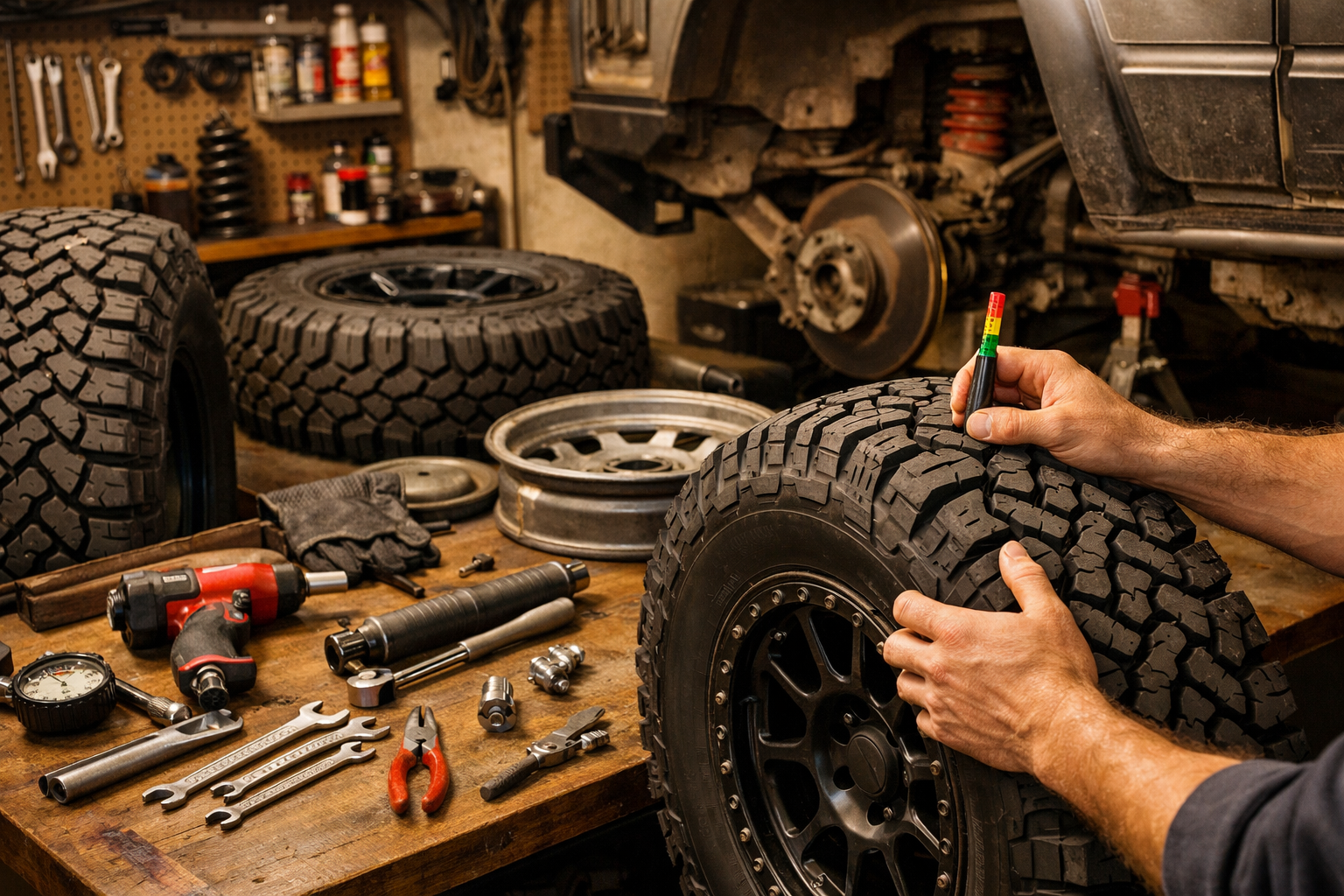
- Overinflating. Chalk test your tread. Too much pressure wears the center. Follow manufacturer specs.
- Falling for dealer upsells. Nitrogen fills for $199? Regular air is already 78% nitrogen. Save your cash.
When to Call a Professional
If you’re changing tire sizes significantly or adding a lift, talk to a reputable tire shop. Improper fitment can rub brake lines or suspension components. That’s dangerous.
A fair mounting and balancing price is $25–$40 per tire. TPMS relearn should be under $100. If a shop pushes $300 “road hazard packages,” ask what’s actually covered — and read the fine print.
If you experience vibration after installation, don’t ignore it. Have them rebalance immediately. You can also check for open recalls related to suspension or steering at NHTSA’s recall database.
Recommended Products
- BFGoodrich All Terrain T/A KO3 — Balanced, durable, excellent sidewalls. What I’d run on a daily-driven 4×4. ~$320 per tire (275/70R18).
- Falken Wildpeak A/T4W — Great winter traction, slightly cheaper at ~$280 per tire.
- Toyo Open Country A/T III — Quieter ride, strong tread life warranty. ~$300 per tire.
- Budget Option: General Grabber A/TX — Around $240 per tire. Solid performance without premium pricing.
In my own garage? I’ve installed more BFGoodrich All Terrain T/A sets than I can count. They’re not the cheapest, but they’re predictable — and predictable keeps you out of ditches.
Do This
- Match tire type to real-world driving
- Rotate every 5,000–7,500 miles
- Check door-jamb load specs
- Buy from a shop that offers free rebalancing
Don’t Do This
- Oversize without checking clearance
- Pay extra for nitrogen fills
- Ignore road noise complaints
- Cheap out on unknown brands
The right rubber transforms your truck. Follow this off road tire guide, be honest about your driving habits, and choose tires that work as hard as you do. You don’t need the most aggressive overlanding tires on the market — you need the right ones.
Got questions about truck tire selection or debating between KO3s and something else? Drop it in the comments. I’ve probably mounted it, balanced it, and patched it at some point in the last 20 years.
Stay safe out there, keep the shiny side up, and remember — a $20 repair manual saves a $2,000 repair bill.