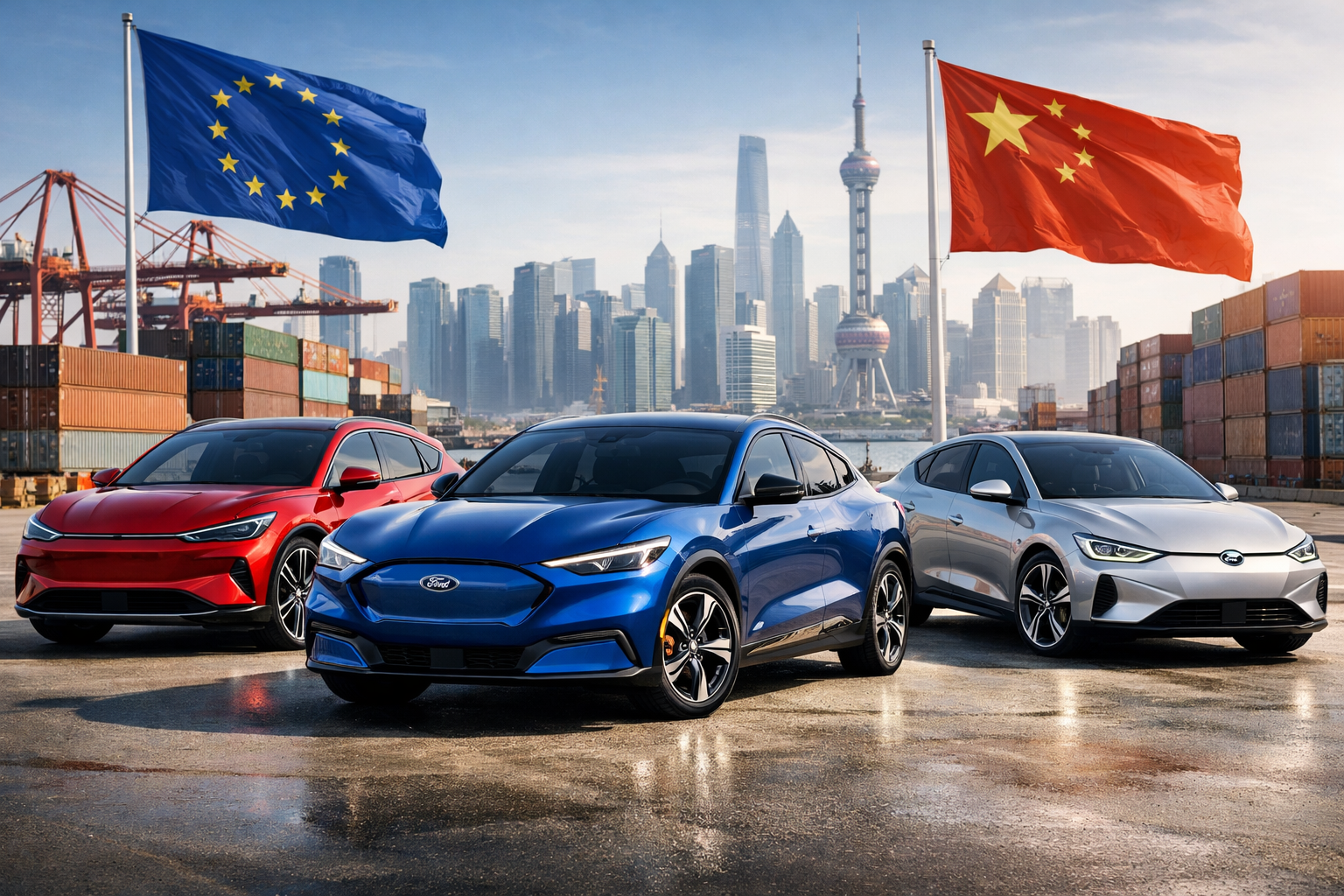

Here’s a spicy truth bomb: EV tariffs aren’t about saving European jobs—they’re about buying time while legacy automakers scramble like interns who forgot the presentation was today. China can build a competent electric hatch for under $20,000, while Europe is still arguing about font choices on touchscreen menus. If you’re wondering why your next EV suddenly costs five grand more, this is why.
This matters right now because 2025–2026 is the inflection point where policy starts dictating what actually lands in showrooms. I’ve driven dozens of SUVs and EVs across Europe, and the irony is delicious: the cars Brussels is trying to block are often the ones normal people can actually afford. Meanwhile, Ford, Volkswagen, Stellantis, and Renault are playing geopolitical chess while buyers just want decent range and a price that doesn’t require a second mortgage.
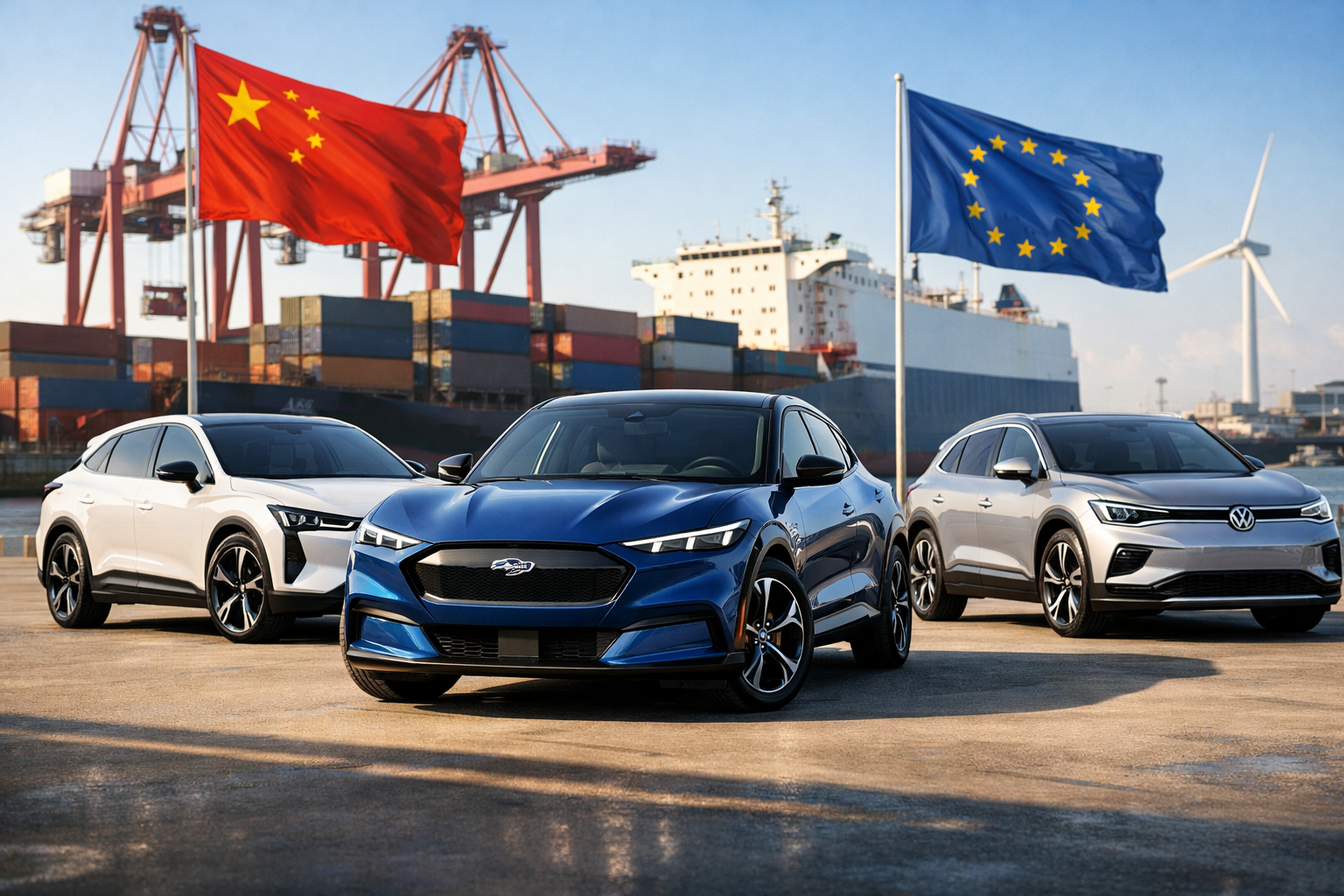
So let’s talk China, Ford, and Europe—how automakers are navigating EV tariffs, dodging political potholes, and deciding whether to build cars where they sell them, or ship them halfway around the planet and pray.
EV Tariffs: Europe’s Blunt Instrument
The EU’s provisional tariffs on Chinese-built EVs—ranging approximately from 17% to over 35% depending on the brand—are less scalpel, more sledgehammer. The official line is “countering unfair state subsidies,” which is corporate-speak for “they’re beating us at our own game.” BYD, SAIC (MG), and Geely suddenly look like party crashers who brought better snacks.
Here’s the controversial hot take: tariffs won’t save European automakers; they’ll just delay the inevitable. Remember when American brands tried to tariff Japanese cars in the 1980s? Toyota didn’t cry—it built factories in Kentucky. History doesn’t repeat, but it absolutely does donuts in the parking lot.
Why Chinese EVs Scare Europe Silly
Chinese EVs aren’t scary because they’re cheap; they’re scary because they’re good. A BYD Seal with around 530 hp, a 0–60 mph time of roughly 3.8 seconds, and a starting price around €45,000 undercuts a Tesla Model 3 Performance and embarrasses a BMW i4. That’s not “budget,” that’s a full-on ambush.
European brands like Volkswagen, Peugeot, and Fiat built their empires on small cars. Now MG and BYD are selling those same cars with more tech, longer ranges—often 250 to 350 miles—and prices that make CFOs sweat through their linen suits.
Ford’s Manufacturing Shuffle: Follow the Tariffs
Ford is in a particularly awkward position, like bringing a V8 to a vegan potluck. The Mustang Mach-E is built in Mexico, the Explorer EV is Europe-focused, and Ford’s China exposure is politically radioactive. So Ford’s response has been pragmatic: localize or die.
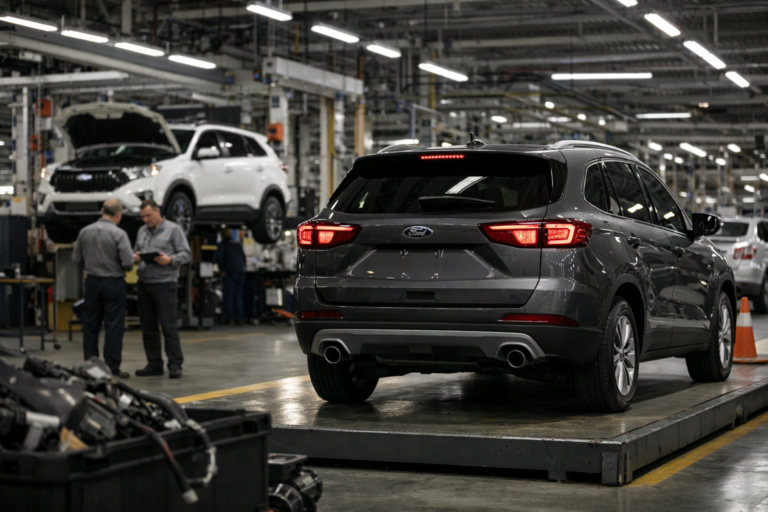
Expect Ford manufacturing to double down in Europe, even if it means slimmer margins. Building EVs closer to where they’re sold helps dodge EV tariffs, qualify for incentives, and look good in press releases about “regional resilience.” Translation: fewer boats, more factories, less tariff roulette.
Volkswagen, Stellantis, and the Art of Corporate Yoga
Volkswagen Group is stretching itself into a pretzel. On one hand, it’s partnering with Chinese firms for software and platforms; on the other, it’s lobbying Brussels to keep Chinese-built cars out. Stellantis—home to Peugeot, Opel, Fiat, and Jeep—is even cheekier, openly admitting it might build Chinese EVs in Europe.
This isn’t hypocrisy; it’s survival. Carlos Tavares famously said tariffs would make European cars worse, not better. He’s right. Protectionism tends to breed complacency, and complacency builds cars with laggy infotainment and steering feel like overcooked pasta.
What This Means for Prices and Choice
Short term, expect higher prices and fewer options. A compact EV that could’ve started around $30,000 now creeps toward $35,000 once tariffs and “logistics adjustments” are baked in. Check manufacturer website for latest pricing, because these numbers change faster than YouTube thumbnails.
Long term, though, competition will find a way. Chinese brands will build in Europe. European brands will cut costs or finally fix their software. And buyers will benefit—eventually. If you want context on choosing between electrified options, our Hybrid vs Electric buyer’s guide is worth a read.
Are Tariffs Actually Good for Innovation?
Here’s where I annoy everyone: tariffs can help, but only if automakers use the breathing room wisely. Invest in batteries, motors, and software—not another “lifestyle” trim with copper stitching. Tesla didn’t get good because it was protected; it got good because it was terrified.
Europe needs fewer meetings about “brand DNA” and more engineers allowed to break things. Otherwise, Chinese brands will simply wait out the EV tariffs like a red light, then floor it.
Global Politics vs Real-World Driving
None of this changes what matters behind the wheel. A good EV still needs sharp throttle response, predictable handling, and a charging curve that doesn’t collapse like a flan in a cupboard. Chris Harris has said it repeatedly: weight management matters more than badge engineering.
Whether it’s a Ford, a VW, or a BYD, buyers will gravitate to what feels honest. Tariffs can’t hide a car that drives like a fridge on casters.
The Bigger Picture: This Isn’t Just About Cars
This fight mirrors what’s happening across industries—chips, solar panels, even agriculture. Cars just happen to be the most visible, emotional battleground. If you’re fascinated by how branding shapes loyalty even when prices rise, our piece on brand loyalty and unaffordable cars connects the dots.
And if you think Europe can simply legislate its way to EV dominance, I’ve got a dieselgate apology letter to sell you.
Pros
- Protects short-term European manufacturing jobs
- Buys legacy automakers time to improve EV tech
- Encourages local production and supply chains
- Signals serious intent on industrial policy
Cons
- Higher prices for consumers
- Reduced competition and slower innovation
- Risks retaliation from China
Bottom line: EV tariffs are a temporary shield, not a cure. Automakers like Ford will adapt, Chinese brands will persist, and Europe will eventually have to win on engineering, not paperwork. The market always finds the racing line.
Frequently Asked Questions
What are EV tariffs in Europe?
They are additional import taxes on Chinese-built electric vehicles, ranging roughly from 17% to over 35%, depending on the manufacturer and subsidy findings.
How do EV tariffs affect car prices?
They typically increase retail prices by several thousand dollars, especially on entry-level EVs that relied on low manufacturing costs.
How is Ford responding to EV tariffs?
Ford is focusing on regional manufacturing in Europe and North America to reduce tariff exposure and qualify for local incentives.
Will EV tariffs stop Chinese cars in Europe?
No. Most analysts expect Chinese brands to build factories in Europe, bypassing tariffs while maintaining competitive pricing.