
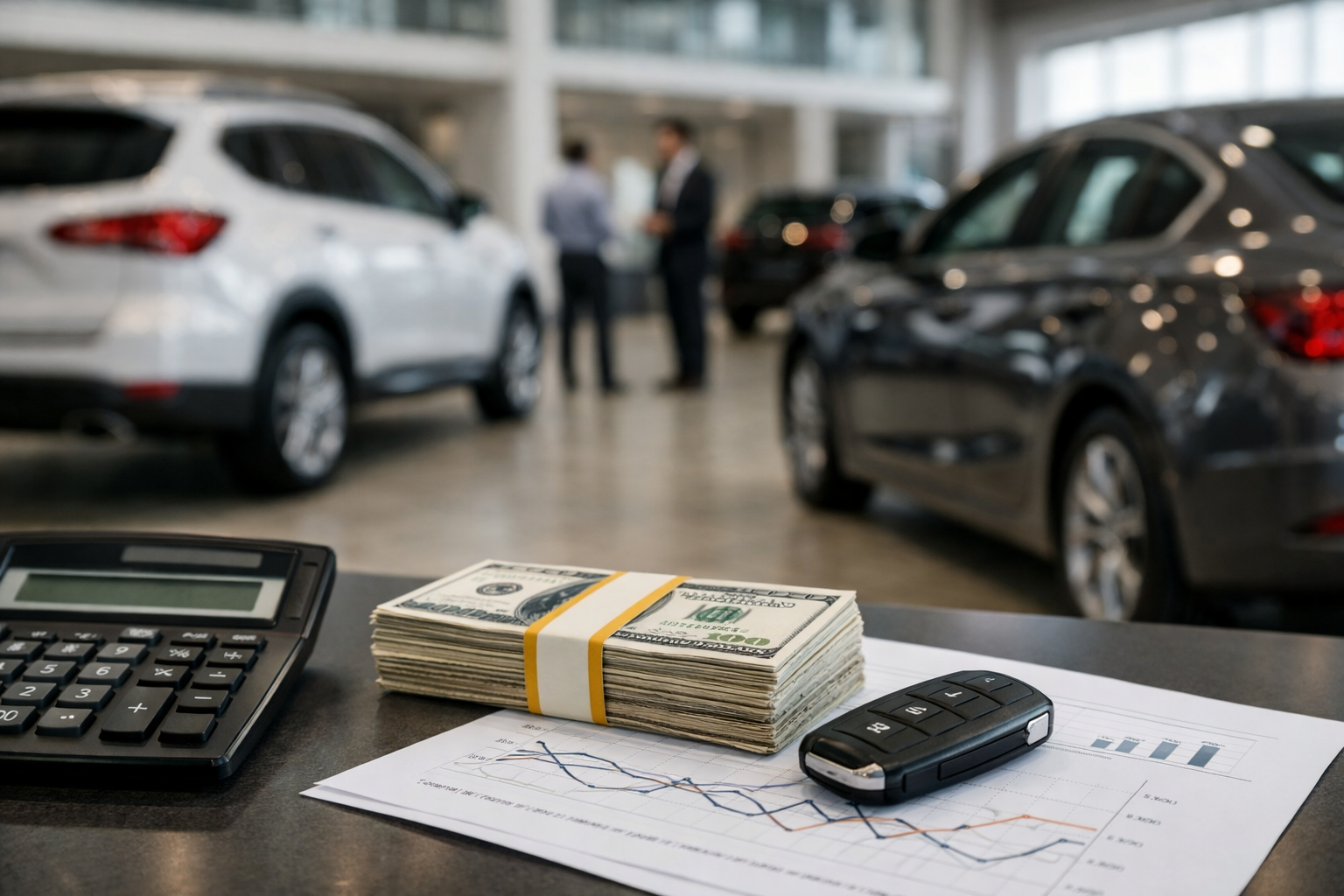
New car shoppers are finally seeing meaningful leverage for the first time since the pandemic, as car prices 2026 stabilize and incentives quietly climb across multiple segments. According to Cox Automotive data released in late March 2026, average transaction prices dipped below $47,000 for the first time in 18 months, while dealer inventories rose above 70 days’ supply — a level historically associated with heavier discounting.
Meanwhile, lawmakers in Washington are debating a limited auto loan interest deduction for middle-income households as part of a broader tax package introduced in February 2026, according to Reuters. Add in rising new car incentives and plateauing interest rates, and the obvious question emerges: is 2026 finally a buyer’s market?
The Headlines
- What: New car prices flatten as incentives rise and a proposed auto loan interest deduction gains traction
- Who: Automakers, U.S. lawmakers, dealers, and car buyers
- When: Q1–Q2 2026, with tax changes under debate for 2027
- Impact: Buyers may gain negotiating power for the first time since 2020
- Key Number: $2,200 — average incentive spending per vehicle in March 2026, per industry estimates
What Happened
Inventory has returned. According to Cox Automotive and dealer surveys cited by Bloomberg, U.S. dealer supply averaged 72 days in March 2026, up from roughly 38 days at the height of the shortage in 2022. As a result, automakers boosted incentive spending to an estimated $2,200 per vehicle — still below the $3,500–$4,000 pre-pandemic norm, but moving quickly in that direction.
Additionally, average APRs on new-car loans hover around 6.1% for well-qualified buyers, according to Edmunds data released in Q1 2026. That’s down from peaks above 7% in late 2024, though still well above the 3% financing common before 2020. Consequently, average car payments 2026 remain elevated at roughly $735 per month for new vehicles.
On the policy front, a bipartisan proposal introduced in February would allow buyers earning under $150,000 annually to deduct up to $10,000 in auto loan interest for vehicles assembled in North America. While still under committee review, the proposal reflects political pressure over affordability and stagnant wage growth.
Why It Matters
The psychology of the market is shifting. For three years, consumers paid above MSRP, waived negotiations, and waited months for delivery. However, as supply normalizes and automakers chase volume targets, pricing power is tilting back toward buyers.
Importantly, car prices 2026 are not collapsing — they’re plateauing. That distinction matters. Automakers like Toyota and Honda, which maintained tight inventory discipline, are discounting less aggressively than Ford and Stellantis, both of which carry higher truck and SUV inventory. Therefore, the “buyer’s market” label depends heavily on brand and segment.
Furthermore, incentives are increasingly targeted. EVs see the heaviest discounts due to slowing demand growth and global competition, particularly from China. If you’ve followed our analysis of China’s EV innovation surge, you know U.S. automakers face mounting pricing pressure in electric segments.
The Bigger Picture
This reset was inevitable. After the semiconductor shortage slashed production by millions of units between 2020 and 2022, automakers embraced lean inventories and higher margins. General Motors and Ford both reported record per-vehicle profits in 2023 and 2024, according to SEC filings.
However, growth has slowed. U.S. auto sales are tracking around 15.6 million units annualized in early 2026, roughly flat year-over-year. At the same time, global uncertainty and new trade tensions — detailed in our coverage of Auto Tariffs 2026 — are raising input costs for imported components.
In contrast, lawmakers promoting the auto loan interest deduction argue that affordability, not supply, is now the constraint. According to analysis from the U.S. Department of Energy, transportation remains the second-largest household expense after housing. A modest tax deduction could stimulate demand without forcing automakers to slash MSRPs.
Yet here’s the contrarian view: tax deductions often inflate prices. We’ve seen this pattern in housing and higher education. If the deduction passes in 2027, automakers may simply reduce incentives accordingly, neutralizing much of the benefit.
What the Competition Is Doing
Ford is leaning hardest into incentives, particularly on F-150 Lightning and Mustang Mach-E models, offering 0% financing for 60 months in select markets. Meanwhile, Stellantis is stacking cash rebates on Jeep and Ram inventory, where days’ supply exceed 90 in some regions.
Toyota, by contrast, maintains leaner supply and lower discounts, protecting resale values. Honda follows a similar strategy, prioritizing production discipline over volume chasing.
On the EV front, Tesla continues to adjust pricing dynamically, cutting Model Y prices in Q1 2026 by roughly 4% in response to competitive pressure. Meanwhile, Hyundai and Kia are bundling charging credits and lease incentives rather than headline price cuts.
Luxury brands show a split strategy. BMW and Mercedes-Benz emphasize subsidized leases to keep monthly payments manageable. You can see how this plays into broader EV adoption goals in our analysis of BMW’s EV sales strategy.
What It Means for You
If you’re shopping in 2026, negotiation is back. Dealers are more willing to discuss below-MSRP deals, particularly on EVs and full-size trucks. However, high monthly payments remain a hurdle, so understanding financing terms matters more than ever.
Before stepping into a showroom, review realistic budgeting strategies like those outlined in our guide to average car payments 2026 and smart budgeting. Additionally, watch for hidden fees — documentation charges and add-ons quietly erode savings, as we detail in our dealership pricing investigation.
If the auto loan interest deduction becomes law, it could effectively lower your net borrowing cost by 0.5–1 percentage points, depending on your tax bracket. However, that benefit won’t arrive until you file taxes — it doesn’t reduce monthly payments upfront.
What to Watch Next
First, monitor congressional movement on the tax proposal through summer 2026. If it gains bipartisan backing, automakers may adjust pricing strategies preemptively.
Second, watch incentive spending. If average per-vehicle incentives surpass $3,000 by late 2026, that would signal a genuine buyer’s market rather than a temporary adjustment.
Finally, pay attention to interest rates. Federal Reserve commentary later this year will heavily influence whether financing costs ease further or stabilize.
The Upside
- Rising inventory improves negotiating leverage
- Incentives increasing across trucks and EVs
- Potential auto loan interest deduction boosts affordability
- More model availability and shorter wait times
The Concerns
- Average car payments 2026 remain historically high
- Tax deduction may indirectly support higher prices
- Tariffs could raise manufacturing costs
- EV resale values remain volatile
Having covered three pricing cycles since 2020, I can tell you this moment feels different. It’s not a crash, and it’s not 2019-style discounting — but it is a normalization. Car prices 2026 reflect a market recalibrating after extreme disruption.
The next 12 to 24 months will determine whether this becomes a sustained buyer’s market or simply a brief pause before the next shock. For now, informed shoppers hold more cards than they have in years — and that alone marks a meaningful shift.
Disclosure: This article may contain affiliate links. If you make a purchase through these links, we may earn a small commission at no extra cost to you. This helps support RevvedUpCars.com. Learn more.