
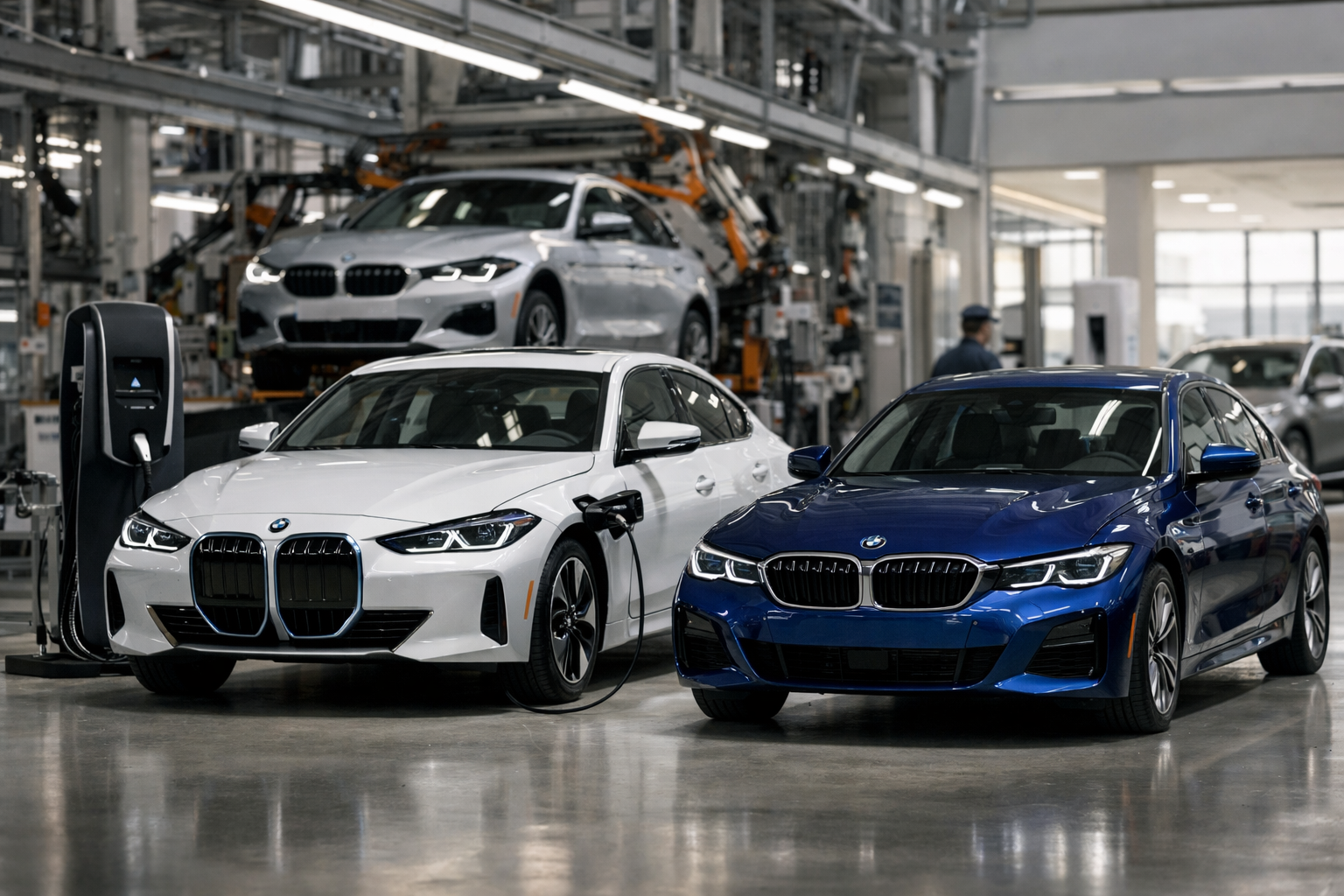
BMW says it can achieve near parity between electric and combustion models by the end of the decade — a bold claim given today’s market realities. The big question behind BMW EV sales is simple: can the German luxury giant really match electric and gas-powered deliveries by 2030, or is this aspirational corporate math?
As of March 2026, BMW is targeting roughly 50% battery-electric vehicle (BEV) share globally by 2030, according to company statements and earnings calls. That would represent a dramatic shift from where things stand today — and it places BMW squarely between Tesla’s all-electric bet and Mercedes-Benz’s more cautious transition strategy.
Having covered multiple electrification cycles, I can tell you this is where ambition meets arithmetic. The numbers — production capacity, regional adoption rates, policy support, and consumer demand — will ultimately decide whether BMW’s electrification strategy becomes a case study in execution or overreach.
The Headlines
- What: BMW aims to reach roughly 50% EV sales globally by 2030
- Who: BMW Group (BMW, MINI, Rolls-Royce)
- When: Target year 2030; reaffirmed in 2025–2026 financial guidance
- Impact: Could reshape luxury market competition and resale values
- Key Number: 376,000+ BEVs sold globally in 2025 (approx. 15% of total volume, per company reports)
What Happened
BMW reiterated in early 2026 investor communications that it expects fully electric vehicles to account for up to half of global deliveries by 2030, building on 2025’s record EV growth. According to BMW Group’s 2025 annual results and coverage from Reuters, the company delivered approximately 2.5 million vehicles globally last year, with BEVs making up about 15% of that total.
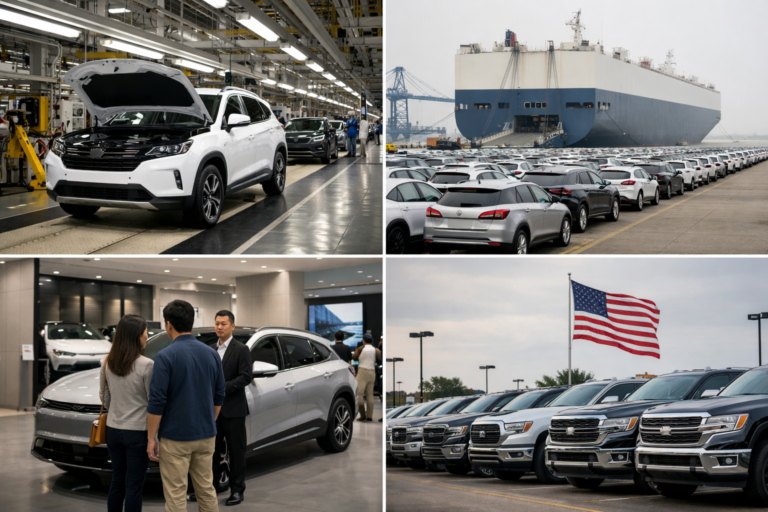
Notably, BMW has taken a “flexible architecture” approach. Unlike Mercedes’ initial EVA platform or Volkswagen’s MEB-only push, BMW builds EVs and internal combustion vehicles on shared lines. Models like the i4 and i5 sit alongside gasoline 3 and 5 Series variants, while the upcoming Neue Klasse platform, launching in 2025–2026, will underpin dedicated next-generation EVs.
CEO Oliver Zipse has consistently rejected hard end-dates for combustion engines. In prior statements reported by Bloomberg, he argued that “technology openness” protects margins and customer choice. Translation: BMW doesn’t want to be caught flat-footed if EV adoption slows.
Why It Matters
Luxury buyers are leading EV adoption in most global markets. According to the International Energy Agency (IEA), premium brands account for a disproportionate share of EV sales in Europe and China. That gives BMW an advantage — but also pressure. If it fails to scale BMW EV sales fast enough, rivals will capture affluent early adopters.
Meanwhile, regulatory tailwinds are real. The European Union’s planned 2035 ban on new combustion car sales, outlined by the European Commission, forces automakers to electrify or face steep fleet-average CO₂ fines. In the U.S., stricter EPA emissions standards for 2027–2032 effectively push manufacturers toward higher EV penetration.
However, demand volatility remains the wild card. We’ve seen signs of cooling EV growth in certain regions, particularly as incentives phase out and interest rates stay elevated. As we’ve covered in our analysis of auto tariffs and pricing pressure, geopolitical risks can quickly ripple into vehicle affordability.
The Bigger Picture
BMW’s strategy differs sharply from Tesla’s all-in approach and from brands like Ferrari, which are cautiously entering the EV era — see our breakdown of the Ferrari Luce EV strategy. BMW is hedging. It wants scale in EVs without abandoning profitable combustion SUVs and performance sedans.
Historically, BMW thrives on balanced portfolios. The 3 Series and X5 have long funded innovation. In fact, the 2026 BMW X5 M Competition — which we recently tested — remains a high-margin halo product. You can read our full take here: 2026 BMW X5 M Competition Review. Vehicles like that generate the cash flow funding Neue Klasse battery investments.
Globally, China will likely determine whether BMW electric vs gas parity is realistic. China accounts for roughly one-third of BMW’s global deliveries. Yet competition there is brutal, with BYD, NIO, and Tesla cutting prices aggressively. If China EV growth slows — as we’ve seen in recent sales data from our report on China’s auto market slide — BMW’s math gets tougher.
What the Competition Is Doing
Mercedes-Benz initially targeted 50% electrified sales (including hybrids) by 2025 but has since moderated its timeline, citing softer demand. Audi, part of Volkswagen Group, plans to launch only new EV models from 2026 onward but continues selling combustion vehicles for years after. Meanwhile, Tesla remains 100% electric and continues expanding capacity globally.
Volkswagen is pushing scale aggressively with its MEB and upcoming SSP platforms. Our analysis of Volkswagen’s 2026 EV strategy shows how serious Wolfsburg is about volume. However, VW’s margins lag BMW’s in many segments, highlighting a key difference: BMW prioritizes profitability over raw EV share.
Volvo, which reported strong early-2026 EV momentum, is moving faster toward an EV-only lineup. Yet even Volvo has quietly adjusted timelines as infrastructure and demand fluctuate. The pattern is familiar: bold announcements, then incremental recalibration.
What It Means for You
If BMW hits its targets, expect broader EV availability across price points — from entry-level 3 Series equivalents to high-end SUVs. Additionally, battery costs are projected by BloombergNEF to decline gradually toward 2030, which could stabilize pricing.
However, near-term affordability remains a hurdle. Average transaction prices for luxury EVs still exceed $60,000 in the U.S., according to industry data. Combined with financing rates hovering above 6%, that’s a barrier for many buyers. If you’re considering an EV, our guide to buying an EV in 2026 breaks down incentives and charging realities.
For traditional BMW fans, combustion models aren’t disappearing tomorrow. BMW electric vs gas balance means you’ll likely have both options well into the 2030s. The contrarian insight? BMW’s reluctance to kill off gasoline entirely may protect resale values for both powertrains by preventing oversupply on either side.
What to Watch Next
First, watch Neue Klasse production ramp-up in 2026 and 2027. Delays or battery supply constraints would jeopardize 2030 parity. Second, monitor Chinese EV pricing wars — they directly affect BMW EV sales volumes and margins. Third, pay attention to U.S. and EU incentive policies after 2027; regulatory shifts can swing adoption curves dramatically.
Additionally, keep an eye on charging infrastructure investment. Without reliable public charging growth — tracked by the U.S. Department of Energy — luxury EV growth could plateau. Finally, quarterly earnings calls will reveal whether EV margins approach combustion parity, a key inflection point.
The Upside
- Flexible production reduces risk if EV demand fluctuates
- Luxury positioning supports higher EV margins
- Regulatory alignment in EU and U.S. favors electrification
- Neue Klasse platform promises efficiency gains and range improvements
The Concerns
- China market volatility could derail growth projections
- High interest rates dampen premium EV demand
- Battery supply chain risks remain unresolved
- Competitors like Tesla and BYD undercut pricing aggressively
Here’s my bottom line: matching electric and gas sales by 2030 is possible — but far from guaranteed. The trajectory of BMW EV sales depends less on press releases and more on China’s demand curve, battery economics, and charging infrastructure execution.
BMW electrification strategy is pragmatic rather than ideological. That may not grab headlines like Tesla’s moonshots, but over a five-year horizon, disciplined execution often beats bold promises. The next 24 months will tell us whether BMW’s balanced bet was visionary — or merely cautious.
Disclosure: This article may contain affiliate links. If you make a purchase through these links, we may earn a small commission at no extra cost to you. This helps support RevvedUpCars.com. Learn more.