
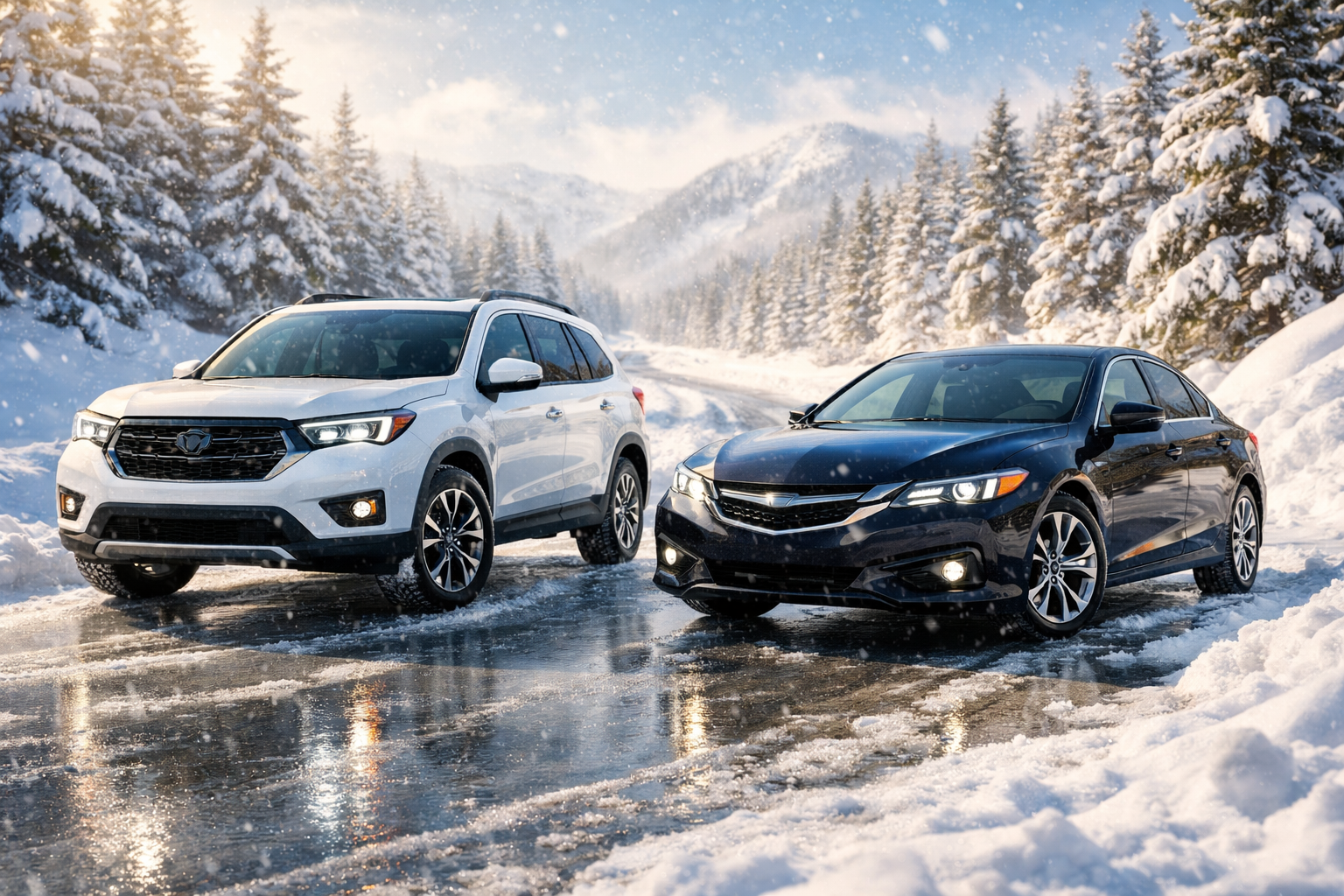
AWD won’t save you from physics, and that’s the hill I’m prepared to slide down—sideways—on. Every winter I watch confident SUV drivers pirouette into snowbanks, convinced that a shiny AWD badge is some sort of Hogwarts spell against ice. It isn’t, and AWD winter driving is where myths go to die.
This matters right now because winter doesn’t care if you’re in a $28,000 Subaru Impreza or a $75,000 Audi Q5—cold rubber, low grip, and momentum apply equally. I’ve driven dozens of SUVs and sedans on frozen lakes and real roads, and the truth is uncomfortable: technique and tires matter more than drivetrains. If you’re relying on AWD alone, you’re basically trusting a lazier-than-a-cat-in-a-sunbeam throttle response to beat black ice.
Let’s talk honestly about AWD winter driving, why it helps, where it absolutely doesn’t, and how to not become the viral clip that Doug DeMuro politely roasts on YouTube. Grab a pint; this is going to be educational.
Why AWD Winter Driving Isn’t a Get-Out-of-Jail-Free Card
AWD helps you get moving, not stop, and stopping is where winter crashes happen. Your Toyota RAV4 AWD, Subaru Outback, or BMW X3 can send power to all four wheels, but braking is still handled by four contact patches roughly the size of your palm. On ice, those patches have about as much grip as a politician’s promise.
Here’s the controversial hot take: a front-wheel-drive Honda Civic on proper winter tires will out-brake and out-corner an AWD SUV on all-seasons every single time. NHTSA crash data backs this up—loss of control, not lack of traction, is the winter killer, according to NHTSA. AWD is a tool, not a force field.
SUVs vs Sedans: Who Actually Has the Advantage?
SUVs like the Mazda CX-5, Ford Escape, and Hyundai Tucson offer ground clearance, which helps when snow gets deep—say 8 inches or more. But higher ride height also means a higher center of gravity, which is winter’s way of saying “let’s see how fast you spin.” I’ve felt this firsthand hustling a CR-V downhill; it wanted to swap ends like a badly set-up drift car.
Sedans like the Audi A4, Subaru Legacy, and even a humble Toyota Camry sit lower and feel more planted. Less weight transfer equals more predictable grip, especially during emergency maneuvers at 30–40 mph. If you live where roads are plowed quickly, a sedan with winter tires is often the smarter, cheaper choice.
The Tire Truth Nobody Wants to Hear
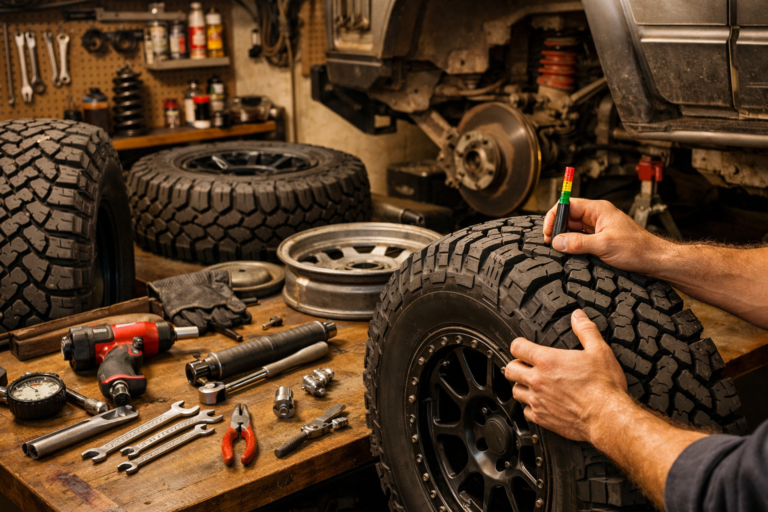
I’ll say it louder for the people in the heated third row: TIRES MATTER MORE THAN AWD. Winter tires use softer rubber compounds that stay flexible below 45°F, while all-seasons turn into hockey pucks. That’s why a $600 set of winters can transform your car more than any drivetrain option.
If you want specifics, we’ve already broken down the best options in AWD Snow Tires 2026: Best Picks for Snow. Brands like Michelin X-Ice and Bridgestone Blizzak can cut stopping distances by 20–30% on snow at 30 mph. Fuel economy drops slightly—about 1–2 mpg—but that’s a small price to pay for not rearranging your bumper.
AWD Winter Driving Techniques That Actually Work
First rule: smooth inputs. If you stab the throttle like you’re launching a Golf R (0–60 mph in about 4.7 seconds), the traction control will have a panic attack and cut power anyway. Roll onto the throttle gently, especially when turning, and let the system do its job.
Second rule: increase following distance—double it, minimum. At 30 mph on packed snow, stopping distances can stretch past 150 feet, according to FuelEconomy.gov testing data. AWD helps you go; it doesn’t rewrite Newton’s laws.
Common Winter Mistakes I See Every Year
Overconfidence is the big one, especially in AWD SUVs like the Jeep Grand Cherokee or Tesla Model Y. Drivers feel the grip on acceleration and assume braking will match—spoiler alert, it won’t. That mismatch is how ditches get new decorations.
Another sin is turning off stability control because “it’s annoying.” Unless you’re Chris Harris on a closed course, leave it on. Modern systems are calibrated for safety, not lap times, and they can correct slides faster than human reflexes.
Pro Tips From Too Many Cold Miles
Practice emergency braking in an empty parking lot after the first snowfall. Learn how your ABS feels at 20–25 mph so it doesn’t surprise you at 45. This is part of AWD winter driving that no brochure mentions.
Also, keep your car prepped. Our Winter Driving Checklist: Top Tips Before a Cold Snap covers the basics—battery health, washer fluid rated to -20°F, and tire tread depth of at least 6/32 inches. Lazy maintenance is the enemy of winter safety.
When AWD Actually Makes Sense
If you live in rural areas with unplowed roads, steep inclines, or frequent snowstorms, AWD earns its keep. Subaru’s symmetrical AWD system, for example, distributes torque predictably and works brilliantly with proper tires—check Subaru’s own breakdown on Subaru’s official site.
But if you’re commuting on salted highways in a city, AWD is often a $1,500–$3,000 option that delivers psychological comfort more than real-world safety. That money is better spent on tires and training.
AWD vs FWD: The Pub Argument, Settled
I’ve lost count of how many times this comes up over beers. Short version: AWD helps you start, FWD with good tires helps you stop and steer just as well. We’ve gone deep on this in AWD vs FWD Winter: Safer Drivetrain on Snowy Roads, and the data is clear.
If you’re choosing between a FWD sedan starting around $27,000 and an AWD SUV starting around $32,000 (check manufacturer website for latest pricing), don’t assume the pricier one is safer by default. Safety is a system, not a badge.
Pros
- AWD improves traction when accelerating on snow and ice
- Useful in deep snow and on steep, unplowed roads
- Modern systems integrate well with stability control
- Boosts driver confidence in harsh conditions
Cons
- Does not improve braking distances
- Can encourage dangerous overconfidence
- Costs more upfront and can reduce fuel economy by 1–2 mpg
So, is AWD enough? No—and anyone who tells you otherwise is selling something. AWD winter driving works best when it’s part of a bigger picture: good tires, smart technique, and a healthy respect for winter’s ability to humble even the cockiest SUV. Remember, the goal isn’t to feel invincible; it’s to get home without starring in someone else’s dashcam compilation.