
Here’s a spicy truth that makes AWD marketing departments choke on their lattes: all-wheel drive does not magically make you safer on ice. I’ve watched plenty of confident AWD heroes pirouette into snowbanks while a humble front-wheel-drive hatchback toddled past like it knew something they didn’t. The AWD vs FWD winter debate matters because snowy roads don’t care about your badge, your ego, or that “Symmetrical Traction Experience” brochure.
Right now, dealerships are upselling AWD like it’s a vaccine against winter stupidity, often for $1,500 to $3,000 extra. Meanwhile, physics is sat in the corner, arms crossed, muttering about tires, weight transfer, and braking distances. If you actually want snow driving safety on icy roads, you need to understand what AWD and FWD do well, what they don’t, and where the myths get dangerous.
I’ve driven dozens of SUVs and crossovers back-to-back in blizzards, from a $24,000 Toyota Corolla to a $72,000 BMW X5, and the lesson is consistent. AWD vs FWD winter isn’t about which badge feels more reassuring; it’s about which setup matches your conditions, your driving skill, and whether you’ve invested in proper rubber.
Why AWD vs FWD Winter Safety Is So Confusing
The confusion starts with traction versus control, a distinction most YouTube comments conveniently ignore. AWD helps you get moving by sending power to more wheels, while FWD relies on the front tires to pull you along. Neither drivetrain, and I’ll say this slowly, helps you stop faster on icy roads.
Braking is governed by tire grip and ABS calibration, not how many axles are driven. The NHTSA’s own winter safety guidance quietly agrees, if you care to read it on NHTSA.gov. AWD drivers often feel safer, drive faster, and then discover too late that confidence doesn’t increase friction.
Front-Wheel Drive: The Underrated Winter Workhorse
FWD gets mocked as boring, but in winter it’s the sensible boots and coat of drivetrains. With the engine sitting over the driven wheels, you get predictable traction when accelerating and a natural tendency to understeer, which is far easier for average drivers to manage on snow. That’s why cars like the Honda Civic, Toyota Camry, and Mazda3 remain winter darlings in snowy states.
Most modern FWD cars weigh less than AWD equivalents by 150 to 250 pounds, which helps braking and steering response. Fuel economy is better too, often by 2–4 mpg combined, according to FuelEconomy.gov. My controversial hot take: a FWD car on proper winter tires is safer for 80% of drivers than an AWD car on mediocre all-seasons.
All-Wheel Drive: Traction Hero, Overconfidence Villain
AWD shines when you need to climb steep, unplowed hills or pull away from a dead stop on packed snow. Systems in cars like the Subaru Outback, Audi A4 quattro, and Toyota RAV4 AWD can shuffle torque in milliseconds, making forward progress feel effortless. That effortlessness is exactly where the danger creeps in.
AWD adds complexity, weight, and cost, and it doesn’t bend the laws of friction. I’ve tested AWD crossovers that felt unstoppable until braking zones arrived, at which point they behaved like shopping carts on a frozen lake. AWD vs FWD winter debates often ignore that AWD helps you go, not stop or turn.
Tires: The Real King of Winter Traction
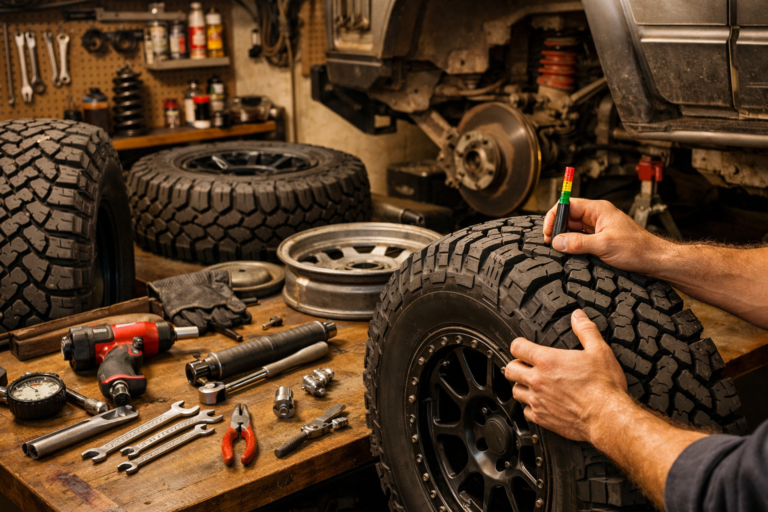
If there’s one hill I’ll happily die on, it’s this: tires matter more than drivetrain, full stop. A $700 set of proper winter tires transforms a FWD Corolla into a snow ninja, while an AWD SUV on worn all-seasons becomes a 4,500-pound liability. We’ve covered this in painful detail in our snow tires guide, and the data backs it up.
Winter tires use softer compounds and aggressive siping to bite into snow and ice at temperatures below 45°F. Stopping distances can improve by 20–30% compared to all-seasons, which is the difference between a near-miss and a body shop visit. AWD vs FWD winter safety arguments without tire context are basically pub myths.
Electronic Aids: Stability Control Is the Unsung Hero
Modern stability control systems are the quiet geniuses saving your bacon when things get sketchy. They brake individual wheels and cut power faster than you can say “oh no,” especially effective in FWD cars where understeer is easier to correct. Even base models in 2025 and 2026 cars are leagues ahead of what we had a decade ago.
AWD systems paired with good stability control can feel miraculous, but they still rely on tire grip. Disable these systems, and you’ll quickly learn how much they were doing for you. If you think AWD alone keeps you safe, you might enjoy our piece on winter driving myths that can hurt you.
Cost, Efficiency, and Real-World Ownership
AWD usually costs more upfront, often starting around $1,500 extra, with higher maintenance over time due to additional differentials and driveshafts. Fuel economy typically drops by 1–3 mpg, which adds up if you commute daily. For buyers cross-shopping a Honda CR-V FWD, Subaru Forester AWD, and Hyundai Tucson AWD, that matters.
FWD cars are cheaper, simpler, and lighter, which translates to fewer long-term headaches. If you live in a city where roads are plowed quickly, AWD is often redundant. Spend the savings on winter tires, alignment checks, and maybe a driving course instead.
When AWD Actually Makes Sense
If you live up a mountain, tow small trailers on snowy roads, or routinely deal with unplowed rural routes, AWD earns its keep. Vehicles like the Subaru Crosstrek, Audi Q5, and Toyota Highlander AWD genuinely reduce stress in these conditions. For those drivers, AWD vs FWD winter safety tilts toward AWD, assuming equal tires.
Just don’t confuse capability with invincibility. Even Chris Harris will tell you that grip is finite, and AWD doesn’t create more of it. It just helps you access what’s already there.
Pros
- AWD improves acceleration on snow and steep inclines
- FWD is predictable and forgiving for average drivers
- FWD costs less and delivers better fuel economy
- Both benefit massively from proper winter tires
Cons
- AWD encourages overconfidence on icy roads
- Neither drivetrain improves braking without good tires
- AWD adds weight, complexity, and maintenance costs
So, AWD vs FWD winter safety isn’t a simple winner-takes-all showdown. For most people, a FWD car on quality winter tires is the smarter, safer choice, and yes, that’s the hill I’m dying on. AWD is brilliant in specific conditions, but the real hero of snowy roads is still four good tires and a driver who respects physics.