
Auto shows 2026 are either a glorious candy store for car nerds or a fossilized marketing exercise with more neon lighting than substance, depending on who you ask. Here’s my hot take after 15 years of trudging through convention halls: if you’re actually buying a car soon, they can still be brilliant, but only if you know what you’re doing. Walk in blind, and you’ll leave with a tote bag, a lukewarm coffee, and absolutely no clarity. Walk in prepared, and you might save yourself months of dealer nonsense.
This matters right now because the way we buy cars has changed faster than a Tesla Model Y hitting 60 mph in about 4.8 seconds. Prices are still hovering around “are you joking?” levels, subscriptions are everywhere, and brands like Ford, BMW, and Hyundai are quietly reshaping lineups for 2025 and 2026. Auto shows sit at the crossroads of all that chaos, which is why auto shows 2026 deserve a proper buyer-focused reality check.
I’ve driven dozens of SUVs, EVs, and so-called “lifestyle crossovers,” and I’ll say this upfront: an auto show will never replace a test drive. But it can absolutely help you avoid the wrong shortlist, especially when you’re cross-shopping stuff as different as a Toyota RAV4 Hybrid, Tesla Model Y, and Mazda CX-50. Think of it as speed dating for cars, minus the awkward eye contact.
Why Auto Shows 2026 Still Matter for Buyers
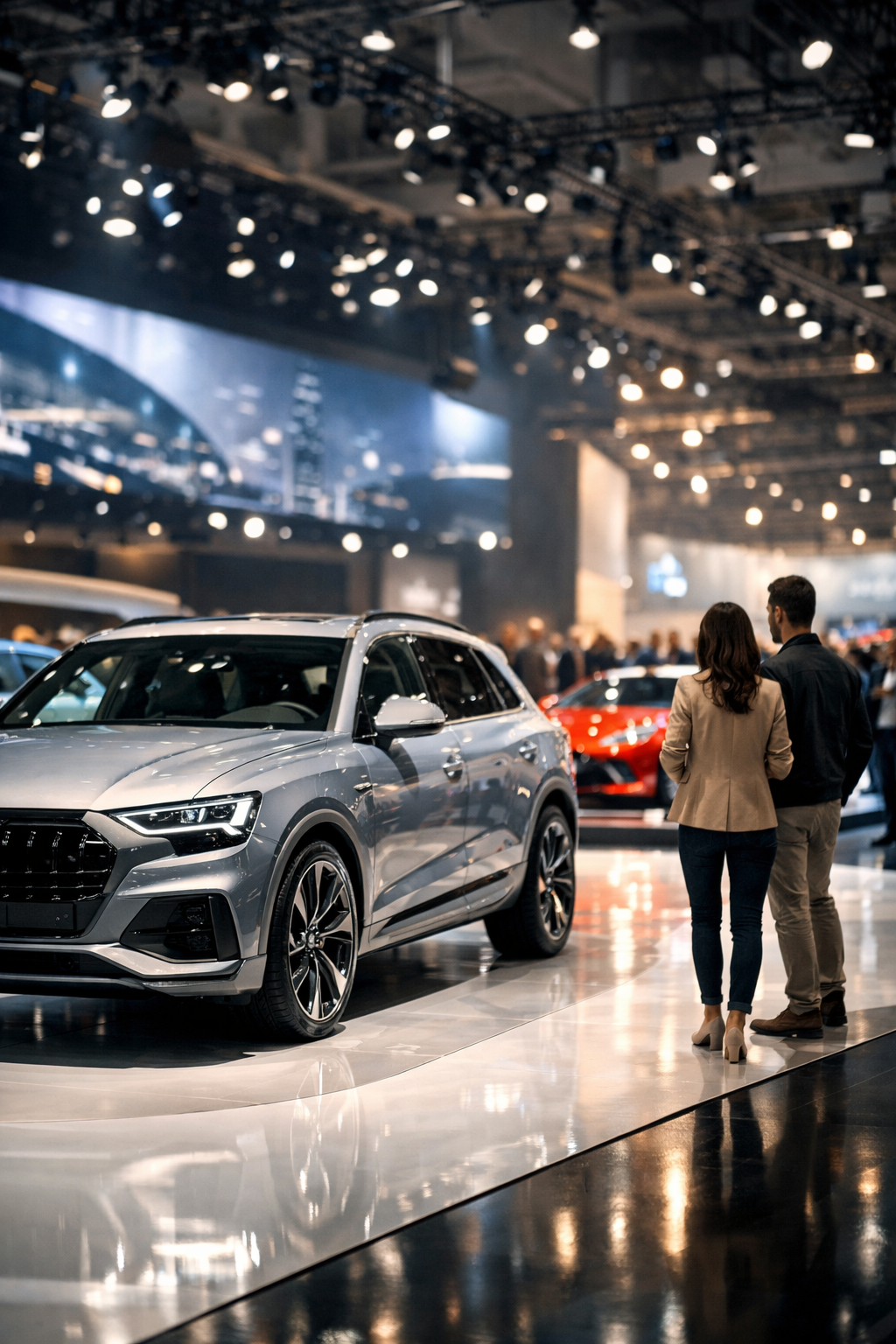
The biggest advantage of auto shows 2026 is compression. In three hours, you can sit in 30 cars that would otherwise require weeks of dealer hopping, fake smiles, and finance managers named Brad. You’ll spot deal-breakers instantly, like infotainment screens that look like a 2012 iPad glued on with hope, or rear seats tighter than Ryanair legroom.
You also get real-world context. A Chevy Silverado looks huge on Instagram, but park it next to a Ford F-150 and a Ram 1500 under show lights, and suddenly proportions make sense. That perspective is gold, especially if you’re debating whether a midsize SUV like a Honda CR-V is “big enough” or if you’re just buying anxiety on wheels.
The Stuff Dealers and YouTube Can’t Show You
YouTube reviewers like Doug DeMuro will show you every quirky detail, and bless him for it, but even the best camera can’t tell you if a seat murders your lower back in five minutes. Auto shows let you feel materials, test driving positions, and see if that “premium soft-touch surface” is actually just textured sadness. I’ve watched buyers kill a $55,000 decision because the steering wheel felt like a Fisher-Price toy.
This is especially useful when comparing brands that look similar on paper. A Kia Sportage Hybrid and a Toyota RAV4 Hybrid both promise around 40 mpg combined, approximately, but their interiors tell very different stories. One feels like a tech-forward lounge, the other like a sensible pair of running shoes, and only one of those fits your personality.
Where Auto Shows Fall Flat in 2026
Let’s be ruthless: the days of earth-shattering debuts are mostly gone. Brands drip-feed reveals online because it’s cheaper and hits TikTok faster, so many stands feel like reruns. You’ll see “concept-inspired design language” slapped on production cars that look exactly like last year’s model with angrier headlights.
My controversial hot take: if you’re going purely to see future tech, CES has eaten the auto show’s lunch. Traditional shows now serve buyers more than dreamers, and that’s fine, but only if you adjust expectations. Expect fewer supercars and more earnest explanations about charging curves and over-the-air updates.
How Smart Buyers Should Use Auto Shows 2026
Go in with a hit list of five cars, not fifty. Sit in them, adjust mirrors, fiddle with climate controls, and check rear-seat space like you actually own knees. Take photos of window stickers and specs, then cross-check claims later using FuelEconomy.gov for MPG or range reality.
This is also where you should ask awkward questions. Product specialists aren’t salespeople, and they’ll often admit things a dealer won’t, like “yeah, that third row is more for children or very optimistic adults.” It’s the perfect prelude to deeper research, like our guide on whether buying new actually makes sense in 2026.
EVs, Hybrids, and the Confusion Factor
Electric cars are where auto shows still shine, because charging ports, trunk space, and regen settings are deeply personal things. A Tesla Model 3, Hyundai Ioniq 6, and BMW i4 all hit 0-60 mph in the 3.5 to 5.8 second range depending on trim, but they feel wildly different inside. Seeing them side by side cuts through marketing fluff instantly.
You should still verify safety and ownership data later through places like NHTSA, but the show floor helps you narrow which EVs deserve that homework. It also exposes nonsense, like cargo areas that vanish the moment you fold the seats, or frunks that barely hold a backpack.
The Money Question Everyone Avoids
Auto shows won’t give you the best price, full stop. What they give you is leverage, because you’ll know trims, options, and alternatives better than the average salesperson. That knowledge feeds directly into smarter negotiations and strategies like those in our lower car payment guide.
Ignore “show-only incentives” unless they’re backed by paperwork and verified later on a manufacturer site, like Toyota’s official pricing pages (check manufacturer website for latest pricing). The real win is avoiding a $3,000 mistake on features you don’t need or, worse, hate.
So… Who Should Still Go?
If you’re a casual fan chasing Instagram moments, you’ll be underwhelmed. If you’re a buyer deciding between a Subaru Outback, Honda Passport, and Mazda CX-90 within the next six months, auto shows 2026 are still massively useful. They’re inefficient entertainment but efficient research.
I’ll say it plainly: skipping auto shows entirely and relying on configurators is like ordering a tailored suit without trying one on. You might get lucky, but odds are something will itch.
Pros
- See dozens of competitors side by side in one visit
- Spot interior and comfort deal-breakers instantly
- Ask non-sales staff honest questions
- Excellent for narrowing shortlists before test drives
Cons
- No real test drives or pricing transparency
- Fewer true debuts than a decade ago
- Easy to get overwhelmed without a plan
Auto shows 2026 aren’t dead; they’ve just grown up and put on sensible shoes. Use them as a tool, not a spectacle, and they’ll still earn their keep. Go in expecting fireworks, and you’ll leave grumpy, hungry, and wondering why you paid for parking.