
The Audi new grille landed with the subtlety of a slammed door at a Michelin-starred restaurant, while BMW quietly tweaked its logo like it was updating a LinkedIn headshot. One of these changes actually affects how a car looks, feels, and ages; the other mostly affects how brand managers sleep at night. If you care about car design trends in 2026—and you should, because you’re the one staring at this thing every morning—this isn’t a trivial spat.
I’ve driven dozens of 2025 and 2026 Audis and BMWs back-to-back, and here’s the pub-friendly truth: front-end design now matters more than horsepower bragging rights. With EVs normalizing 0–60 mph in the low 4s and SUVs doing 30 mpg like it’s nothing, design is the last battlefield where brands still swing wildly. The Audi new grille versus the BMW logo change is a perfect snapshot of where German luxury is either evolving—or disappearing up its own buzzword.
This matters right now because both brands are fighting Tesla, Mercedes-Benz, Lexus, Genesis, and even Porsche not just on performance, but on identity. When everything drives “pretty good,” looks become the tiebreaker. And yes, I’m about to upset some BMW loyalists.
The Contenders: Audi’s Face vs BMW’s Signature
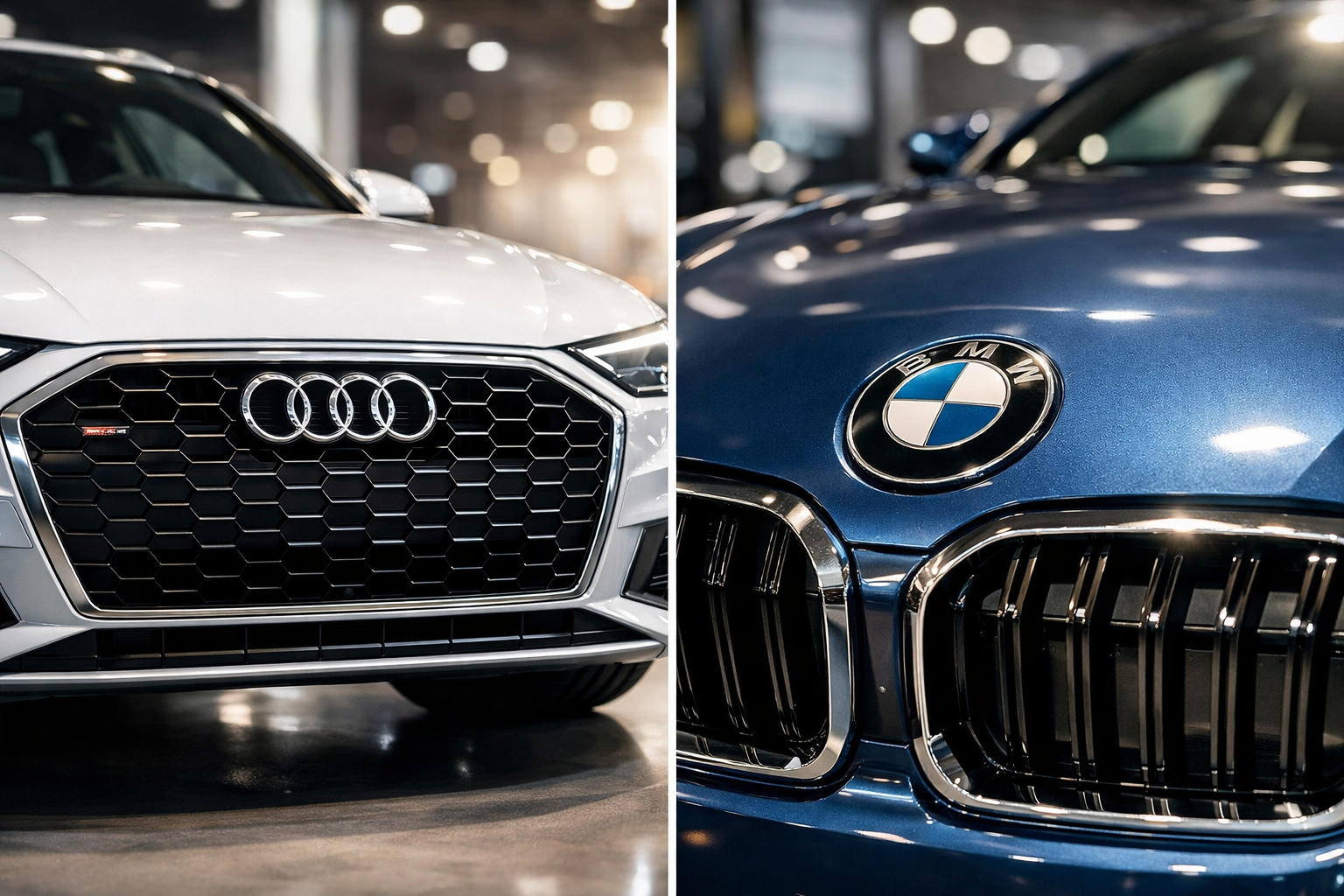
Audi’s latest grille redesign rolled out across the 2025–2026 A6, Q7, and RS models, shrinking the visual bulk while sharpening the edges. BMW’s updated logo, introduced quietly on refreshed 3 Series and i5 models, ditched the black ring for a flatter, more minimalist look. One screams “new era,” the other whispers “committee-approved.”
Design-wise, Audi is betting the farm on front-end coherence, while BMW is nibbling around the edges of brand heritage. Mercedes went full spaceship with the EQ line, Lexus doubled down on the spindle, and Genesis keeps winning design awards like it’s collecting Pokémon. Against that backdrop, these two changes couldn’t be more different in ambition.
Design Face-Off: Audi New Grille vs BMW Logo Change
Let’s get blunt: the Audi new grille actually changes how the car looks from 50 feet away. It’s wider, lower, and integrates lighting elements better, especially on S and RS trims where performance credibility matters. BMW’s logo change, meanwhile, is something Doug DeMuro will notice immediately and your neighbor will never clock.
Audi’s grille also fixes a long-standing issue—fake aggression. The previous designs looked like they were trying too hard, like a CrossFit bro in a three-piece suit. The new approach is cleaner, more technical, and ages better, which matters when you’re dropping approximately $55,000 on an A6 (check manufacturer website for latest pricing).
Interior & Tech: Where Logos Don’t Matter
Here’s the controversial hot take: interior design now carries more brand weight than exterior badges. BMW still nails ergonomics, but its new logo does nothing once you’re staring at a curved display pumping out 14.9 inches of touchscreen. Audi’s interiors, especially in the 2026 lineup, feel like they were designed by engineers who actually drive.
This is where BMW’s logo tweak feels like a missed opportunity. Imagine if they’d redesigned steering wheel touchpoints or improved haptic feedback instead. Audi’s exterior change complements an interior philosophy that’s already strong, while BMW’s logo feels disconnected from the driving experience Chris Harris would actually care about.
Performance Credibility: Looks Backed by Numbers
Design only works if it aligns with performance, and Audi understands this better right now. An RS6 Avant still does 0–60 mph in about 3.5 seconds with 591 hp, and the grille looks like it could inhale small animals. BMW’s M5, packing around 717 hp in its latest electrified form, doesn’t look any more menacing because of a logo tweak.
When Mercedes-AMG and Porsche are making their performance cars look purposeful, BMW’s minimalist branding feels oddly soft. The Audi new grille visually communicates performance intent, which is crucial when buyers cross-shop against AMG E-Class models and Porsche Panamera variants.
Value & Brand Perception in 2026
Brand perception directly affects resale value, and this is where design choices pay rent. Audi’s cleaner front-end is likely to age better over a 5–7 year ownership cycle, which matters if you’ve read our take on whether a new car is worth it in 2026. BMW’s logo change won’t hurt resale, but it won’t help it either.
Luxury buyers are savvier now, often using tools like smart payment strategies to stretch budgets. They want designs that won’t look dated when the next refresh drops. Audi’s move feels future-proof; BMW’s feels like a footnote.
Car Design Trends: Who’s Actually Leading?
Zooming out, car design trends in 2026 favor clarity and honesty. Fake vents are dying, overstyled grilles are being reeled in, and EV aerodynamics are forcing brands to rethink faces. Audi’s approach aligns with this shift, while BMW’s logo tweak feels like rearranging deck chairs.
Genesis, for example, has built an entire luxury identity in under a decade by committing hard to design. BMW, bizarrely, seems hesitant to make bold visual calls outside of polarizing grilles. The Audi new grille shows what happens when a brand actually listens to criticism.
Safety, Efficiency, and the Stuff Marketing Ignores
Neither change directly affects crash ratings, which you can verify on NHTSA.gov, but design impacts pedestrian safety and aero efficiency. Audi’s smoother front-end helps with airflow, contributing to better highway efficiency—think 27–30 mpg combined on mild-hybrid A6 models, per FuelEconomy.gov.
BMW’s logo tweak is neutral here, which is the problem. When regulations are tightening and EV range anxiety still exists, every design choice should earn its keep. Audi’s does; BMW’s just exists.
Comparison Table: Design Impact Snapshot
| Spec | Audi Lineup (2025–2026) | BMW Lineup (2025–2026) |
|---|---|---|
| Starting Price | Approximately $45,000 | Approximately $44,000 |
| Design Change | Full front-end grille redesign | Logo and badge update |
| Visual Impact | High | Low |
| Brand Cohesion | Improved across models | Largely unchanged |
| Longevity | Likely to age well | Neutral |
| Warranty | 4 yr/50,000 mi | 4 yr/50,000 mi |
Pros
- Audi’s new grille meaningfully updates brand identity
- Better alignment with performance models
- Improves perceived value and longevity
- Fits broader car design trends
Cons
- BMW logo change feels underwhelming
- Design impact is easy to miss
- Missed opportunity for deeper refresh
So which matters more? The Audi new grille, and it’s not even close. BMW’s logo change is polite, safe, and utterly forgettable, while Audi actually took a risk that pays off every time you walk up to the car. In a world where everything is fast, efficient, and expensive, design still has to make you feel something—and Audi remembered that.