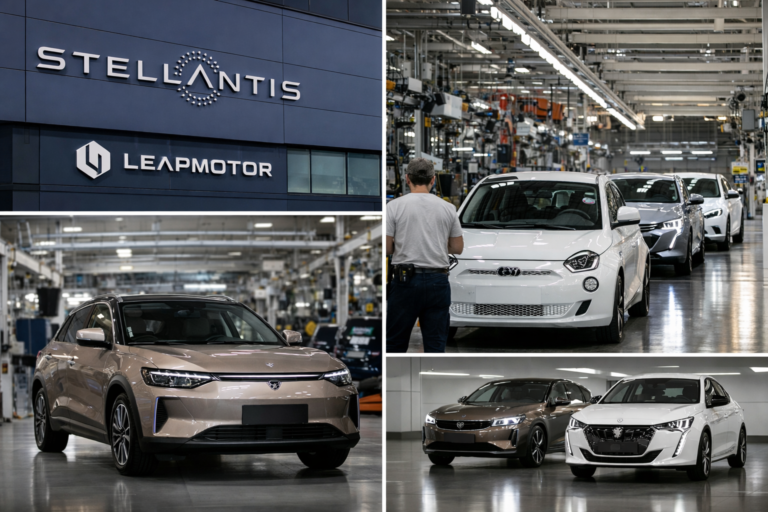

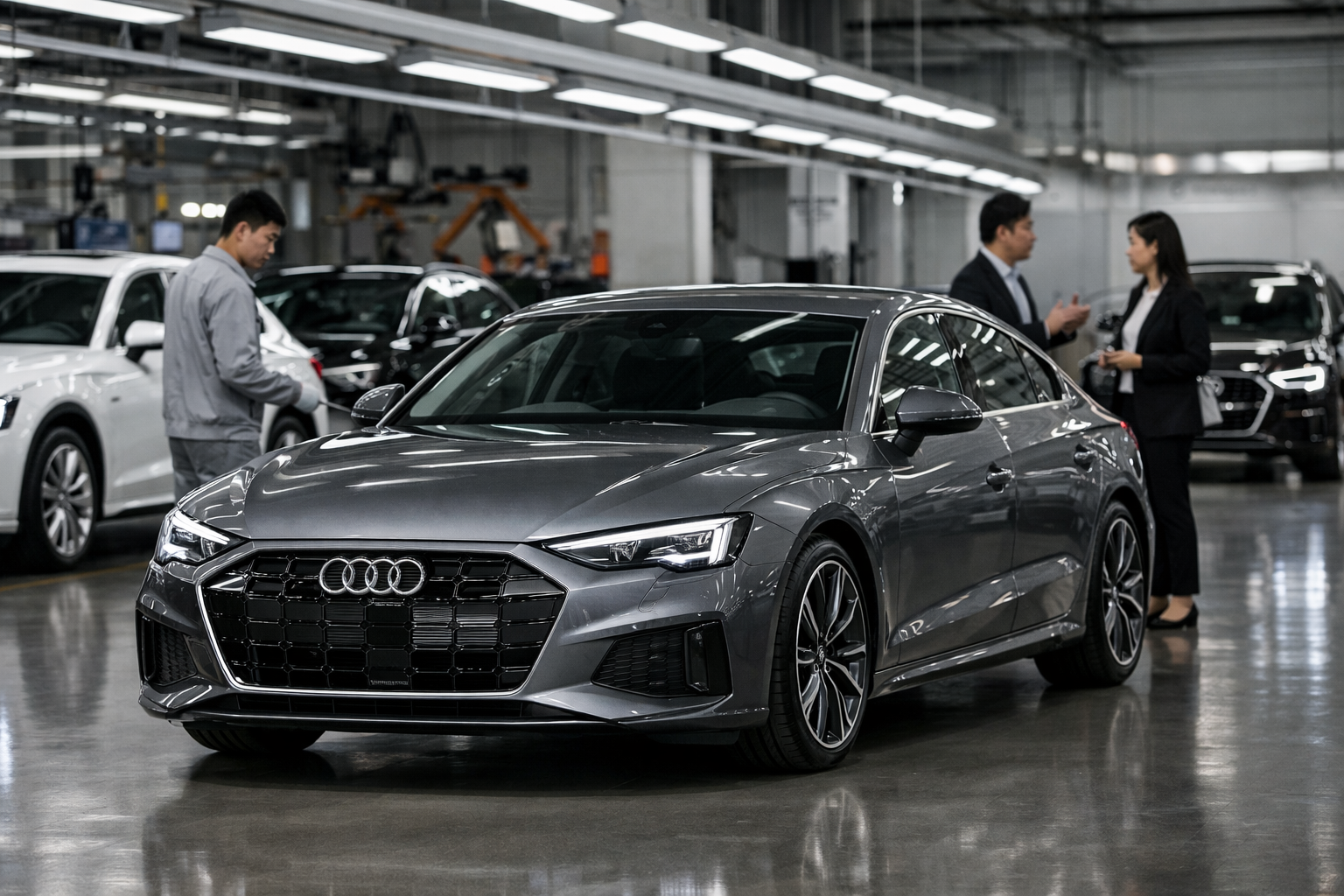
Audi is slashing prices on its new E5 Sportback in China just months after launch, a rare public admission that Audi China sales are under intensifying pressure from domestic EV brands. Dealers in major cities including Shanghai and Shenzhen began advertising discounts of up to 15% in late February 2026, according to local media and pricing data reviewed by Reuters. For a model positioned as a tech-forward halo for Audi’s China strategy, that’s a flashing yellow light.
The E5 Sportback was supposed to help Audi regain momentum in the world’s largest car market. Instead, aggressive E5 Sportback discounts are highlighting how quickly Chinese buyers are shifting toward homegrown brands like Xiaomi and Geely-owned Zeekr. This isn’t just about one slow-selling model; it’s a signal that Audi’s long-standing China playbook is under strain.
The Headlines
- What: Audi dealers in China are offering steep discounts on the E5 Sportback months after launch
- Who: Audi China, FAW-Volkswagen joint venture, competing brands Xiaomi and Zeekr
- When: Discounts surfaced in February–March 2026
- Impact: Signals mounting pressure on Audi’s premium positioning in the world’s largest EV market
- Key Number: Up to 15% off MSRP in some cities
What Happened
Audi launched the E5 Sportback in late 2025 as a locally produced electric fastback aimed squarely at China’s tech-savvy premium buyers. Built through its FAW-Volkswagen joint venture, the model was positioned against the Tesla Model Y, Zeekr 001, and newer entrants like the Xiaomi SU7.
However, by February 2026, dealers began offering discounts reportedly ranging from RMB 30,000 to RMB 50,000 (roughly $4,000–$7,000), depending on trim and region, according to Reuters and Chinese automotive outlets. That equates to as much as 15% off sticker—unusual for a fresh premium EV.
In a brief statement to local media, Audi said pricing decisions are made by dealers and that it remains “committed to long-term development in China.” Notably, Audi’s China deliveries fell by high single digits in 2025, according to company filings, even as China’s overall EV market grew more than 25% year-over-year, per the China Passenger Car Association.
The timing is critical. Xiaomi’s first EV, the SU7, has reportedly secured over 100,000 orders since launch, according to company statements covered by Bloomberg. Meanwhile, Zeekr delivered more than 140,000 vehicles globally in 2025, with the majority in China. In contrast, Audi’s EV lineup has struggled to match the pace of domestic rivals in software updates, charging ecosystem integration, and perceived value.
Why It Matters
China accounts for roughly 40% of Audi’s global sales. When Audi China sales soften, the impact ripples through Audi’s global earnings and Volkswagen Group’s broader electrification strategy. Volkswagen has already warned investors that competition in China is compressing margins, according to recent earnings calls.
Moreover, discounting so soon after launch undermines brand equity. Premium buyers in China increasingly equate “smart” features—advanced driver assistance, over-the-air updates, voice AI—with value. Domestic brands iterate faster because their development cycles are tightly integrated with local tech ecosystems.
Additionally, aggressive E5 Sportback discounts could pressure resale values. That matters in China’s major cities, where buyers are becoming more sensitive to total cost of ownership. As we’ve seen in other markets, rapid price cuts can erode consumer confidence—Tesla experienced this dynamic globally in 2023 and 2024.
There’s also a strategic angle. Audi has leaned heavily on joint ventures and legacy dealership networks. Meanwhile, Xiaomi sells with a direct-to-consumer, tech-brand playbook. The contrast is stark, and it mirrors the hesitation some Western dealers have shown about new entrants, as we explored in this analysis of US dealer concerns about Chinese brands.
The Bigger Picture
China’s EV market is no longer about early adopters. It’s hyper-competitive, price-sensitive, and increasingly nationalistic. Domestic brands now command more than 60% of the new-energy vehicle market, according to industry data cited by the IEA.
Historically, Audi built its China dominance on long-wheelbase sedans like the A6L, favored by government and business elites. However, the center of gravity has shifted to tech-focused EVs priced between RMB 200,000 and 350,000. That’s exactly where Xiaomi EV competition and Zeekr rivalry are most intense.
Furthermore, regulatory dynamics favor local players. China’s industrial policy has supported battery supply chains and software ecosystems at home. In contrast, European automakers face growing trade scrutiny abroad, as seen in tariff debates covered in our Supreme Court tariffs analysis.
Here’s the contrarian insight: discounting may not signal catastrophic demand failure. It could reflect a deliberate volume strategy to protect factory utilization at FAW-Volkswagen plants. In China’s market, scale often matters more than per-unit margin—at least in the short term.
What the Competition Is Doing
Xiaomi is leveraging its smartphone ecosystem to lock customers into a broader tech platform. The SU7 integrates seamlessly with Xiaomi devices, and early reviews praise its infotainment responsiveness. That software-first approach resonates with younger buyers.
Zeekr, backed by Geely, is pushing upmarket with performance-oriented EVs while aggressively expanding charging infrastructure partnerships. Additionally, BYD continues to dominate on cost control thanks to vertical battery integration, giving it pricing flexibility Audi lacks.
Tesla, meanwhile, has localized production at Gigafactory Shanghai and repeatedly adjusted pricing to defend market share. Although Tesla’s margins have narrowed, it retains strong brand recognition and an established Supercharger network.
In contrast, Audi is balancing legacy combustion models with EV investment. Volkswagen Group has pledged tens of billions of euros toward software and battery development, yet software delays have plagued its Cariad division, according to multiple reports by Reuters. That lag shows up in user experience comparisons.
What It Means for You
If you’re a buyer in China, E5 Sportback discounts mean real savings—at least in the short term. However, weigh that against potential resale depreciation if price cuts deepen.
Additionally, compare feature sets carefully. Domestic rivals often bundle advanced driver assistance and connectivity as standard. As we’ve advised in our Car Buying Tips 2026 guide, focus on total ownership costs, charging access, and software update policies—not just upfront price.
For global consumers, the implications are indirect but meaningful. If Audi China sales continue to weaken, Audi may reallocate resources, delay certain global EV launches, or adjust pricing strategies elsewhere to protect margins.
What to Watch Next
First, monitor Audi’s first-half 2026 China delivery figures. A stabilization would suggest the E5 Sportback discounts are tactical. Continued decline would indicate deeper brand erosion.
Second, watch software updates and feature rollouts. If Audi accelerates over-the-air improvements or announces a China-specific digital platform, that’s a sign it understands the competitive gap.
Finally, pay attention to how Xiaomi EV competition evolves. If Xiaomi scales production smoothly and avoids quality pitfalls, it could permanently reshape the premium segment.
The Upside
- Short-term bargains for Chinese buyers
- Potential boost to Audi’s factory utilization
- Competitive pressure may accelerate software innovation
- Could reset pricing expectations in the premium EV space
The Concerns
- Erodes premium brand positioning
- Signals margin compression for Volkswagen Group
- Risks lower resale values for early buyers
- Highlights ongoing software and tech gap versus Chinese rivals
Having covered three product cycles in China, I can tell you this pattern is familiar: foreign brands underestimate the speed of local innovation, then scramble with incentives. The difference this time is scale. With Xiaomi EV competition and Zeekr rivalry intensifying, and Audi China sales under visible strain, the margin for error is shrinking.
Over the next two to five years, success in China will hinge less on heritage and more on software velocity, ecosystem integration, and price discipline. Audi still has brand equity and engineering depth. But discounts on a flagship EV suggest that in today’s China, that’s no longer enough.
Disclosure: This article may contain affiliate links. If you make a purchase through these links, we may earn a small commission at no extra cost to you. This helps support RevvedUpCars.com. Learn more.