
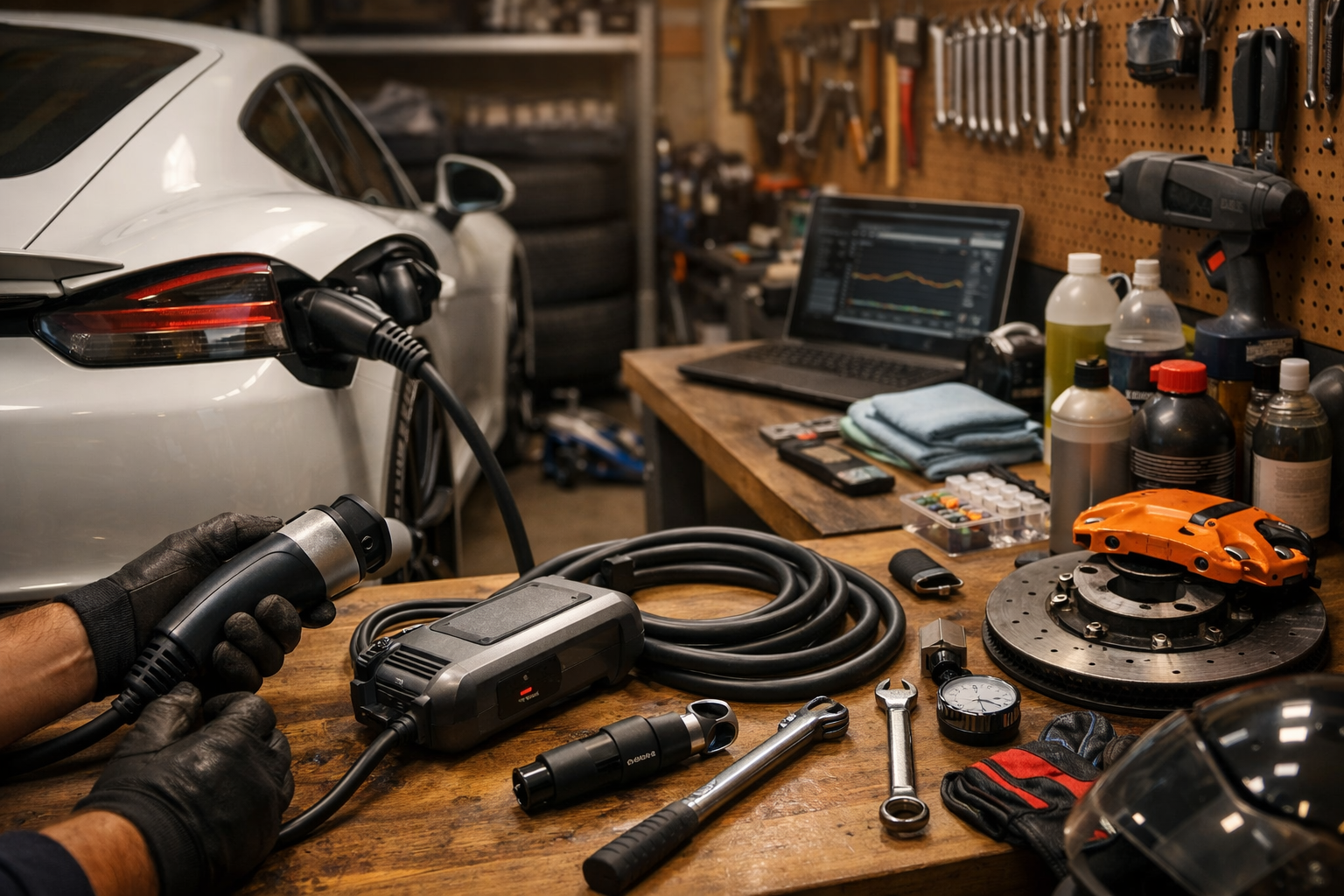
You finally got the call — your 2025 or 2026 electric 718 is on the way. Now you’re staring at your garage thinking, “Okay… what do I actually need to do?” This electric Porsche Cayman guide is your game plan for charging setup, smart maintenance, and getting that thing ready for a proper track day.
This isn’t just about plugging it in. Charging wrong can cost you time and money. Skipping EV-specific maintenance can kill range. And showing up to a track day unprepared? That’s how you limp home at 40% power.
I’ve worked on everything from air‑cooled 911s to the newest EV platforms. Let’s get you ready to own this thing like a pro — without paying dealer prices for stuff you can handle yourself.
What You’ll Need
- Tools: 1/2″ torque wrench, digital tire pressure gauge, trim removal tool, OBD2 scanner (EV-compatible), multimeter
- Parts/Materials: Level 2 home charger ($500–$900), 240V outlet install ($600–$1,500), tire chalk ($10), high-temp brake fluid if tracking ($25–$40)
- Time: Charger install: 2–4 hours (electrician). Track prep: 1–2 hours. Basic inspection: 30 minutes
- Difficulty: 🔧🔧 (2/5 – Moderate planning, light wrenching)
- Dealer Cost: $2,000+ charger install & prep vs DIY/Independent: $1,100–$1,800 — You Save: $500–$900
Why This Matters
EVs are simpler mechanically, but they’re not maintenance-free. Ignore charging setup and you’ll wait 30+ hours on a basic wall outlet. Skip cooling checks before a track day and the car will pull power to protect itself.
Battery conditioning and brake fluid service still follow intervals — check Porsche’s official maintenance schedule on their site and confirm recall status anytime at NHTSA.gov. In general, expect inspections yearly and brake fluid every 2 years (more often if tracked).
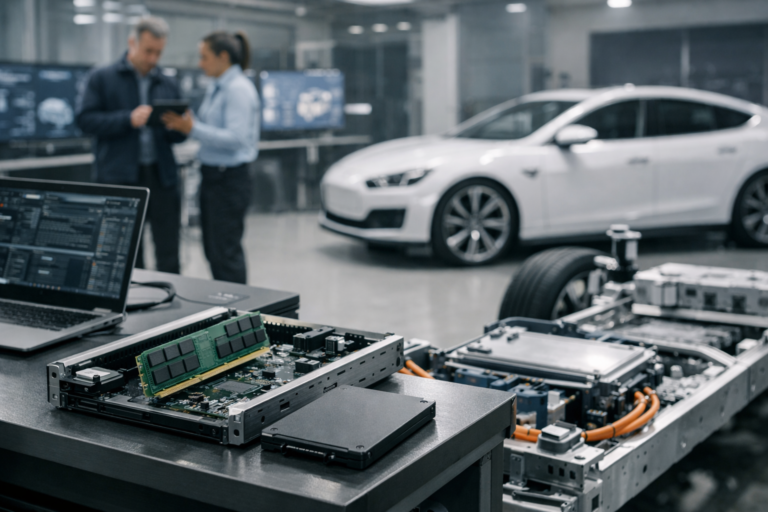
And if you care about resale? Clean charging history and documented service matter. Modern EVs are basically rolling computers — some packing massive onboard computing power like we covered in 300GB RAM Cars: The Next Software-Defined Leap. Maintenance records are your proof you didn’t abuse that tech.
Before You Start
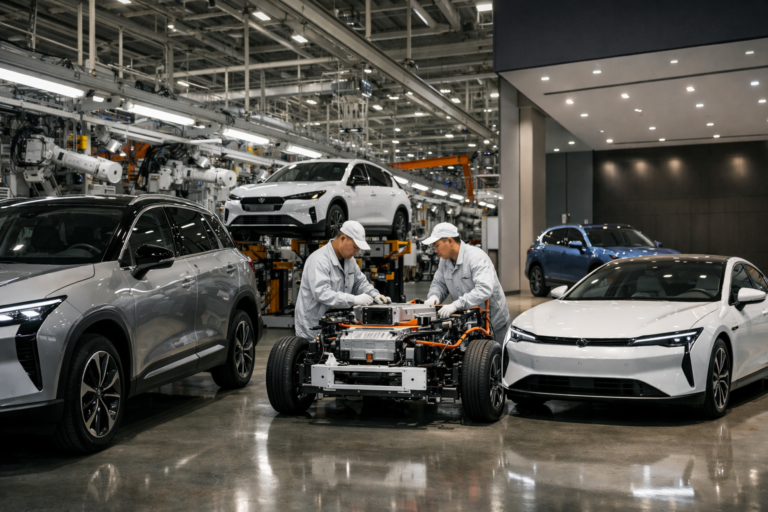
⚠️ WARNING: High-voltage EV systems can exceed 400 volts. Never touch orange cables or open battery components. That’s not DIY territory.
Park on a flat surface. Set the parking brake. Let the car cool completely before inspecting brakes or cooling components.
Do NOT DIY if you see battery warning lights, reduced power messages, or coolant leaks under the vehicle. Those require Porsche diagnostic software.
If you’re new to EV ownership, it’s worth reading independent testing insights like how Consumer Reports evaluates vehicles so you understand real-world range and performance expectations.
Step-by-Step Guide
Part 1: Home Charging Setup
- Install a Level 2 Charger. A 240V, 40–50 amp circuit is the sweet spot. Hire a licensed electrician. Expect $600–$1,500 depending on panel distance.
- Mount charger chest-high. Keeps cables off the floor and dry. Use proper anchors — not drywall screws.
- Set charging limit to 80% for daily use. This preserves battery health. Only charge to 100% before long trips or track events.
- Test charge rate. You should see 20–35 miles of range per hour depending on amperage.
Pro Tip: Schedule charging overnight when electricity rates are lower. Some utilities offer EV discounts — call and ask.
Part 2: Basic EV Maintenance Check
- Check tire pressure cold. Likely 36–42 PSI (consult your owner’s manual). Use a digital gauge — not the $2 pencil stick.
- Torque lug nuts. Use a 1/2″ torque wrench. Porsche specs vary — consult your manual. Do NOT guess.
- Inspect brake pads and rotors. EVs use regen braking, but corrosion builds up from less use.
- Check coolant levels (if accessible). Many EVs use battery cooling systems. If low, dealer visit required.
Part 3: EV Track Day Preparation
- Charge to 100% morning of event. You’ll burn range fast under load.
- Increase tire pressure 2–3 PSI above street setting. Heat will raise it further.
- Use tire chalk on sidewalls. After a session, check rollover — tells you if pressure is correct.
- Set regen to performance mode (if equipped). Helps manage braking zones.
- Monitor battery temps between sessions. Heat soak reduces performance.
This part of the electric Porsche Cayman guide matters most for track guys — EV power delivery is instant, but thermal management is king.
Common Mistakes to Avoid
- Using Level 1 charging long-term. I’ve seen owners frustrated waiting 24+ hours. Install Level 2. It’s worth it.
- Charging to 100% daily. Long-term battery degradation is real. Stick to 80%.
- Ignoring brake maintenance. I’ve seen rotors rust beyond saving because regen masked the issue.
- Showing up to track at 70% charge. You’ll get maybe two hard sessions.
- Skipping software updates. EV performance tweaks often come via OTA updates.
And don’t fall for dealer “EV maintenance packages” that include cabin filters and inspections for $899. Parts cost under $150.
When to Call a Professional
If you see battery cooling errors, power reduction warnings, or charging faults — that’s dealer-level diagnostics.
A fair annual inspection for a performance EV should run $300–$600. If you’re quoted $1,200+, ask for itemized breakdowns. Read our guide on spotting dealership pricing tricks before signing anything.
Red flags: vague “system recalibration” fees, refusal to show old parts, or pushing unnecessary tire replacements before 15,000 miles.
Recommended Products
- ChargePoint Home Flex: Reliable, adjustable amperage — around $750.
- Grizzl‑E Classic: Budget tank of a charger — about $500.
- Milton Digital Tire Gauge: $25. Accurate and durable.
- ATE Type 200 Brake Fluid: $30. Great for occasional track days.
What I’d run in my own garage? Grizzl‑E charger and the Milton gauge. Simple. Reliable. No fluff.
electric Porsche Cayman guide: Final Ownership Thoughts
The electric Porsche Cayman guide takeaway is simple: plan your charging, monitor heat, and don’t treat it like a gas car. It’s different — not complicated.
EV ownership is growing fast — just look at how brands are pushing electrification in pieces like BMW’s EV sales race to 2030. Porsche’s version will reward owners who understand the tech.
Do This
- Install Level 2 charging immediately
- Charge to 80% for daily driving
- Check tires before every track day
- Keep software updated
Don’t Do This
- Open high-voltage components
- Ignore brake corrosion
- Rely on Level 1 charging long-term
- Pay for overpriced dealer “EV packages”
You can absolutely handle the prep side of this. The electric stuff isn’t scary — just respect the high voltage and know your limits. Follow this electric Porsche Cayman guide, and you’ll enjoy every silent, neck-snapping launch the way Porsche intended.
Got track questions or charging setup concerns? Drop them below. Stay safe under there — and remember, a $20 repair manual saves a $2,000 repair bill.