
Automakers are quietly preparing for a surge in automotive memory demand that would have sounded absurd just five years ago: mainstream vehicles equipped with up to 300GB of RAM. On April 2, 2026, Micron and Samsung each outlined next-generation automotive-grade memory roadmaps targeting “software-defined vehicle” platforms launching in 2027 and 2028, according to statements published in their investor briefings and reported by Reuters.
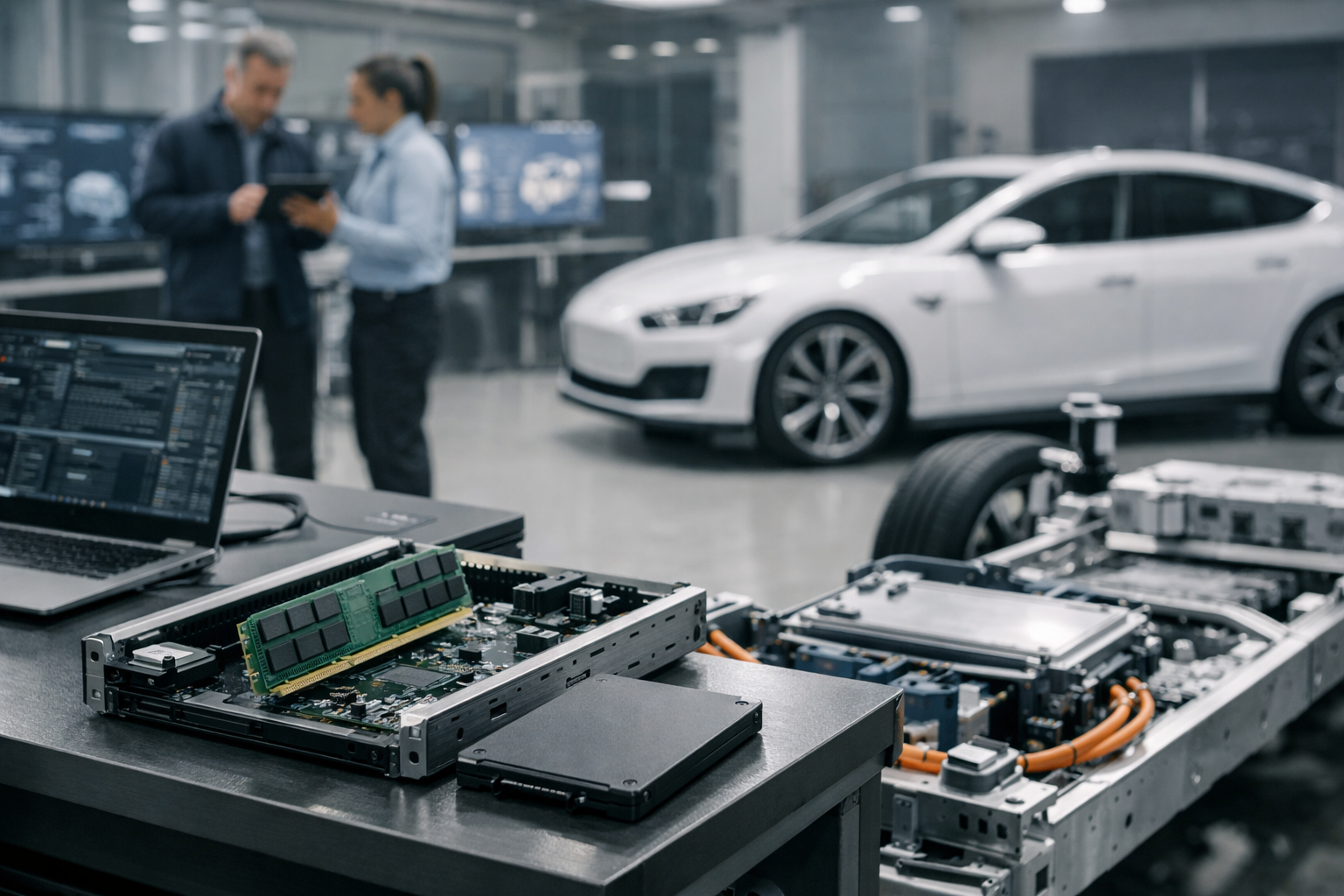
This isn’t about better infotainment alone. It’s about cars becoming rolling data centers, capable of running AI driver-assistance stacks, over-the-air updates, high-resolution sensor fusion, and in-car app ecosystems simultaneously. For an industry pivoting hard toward the software defined vehicle, 300GB RAM cars are less a flex and more a necessity.
The Headlines
- What: Memory suppliers unveil roadmaps supporting up to 300GB RAM in next-gen vehicles
- Who: Micron, Samsung, SK hynix; automakers including Tesla, Mercedes-Benz, BMW
- When: Announced April 2, 2026; production targeted for 2027–2028 models
- Impact: Enables advanced AI, autonomy features, and always-on connectivity in future cars
- Key Number: 300GB projected RAM capacity in premium software-defined vehicles
What Happened
At investor events this week, Micron detailed its new LPDDR6 and automotive-grade GDDR7 memory solutions, claiming bandwidth improvements of more than 50% over current LPDDR5X chips. Samsung and SK hynix echoed similar performance targets in separate briefings, noting that advanced driver-assistance systems (ADAS) and AI cockpits are driving exponential automotive memory demand.
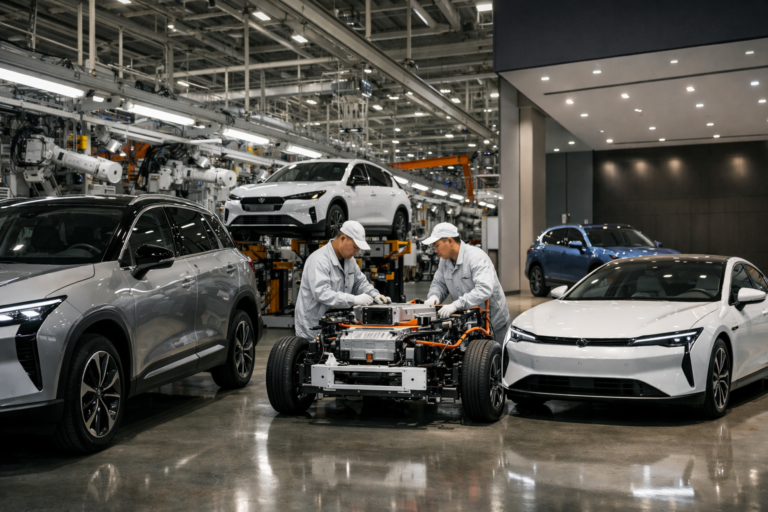
According to Micron’s automotive business unit, a Level 2+ vehicle today typically uses 16GB to 32GB of DRAM. However, upcoming centralized computing architectures—where multiple electronic control units consolidate into a handful of high-performance domain controllers—could require 128GB to 300GB in premium models.
“The car is becoming one of the most data-intensive edge devices,” Micron said in its April 2 investor presentation.
Meanwhile, automakers including Mercedes-Benz and BMW have publicly committed to “software-first” platforms launching around 2027. Tesla already uses high-memory compute modules in its Full Self-Driving hardware stack, and Rivian’s second-generation R2 platform is expected to consolidate dozens of ECUs into centralized processors.
Importantly, these figures are roadmaps, not confirmed production specs. However, the trajectory aligns with trends we’ve seen since 2020: more sensors, more cameras, more AI inference at the edge—and therefore more RAM.
Why It Matters
The shift toward 300GB RAM cars underscores how automotive memory demand is now tied directly to competitive positioning in autonomy and digital services. Vehicles are no longer defined by engine displacement or even battery size, but by compute capability.
Additionally, memory capacity determines how sophisticated a vehicle’s sensor fusion can be. A Level 3-ready system processing data from 8 to 12 cameras, multiple radar units, and potentially lidar must buffer and analyze enormous data streams in real time. According to the U.S. Department of Energy, edge computing efficiency is critical to reducing overall EV energy consumption—meaning smarter memory management can indirectly improve range.
For consumers, this translates into faster infotainment, more advanced driver-assistance features, seamless over-the-air updates, and potentially subscription-based AI services. As we explored in our coverage of Amazon NVIDIA Car AI Sparks Automaker Rush, cloud partnerships are pushing automakers to treat vehicles as software platforms rather than hardware products.
However, more memory also raises cost pressures. Automotive-grade DRAM must meet strict reliability and temperature standards, often costing significantly more than consumer PC memory. That expense will either compress margins or push MSRPs higher.
The Bigger Picture
To understand today’s automotive memory demand, rewind to 2015. Most vehicles then operated on dozens of distributed ECUs with minimal shared processing power. Over the last decade, automakers have shifted toward centralized architectures—a trend accelerated by Tesla’s vertically integrated approach.
Furthermore, regulatory pressure is increasing data requirements. The National Highway Traffic Safety Administration has expanded advanced safety system reporting requirements, per NHTSA guidance. More data logging and transparency means more onboard storage and memory capacity.
Meanwhile, geopolitical supply-chain risks remain a factor. Memory production is heavily concentrated in South Korea and Taiwan. Any disruption—whether from trade disputes or regional conflict—could ripple through global auto production, much like the 2021 semiconductor shortage. For context, see our analysis of US Auto Sales 2026: Will War Derail Recovery?.
Notably, this shift also intersects with vehicle connectivity and cybersecurity. As compute power increases, so does the attack surface. Our guide to Vehicle Connectivity Explained: Protect Your Data Now outlines how more data processing onboard requires stronger encryption and privacy safeguards.
What the Competition Is Doing
Tesla remains the benchmark for compute-heavy architectures. Its Hardware 4 platform reportedly integrates substantial onboard memory to support neural network processing. Tesla’s advantage lies in vertical integration—designing its own chips in partnership with suppliers.
Mercedes-Benz and BMW, by contrast, rely more on partnerships with Nvidia and Qualcomm. Mercedes’ upcoming MB.OS platform aims to unify infotainment and ADAS into a single software stack by 2027. BMW’s “Neue Klasse” EV architecture similarly emphasizes centralized computing and AI-driven interfaces.
Meanwhile, Volkswagen is attempting to recover from software missteps in its Cariad division. As detailed in our analysis of Volkswagen 2026 Models: EV Push or Overload?, VW’s strategy hinges on stabilizing its software platform before scaling advanced features.
In China, BYD and Nio are investing heavily in AI chips and high-memory compute for domestic models. However, ongoing trade tensions and potential restrictions could limit technology sharing in Western markets.
What It Means for You
If you’re buying a 2025 or 2026 vehicle, you’re unlikely to see 300GB RAM under the hood yet. However, you will start noticing more marketing around “AI-powered” features and seamless updates. Those capabilities depend directly on rising automotive memory demand.
Additionally, higher compute capacity may future-proof vehicles for longer software support cycles. A car with ample onboard memory can handle new features delivered via over-the-air updates, extending its functional lifespan.
On the flip side, expect premium trims to carry higher prices. More memory, more powerful processors, and enhanced cooling systems add cost. Therefore, if cutting-edge autonomy isn’t a priority, mid-level trims may offer better value over the next two years.
What to Watch Next
Watch 2027 model-year announcements closely. That’s when centralized architectures and high-memory platforms are expected to hit showrooms in volume. Additionally, monitor pricing trends for automotive-grade DRAM; if costs fall as production scales, 300GB RAM cars could move from luxury to mainstream faster than expected.
Furthermore, pay attention to regulatory updates from NHTSA and the EPA regarding data transparency and safety requirements. More stringent standards will likely accelerate onboard compute needs.
The Upside
- Enables more advanced driver-assistance and AI features
- Supports longer software lifecycles via over-the-air updates
- Improves infotainment speed and responsiveness
- Positions vehicles for higher levels of autonomy
The Concerns
- Higher hardware costs could raise vehicle prices
- Increased cybersecurity risks with more connected compute
- Supply-chain concentration in Asia poses geopolitical risk
- Potential for feature bloat that adds complexity without real benefit
Having covered three product cycles, I can tell you this pattern is familiar: hardware leaps enable software revolutions. The difference now is scale. Automotive memory demand is growing at a pace that mirrors smartphones in the early 2010s—but with far higher safety stakes and capital intensity.
Over the next five years, the winners won’t just build good cars. They’ll build powerful computers on wheels—and manage the cost, security, and reliability challenges that come with them.
Disclosure: This article may contain affiliate links. If you make a purchase through these links, we may earn a small commission at no extra cost to you. This helps support RevvedUpCars.com. Learn more.