
Detroit’s biggest automakers are quietly lobbying Washington to tighten restrictions on Chinese vehicle imports, arguing that a Chinese cars US ban is necessary to protect national security and domestic manufacturing. The push intensified in March 2026 as the Biden administration’s expanded review of connected-vehicle data security moved closer to formal rulemaking, according to Reuters and industry filings.
On the surface, this looks like geopolitical posturing. In reality, it’s about pricing power. Affordable Chinese EVs—some selling overseas for under $20,000—pose a direct threat to U.S. automakers already struggling with rising labor costs, $800 average monthly payments, and the slow ramp of domestic battery production.
However, banning or heavily restricting Chinese vehicles would reshape the entry-level market just as American buyers are desperate for lower prices. The outcome will determine whether affordable EVs arrive sooner—or stay out of reach for another product cycle.
The Headlines
- What: U.S. automakers are backing tighter restrictions or a potential ban on Chinese-built vehicles over security and trade concerns
- Who: Ford, GM, Stellantis, U.S. Commerce Department, Chinese automakers like BYD and SAIC
- When: Policy review ongoing in early 2026; new rules expected later this year
- Impact: Could limit access to low-cost EVs and keep U.S. vehicle prices elevated
- Key Number: 100%+ tariffs currently applied to Chinese EV imports under existing trade rules
What Happened
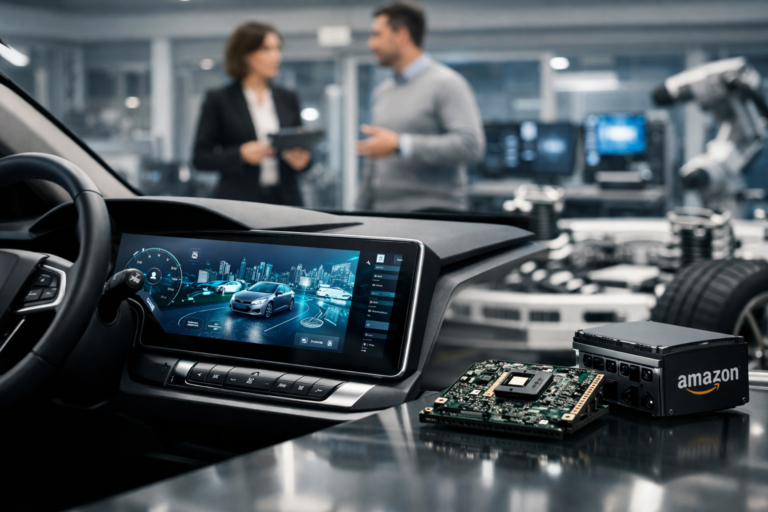
The Commerce Department confirmed in February 2026 that it is advancing a proposed rule to restrict Chinese software and hardware in connected vehicles, citing national security risks tied to data collection. According to Bloomberg, the rule could effectively block Chinese-branded vehicles from being sold in the U.S., even beyond the steep tariffs already in place.
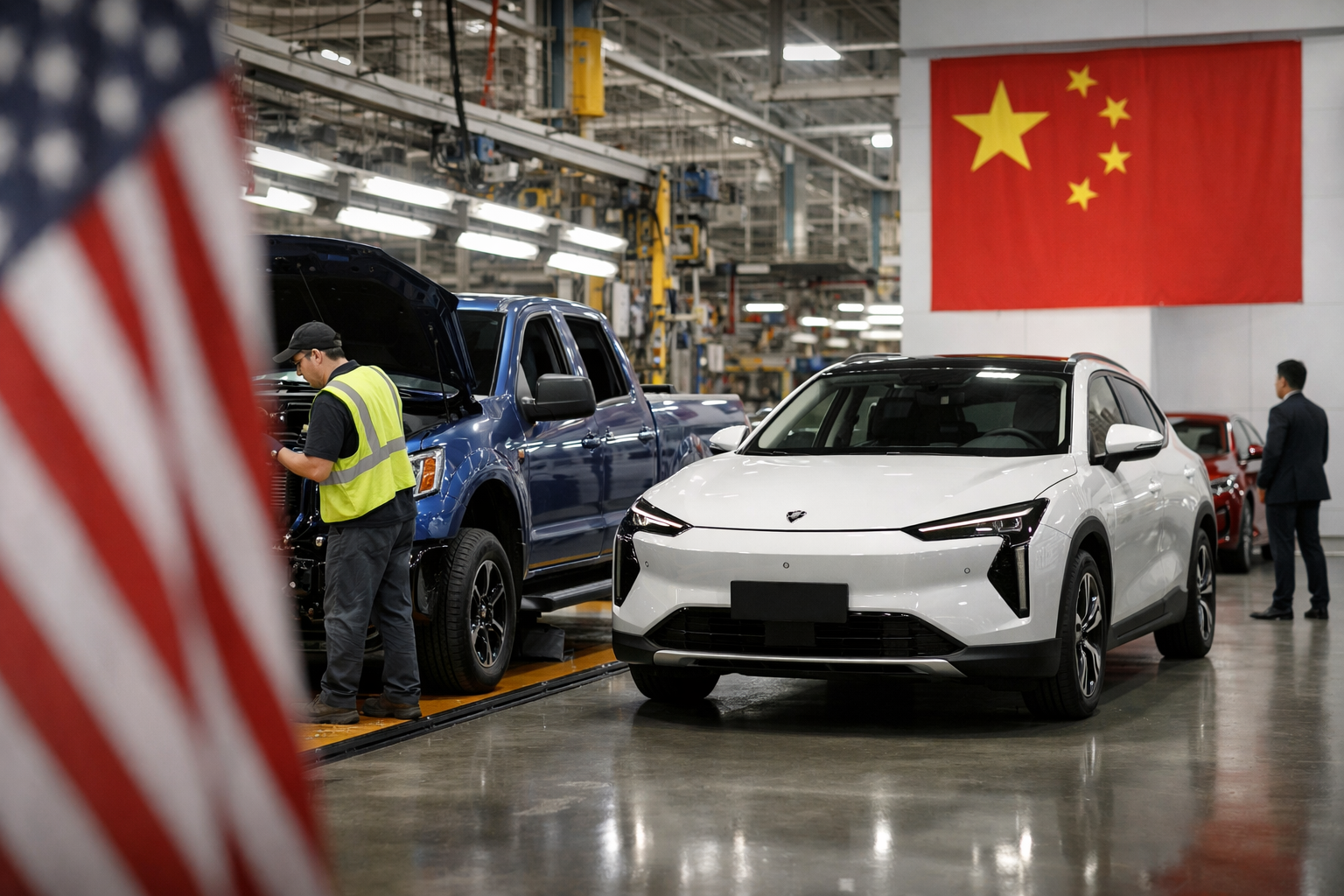
Currently, Chinese EVs face tariffs exceeding 100% when combining Section 301 duties and additional measures announced in 2024. Those levies already make direct imports economically unviable. However, U.S. automakers are pushing for broader restrictions that would also apply to vehicles assembled in Mexico or other countries if they rely heavily on Chinese software or components.
Ford, GM, and Stellantis have not publicly called for an outright ban. Yet in comments submitted to regulators, they argue that Chinese automakers benefit from “non-market subsidies” and could undercut U.S. pricing if allowed easier entry. Meanwhile, BYD—China’s largest EV maker—sold over 3 million electrified vehicles globally in 2025, according to company filings, making it the world’s top EV producer by volume.
Notably, the debate goes beyond hardware. Regulators are focused on vehicle connectivity, data storage, and over-the-air software updates. The National Highway Traffic Safety Administration has emphasized the growing role of software in vehicle safety and security, as outlined on NHTSA.gov.
Why It Matters
A Chinese cars US ban would not just be about trade—it would reshape the affordable EV landscape. Chinese brands like BYD, MG (owned by SAIC), and Geely have proven they can profitably sell compact EVs in Europe and Asia for $20,000 to $30,000. In contrast, the average transaction price for a new vehicle in the U.S. remains above $47,000, according to Cox Automotive.
Therefore, keeping Chinese competition out effectively buys Detroit time. GM and Ford are still scaling next-generation EV platforms after slowing production in 2024 and 2025 due to weaker-than-expected demand. Meanwhile, battery costs have declined globally, but U.S.-based production remains more expensive due to labor and compliance costs.
However, there’s a consumer tradeoff. Reduced competition tends to support higher prices. We’ve already seen how Auto Tariffs 2026: U.S. Trade Shifts Hit Industry contributed to supply chain realignments that ultimately raised costs. Limiting Chinese entrants could prolong the era of $700–$800 monthly payments.
The Bigger Picture
This debate didn’t emerge overnight. The U.S. government has steadily escalated scrutiny of Chinese technology across sectors, from telecommunications to semiconductors. Vehicles, increasingly defined by software and connectivity, are the next frontier. The Department of Energy has highlighted cybersecurity risks in grid-connected transportation systems on Energy.gov.
At the same time, China’s domestic auto market is slowing. As detailed in our analysis of China Auto Sales Drop: Global Impact Now, overcapacity in Chinese factories is pushing automakers to expand exports aggressively. Europe has already launched anti-subsidy investigations into Chinese EV imports.
In contrast, the U.S. market has remained relatively insulated. Direct Chinese-brand sales here are minimal. Polestar and Volvo, though Chinese-owned, build many U.S.-bound vehicles outside mainland China to navigate trade barriers. The real concern in Detroit is what happens if a $25,000 BYD crossover lands in Texas showrooms.
What the Competition Is Doing
Ford is betting on affordability through domestic production, as seen in the 2026 Ford Electric Truck Review: Affordable EV Pickup. The company aims to hit lower price points with U.S.-built batteries, though executives admit margins will be thin initially.
GM, meanwhile, is doubling down on its Ultium-based lineup, targeting scale efficiencies by 2027. The automaker reported EV losses narrowing in late 2025 earnings calls, but profitability remains a future goal. Stellantis has taken a more global approach, leveraging partnerships in Europe and considering lower-cost platforms for North America.
In contrast, Tesla occupies a unique position. It supports domestic manufacturing but has also warned against excessive trade barriers in past SEC filings, arguing that global supply chains are critical to EV cost reductions. Tesla’s Model 3 and Model Y still dominate U.S. EV market share—roughly 50% combined in 2025—but face margin pressure as competition increases.
Meanwhile, Hyundai and Kia have accelerated U.S. plant investments to qualify for federal EV tax credits under the Inflation Reduction Act. They benefit if Chinese competitors stay out but must still compete aggressively on price.
What It Means for You
For car buyers, a Chinese cars US ban likely means fewer ultra-low-cost EV options in the near term. If you’re waiting for a $20,000 electric crossover, don’t expect it from a Chinese brand anytime soon.
However, domestic and Korean automakers will feel pressure to fill that gap. That could accelerate the rollout of sub-$30,000 EVs by 2027 or 2028. Additionally, federal tax credits of up to $7,500 remain available for qualifying models assembled in North America, partially offsetting higher sticker prices.
Therefore, timing matters. If you’re considering an EV purchase in 2026, monitor incentive eligibility and production ramp-ups. And as always, be vigilant about dealer markups—our guide on Spot Dealership Pricing Tricks & Save Money remains relevant in a tight-supply market.
What to Watch Next
First, watch for the Commerce Department’s final rule on connected vehicle software, expected later in 2026. If it broadly restricts Chinese-origin systems, it could indirectly enforce a Chinese cars US ban without new tariffs.
Second, monitor how Chinese automakers respond. They could expand manufacturing in Mexico or partner with established brands to sidestep direct branding barriers. That workaround strategy has precedent in other industries.
Finally, keep an eye on pricing. If average transaction prices remain above $45,000 into 2027, political pressure may shift from protectionism toward affordability.
The Upside
- Protects U.S. manufacturing jobs and union labor agreements
- Reduces potential cybersecurity risks tied to connected vehicles
- Gives domestic automakers time to scale EV production
- Supports compliance with Inflation Reduction Act sourcing rules
The Concerns
- Limits access to lower-cost EVs for price-sensitive buyers
- Reduces competitive pressure that drives innovation
- Risks retaliation affecting U.S. automakers’ China sales
- Could keep average vehicle prices elevated longer
Having covered multiple trade disputes over the past five years, I can tell you this pattern is familiar: policymakers cite security, automakers cite fairness, and consumers feel the pricing ripple effects. A Chinese cars US ban may protect domestic industry in the short term, but it also delays the price war that could finally make EVs truly affordable.
The next two years will determine whether protection buys innovation—or simply preserves higher margins. For buyers watching their monthly payments, that distinction is everything.
Disclosure: This article may contain affiliate links. If you make a purchase through these links, we may earn a small commission at no extra cost to you. This helps support RevvedUpCars.com. Learn more.