

You know that feeling when you pop the hood for the first time and think, “I could do this for a living”? That spark right there is how a lot of us got started in an automotive technician career. I started sweeping floors in a two-bay shop, and 20 years later I’ve still got grease under my nails and zero regrets.
The truth? Good techs are in demand. With 2025–2026 models getting more complex—hybrids, EVs, ADAS sensors—shops are begging for trained hands. In this guide, I’ll walk you through skills, auto tech training options, certifications, and real-world career paths so you can decide if this trade is your road.
What You’ll Need
- Tools: Basic starter set ($300–$800), laptop for online training, notebook
- Parts/Materials: Tuition funds ($5,000–$25,000 depending on program), ASE exam fees ($50 registration + $47 per test)
- Time: 6 months–2 years training; 2–5 years to master-level pay
- Difficulty: 🔧🔧🔧🔧 (4/5 — challenging but rewarding)
- Dealer Cost: $0 to start as a lube tech vs Trade School $15,000 — Earning Potential: $40,000–$90,000+ annually
Why an Automotive Technician Career Matters
This isn’t just a job—it’s a skill that can’t be outsourced to an app. Cars still break. Recalls still happen. (Just look at how often we’re covering issues like Ford recalls 2026: What’s Going Wrong?.) Every one of those vehicles needs a trained tech.
Skip proper training and you’ll be stuck doing oil changes for $15–$18 an hour. Invest in certifications and diagnostics skills? You’re looking at $35–$45 per flat-rate hour in many regions by 2026. In busy metro areas, master techs can clear $90,000–$120,000 a year.
And here’s the big one: modern vehicles are rolling computers. From EV trucks like the 2026 Ford Electric Truck to advanced driver-assist systems, the tech is only getting deeper. That means opportunity if you’re trained.
Before You Start
⚠️ WARNING: This trade is physical. You’ll lift transmissions (80–150 lbs), work around high voltage in hybrids/EVs (up to 400+ volts), and deal with fuel systems under pressure. Safety training isn’t optional—it’s survival.
Ask yourself a few honest questions:
- Do you like solving puzzles?
- Can you handle working on commission (flat-rate pay)?
- Are you okay investing in your own tools?
When NOT to jump in blindly: if you hate continuous learning. Between software recalls (Car Software Recall Guide) and new emissions standards from EPA.gov, this field changes every year.
Step-by-Step Guide
-
Start with the Basics (High School or GED)
Focus on math, electronics, and computer classes. Algebra matters more than you think—diagnostics is logic. Auto shop class? Even better. -
Choose Your Training Path
Community college programs: $5,000–$15,000 for 1–2 years.
Private trade schools: $15,000–$30,000.
Manufacturer programs (Toyota T-TEN, Honda PACT): Often sponsored by dealerships.
Pro Tip: Visit the shop. If the lifts look 30 years old and the scan tools are outdated, walk away. -
Get Entry-Level Experience
Apply as a lube tech or apprentice. Expect $15–$20/hour starting. That’s your paid classroom. -
Earn ASE Certifications
Go to ASE.com and study the A1–A8 series. You need two years of experience to be fully certified.
Tests cost about $47 each plus a $50 registration fee. Master Tech status requires passing all 8 core exams.
In 20 years of wrenching, I’ve seen ASE patches add $5–$10 per hour to pay. -
Specialize
Hybrid/EV systems, diesel, diagnostics, ADAS calibration. EV certification is huge right now. High-voltage training can bump your value fast. -
Build Your Tool Collection Smart
Start with a $400–$800 basic set. Don’t finance a $15,000 tool truck setup in year one. I’ve seen rookies buried in tool debt before their first raise.
Common Mistakes to Avoid
- Going $20,000 into tool debt immediately. I’ve seen this sink careers fast.
- Ignoring electrical training. Modern cars are 50% wiring and modules.
- Skipping certifications. Shops pay for proof, not promises.
- Staying too comfortable. If you’re not learning diagnostics, you’re replaceable.
- Believing flat-rate myths. Efficiency matters. Slow techs don’t eat well.
When to Call a Professional (Mentor)
If you’re stuck choosing between schools or job offers, find a working master tech—not a recruiter—and buy them lunch. Seriously. Ask:
- What’s your actual weekly take-home?
- How’s management?
- Is training paid?
- What’s turnover like?
Red flags at shops: no paid training, no scan tool updates, constant comebacks, or service writers pushing shady upsells. (Learn how to spot that nonsense here: Spot Dealership Pricing Tricks & Save Money.)
A fair starting wage in 2026? $18–$22/hour entry-level, $25–$35/hour mid-level, $35+ for master tech depending on region.
Recommended Products
- GearWrench 243-Piece Set ($399): Solid starter kit without tool-truck prices.
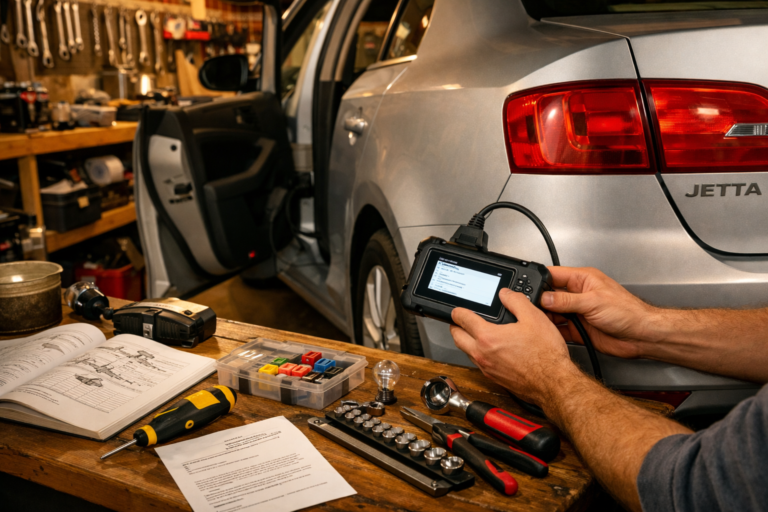
- Autel MaxiCOM Scanner ($800–$1,200): What I use in my own garage for advanced diagnostics.
- Fluke 115 Multimeter ($150): Don’t cheap out on electrical testing.
- Mitchell 1 or AllData Subscription ($179/month shop rate): Access to factory procedures.
Budget smart. A $150 multimeter can prevent a $2,000 misdiagnosis.
Do This
- Invest in ASE certifications early
- Learn electrical and EV systems
- Buy quality tools slowly
- Find a mentor in the field
Don’t Do This
- Finance expensive tools too soon
- Skip ongoing training
- Ignore shop culture red flags
- Assume all dealers pay the same
An automotive technician career isn’t the easy road—but it’s a solid one. If you like working with your hands, solving problems, and not sitting behind a desk all day, this trade can treat you well. The demand isn’t slowing down, especially with hybrids and EVs reshaping the industry.
You can start small. Sweep floors. Change oil. Study at night. Stack certifications. That’s how most of us did it. Drop your questions in the comments—whether you’re 17 or 47, there’s room in this field if you’re willing to learn.
Stay curious, keep your knuckles safe, and remember — a $20 repair manual saves a $2,000 repair bill.