
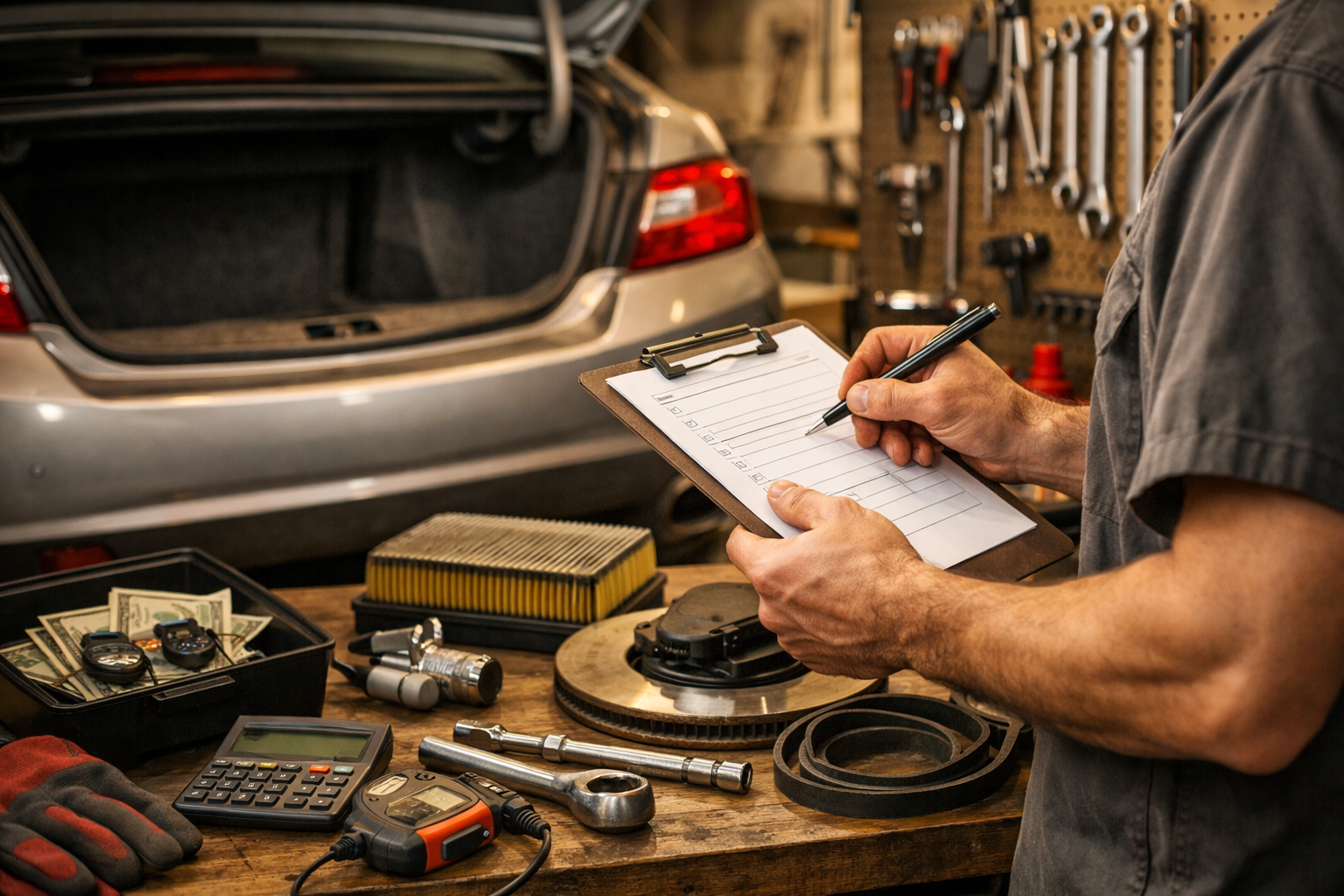
You walk into the dealership feeling pretty good about your car… then they slide that trade-in number across the desk and it feels like someone just lowballed your house at a yard sale. If you’re searching for trade in car tips 2026, you’re already ahead of the game — because most folks lose $1,000 to $3,000 simply by not knowing how the game is played.
In 2026, used car values are bouncing around thanks to tariffs, EV demand, and supply chain drama. One month your SUV is hot, the next month it’s just “another unit.” Today I’m going to show you how to squeeze every dollar out of your trade without getting steamrolled by dealership trade in strategies.
No grease under your nails this time — just smart moves that protect your wallet. Let’s get you paid what your car is actually worth.
What You’ll Need
- Tools: Smartphone with camera, tire pressure gauge, OBD2 scanner ($25 basic unit), 10mm socket (to tighten loose battery terminals if needed)
- Parts/Materials: Car wash supplies ($15), touch-up paint ($20-$40), replacement wiper blades ($25)
- Time: 2–3 hours prep; 1–2 dealership visits
- Difficulty: 🔧🔧 (mostly prep and negotiation)
- Dealer Cost: Typical trade-in undervalue $1,500–$3,000 vs DIY prep cost $75–$150 — You Save: Up to $2,850
Why This Matters
Here’s the reality: dealers expect to recondition your car and resell it at a profit. That’s fair. What’s not fair is when they deduct $2,000 for issues that cost $200 to fix.
In 20 years of wrenching, I’ve seen perfectly good cars lose thousands in value over bald tires, dirty interiors, or a $15 check-engine light issue. That’s not mechanical failure — that’s presentation.
If you’re trading in every 3–6 years (which most people do), maximizing value now affects your next loan, your monthly payment, and even how much negative equity you carry. Think of it like selling a house — curb appeal matters.
Before You Start
⚠️ WARNING: If you’re doing any minor repairs before trade-in, always use jack stands on a flat surface. Never rely on a scissor jack alone. I’ve seen cars slip — it’s not pretty.
Run your VIN through NHTSA.gov to check for open recalls. An open recall can delay resale and reduce dealer confidence.
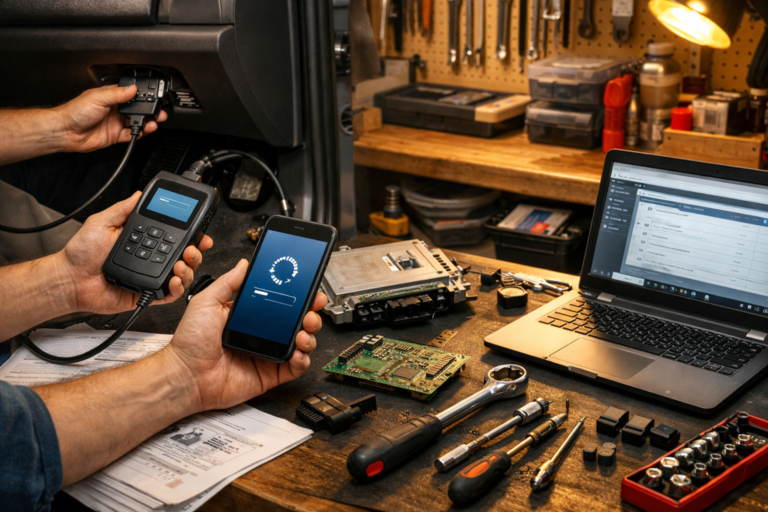
If your check engine light is on, plug in a basic OBD2 scanner. Codes like P0455 (loose gas cap) or P0171 (lean condition) may be cheap fixes. But if you see transmission codes or misfire codes across multiple cylinders, that’s when you stop and consider professional help.
Also, understand the market. EV demand is shifting — especially with changing incentives. If you’re trading an electric vehicle, check our Buying an EV 2026 guide to see how incentives affect used values.
Step-by-Step Guide
-
Research your car’s real value.
Check three sources: Kelley Blue Book, Edmunds, and local dealer listings. Compare similar mileage and trim levels. Print them out or screenshot them. Knowledge is leverage. -
Fix the cheap stuff first.
Replace wiper blades ($25). Install fresh cabin air filter ($20). Inflate tires to spec (check door jamb sticker). Tighten battery terminals with a 10mm socket if loose.
Pro Tip: A $120 detail can add $500–$1,000 in perceived value. Dealers judge fast. -
Address warning lights smartly.
Don’t clear codes just to hide problems — they’ll see pending codes. Fix minor issues honestly. If unsure, check manufacturer maintenance schedules like Toyota’s official site or Honda’s service pages. -
Get multiple offers.
Visit at least two dealerships. Even better, get a CarMax or Carvana offer as a baseline. This is one of the most powerful trade in car tips 2026 strategies — dealers suddenly “find” extra money when they know you have options. -
Negotiate trade-in separately.
Lock in your vehicle price first. Then introduce the trade. Dealers love blending numbers to confuse you. Keep it clean and separate. -
Time it right.
SUVs sell better in fall and early winter. Convertibles? Spring. Hybrids spike when gas prices rise (watch global price shifts). Seasonality matters more than people think.
Common Mistakes to Avoid
- Trading with bald tires. I’ve seen dealers deduct $800 for tires that cost $650 installed at Costco.
- Showing up dirty. First impressions stick. A messy interior screams “neglected.”
- Admitting desperation. If they know you “have to” trade today, you lose leverage.
- Rolling negative equity blindly. That $3,000 you owe doesn’t disappear — it moves to your new loan.
- Ignoring dealership red flags. If numbers keep changing, read our guide on spotting shady dealers.
I’ve watched customers lose $2,500 just because they didn’t push back once. You don’t have to be aggressive — just informed.
When to Call a Professional
If your vehicle has frame damage, major oil leaks, slipping transmission, or airbag lights — get a diagnostic first. Spending $150 on an inspection could save you from accepting a $4,000 lowball.
A fair dealer doc fee ranges from $200–$500 depending on your state. Reconditioning deductions should be itemized. Ask: “How did you calculate that adjustment?” If they can’t explain clearly, that’s a red flag.
And if you’re unsure whether to trade or sell privately, compare strategies in our Buy or Sell Car 2026 guide. Sometimes private sale nets $2,000–$4,000 more — but it takes effort.
Recommended Products
- BlueDriver OBD2 Scanner ($99) – What I use in my own garage. Accurate, app-based, dealer-level insight.
- Meguiar’s Ultimate Interior Detailer ($12) – Cheap shine, big impact.
- Rain-X Latitude Wiper Blades ($25) – Quick visual improvement.
- Slime Digital Tire Gauge ($15) – Proper tire pressure boosts buyer confidence.
All together, you’re under $150. Compare that to a $2,000 deduction for “needs reconditioning.”
Using Trade In Car Tips 2026 to Outsmart Dealership Trade In Strategies
Dealers are pros at psychology. They’ll focus on your monthly payment, not the trade value. They’ll inflate your trade but raise the vehicle price. It’s a shell game.
The best trade in car tips 2026 move? Treat your trade like a separate transaction. Walk in knowing your used car value guide numbers. Stay calm. Silence works wonders in negotiations.
And remember — they need used inventory. Clean, well-maintained 2018–2023 vehicles are hot right now because new car prices are still elevated. Use that leverage.
Do This
- Get 2–3 written trade offers
- Fix small, visible issues first
- Research real-world listing prices
- Separate trade value from new car price
Don’t Do This
- Accept the first offer without question
- Hide mechanical problems
- Neglect basic cleaning
- Focus only on monthly payment
Getting top dollar for your trade isn’t about being slick — it’s about being prepared. Follow these trade in car tips 2026, understand dealership trade in strategies, and walk in confident. You can absolutely do this, and it might be the easiest $2,000 you ever “earn.”
Got a trade-in offer you’re unsure about? Drop it in the comments and I’ll help you break it down. Stay sharp out there — and remember, a $20 repair manual saves a $2,000 repair bill.