
Ferrari has built its reputation on noise, fury, and the sort of V12 theatrics that make small children cry and grown adults weep with joy. Now it’s built an electric car with a dashboard that looks like it was sketched in Cupertino. Yes, the 2026 Ferrari Luce is real, it’s silent(ish), and it might be the most controversial thing to leave Maranello since the first SUV.
This 2026 Ferrari Luce review matters because it answers the question every petrolhead has been muttering into their espresso: can an electric Ferrari still feel like a Ferrari? With Rimac Nevera numbers floating around, Porsche Taycan Turbo GT snapping at heels, and even the Porsche Cayenne Turbo Electric redefining what “performance EV” means, Maranello couldn’t afford a half-hearted science project.
So I flew to Italy, strapped in, and prepared myself for either a revelation or a funeral.
Quick Specs
- Starting Price: approximately $450,000 (check manufacturer website for latest pricing)
- Engine: Dual electric motors, 120 kWh battery
- Power: 1,050 hp / 900 lb-ft (est.)
- 0-60 mph: 2.2 seconds
- Fuel Economy: Approximately 310-mile range (WLTP target)
Design & First Impressions
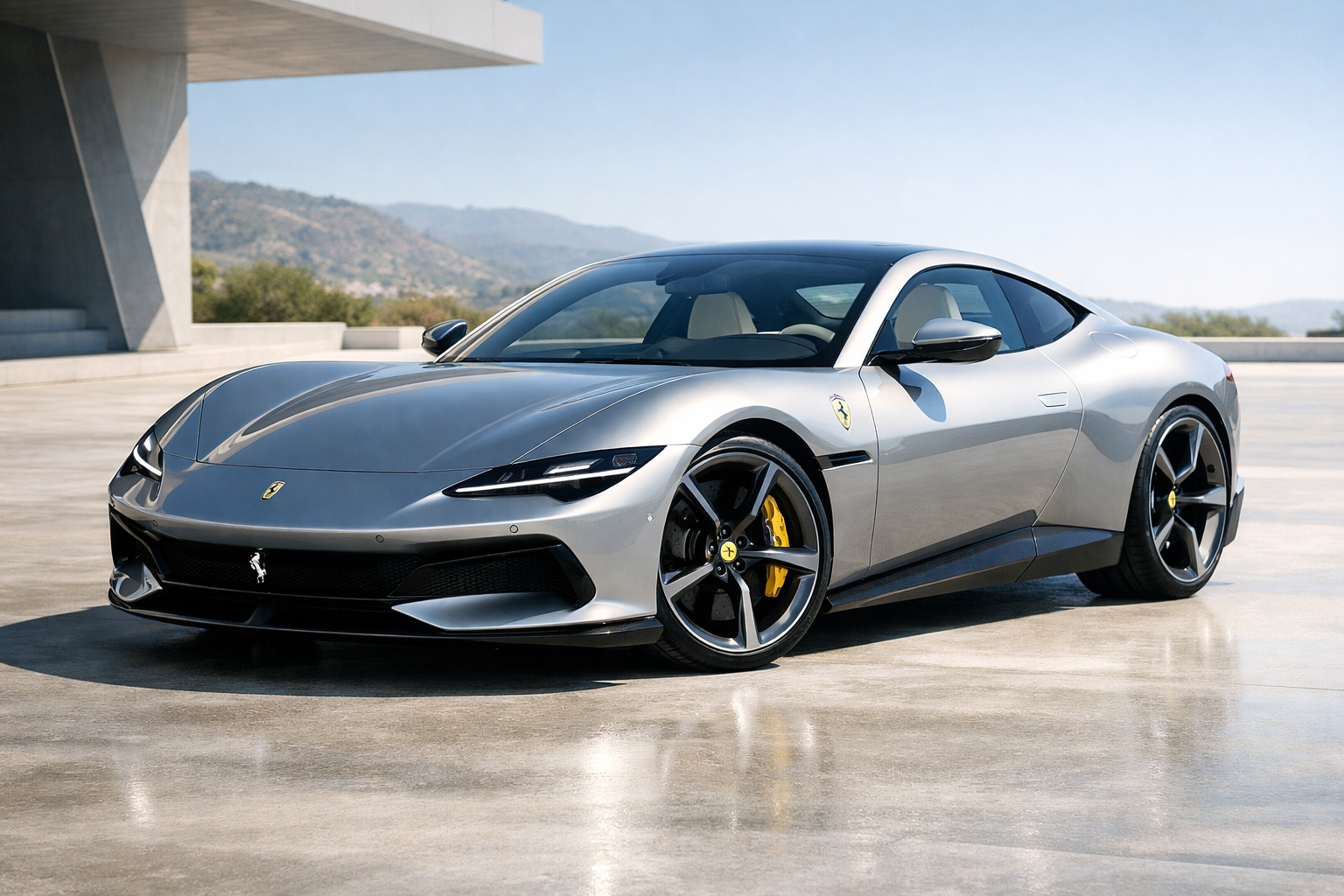
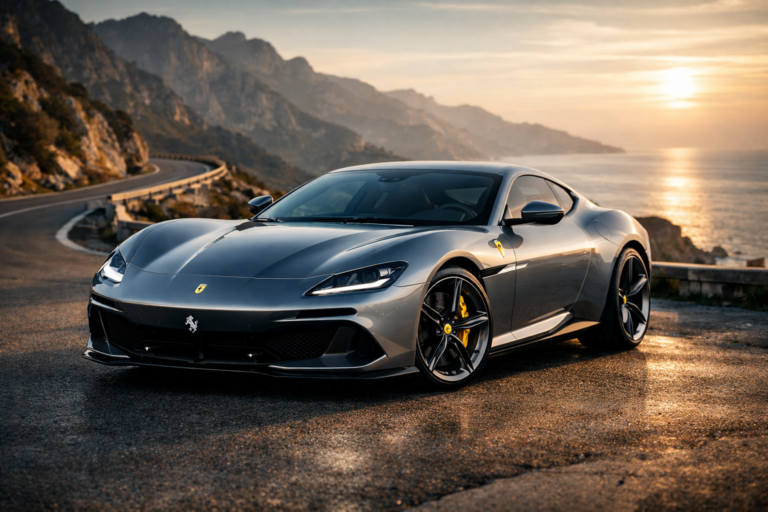
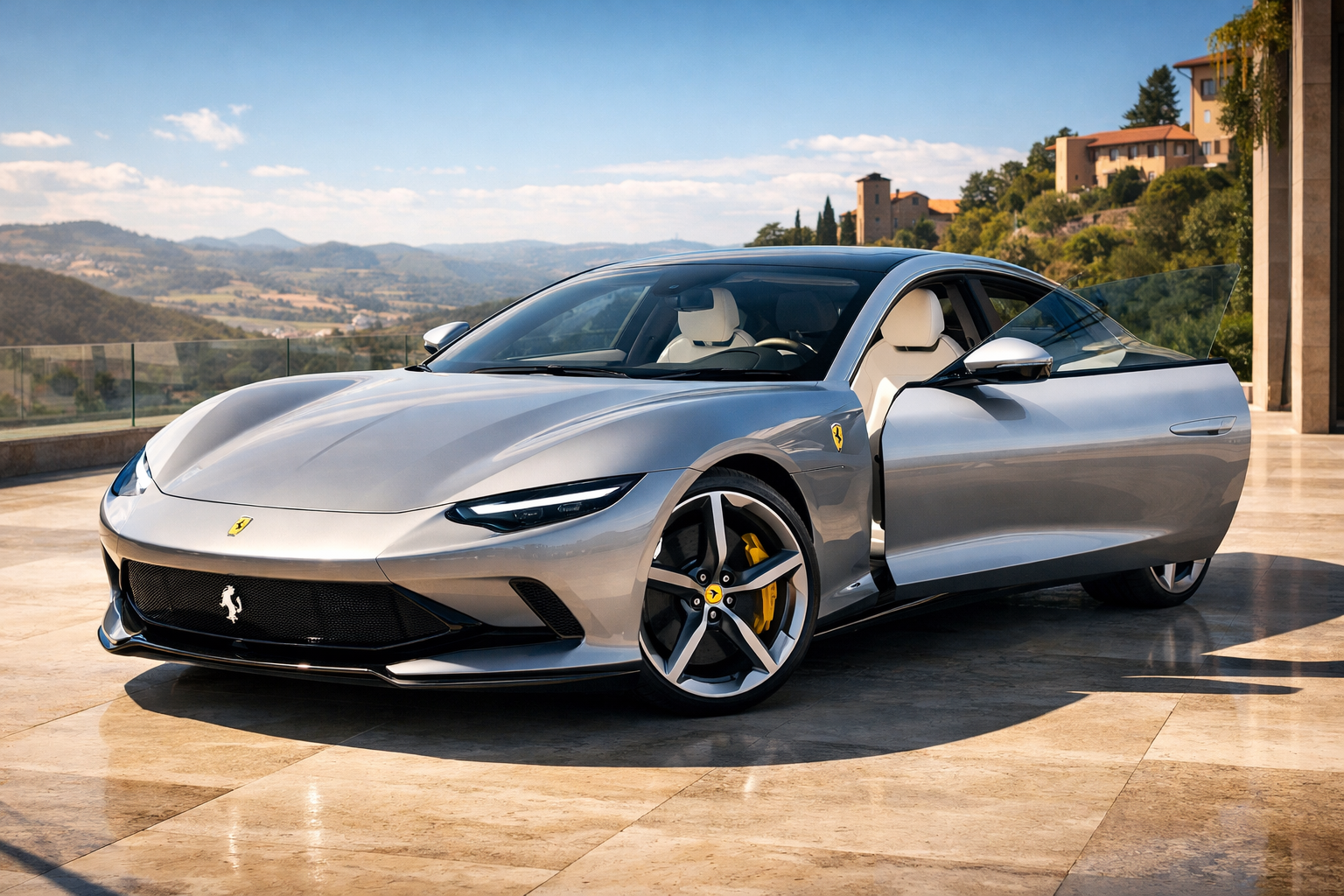
Let’s get this out of the way: it doesn’t look like a Taycan with a prancing horse badge. The Luce is low, impossibly wide, and sculpted like someone melted an SF90 and refroze it in a wind tunnel. There’s no fake grille nonsense—just active aero, massive side intakes, and a rear diffuser big enough to swallow a Fiat 500.
The front lighting signature is razor-thin and aggressive, more concept car than production reality. In fact, it feels like a rolling answer to our piece on why car design concepts still matter—because this is a concept that escaped the motor show stand. Even parked, it looks like it’s about to do 180 mph.
Hot take: this is the best-looking Ferrari since the 458. Yes, better than the Roma. Fight me in the comments.
Interior & Tech: Cupertino Meets Carbon Fiber
The headline of this 2026 Ferrari Luce review isn’t just “it’s electric.” It’s that the interior feels like Apple decided to build a hypercar. The dashboard is a single sweeping glass panel housing a 17-inch central display and a 12-inch passenger screen, all running Ferrari’s new in-house OS.
It’s minimalist—dangerously minimalist. Physical buttons are nearly extinct, replaced by haptic sliders and touch zones on the steering wheel. Doug DeMuro would have a field day with the quirks: swipe left to adjust regen, pinch to change drive modes, and a hidden “Track Telemetry” menu buried three layers deep like a Silicon Valley Easter egg.
The materials, thankfully, are pure Maranello. Forged carbon, buttery Italian leather, and aluminum paddles that feel like they were machined by Renaissance artists. It’s proof that cars can be art, even when they run on electrons.
But here’s my gripe: the screen-heavy layout looks stunning today. In 10 years? It might age like an old iPhone. Ferrari built its legend on timeless design, not software updates.
Driving Experience: Is It Still a Ferrari?
Numbers first: 1,050 horsepower, 0–60 mph in 2.2 seconds, and a quarter-mile that should dip into the 9s. That puts it squarely in Tesla Model S Plaid, Porsche Taycan Turbo GT, and even Rimac Nevera territory. On paper, it’s outrageous.
On the road, it’s something else entirely. The throttle response isn’t just instant—it’s telepathic. You think about accelerating and suddenly the horizon is rearranging itself. Chris Harris would call it “violently competent,” and he’d be right.
What shocked me most was the steering. Ferrari has engineered in weight and feedback that most EVs simply lack. It’s not hydraulic-era 458 purity, but it’s leagues ahead of the slightly numb feel in the Taycan.
And the sound? No fake spaceship whoosh, thank heavens. Instead, a subtle mechanical whirr and drivetrain hum that rises with speed. It’s restrained, almost classy—like Ferrari decided not to cosplay as a sci-fi prop.
Fuel Economy & Running Costs
Ferrari claims approximately 310 miles of range on the WLTP cycle from its 120 kWh battery. Expect closer to 270–280 miles in real-world enthusiastic driving. Fast-charging peaks at 350 kW, meaning 10–80% in around 18 minutes under ideal conditions.
This is where the 2026 Ferrari Luce review gets interesting. Buyers at $450,000 probably aren’t cross-shopping based on electricity prices, but the shift from $10,000 annual fuel bills to home charging is significant. For a broader perspective, our Hybrid vs Electric buyer’s guide explains how ownership math is changing even at the high end.
Battery warranty is expected to mirror Ferrari’s current hybrid coverage—around 8 years. For official updates and specs, check Ferrari’s website.
Practicality: A Usable Ferrari?
There’s a small front trunk—about 5 cubic feet—and a surprisingly decent rear shelf behind the seats. You could do a weekend getaway without playing Tetris with your luggage. That’s more than you can say for a 296 GTB.
Ride quality in Comfort mode is compliant, almost grand-tourer soft. It’s not quite a four-seat Roma, and certainly not a three-row SUV safe bet, but for a two-seat hyper-EV, it’s livable.
Controversial opinion: this might become the daily-driver Ferrari of choice for urban millionaires. No cold-start drama, no neighbor complaints, just silent ballistic performance.
Value vs Competitors
At approximately $450,000, the Luce undercuts the $2 million Rimac Nevera but sits above a Porsche Taycan Turbo GT (around $230,000) and a Tesla Model S Plaid (about $95,000). It’s also entering a world where Aston Martin and Lamborghini are preparing their own EV supercars.
But here’s the difference: badge equity. Ferrari doesn’t compete on price; it competes on mythology. We explored how brand loyalty shapes buying choices, and nowhere is that truer than here.
If you want the fastest EV per dollar, buy a Plaid. If you want the most technically astonishing EV, call Rimac. If you want an electric car that still makes you feel like you’ve joined a very exclusive club, the Luce is in a class of one.
Pros
- Stunning design that feels authentically Ferrari
- Ferocious acceleration with genuine steering feedback
- High-quality, artful interior materials
- Competitive range and ultra-fast charging
Cons
- Screen-heavy interior may age quickly
- Eye-watering starting price around $450,000
- Lacks the emotional soundtrack of a V8 or V12
Verdict
The 2026 Ferrari Luce review boils down to this: it’s not a betrayal of Ferrari’s heritage. It’s an evolution. It doesn’t replace the operatic madness of a V12—see our take on why V12 engines refuse to die—but it proves that performance and electricity don’t have to be mutually exclusive.
Is it perfect? No. I miss the mechanical symphony, and I’m wary of an interior that leans so heavily on software. But as a driver’s car—yes, a driver’s EV—it’s sensational.
Ferrari hasn’t just built an electric car. It’s built an argument—and a very fast one.
Frequently Asked Questions
What is the starting price of the 2026 Ferrari Luce?
The 2026 Ferrari Luce starts at approximately $450,000. Final pricing will vary by market and options, so check Ferrari’s official website for the latest details.
How fast is the 2026 Ferrari Luce?
Ferrari targets 0–60 mph in about 2.2 seconds with roughly 1,050 horsepower. That puts it in the same league as the Porsche Taycan Turbo GT and Tesla Model S Plaid.
What is the range of Ferrari’s electric car?
The Luce is expected to deliver around 310 miles of WLTP range from its 120 kWh battery. Real-world range will likely be closer to 270–280 miles with spirited driving.
Does the 2026 Ferrari Luce still feel like a Ferrari?
Yes, particularly in steering feel and chassis balance. While it lacks a traditional engine soundtrack, its acceleration, handling precision, and design maintain a strong Ferrari identity.