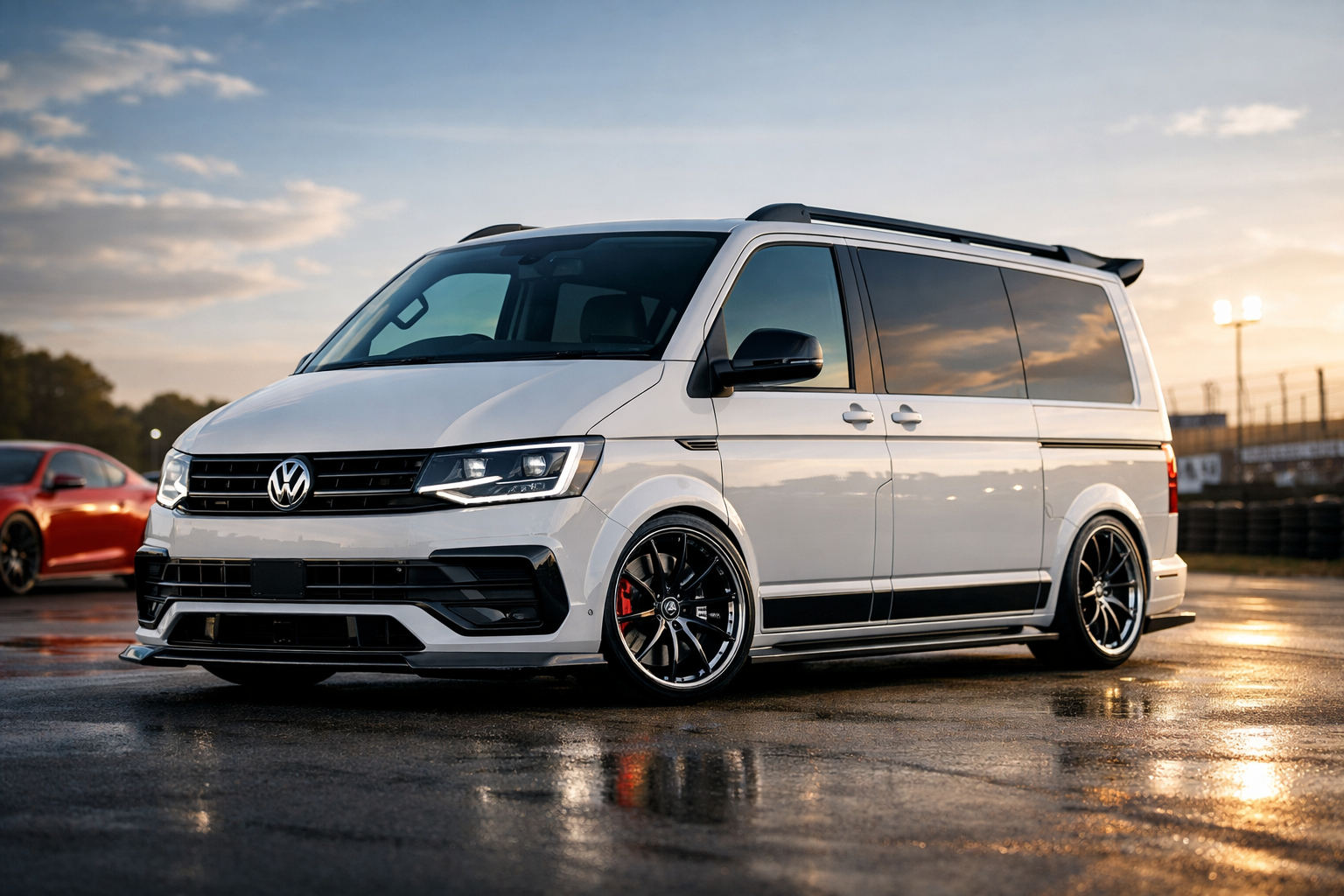

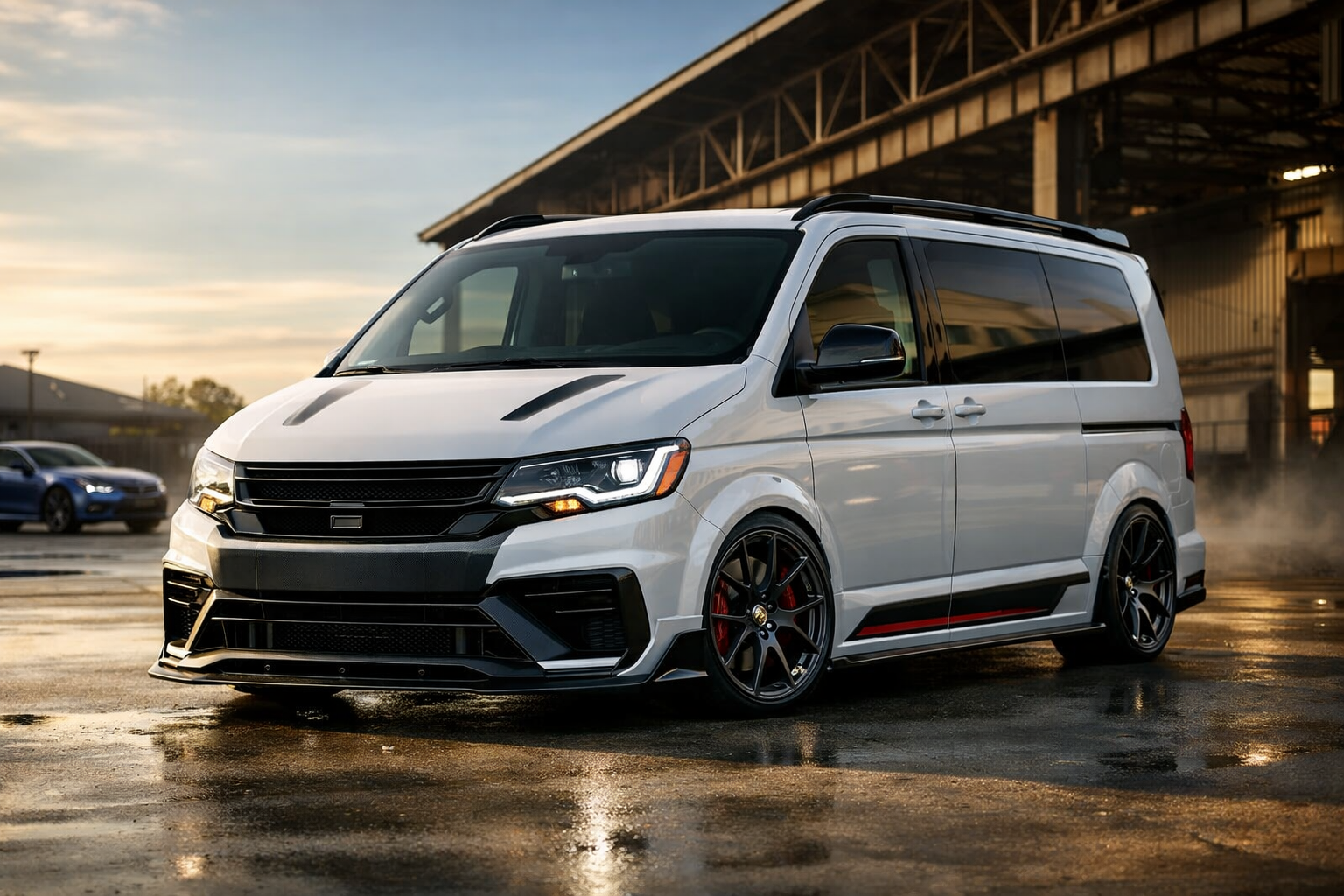
Here’s a heretical thought to kick your pint over: performance vans make more sense than half the “sporty” SUVs clogging dealership lots right now. I’m talking about vans that’ll haul a motorbike, your kids, and still embarrass a base Mustang away from the lights. If that sounds ridiculous, remember we once laughed at hot hatchbacks too.
This matters right now because crossovers have eaten themselves into beige oblivion, and enthusiasts are starving for something different. Vans, oddly, are having a glow-up thanks to electrification, modular platforms, and a quiet rebellion against three-row SUVs. And yes, the whisper you heard was the Volkswagen Transporter GTI warming up somewhere in Europe.
I’ve driven dozens of SUVs that promise “sport-inspired dynamics” and deliver throttle response lazier than a cat in a sunbeam. Performance vans, on the other hand, could be the anti-SUV: honest about what they are, clever about how they move, and unapologetically weird. If you liked our deep dive on the VW Transporter GTI, you already know why this niche refuses to die quietly.
Quick Specs
- Starting Price: approximately $55,000 (Europe-only; check manufacturer website for latest pricing)
- Engine: 2.0L Turbocharged inline-4
- Power: around 300 hp / 295 lb-ft
- 0-60 mph: approximately 5.5 seconds
- Fuel Economy: roughly 22 city / 28 highway mpg
Why Performance Vans Suddenly Make Sense
The brutal truth is physics favors a long wheelbase when you want stability, and vans have that in spades. With modern adaptive dampers and trick torque-vectoring diffs, a lowered van can feel more planted than a tall SUV pretending to be sporty. Think less “delivery driver” and more “German autobahn missile with cupholders.”
Electrification turbocharges this logic further, metaphorically and literally. A dual-motor electric van can churn out 400 hp with instant torque, masking weight better than any turbo four-cylinder ever could. That’s why brands like Mercedes with the EQV, Ford with the E-Transit Custom Sport, and Hyundai eyeing N-style vans aren’t just flirting—they’re experimenting.
The Volkswagen Transporter GTI and Its Rivals
The Volkswagen Transporter GTI is the poster child, borrowing heavily from the Golf GTI parts bin like a cheeky Lego build. Roughly 300 hp, adaptive suspension, and plaid seats in a van should not work, yet it does. It’s the automotive equivalent of wearing a tailored suit with sneakers—and pulling it off.
Competitors aren’t asleep at the wheel either. Mercedes-AMG has toyed with Sport packages for the V-Class, Ford’s Transit Custom MS-RT packs around 280 hp, and Peugeot’s Sport division has sniffed around the Expert platform. Even Toyota’s GR engineers have reportedly eyed the HiAce, which is either brilliant or terrifying.
Driving Experience: Pub Talk Meets Physics
Here’s my controversial hot take: a well-sorted performance van is more fun on real roads than most hot SUVs. You sit higher, see further, and the chassis communicates honestly instead of masking sins with fake engine noise. Chris Harris would appreciate the balance, even if he’d moan about the steering rack.
Sure, you feel the mass under braking, but modern brakes are enormous—often six-piston fronts borrowed from performance sedans. 0–60 mph in the mid-five-second range sounds bonkers for something with sliding doors, yet here we are. Doug DeMuro would lose his mind over the quirks alone.
Practicality: The Secret Weapon
This is where performance vans humiliate sporty SUVs. We’re talking 200-plus cubic feet of cargo space, flat floors, and room for bikes without removing wheels. Compare that to a Porsche Macan GTS, BMW X3 M40i, or Audi SQ5, and the van wins every pub argument that ends with “yeah, but can it carry a fridge?”
Families get ISOFIX mounts, dog owners get space, and track-day nerds get mobile workshops. It’s why enthusiasts who’ve read our piece on the three-row SUV dilemma are quietly eyeing vans instead.
Costs, MPG, and the Adult Stuff
Running costs are surprisingly sane. A turbo four-cylinder van averaging about 25 mpg combined beats most V6 performance SUVs, and insurance often falls into commercial brackets. Electric versions promise sub-4-second sprints and 250-mile ranges, according to FuelEconomy.gov, though real-world results depend on how heavy your right foot is.
Safety tech is no longer an afterthought either. Most modern vans score well in crash testing, with details available via NHTSA, and include adaptive cruise, lane assist, and proper driver aids. The days of bare-metal death traps are long gone.
Why This Niche Could Still Fail
Here’s the risk: image. Vans still scream “fleet special” to American buyers, and marketing departments panic at that. Unless brands lean into the weird—like we argued in why weird design works—performance vans could die from blandness.
Pricing is another landmine. Push past $65,000 and buyers will default to luxury SUVs out of habit. Keep them around $50,000–$60,000, offer loud colors, and suddenly the niche has teeth.
Pros
- Ridiculous practicality with genuine performance
- Better road visibility than most sporty SUVs
- Unique enthusiast appeal
- Often cheaper to run than performance SUVs
Cons
- Image problem in some markets
- Heavy weight still limits ultimate handling
- Limited availability, especially in the U.S.
So, are performance vans the next big niche? I’d bet my bar tab they’ll never be mainstream—and that’s exactly why they’ll matter. The best enthusiast cars have always lived slightly off to the side, grinning at the rest of traffic.
Frequently Asked Questions
What are performance vans?
They’re vans tuned for speed and handling, typically with 250–400 hp, sport suspensions, and upgraded brakes. Think hot hatch engineering in a van body.
Are performance vans coming to the U.S.?
Not widely yet. Most options like the VW Transporter GTI are Europe-focused, though electric vans could change that by 2027.
Is the Volkswagen Transporter GTI worth it?
If you want speed and space, yes. Around 300 hp and massive cargo room make it unique, but availability and price are key drawbacks.
Do performance vans replace sporty SUVs?
For some buyers, absolutely. They offer better practicality and similar acceleration, but lack the premium image many SUV buyers expect.