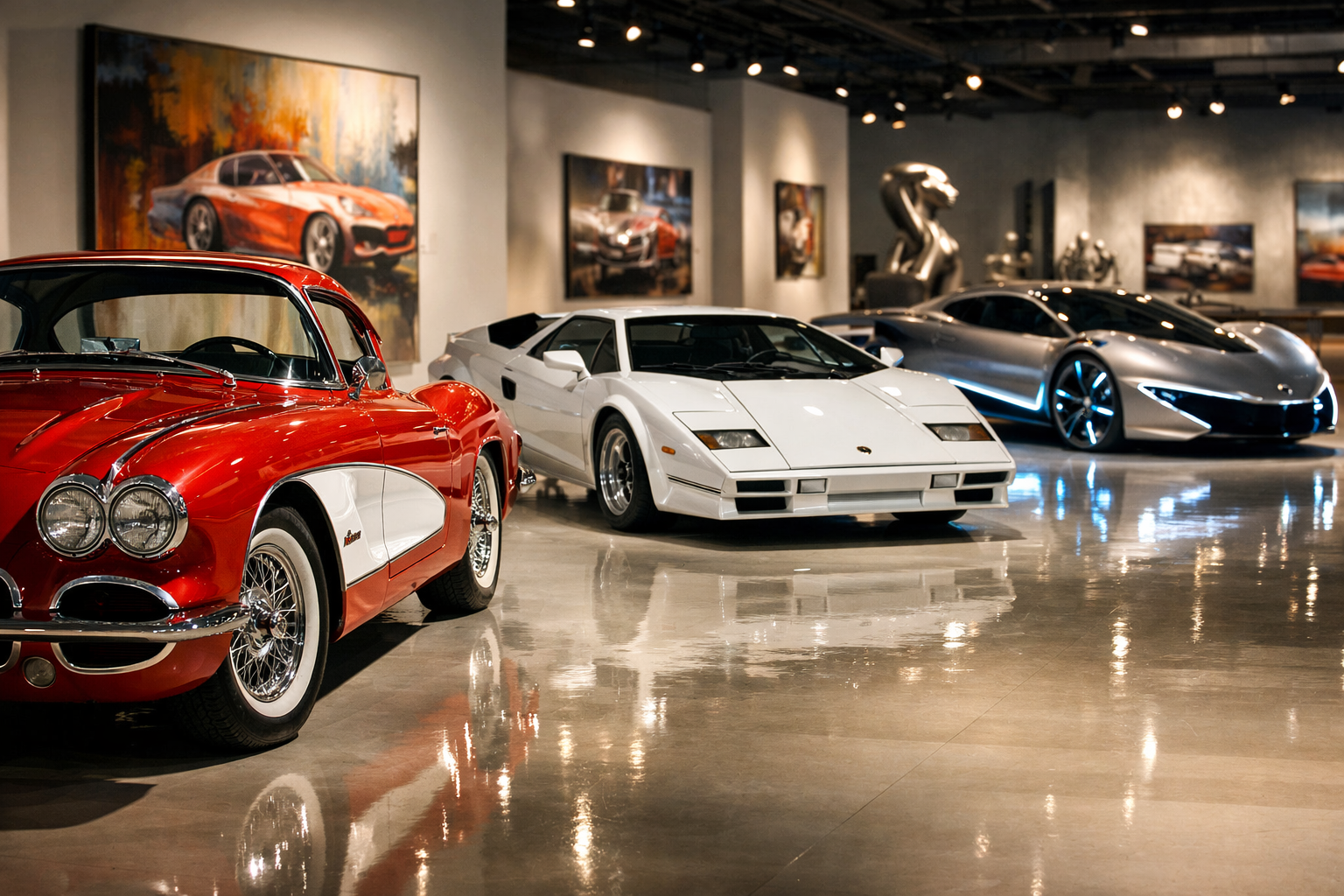

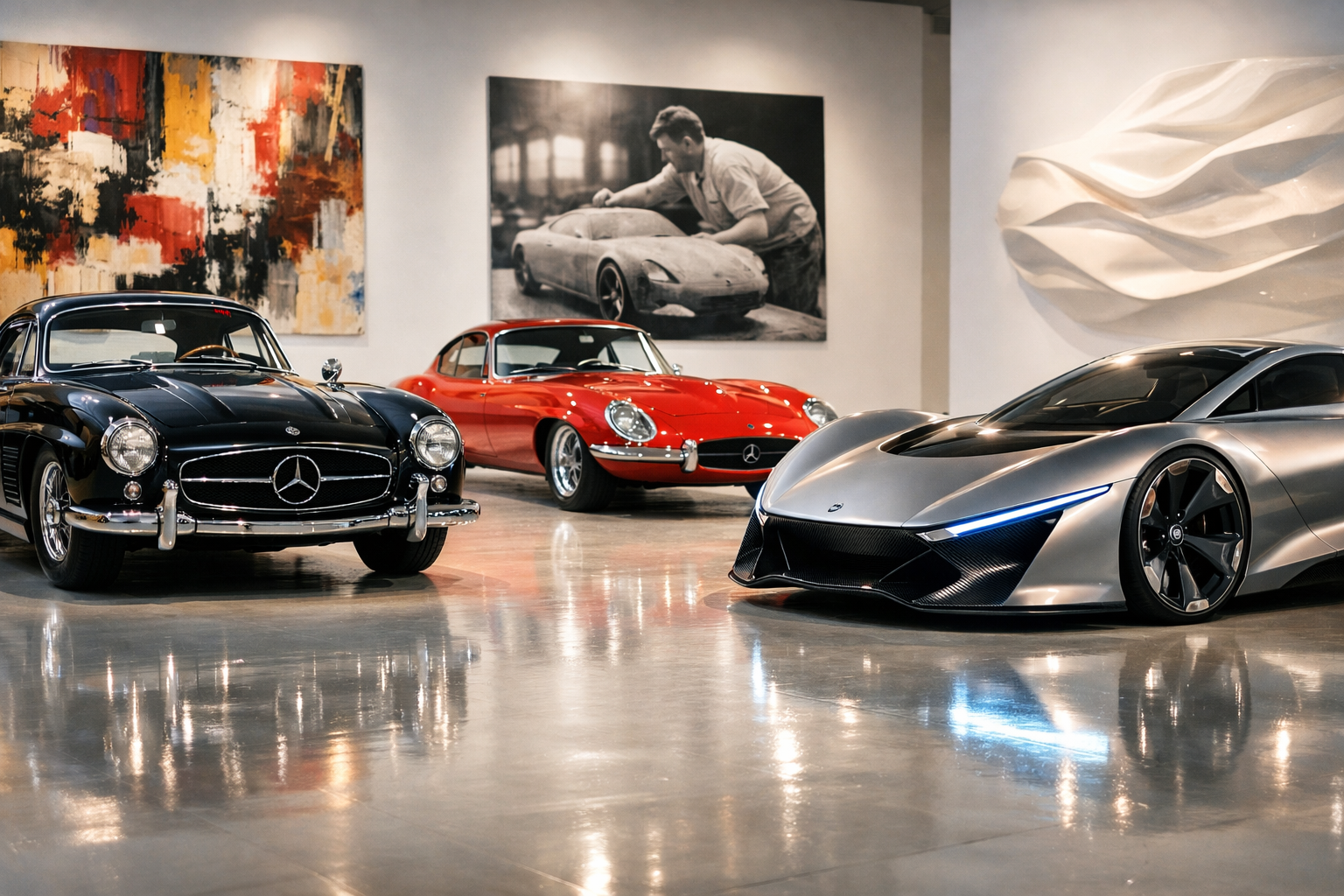
A $10 million Ferrari parked under gallery lights will draw a quieter, deeper crowd than a $300 ticket to a pop concert, and that tells you everything about where cars sit culturally right now. We’re no longer just arguing lap times; we’re debating brushstrokes, proportions, and whether a shoulder line can make grown adults emotional. This is automotive art having its moment, and it matters because the stuff designers sketch today becomes the metal we argue about in pubs tomorrow.
I’ve driven dozens of SUVs that blur together like corporate PowerPoint slides, yet I can still remember the first time I stood in front of a 1961 Ferrari 250 GT SWB—280 hp, carburetors like jewelry, now worth approximately $10–12 million depending on provenance. That car never needed to justify its existence with a 0–60 time. It existed to be beautiful first, fast second, and that priority shift is exactly what modern design studios are desperately trying to rediscover.
Why should you care right now? Because design is the last honest differentiator in a world where every EV claims 0–60 in under 3.5 seconds and 300-mile range. When everything is fast, the cars that look and feel special become the ones we remember, share on Instagram, and eventually pay stupid money for at auction.
Automotive Art Starts with the Classics
Classic cars weren’t designed by committee; they were shaped by stubborn geniuses with sharpened pencils. Think Jaguar E-Type, Lamborghini Miura, Porsche 911—cars that didn’t ask permission and didn’t care about focus groups. Compared to a modern BMW i7 at starting around $105,000 (check manufacturer website for latest pricing), these classics had laughable safety tech and zero touchscreens, yet they still stop people cold.
Hot take: the reason classics age well isn’t nostalgia—it’s clarity. A 1960s Alfa Romeo Giulia Sprint has about 112 hp and does 0–60 in roughly 10 seconds, yet every line has purpose. Meanwhile, some modern rivals like the Mercedes EQS, Audi A8, and Tesla Model S chase aero coefficients so aggressively they look like soap bars left out in the rain.
Inside Modern Car Design Studios
Step into a modern car design studio and it’s part art school, part Silicon Valley startup, part therapy session. Clay models still exist, but now they’re flanked by VR rigs and buzzwords like “parametric surfacing” that make my eyes roll harder than a Doug DeMuro quirks video. Studios at Porsche, Hyundai, and Lucid are all chasing identity, not just drag coefficients.
The best studios still champion a single vision. Porsche Design knows exactly why a 911 looks like a 911, even in 2026 with hybrid rumors swirling. Contrast that with brands that chase trends—looking at you, some recent Lexus and BMW concepts—and you get cars that feel algorithmically generated.
Concept Cars: Art Galleries on Wheels
Concept cars are where automotive art gets loud, weird, and occasionally brilliant. The Audi Skysphere concept promised 623 hp electric performance wrapped in proportions that screamed grand tourer, not appliance. Yes, most concepts never hit production, but they set the visual tone the way a concept album shapes a band’s next three records.
If you think concepts are pointless, read why car design concepts still matter. Even YouTube creators like Supercar Blondie and Marques Brownlee treat these things like rolling TED Talks on the future. They’re aspirational art pieces, not spec-sheet exercises.
When Cars Enter the Art World Proper
Once a car crosses into museums and curated shows, the conversation changes. Events like Luxury Car Shows: Cars on 5th Explained blur the line between concours and gallery opening. You’ll see a $2 million Bugatti Chiron next to a 1955 Mercedes 300SL, and both are judged on presence, not lap times.
I’ll die on this hill: cars belong in art spaces more than most modern sculptures. At least a car combines engineering, ergonomics, and aesthetics. A canvas with a red stripe can’t do 200 mph, no matter how hard the curator squints.
The Collector Market Proves the Point
The market doesn’t lie. A Singer-restored Porsche 911 can command $500,000–$750,000 with “only” around 300 hp because every detail feels intentional. Compare that to a new 2026 Porsche Cayenne Turbo Electric pushing over 700 hp for starting around $160,000, and tell me which one people will hang posters of.
We’ve covered this obsession with heritage before, especially with icons like the Sterling 825SL. When design resonates, value follows. That’s economics meeting emotion at the bar.
The Problem with Algorithmic Design
Here’s the controversial bit: AI-assisted design is already making cars uglier. Optimization for pedestrian safety, battery packaging, and aero is necessary, but when software leads and humans follow, you get cars with the charisma of a microwave. Rivals like the Toyota bZ4X, Chevy Blazer EV, and Ford Mustang Mach-E prove performance doesn’t equal personality.
The best designers fight the math. They accept a 0.01 hit in drag coefficient to keep a fender line that makes your heart beat faster. That’s art winning over spreadsheets.
Why Automotive Art Matters to Enthusiasts
For enthusiasts, automotive art is emotional fuel. It’s why we forgive a 1970s Lamborghini Countach for having rear visibility worse than a brick wall. It’s why we still argue about pop-up headlights at 1 a.m. like philosophers.
Cars that feel artistic invite interaction. You photograph them, sketch them, debate them. Appliances just get leased.
Pros
- Design-driven cars age better and hold value
- Stronger emotional connection for owners
- Encourages bold innovation in studios
- Creates cultural icons beyond transportation
Cons
- Art-first design can sacrifice practicality
- Higher development costs passed to buyers
- Risk of polarizing aesthetics
The future belongs to brands that remember cars can be more than transport pods. If manufacturers treat design studios like art houses instead of cost centers, we all win. Ignore that, and we’ll be left with fast, soulless rectangles—and no one frames those on their wall.
Frequently Asked Questions
What does automotive art actually mean?
Automotive art refers to cars designed with aesthetic intent equal to engineering, prioritizing proportion, detail, and emotion alongside performance.
Are concept cars considered automotive art?
Yes. Concepts are often pure design statements, free from regulations, and influence production models for years.
Do artistic car designs hurt performance?
Not necessarily. Many iconic designs balance beauty with speed, like the Porsche 911 or Ferrari 250 series.
Why are classic cars valued as art?
They represent a specific design philosophy and era, often handcrafted, with forms unlikely to be repeated.