

I once bought a used Porsche 911 in under 45 minutes, and the salesman looked like I’d just broken the space-time continuum. That used to be impossible because buying a car traditionally takes longer than a Nürburgring lap in a diesel Land Rover. Thanks to car buying software, that miserable half-day ordeal is now getting sliced nearly in half, and frankly, it’s about damn time.
This matters right now because 2025 and 2026 cars are rolling computers with window stickers starting around $30,000 and rocketing past $80,000 before you’ve even sniffed the options list. If I’m wiring that kind of money, I don’t want to spend four hours arguing about VIN etching and nitrogen-filled tires. Dealership tech has quietly become the most important performance upgrade in the buying process, more impactful than a 20-hp bump or a fake exhaust note.
I’ve driven dozens of SUVs, sports cars, and EVs from Tesla, BMW, Toyota, Ford, Hyundai, and Kia, and here’s the hot take: the slowest part of modern car ownership isn’t charging or maintenance, it’s the buying experience. Car buying software is finally dragging dealerships out of the fax-machine era and into something resembling 2026. Think less DMV, more Apple Store—minus the smug Genius Bar energy.
Why Car Buying Software Is Slashing Deal Times
The average U.S. car purchase used to take about 3.5 to 4 hours, according to dealer surveys, which is longer than a full F1 race including red flags. Modern car buying software bundles credit apps, trade-in valuation, F&I menus, and e-signatures into one workflow that can cut that to roughly 90–120 minutes. That’s not marketing fluff; I’ve watched it happen firsthand.
Platforms like Dealertrack, RouteOne, and Cox Automotive systems talk to banks in real time, not via carrier pigeon. When a buyer gets approved in minutes instead of an hour, momentum stays alive, and fewer deals die from boredom. Competitors still stuck in paper purgatory—looking at you, smaller legacy dealers—are hemorrhaging customers.
The Tech Stack Behind Faster Car Sales
This isn’t one magic app; it’s a stack. Digital retailing tools, inventory management, CRM systems, and F&I software now sync like a well-tuned dual-clutch gearbox. If you want the nerdy deep dive, why dealers are racing to adopt automotive CRM explains why customer data is now worth more than floor mats.
The controversial bit? Dealers who don’t invest in this tech deserve to lose business. I’ve got zero sympathy for stores whining about margins while making customers wait 40 minutes for a printout. Tesla, Carvana, and even Hyundai’s online sales pilots have proven that speed equals trust.
Digital Paperwork: Killing the Clipboard Once and for All
E-signatures sound boring, but they’re the unsung hero here. Signing 25 documents digitally takes about 5 minutes instead of 30, and errors drop dramatically. Less reprinting means fewer “sorry, one more signature” moments that kill enthusiasm faster than a CVT under hard throttle.
From a buyer’s perspective, this is sanity-saving. You can review contracts at home, on your couch, with a beer, rather than under fluorescent lights. It’s one of the rare cases where dealership tech actually benefits humans, not just spreadsheets.
Trade-Ins Go from Guesswork to Data Science
Trade-ins used to be a mysterious ritual involving a manager vanishing into the back room like a wizard consulting ancient scrolls. Now, car buying software pulls auction data, market trends, and VIN-specific history in seconds. Expect offers within 5–10% accuracy of final value, not the old lowball song and dance.
This directly affects faster car sales because transparency reduces haggling. When buyers trust the number, deals close quicker. It also ties into brand loyalty—something we’ve covered in how brand loyalty shapes buying choices—because fewer bad experiences mean repeat customers.
F&I Menus: Less Pressure, More Clarity
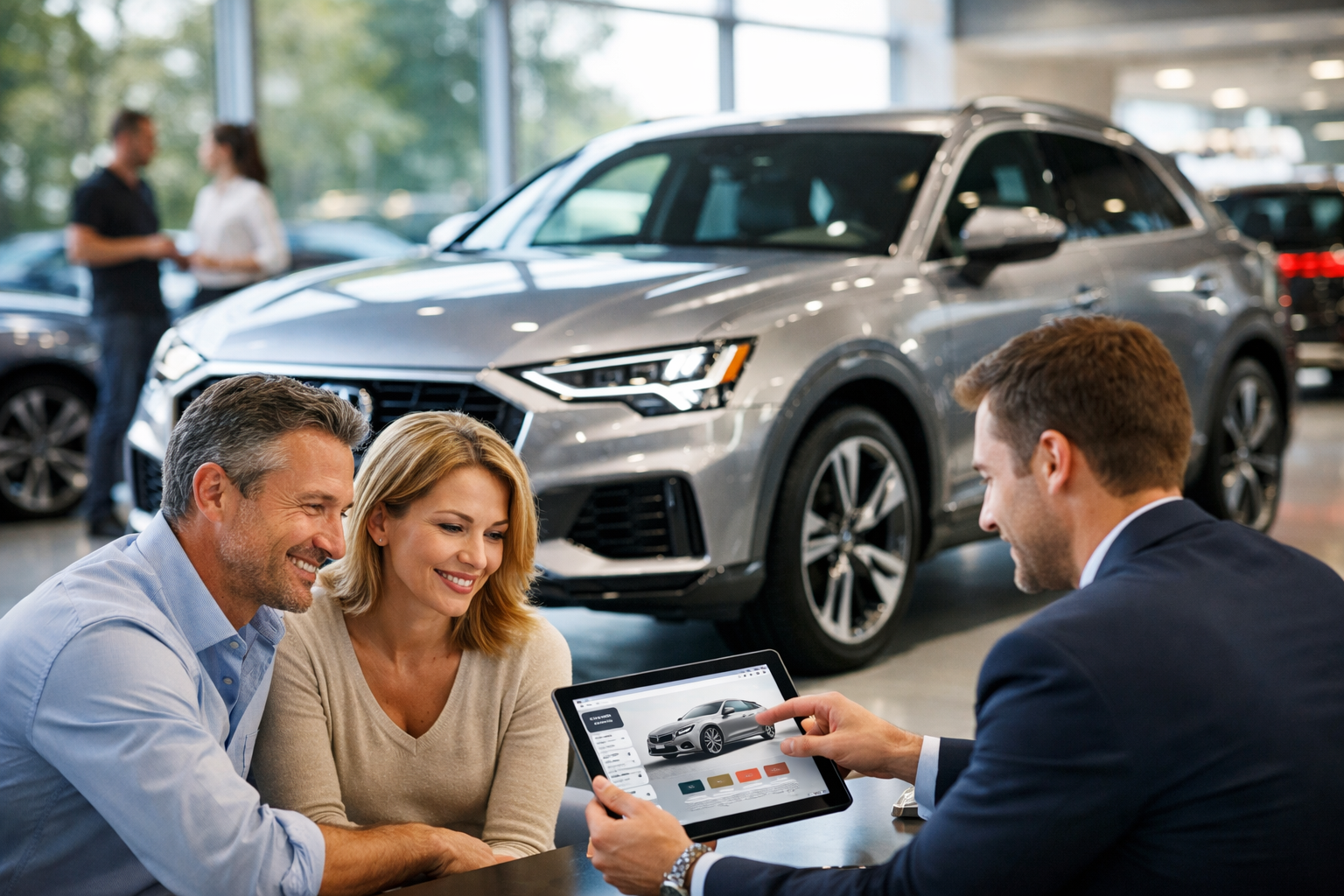
The finance office was once where joy went to die. Software-driven F&I menus now show warranties, GAP insurance, and service plans with clear pricing and acceptance rates. Buyers select options on a tablet like they’re configuring a BMW M3, not negotiating a hostage release.
Here’s my spicy take: extended warranties aren’t evil if presented honestly. When buyers see a $2,500 plan broken down to about $35 a month, many opt in without resentment. Faster decisions mean faster exits, which everyone wants.
Online-to-Offline Buying Actually Works Now
Clicking “buy online” used to dump you into a black hole. In 2026, it actually matters. Customers can structure deals at home, upload licenses and insurance, and show up to sign and drive in under an hour.
This hybrid model is why physical dealers still matter, despite YouTubers predicting their doom every six months. Auto shows still draw crowds—see why the Philadelphia Auto Show revival matters—but the real innovation is happening quietly behind dealership doors.
The Risks Nobody Talks About
Speed cuts both ways. Faster processes can mask bad decisions, especially with 72- or 84-month loans that look painless monthly but brutal long-term. Software won’t save buyers from math, and dealers aren’t always incentivized to explain it.
There’s also data privacy. These systems hold credit scores, SSNs, and financial histories, making them juicy targets. Dealers must follow federal guidelines and buyers should understand their rights via NHTSA consumer resources.
Pros and Cons of Software-Driven Car Buying
Pros
- Buying time cut from ~4 hours to about 90 minutes
- Transparent pricing and trade-in valuations
- Less pressure in F&I decisions
- Higher accuracy, fewer paperwork errors
Cons
- Can encourage rushed financial decisions
- Data privacy concerns if systems aren’t secure
- Old-school dealers still lag behind
Verdict: Faster, Smarter, Still Needs a Brain
Car buying software has transformed the worst part of car ownership into something almost tolerable. It’s not perfect, and it won’t fix bad loans or bad dealers, but it’s the biggest quality-of-life upgrade buyers have seen in decades. Like ABS or stability control, once you’ve experienced it, going back feels medieval.
If you’re still spending half a day buying a car in 2026, that’s not tradition—it’s a warning sign. Embrace the tech, keep your brain switched on, and you’ll be home before your coffee gets cold.
Frequently Asked Questions
How does car buying software actually save time?
It automates credit checks, paperwork, trade-in valuations, and e-signatures. This can reduce total buying time from about 4 hours to roughly 90–120 minutes.
Is car buying software safe for personal data?
Reputable platforms use encryption and comply with federal regulations. Buyers should still verify dealer security practices and understand data usage policies.
Can I buy a car completely online now?
Yes, many dealers allow full online transactions, though some states still require in-person signatures or delivery steps.
Does faster car sales mean worse deals?
Not necessarily. Transparency often improves pricing, but buyers must still review loan terms carefully, especially long-term financing.