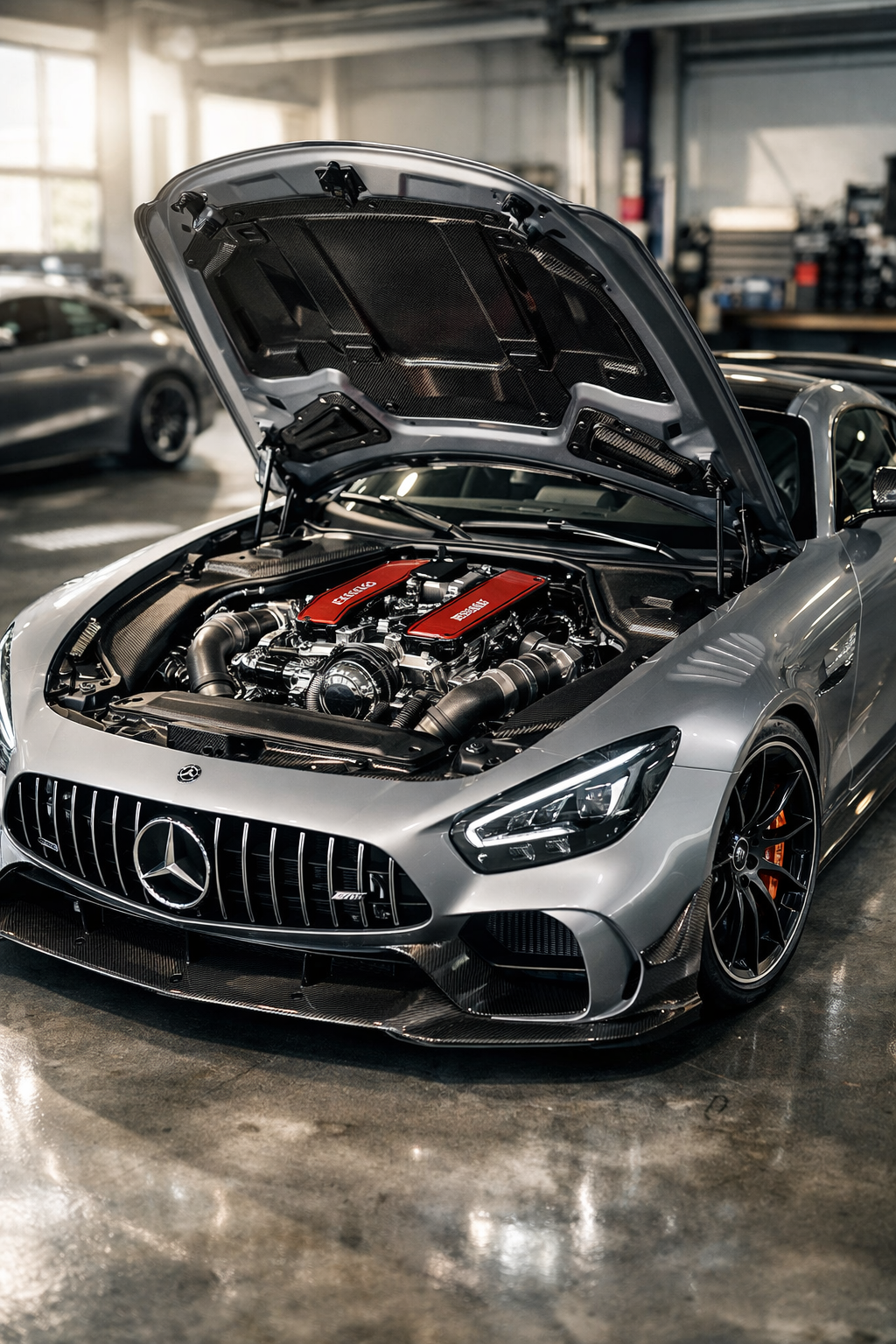

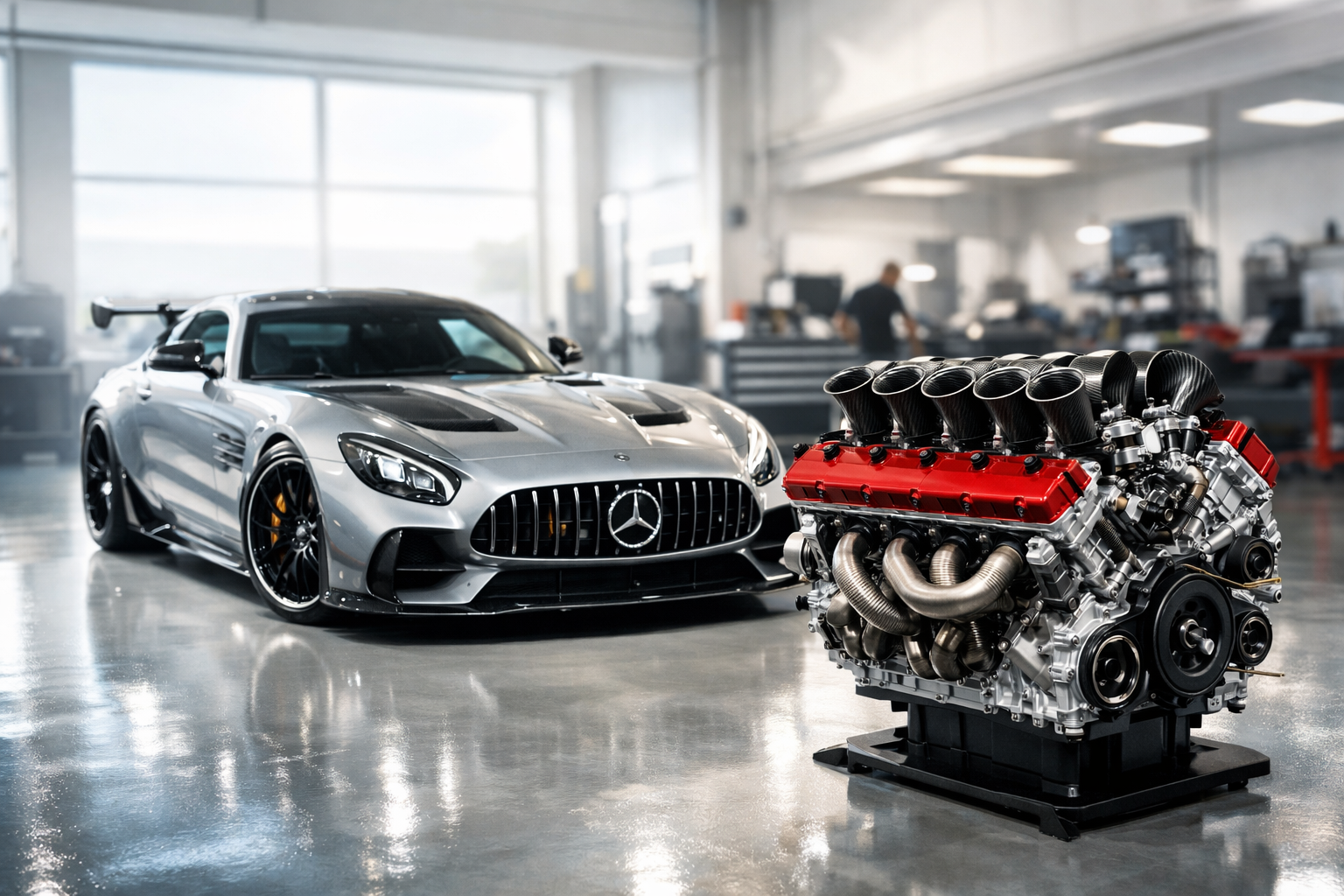
Mercedes bringing back a flat-plane V8 sounds like heresy, a bit like Gordon Ramsay opening a vegan steakhouse. Yet here we are in 2026, watching Stuttgart flirt again with an engine layout that screams Ferrari, not cigar-lounge AMG. The flat-plane V8 is suddenly relevant again, and if you care about performance engines, this matters right now.
I’ve driven dozens of modern AMG cars, from the C63’s controversial four-cylinder hybrid to the old M156 monsters that drank fuel like sailors on shore leave. Mercedes betting on a flat-plane V8 again isn’t nostalgia; it’s a calculated engineering move wrapped in motorsport logic. And yes, it’s also a subtle middle finger to the idea that all performance cars must sound like electric vacuum cleaners.
So let’s unpack why the flat-plane V8 is back on Mercedes’ agenda, what it means for future AMG models, and whether this is genius engineering or just marketing dressed up in titanium exhaust tips.
Flat-Plane V8: The Basics Without the Boring
A flat-plane V8 uses a crankshaft layout where opposing pistons move in sync, more like two inline-fours glued together. Compared to a traditional cross-plane V8, it’s lighter, revs higher, and responds to throttle inputs faster than a caffeinated terrier. The downside is vibration, noise, and the kind of NVH engineers usually treat like a contagious disease.
Ferrari has championed this design for decades, from the 458 Italia to the current 296-derived race engines, while Ford used it in the Shelby GT350’s 5.2L V8 making 526 hp at 8,250 rpm. Mercedes historically avoided it in road cars because luxury buyers don’t enjoy their espresso shaking out of the cupholder.
But times change, and AMG buyers now care more about lap times, throttle response, and Nürburgring bragging rights than whisper-quiet idling.
Why Mercedes Is Revisiting the Flat-Plane V8
The brutal truth is emissions and electrification have cornered Mercedes. Downsized turbo fours with hybrid assistance, like the current C63’s 671 hp setup, are fast but emotionally bankrupt. A flat-plane V8 offers lighter internals, better airflow, and higher redlines, which means more power without simply cranking boost to moon levels.
Mercedes’ engineers aren’t stupid; they know enthusiasts roasted the C63 harder than a YouTube comment section on launch day. Reintroducing a flat-plane V8 is a way to claw back credibility while still meeting regulations through clever combustion efficiency and hybrid pairing. Think less brute-force torque, more surgical aggression.
It’s also a direct shot across the bow at rivals like the Porsche 911 Turbo, Ferrari Roma, and even the BMW M4 CSL.
The Engineering Advantage AMG Actually Cares About
Here’s the nerdy bit Doug DeMuro would love: flat-plane V8s allow for equal-length exhaust headers without needing plumbing that looks like a plate of spaghetti. That improves scavenging, throttle response, and high-rpm power. In plain English, the engine breathes better when you’re absolutely sending it.
Weight savings matter too. A flat-plane crank can shave roughly 20-30 pounds compared to a cross-plane equivalent, which is the difference between understeer and smug satisfaction mid-corner. Chris Harris has said repeatedly that engine response matters more than raw horsepower, and this is exactly that philosophy.
Expect power figures north of 600 hp in future AMG GT variants, with 0-60 mph times around 3.0 seconds and redlines flirting with 8,000 rpm.
Yes, It’ll Sound Weird—And That’s the Point
Hot take: the uneven burble of cross-plane V8s is overrated. A flat-plane V8 screams like an angry Italian opera singer trapped in a German suit, and that’s glorious. It’s sharper, angrier, and tells you exactly how fast the engine is spinning.
Mercedes knows some buyers will complain, but those buyers already defected to EVs or luxury SUVs. The remaining AMG faithful want drama, not decibel-balanced spreadsheets. If you want silence, there’s always an EQS with a meditation app.
How This Fits Mercedes’ Bigger Performance Strategy
This move isn’t happening in isolation. Mercedes is rethinking brand identity as performance, luxury, and electrification collide, much like we discussed in what enthusiasts lose in the luxury shift. A flat-plane V8 signals that AMG still values mechanical excellence, not just software patches.
It also complements hybrid systems better than you’d think. Electric torque fills low-end gaps, while the flat-plane V8 handles high-rpm theatrics. That’s smarter than chasing 1,000 hp headlines that nobody can use outside YouTube drag races.
Competitors like Audi RS models, Lexus F performance cars, and BMW M are watching closely, whether they admit it or not.
Cost, Reliability, and the Uncomfortable Questions
Let’s not pretend this will be cheap. Expect cars with this engine to start around $140,000, check manufacturer website for latest pricing, especially for AMG GT and limited-run Black Series models. Maintenance won’t be Camry-level either; flat-plane engines demand precision balancing and exotic materials.
Reliability? Modern metallurgy and active engine mounts mitigate most vibration issues, but this won’t be as bulletproof as a naturally aspirated Lexus V8. If you want stress-free ownership, read why reliable cars are the smart luxury choice and buy something sensible.
If you want a performance engine with a pulse, you accept the compromises.
Why Enthusiasts Should Care Right Now
The industry is pivoting hard toward electrification, and internal combustion’s future depends on engines that justify their existence. A flat-plane V8 does exactly that by offering an experience EVs can’t replicate. It’s mechanical, visceral, and slightly unhinged.
This also echoes broader debates about enthusiast relevance, like in the gasoline case for hot hatches after 2030. Mercedes choosing this route tells us performance brands aren’t done fighting yet.
If AMG pulls this off, it could be remembered as the moment Mercedes rediscovered its soul.
Pros
- Sharper throttle response and higher rev limits
- Lighter engine improves handling balance
- Distinctive, motorsport-inspired sound
- Restores AMG performance credibility
Cons
- Higher cost and complexity
- Increased vibration compared to cross-plane V8s
- Not ideal for buyers prioritizing comfort
The flat-plane V8 isn’t a backward step; it’s Mercedes reminding us why we fell in love with performance engines in the first place. If this is the last great era of combustion, AMG intends to go out screaming.
Frequently Asked Questions
What is a flat-plane V8 engine?
A flat-plane V8 uses a crankshaft where opposing pistons move together, enabling higher revs and faster throttle response. It’s lighter than a cross-plane V8 but produces more vibration.
Why is Mercedes using a flat-plane V8 again?
Mercedes wants improved responsiveness, reduced weight, and better emissions efficiency. It also helps AMG regain enthusiast credibility lost with downsized hybrid engines.
Which Mercedes models could get a flat-plane V8?
Likely candidates include future AMG GT and Black Series models. Expect limited production and prices starting around $140,000.
Are flat-plane V8 engines less reliable?
They can experience more vibration, but modern materials and active mounts improve durability. Maintenance costs are higher than traditional V8s.