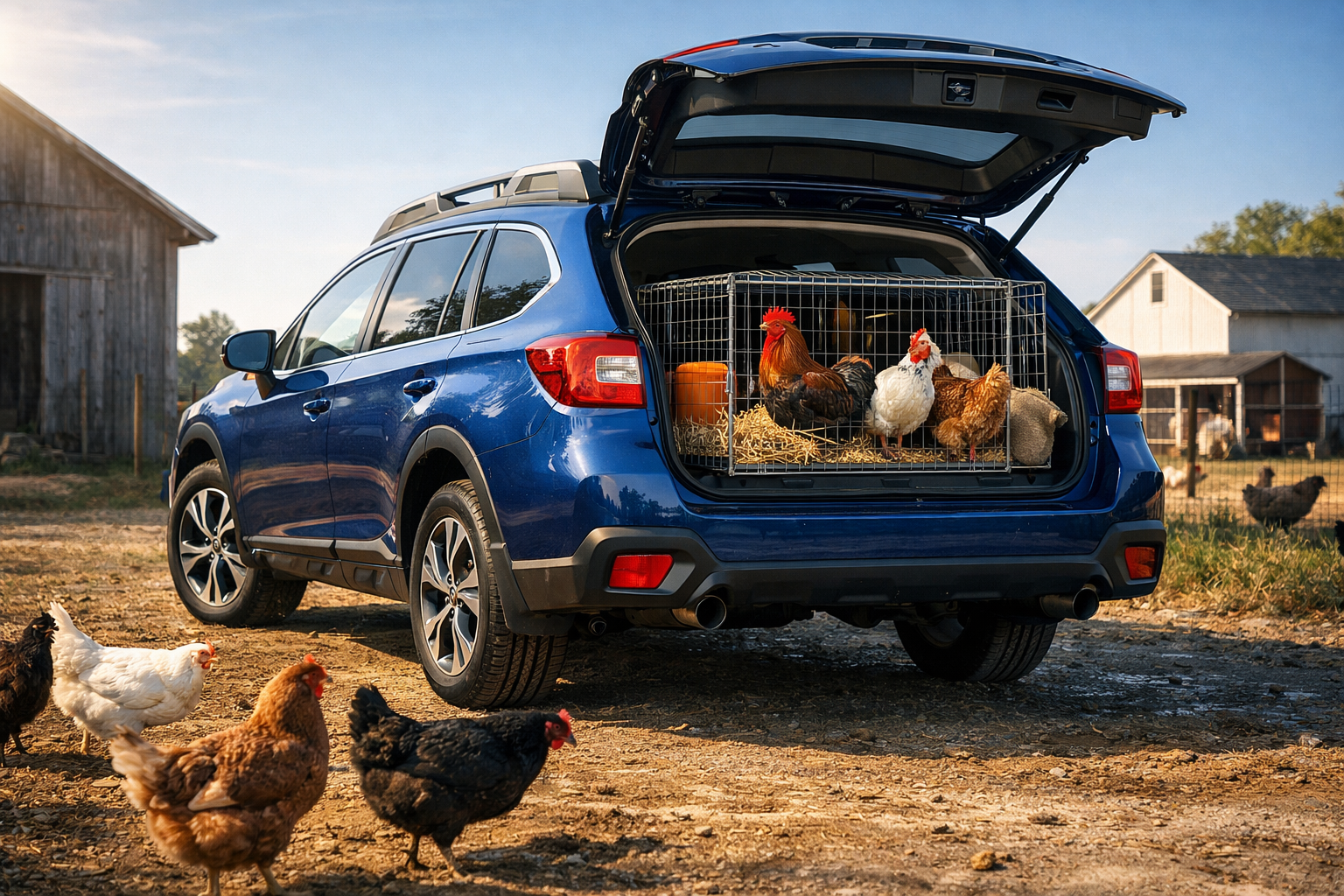

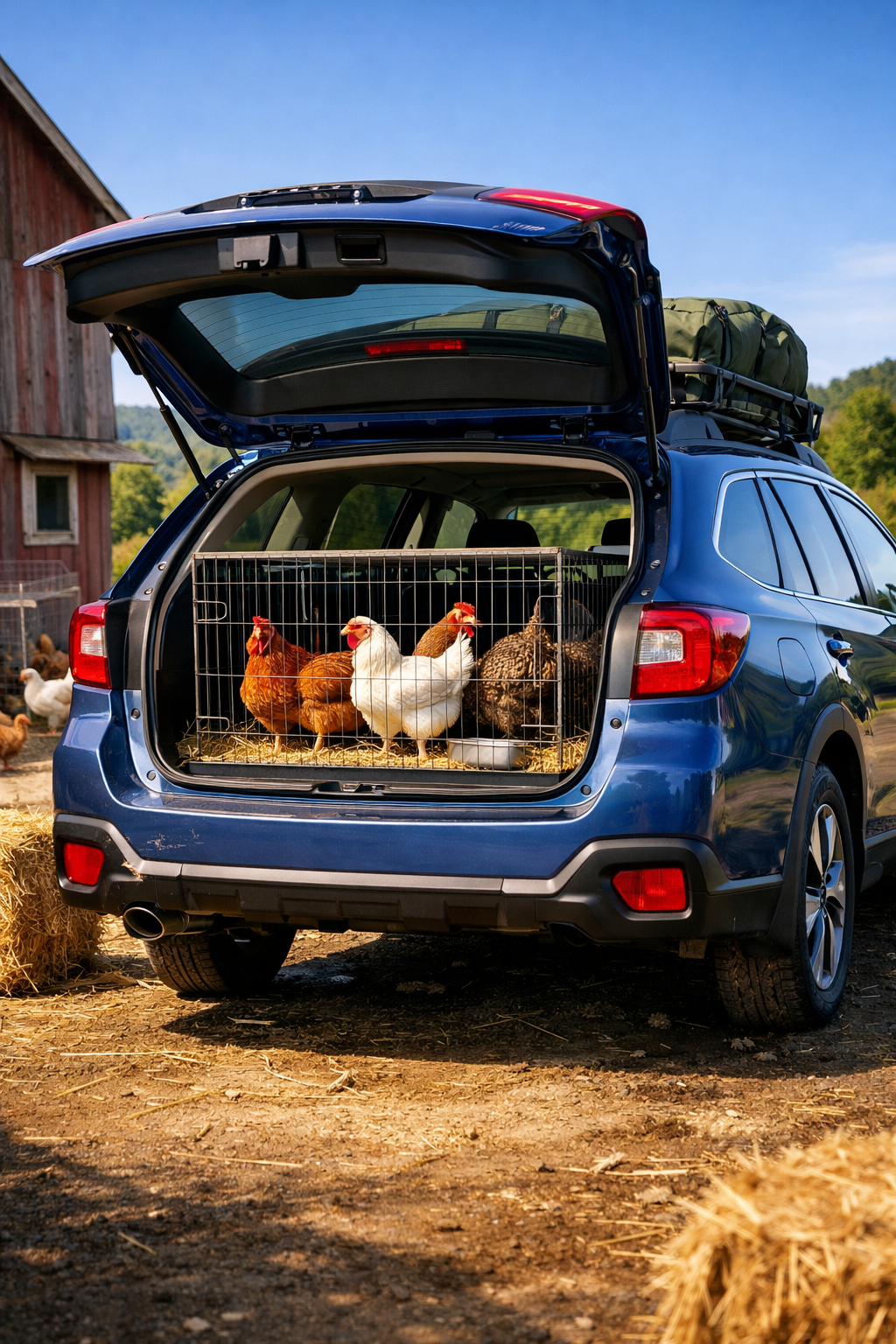
I once watched a man load six live chickens into the back of a 2025 Subaru Outback in a Whole Foods parking lot, and nobody blinked. That’s the bit that matters: this wasn’t a farm supply store, it was kombucha central, and yet it felt completely normal. Subaru owners hauling poultry isn’t a meme—it’s a cultural tell, and it says more about the brand than any glossy ad with a kayak on the roof.
This matters right now because car brands are scrambling for “authentic lifestyle alignment,” while Subaru quietly nailed it 20 years ago and never let go. I’ve driven dozens of crossovers from Toyota, Honda, Mazda, and Jeep, and none of them feel as accidentally perfect for real life as a Subaru. If you’re wondering why resale values are stubbornly high and loyalty rates hover around 70%, the chicken story is your answer.
Yes, we’re going to talk about cars, but we’re really talking about people. Because when Subaru owners treat their vehicles like a mobile shed, animal carrier, and snowplow, that’s not abuse—it’s a design brief fulfilled.
Why Subaru Owners End Up Hauling Chickens
Start with the basics: Subaru’s lineup is engineered for use, not posing. Standard AWD on everything except the BRZ, 8.7 inches of ground clearance on an Outback, and interiors that wipe clean like a pub table at last call. A Toyota RAV4 Hybrid might get 40 mpg, but its glossy plastics cry when a hen flaps.
Then there’s the psychological part. Subaru marketing doesn’t sell status; it sells permission. Permission to get muddy, to dent a bumper, to throw a crate of chickens in back and hose it out later, which you can do because Subaru still uses rubberized cargo floors while luxury brands chase piano black nonsense.
The Engineering That Encourages Weird Behavior
Let’s get nerdy for a second, Doug DeMuro-style. Symmetrical AWD means equal-length half-shafts, fewer torque steer tantrums, and predictable traction on snow, gravel, and farm tracks. That’s why an Outback with the 2.5-liter flat-four (182 hp) feels unbothered hauling 1,000 pounds of feed, even if 0–60 mph takes a leisurely 8.7 seconds.
Compare that to a Honda CR-V or Mazda CX-5, which are excellent cars but tuned for suburbia. Subaru tunes suspension like it expects potholes, frost heaves, and the occasional escapee rooster. Chris Harris would call it “flowy compliance,” and he’d be right.
The Interior: Built for Dogs, Dirt, and… Poultry
Subaru interiors won’t win design awards, and that’s the point. Big buttons, thick steering wheels, and seat fabrics that resist claws and mud better than Alcantara ever will. The 2026 Forester’s StarTex upholstery is basically Patagonia for seats—durable, washable, and faintly judgmental.
Hot take: Subaru’s infotainment is overhated. The big vertical screen is slow on startup, yes, but once you’re moving chickens at 6 a.m., you’re not fiddling with ambient lighting like in a BMW X3. You want CarPlay, heat, and defrost—done.
Community Over Image
This is where Subaru owners diverge from Jeep Wrangler cosplay culture. Jeep sells the idea of adventure; Subaru owners are already late for it. There’s less talk, more use, and fewer Instagram captions explaining why a dirt road “changed my life.”
Spend time in Subaru forums or at trailheads and you’ll see it: advice about tire pressures, dog barriers, and chicken crate tie-downs. We’ve covered this before in our deep dive into how Subaru owners actually use their cars, and it’s gloriously unpolished.
Safety and Practicality Aren’t Buzzwords Here
Subaru’s EyeSight system isn’t sexy, but it works, earning strong ratings from NHTSA across the lineup. When you’re hauling live cargo, smooth braking matters more than Nürburgring lap times. Subaru gets that in a way Ford Bronco marketing never will.
Fuel economy is decent, not class-leading: an Outback does approximately 26 mpg combined per FuelEconomy.gov. But reliability and low running costs keep these cars on farms and trails for 200,000 miles, which is the real environmental flex.
The Controversial Bit: Subaru Isn’t Cool—and That’s Why It Wins
Here’s the spicy take: Subaru would be ruined by trying to be cool. If they chased luxury like everyone else—something we’ve criticized in our take on the luxury creep—they’d lose the chicken-hauling crowd overnight. The brand’s refusal to chase 300-hp turbo crossovers is an act of restraint, not laziness.
Meanwhile, competitors like Toyota, Honda, and even Volvo are polishing their images while quietly pricing out the people who actually use cars. Subaru sticks to starting prices around $28,000–$30,000 for core models like Crosstrek and Forester (check manufacturer website for latest pricing), and that accessibility matters.
What This Says About the Brand’s Future
As electrification looms, Subaru faces a risk: EVs don’t love mud, water, or improvised farm duty. But if any brand can build an electric chicken-hauler with washable floors and honest range claims, it’s Subaru. The Solterra wasn’t perfect, but the intent was right.
As long as Subaru owners keep treating their cars like tools instead of trophies, the brand will stay weird, loyal, and profitable. And frankly, the industry needs that antidote.
Pros
- Genuine usability over image
- Standard AWD across most models
- Durable, cleanable interiors
- Exceptionally loyal owner community
Cons
- Mediocre acceleration numbers
- Infotainment still lags rivals
- Not cheap once fully optioned
So yes, Subaru owners haul chickens, kayaks, dogs, and half of REI, and that’s precisely the point. In a world of overstyled, underused vehicles, Subaru remains gloriously, stubbornly practical. Long may the feathers fly.