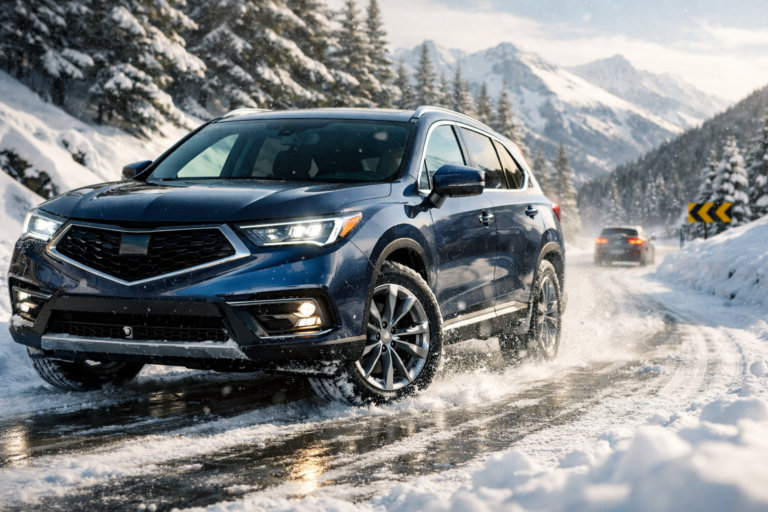

If you think snow tires are just a scam cooked up by Big Rubber to fleece you every winter, I’ve got a bridge in Alaska to sell you. I’ve watched $90,000 Range Rovers pirouette into snowbanks while a clapped-out Subaru on proper winters trundled past like it was delivering groceries. The debate over snow tires vs all-season isn’t academic—it’s the difference between getting home and starring in someone else’s dashcam compilation.
January driving is where confidence meets physics, and physics always wins. Rubber compounds don’t care about your AWD badge, your 400 horsepower, or the fact the dealer said “all-seasons are fine.” If you actually want cold weather safety instead of cold weather vibes, you need to understand what your tires are doing when the thermometer dips below 45°F.
I’ve driven dozens of SUVs, hot hatches, and pickups in winter—from Michigan whiteouts to icy Vermont backroads—and this winter tires guide is written for people who actually leave the house when it snows. We’re cutting through marketing nonsense and getting brutally honest about what works, what doesn’t, and when you’re wasting money.
Why Snow Tires vs All-Season Is the Only Winter Debate That Matters
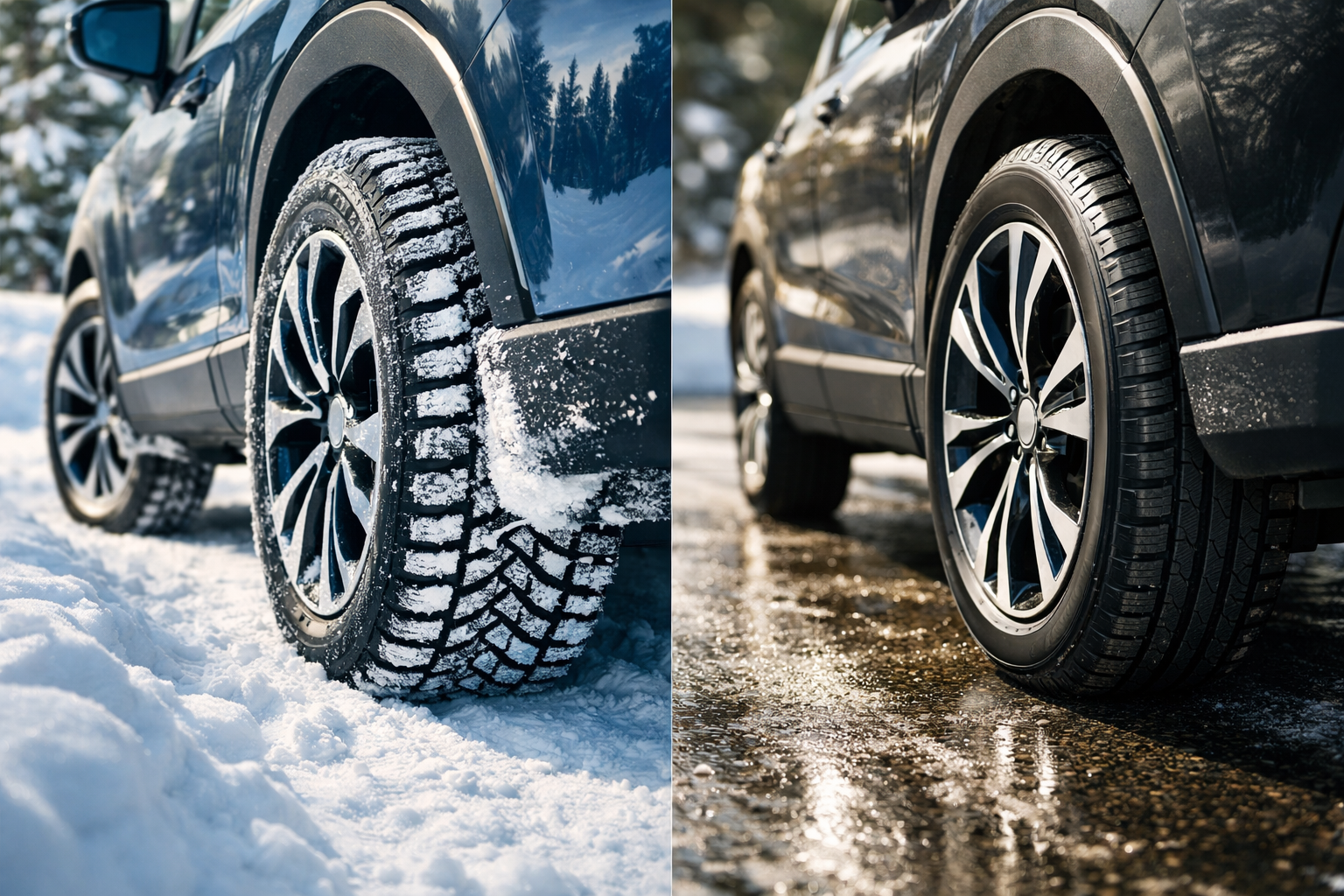
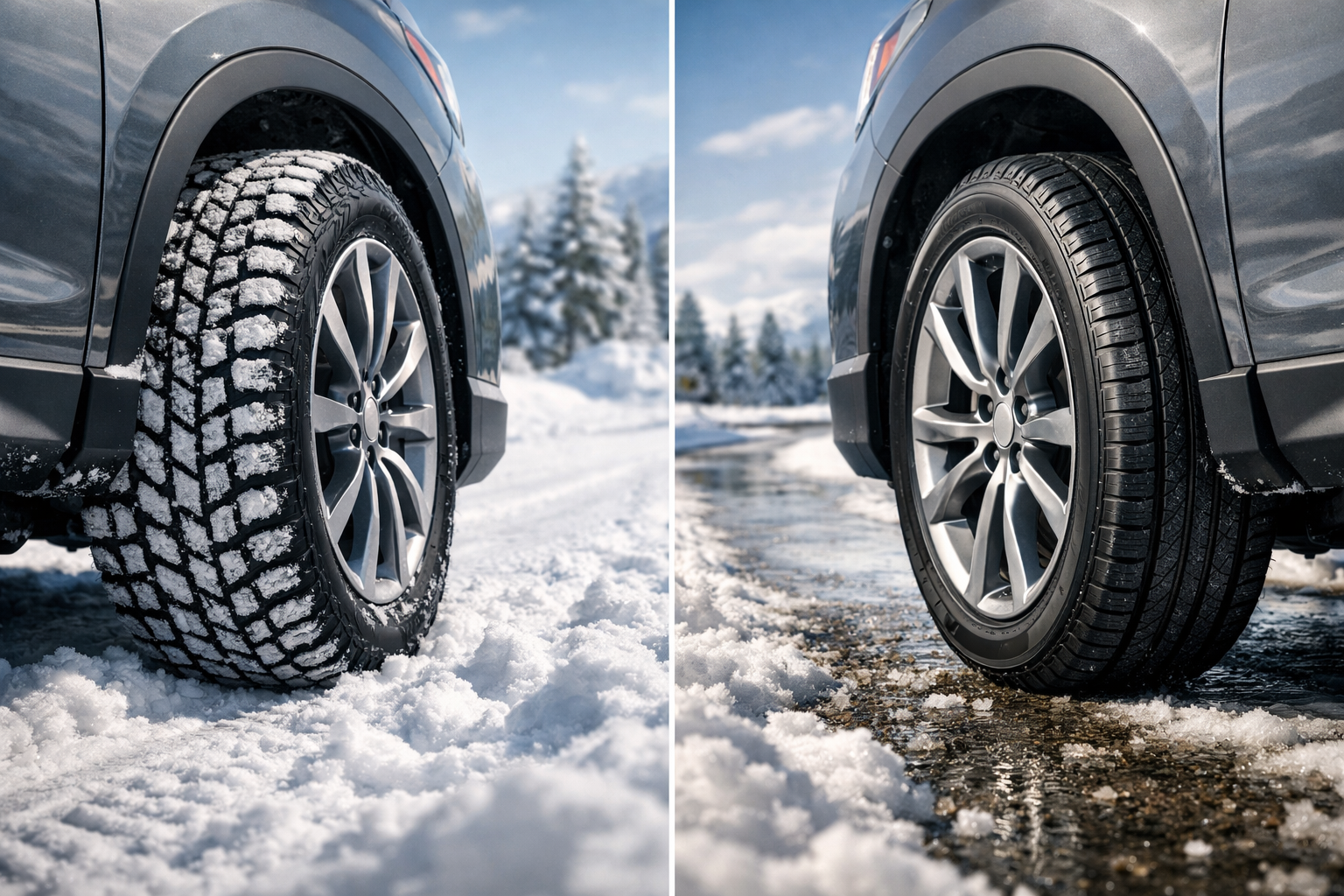
Tires are the only part of your car that actually touch the road, yet people obsess over drivetrains like kids arguing Xbox vs PlayStation. Snow tires use softer rubber compounds that stay pliable below about 45°F, while all-seasons stiffen up like frozen beef jerky. That alone can cut braking distances by 30–40% on snow and ice, according to multiple independent tests.
Here’s the controversial hot take: AWD with all-seasons is often worse than FWD with proper winter tires. Yes, AWD helps you get moving, but it does nothing to help you stop or turn, which is where most winter crashes happen. If you don’t believe me, go read our breakdown of AWD winter driving reality checks and tell me where the laws of physics changed.
What Snow Tires Actually Do Differently
Snow tires aren’t just all-seasons with deeper tread; that’s marketing fluff. They use aggressive siping—tiny slits in the tread blocks—that bite into snow and evacuate slush like a proper snowplow. The rubber compound is engineered to stay flexible at 0°F, which is why throttle response and steering feel don’t turn to mush.
Brands like Michelin X-Ice, Bridgestone Blizzak, and Nokian Hakkapeliitta dominate for a reason. They’re tested obsessively in places where winter isn’t a vibe, it’s a lifestyle. Check Michelin’s own technical breakdown on Michelin’s official site if you want the chemistry lesson.
All-Season Tires: The Jack of All Trades, Master of None
All-seasons are the automotive equivalent of a Swiss Army knife—handy, but rarely the best tool. They’re designed to work “okay” from about 20°F to 100°F, which means compromises everywhere. In light snow, modern all-seasons like the Michelin CrossClimate2 can be surprisingly competent, but ice exposes their limits fast.
If you live somewhere that sees occasional dustings and roads get cleared quickly, all-seasons might be enough. But if January means packed snow, freezing rain, and that lovely polished ice at intersections, you’re gambling with stopping distances. The NHTSA has plenty of winter crash data backing this up on NHTSA.gov.
Real-World Testing: Numbers Don’t Lie
In independent tests, cars on snow tires can stop from 30 mph in roughly 70–80 feet on packed snow. The same car on all-seasons often needs 110–120 feet, which is basically the length of a tractor trailer. That extra distance is the difference between a close call and a bent bumper—or worse.
Acceleration matters less than people think. Even a 500-hp BMW M340i xDrive will struggle for traction on all-seasons, while a 180-hp Toyota Corolla on winters feels planted and predictable. This is why YouTubers like Tyre Reviews and Engineering Explained bang on about tires more than horsepower.
AWD, FWD, RWD: Why Tires Matter More Than Drivetrain
I’ll say it louder for the folks in lifted trucks: AWD does not replace winter tires. It helps you get going, not slow down or turn, which are the hard parts of winter driving. We’ve covered this myth in detail in AWD winter driving explained, and the conclusion is unambiguous.
RWD cars get unfairly maligned in winter, but slap snow tires on a BMW 3 Series and it’s shockingly capable. Meanwhile, AWD SUVs on worn all-seasons become four-wheel sleds. Tires level the playing field more than any drivetrain badge.
Cost Breakdown: Are Snow Tires Really “Expensive”?
A decent set of snow tires for a midsize sedan runs approximately $600–$1,000, depending on size and brand. Add another $100–$150 if you want steel wheels, which I recommend unless you enjoy curb rash on your nice alloys. Spread over four to five winters, the annual cost is less than most people spend on coffee.
Here’s the kicker: running winter tires actually extends the life of your all-seasons because you’re not using them year-round. Over the life of the car, the cost difference shrinks dramatically. And if you want to see which setups work best on AWD cars, our guide to AWD snow tires for 2026 is worth a look.
Common Mistakes That Ruin Winter Safety
Buying snow tires for only the drive wheels is a rookie error that needs to die. Mismatched grip front to rear makes handling unpredictable, especially in emergency maneuvers. Always run four identical winter tires, full stop.
Another classic mistake is waiting until the first storm hits. Tire shops book up fast, and driving home in a blizzard on summer-worn all-seasons is a terrible life choice. Install winters when temps consistently drop below 45°F, not when snow is already piling up.
When All-Seasons Are Actually Fine
If you live in the Sun Belt, see snow once a year, and roads are cleared within hours, high-quality all-seasons might be enough. Look for tires with the Three-Peak Mountain Snowflake rating, which indicates they meet a minimum winter traction standard. Even then, they’re still a compromise.
This is where honest self-assessment matters. If January driving means rural roads, hills, or long commutes before plows arrive, all-seasons are a false economy. Cold weather safety isn’t about optimism; it’s about preparation.
Pros
- Snow tires dramatically improve braking and cornering in winter
- Better control on ice, slush, and packed snow
- Extend the life of your all-season tires
- Increase confidence and reduce winter crash risk
Cons
- Upfront cost of a second set of tires and wheels
- Seasonal changeover required
- Overkill for regions with minimal winter weather
Final Verdict: What You Really Need for January Driving
The snow tires vs all-season argument only exists because people hate buying tires. If you deal with real winter—ice, snow, cold mornings where breath fogs the cabin—proper winter tires are non-negotiable. They’re not a luxury; they’re basic safety equipment.
If your winters are mild and predictable, good all-seasons can work, but don’t kid yourself into thinking they’re “just as good.” Rubber chemistry doesn’t care about your budget or your confidence. Choose based on where you actually drive, not where you wish you lived.
Buy the right tires, and winter driving goes from white-knuckle survival to calm competence. Ignore them, and you’re just another YouTube clip waiting to happen.