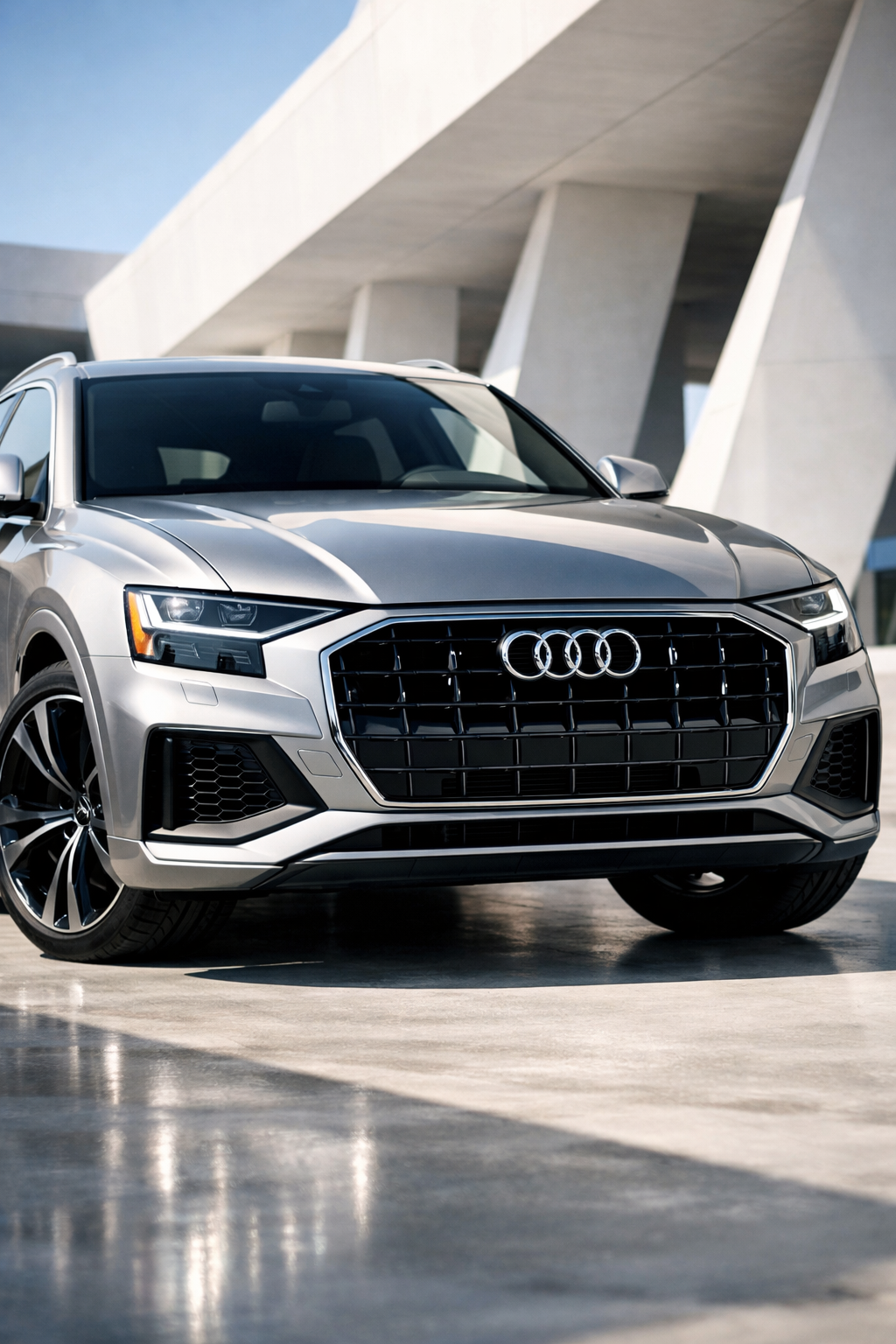

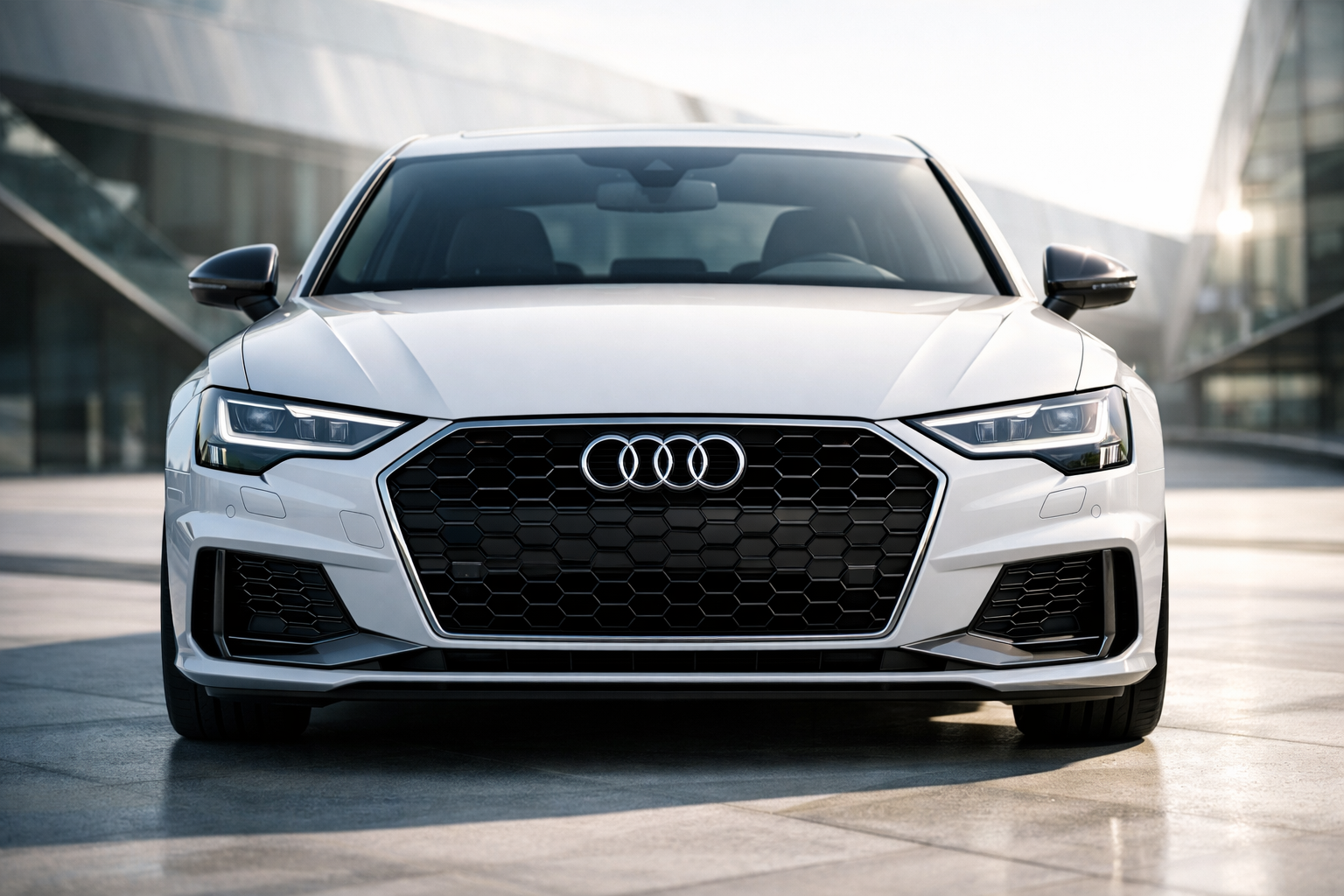
Here’s a spicy thought to kick things off: Audi’s biggest design gamble in a decade isn’t electrification, software, or even killing off coupes—it’s the face. Yes, the Audi new grille strategy is Audi betting its entire brand identity on one facial expression, plastered across everything from a $38,000 A3 to a $90,000 RS Q8. That’s brave, or reckless, depending on how much you care about cars not looking like corporate clip art.
This matters right now because the 2025 and 2026 Audi lineup is the most visually homogenous it’s ever been. I’ve driven dozens of SUVs this year, and I’ll be honest: in a mall parking lot, an A5 Sportback, Q5, and Q7 can blur together faster than a TikTok reel. Audi is telling us this is intentional, a master plan, not design laziness—so let’s actually unpack whether that holds water.
And before you accuse me of nitpicking, remember this: BMW got dragged for its beaver-tooth grilles, Mercedes is flirting with light-up logos, and Lexus still looks like it lost a bet involving a Predator mask. The Audi new grille approach is subtler, yes—but subtle mistakes can be the most dangerous.
The One-Grille Rule: Audi’s Master Plan or Corporate Tunnel Vision?
Audi calls it “brand coherence.” Designers call it “visual discipline.” I call it the One-Grille Rule, where nearly every 2025–2026 Audi wears a variation of the same wide, flat, hexagonal mouth. The idea is simple: instant recognition, whether it’s an ICE A4 or an electric Q8 e-tron.
From a branding perspective, it’s textbook stuff they probably teach at Ingolstadt PowerPoint University. From an enthusiast perspective, it risks turning Audi’s lineup into what Doug DeMuro would politely call “samey,” and what Jeremy Clarkson would call “a photocopier accident.”
Why Audi Thinks This Works
Audi’s argument isn’t stupid, to be fair. In markets like China and the U.S., brand recognition beats nuanced design, and the Audi new grille gives them a visual anchor. BMW has kidney grilles, Lexus has the spindle, and Audi wants you to spot theirs from 200 feet away in traffic.
It also simplifies production and design language across ICE, hybrid, and EV platforms. If you’ve read our breakdown on how electric design changes are reshaping brand identity, you’ll know that legacy brands are scrambling to look electric without alienating loyal buyers.
The Problem: Scale and Proportion
Here’s my hot take: the grille works on big Audis and fails on small ones. On an RS7 with 591 hp and a 0–60 time of about 3.5 seconds, the aggression feels earned. On an A3 with roughly 201 hp and a starting price around $38,000 (check manufacturer website for latest pricing), it looks like it’s trying to bench press above its weight class.
Chris Harris talks a lot about visual honesty—cars should look like they drive. When the same face is stretched across wildly different proportions, that honesty evaporates faster than fuel economy in an RS model.
Competitors Aren’t Playing It Safe Either
Let’s zoom out. BMW’s 4 Series grille caused internet riots, Mercedes-Benz is leaning hard into illuminated stars, and Tesla… well, Tesla barely bothers with grilles at all. Lexus continues to double down on its spindle, even as buyers age into bifocals.
The difference is that those brands accept controversy as the price of standing out. Audi’s Audi new grille strategy aims for universal acceptance, which ironically might make it easier to forget.
EVs Expose the Cracks
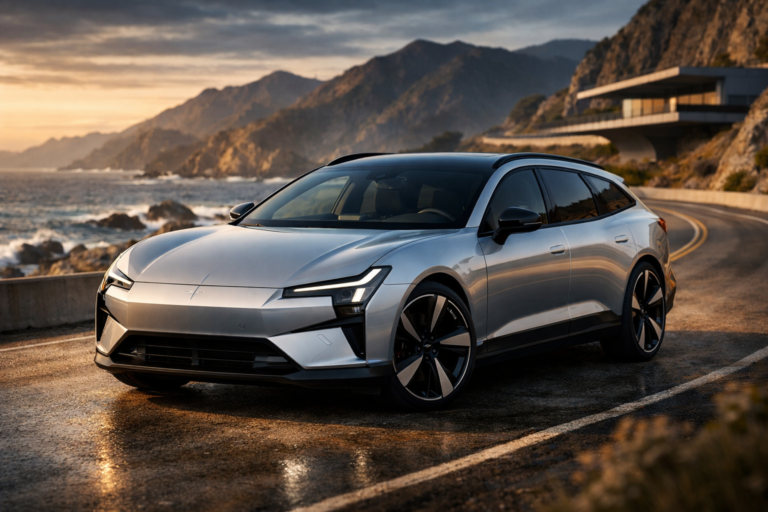
The electric models are where this strategy really gets awkward. EVs don’t need massive grilles for cooling, yet the Q8 e-tron and upcoming A6 e-tron still wear faux intakes like cosplay armor. It’s form over function, and not in a charming Alfa Romeo way.
For context, the Q8 e-tron offers up to approximately 285 miles of range depending on configuration, per FuelEconomy.gov. That’s solid, but slapping a pretend grille on it feels like Audi doesn’t trust its own electric future.
Interior Excellence Can’t Save Exterior Confusion
Inside, Audi still wipes the floor with most rivals. The materials, the click of the switches, the digital displays—it’s all very German and very good. An A6 still feels like a $60,000 car the moment you shut the door, even if the exterior blends into traffic.
But design is holistic. You can’t rely on interior brilliance to excuse exterior anonymity forever, especially when buyers cross-shop a BMW 5 Series, Mercedes E-Class, and Lexus ES on the same afternoon.
The Business Case vs the Enthusiast Cost
From a business standpoint, this strategy probably works. Audi sells consistency, predictability, and premium vibes without scaring the neighbors. There’s a reason why their reliability scores remain competitive, as we’ve noted in our most reliable cars for 2026 roundup.
But enthusiasts are already grumbling. When every Audi looks similar, the emotional ladder—from A to S to RS—feels shorter. And emotion is what gets people to spend $75,000 instead of $55,000.
Is This Better Than BMW’s Grille Chaos?
Controversial opinion time: I’d rather Audi risk a bad grille than bore me into indifference. BMW’s designs spark arguments, memes, and YouTube essays from creators like Throttle House and Carwow. Audi’s designs spark polite nods.
We’ve already compared Audi’s approach directly against Munich’s in our Audi grille vs BMW design analysis, and the takeaway was clear—recognition without excitement is a dangerous middle ground.
Pros
- Strong brand recognition across the entire Audi lineup
- Simplifies transition from ICE to electric models
- Works well on larger, performance-oriented vehicles
- Maintains Audi’s clean, premium aesthetic
Cons
- Makes smaller Audis look overstyled
- Reduces visual distinction between models
- Feels dishonest on EVs that don’t need a grille
So, is the Audi new grille a smart branding move or a design risk? Both. It will sell cars, keep shareholders happy, and ensure Audi remains instantly recognizable—but it also flattens the emotional peaks that made older RS and S models feel special. If Audi doesn’t evolve this face soon, it risks becoming the most handsome car brand you forget you just walked past.
For more on Audi’s long-term thinking, their official design philosophy is outlined on Audi’s manufacturer website, and safety ratings for current models can always be checked via NHTSA. Just don’t be surprised if, next time you’re in a parking lot, you have to squint a little to remember which Audi you parked.