
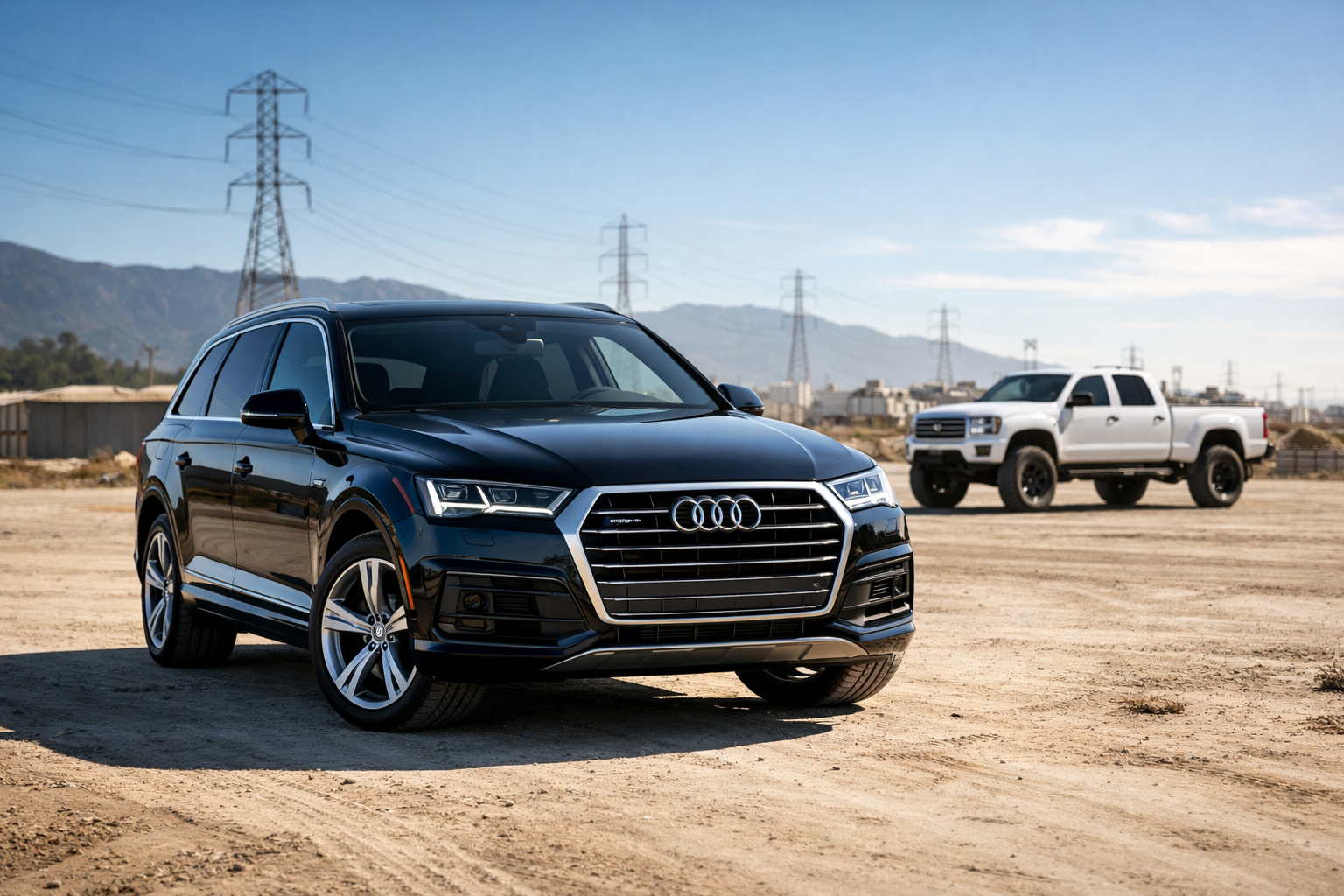
Here’s the heresy: the Audi pickup truck makes zero sense, and Audi knows it. While every armchair product planner on YouTube keeps Photoshopping a lifted RS6 with a bed, Ingolstadt has quietly decided this is a party it’s not attending. That matters right now because luxury trucks are booming, margins are fat, and Audi is still saying “nein” with a straight face.
I’ve driven dozens of SUVs pretending to be trucks, and I’ll say it at the pub: most luxury brands chasing pickups are confusing lifestyle cosplay with actual engineering. Audi’s refusal isn’t laziness; it’s strategy mixed with a bit of German stubbornness. And yes, Audi CEO comments over the past few years have all but confirmed it—no truck, no timeline, stop asking.
If you’re shopping the luxury truck market or wondering why Audi won’t take your money, this is the behind-the-scenes logic no press release will admit. Let’s crack it open like a cold one.
“Audi Pickup Truck” Dreams vs. Reality
The fantasy is seductive: Quattro AWD, a 450-hp twin-turbo V6, leather stitched by elves, and a tailgate that closes with an S-Line thunk. The reality is brutal math. Developing a ground-up pickup platform costs billions, and Audi sells roughly 1.9 million vehicles globally, compared to Ford’s F-Series alone doing around 700,000 units a year.
Audi executives have repeatedly hinted—politely—that trucks don’t align with brand DNA. Translation: the return on investment would be lazier than a cat in a sunbeam. When even Mercedes quietly euthanized the X-Class after lukewarm sales, Audi took notes.
The Luxury Truck Market Isn’t as Easy as It Looks
On paper, the luxury truck market looks like free money. Ford F-150 Platinum starts around $75,000, Ram 1500 Tungsten pushes $87,000, and GMC Sierra Denali Ultimate lives north of $85,000—check manufacturer websites for latest pricing. But these trucks are engineered on decades-old ladder frames with amortized costs.
Audi doesn’t have that luxury. Building a body-on-frame pickup from scratch for North America alone is financial CrossFit. Rivian R1T, for all its innovation, is still struggling to turn a consistent profit at approximately $73,000 starting price.
Audi CEO Comments: Reading Between the Corporate Lines
Audi CEO comments since 2023 have been remarkably consistent: focus on electrification, software-defined vehicles, and premium efficiency. No mention of trucks, beds, or tailgates—ever. Corporate buzzwords like “synergy” and “scalability” get thrown around, but the subtext is clear.
Audi would rather perfect PPE and SSP platforms than gamble on a niche product. That’s why money is going into vehicles like the Q6 e-tron and the electrified RS lineup, not a vanity project for Instagram overlanders.
Platform Problems: Why Audi Can’t Just “Stretch an SUV”
Hot take: an Audi pickup truck based on the Q7 would be rubbish. Unibody trucks ride worse when loaded, tow less, and offend traditional truck buyers who care about numbers like 12,000-lb towing and 2,000-lb payloads. The Ford F-150, Toyota Tundra, and Chevy Silverado would eat it alive.
Yes, Hyundai made the Santa Cruz work, but that’s a lifestyle ute, not a contractor’s tool. Audi’s brand equity would take a hit the moment the tailgate flexed under a pallet of concrete.
Internal Competition: Audi Would Cannibalize Itself
Here’s the part no one mentions on TikTok: Audi already sells expensive SUVs that do truck-ish things. A loaded SQ7 starts around $92,000 and tows up to 7,700 lbs while doing 0–60 mph in approximately 4.0 seconds. That’s quicker than most pickups and quieter doing it.
An Audi pickup truck would steal buyers from the Q7, Q8, and even Porsche Cayenne—and VAG hates cannibalization unless it prints money like the VW Atlas. This doesn’t.
Electrification Changed the Game—and Not in Audi’s Favor
If Audi were to build a truck, it would have to be electric by 2030 to meet EU and U.S. regulations. The problem? Electric trucks are heavy, expensive, and range drops faster than my optimism watching a software update bar. The Rivian R1T does 0–60 mph in 3.0 seconds, but towing slashes its range from 314 miles to barely 150.
Audi is still fixing MMI glitches while Tesla rewrites the rulebook. If you want context on how brands choose battles, read what the end of Tesla’s flagship sedans means for product planning.
Competitors Tried—and Mostly Failed
Mercedes-Benz tried the X-Class with Nissan bones and premium pricing. Result? Dead by 2020. BMW never bothered. Lexus flirted with the idea and backed away faster than a Nürburgring tourist in the rain.
Meanwhile, American brands dominate because they understand trucks culturally, not just mechanically. If you want to see how deep that rabbit hole goes, our 2026 Chevy Silverado review explains why evolution beats reinvention.
Why This Actually Benefits Audi Buyers
Controversial opinion: Audi saying no to a pickup is good news. It means more money for better interiors, tighter chassis tuning, and fewer half-baked experiments. The 2026 RS5 PHEV exists because resources weren’t siphoned off to build a truck nobody truly needed.
And if you’re shopping pragmatically, understanding where brands focus helps long-term ownership. That’s why guides like Is a New Car Worth It? matter more than fantasy renderings.
Pros
- Protects Audi’s brand identity and engineering focus
- Avoids costly, low-volume platform development
- Prevents internal SUV cannibalization
- Resources stay on electrification and performance models
Cons
- Misses out on a booming luxury truck segment
- Leaves lifestyle buyers to rivals like Rivian and Ford
- Fans keep asking awkward questions
So will we ever see an Audi pickup truck? Probably not, and that’s fine. Audi’s refusal is a rare case of a brand knowing what it isn’t, which in 2026 feels almost rebellious. Sometimes the smartest move is leaving money on the table—and walking back to the bar with your dignity intact.
For official brand direction, see Audi’s global site, and for fuel economy realities in trucks, FuelEconomy.gov offers a sobering read.