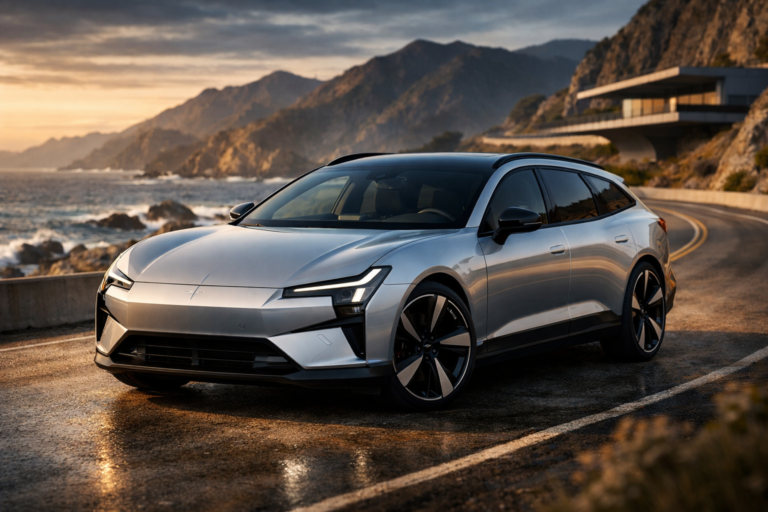

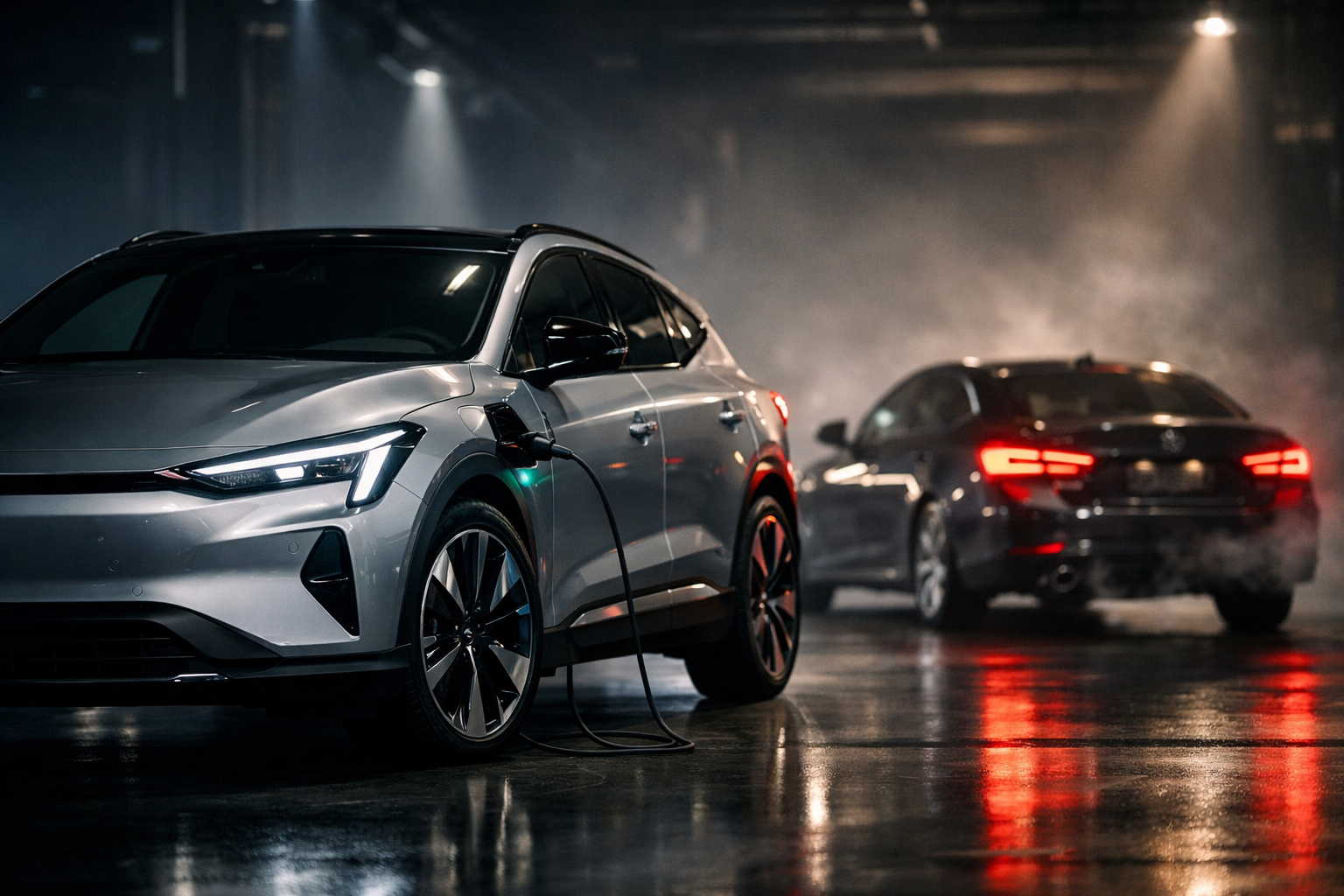
Europe just pulled the handbrake on petrol—and yanked it hard. For the first time ever, EVs outsell gas cars in a full month across Europe, and no, this isn’t a weird Norwegian holiday or a Brussels accounting trick. It’s a proper, continent-wide shift that makes every global product planner sweat through their Patagonia vest.
This matters to you right now because the cars arriving in 2026 and 2027—the ones you’ll actually buy—are being locked in today. When Europe sneezes, global platforms catch a cold, and this month proved the old internal-combustion playbook is officially outdated. If you like good engines, great EVs, or just honest engineering, pay attention.
The phrase EVs outsell gas used to sound like a TED Talk fantasy; now it’s a boardroom panic button. And unlike past spikes driven by incentives, this one was powered by product depth, charging reality, and a buyer base that’s done waiting for “next-gen” promises.
Quick Specs
- Starting Price: Approximately $45,000 (check manufacturer website for latest pricing)
- Engine: Single or Dual Electric Motor
- Power: 250–400 hp / 300–500 lb-ft
- 0-60 mph: 4.5–6.0 seconds
- Fuel Economy: 300–400-mile range
EVs Outsell Gas: Why Europe Crossed the Rubicon
This wasn’t a subsidy sugar rush; incentives have been tapering off in Germany and France. The real reason EVs outsell gas is brutally simple: Europeans can now buy electric versions of the cars they already want. Think VW ID.7 instead of a Passat, BMW i5 instead of a 5 Series, Volvo EX30 instead of yet another XC40.
Charging also stopped being a pub argument. With Ionity, Tesla Superchargers opening up, and urban fast-charging everywhere from Barcelona to Berlin, range anxiety is now about as relevant as cassette tapes. Even YouTubers like Bjørn Nyland have stopped doing “will it make it?” videos and started doing “how fast can it charge?” tests.
The Product Blitz Detroit and Tokyo Didn’t See Coming
European brands flooded the zone with competent EVs while others fiddled with hybrids. Volkswagen Group alone has the ID.3, ID.4, ID.7, Skoda Enyaq, Audi Q4 e-tron, and Porsche Macan EV, all sharing scalable guts. Compare that to Toyota still drip-feeding bZ models like they’re afraid someone might enjoy them.
BMW deserves credit here. The i4 (starting around $53,000) does 0–60 mph in 3.7 seconds in M50 form and still drives like a BMW should. Mercedes finally figured out aerodynamics matter more than chrome, and the EQE is proof—even if it looks like a bar of soap left in the sun.
What This Means for Global Platforms
Here’s the uncomfortable truth: if your platform can’t do EVs profitably, it’s dead. Carmakers are now designing “EV-first, ICE-optional” architectures, not the other way around. That’s why Ford’s next-gen global platform quietly deprioritized V8s, and why Stellantis is scrambling—dealer drama and all—to simplify its lineup.
This shift explains why cars like the 2026 Volkswagen ID. Tiguan exist at all, which we drove recently in our first drive review. It’s not just an electric Tiguan; it’s the template for how global crossovers will be engineered going forward.
The Chinese EV Effect Nobody Wants to Admit
Hot take: Europe didn’t just choose EVs—it chose Chinese efficiency. Brands like BYD, MG (yes, that MG), and NIO are undercutting legacy players by $5,000–$10,000 with better batteries and faster software updates. That’s not “dumping”; that’s competition doing its job.
We’ve already seen this play out in Latin America, as explained in our deep dive on how Chinese EVs shift car markets. Europe is next, and North America is naïve if it thinks tariffs alone will save outdated products.
Gas Isn’t Dead—But It’s Officially the Niche
Let’s be clear before the comments section combusts: petrol isn’t gone. Performance cars, towing rigs, and cheap city runabouts will stick around. But volume? The boring, profitable middle? That’s electric now.
When EVs outsell gas in Europe, it tells CFOs exactly where R&D money should go. Expect fewer all-new ICE engines, more carryover blocks, and a lot of “final edition” badges slapped on cars that quietly stop evolving.
How This Changes What You’ll Buy in 2027
If you’re shopping in a couple of years, expect EVs to be the default choice in showrooms. Salespeople won’t push electric—they’ll assume it. Gas cars will be the special request, like ordering a manual transmission or asking for cloth seats.
This also explains why interior UX suddenly matters. EV buyers won’t tolerate laggy screens or haptic nonsense, which is why even Audi is rethinking minimalism, as discussed in this UX analysis. When the drivetrain is silent, bad software screams.
The Infrastructure Reality Check
Europe’s charging advantage isn’t magic; it’s policy plus density. Shorter distances, apartment chargers, and aggressive fast-charge deployment made the switch viable. The U.S. can get there, but sprawling suburbs and dealership politics slow things down.
For hard data on efficiency and range, FuelEconomy.gov remains a useful baseline, while manufacturers publish charging curves and range figures on their official sites—always worth checking before you buy.
Global Winners, Losers, and One Brutal Prediction
Winners: VW Group, BMW, Volvo, and Tesla—yes, still Tesla—because scale matters. Losers: brands that treated EVs as compliance cars or marketing exercises. My controversial prediction? By 2030, at least two legacy brands will quietly exit Europe altogether.
And for enthusiasts worried about soul, go drive a modern EV hard. Then read our take on the Pininfarina Battista and tell me torque doesn’t count as character.
Pros
- Clear market signal for better EV investment
- More choice at realistic prices
- Faster charging infrastructure rollout
- Forces lazy automakers to adapt or die
Cons
- ICE enthusiasts face shrinking options
- Short-term resale volatility
- Regions without infrastructure lag behind
Europe didn’t just make history; it sent a memo. EVs outsell gas now, and the global industry will follow—not because it’s trendy, but because that’s where the smart money, smart engineering, and smart drivers are heading. The petrol age isn’t over; it’s just been politely moved to the enthusiast shelf.