
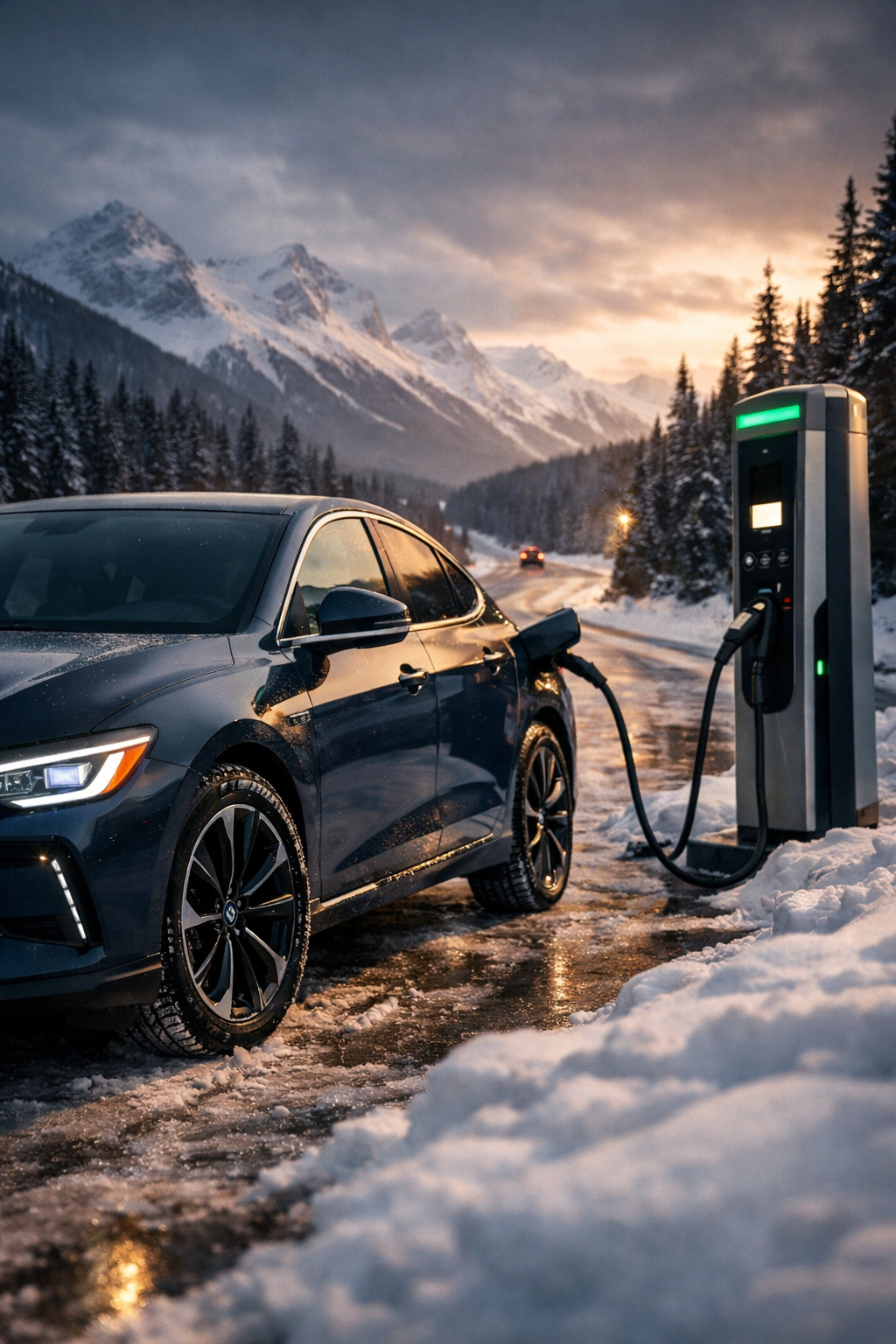
I’ll say it bluntly: an EV winter road trip is either a smug, silent victory lap or a slow-motion tragedy involving a blinking 3% battery icon and a closed charging station in rural Montana. There is absolutely no middle ground. I’ve done winter drives in everything from a Tesla Model Y to a Ford Mustang Mach-E, and cold weather turns sloppy planning into a full-blown fiasco.
This matters right now because winter doesn’t care about your optimistic EPA range estimate or the marketing team’s “up to” claims. Snow, sub-freezing temps, and wind chill can slice 20–40% off real-world range, which is why EV winter road trip prep is less about vibes and more about discipline. Get it right, and you’ll glide past gas stations like a smug penguin in a puffer jacket.
Consider this your pub-table survival guide to the EV winter road trip: charging route planning that actually works, preconditioning EV batteries like you know what you’re doing, and tire choices that won’t turn your $60,000 tech marvel into a curling stone. Ignore this advice and you’ll be that person explaining to a tow-truck driver how regenerative braking works.
Quick Specs
- Starting Price: approximately $44,990 (check manufacturer website for latest pricing)
- Engine: Dual electric motors (AWD)
- Power: 384 hp / 376 lb-ft
- 0-60 mph: 4.8 seconds
- Fuel Economy: EPA-rated 311-mile range
Why EV Winter Road Trips Are Harder Than Advertised
Cold batteries are like me before coffee: slow, grumpy, and wildly uncooperative. Lithium-ion chemistry hates the cold, which means slower charging, reduced regen, and range that drops faster than resale value on last year’s compliance EV. A Tesla Model Y, Hyundai Ioniq 5, or Volkswagen ID.4 can all lose roughly 25% range at 20°F.
My controversial hot take: AWD doesn’t save you in winter if you cheap out on tires. I don’t care how clever your torque-vectoring software is; rubber still matters more than software updates. This is where many EV owners learn that physics doesn’t accept over-the-air patches.
Charging Route Planning That Won’t Ruin Your Trip
Charging route planning in winter is not about shortest distance, it’s about redundancy. I plan stops at 60–70% of theoretical winter range, not the optimistic dash estimate, because chargers break and weather gets worse. Apps like PlugShare are helpful, but your car’s native planner usually understands battery temp better.
I also filter for 150 kW+ chargers minimum, because crawling along at 50 kW in freezing wind is automotive purgatory. A Model Y can add roughly 150 miles in 20–25 minutes on a warm battery, but double that time if you roll in cold and unprepared. For deeper prep, our EV Winter Prep: Maximize Range & Battery Health guide is essential reading.
Preconditioning EV Batteries: Stop Ignoring This Button
Preconditioning EV batteries is the single most ignored feature by new owners, which is baffling because it’s basically free range. Set your navigation to a DC fast charger and let the car warm the battery en route. On a Tesla, this can mean the difference between 250 kW peak charging and a pathetic 90 kW.
If you’re staying overnight, precondition while plugged in before departure. You’ll start with a warm battery, a warm cabin, and zero range penalty, which feels like cheating winter. I’ve seen 10–15% range savings just by not blasting the heater on a cold-soaked pack.
Tire Choices: The Hill I’ll Die On
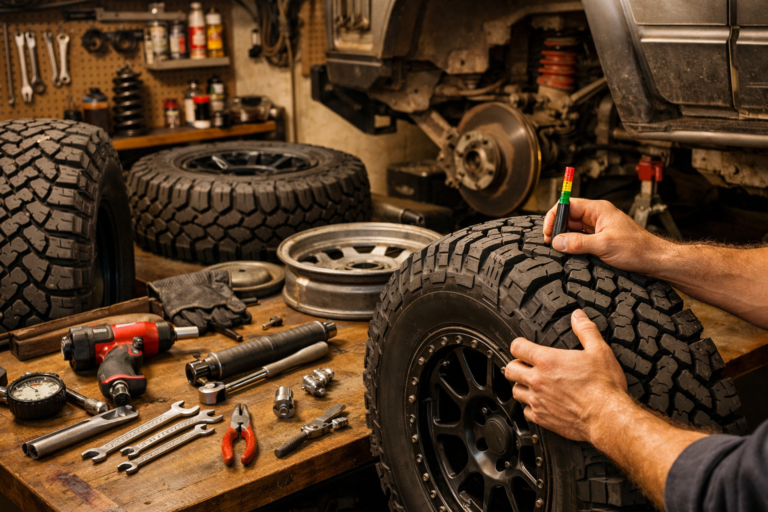
If you drive an EV in winter on all-seasons, you’re doing it wrong. Period. Dedicated winter tires improve stopping distances by up to 30% on snow and ice, which matters more in a 4,800-pound EV than a lightweight hatchback. This isn’t opinion; it’s measurable reality.
Confused about what to buy? Our Snow Tires vs All-Season guide breaks down compounds, tread blocks, and why “M+S” is not a magic spell. I’ll say it again: AWD plus winter tires beats AWD plus excuses every single time.
Driving Technique: Regeneration Is Not a Miracle
High regen in slippery conditions can unsettle the rear axle faster than an overcaffeinated rally driver. I dial regen down in snow, especially in cars like the Mustang Mach-E or Kia EV6 GT-Line, where lift-off deceleration is aggressive. Smooth inputs matter more when your car weighs as much as a grand piano.
Also, resist the urge to hypermile at 55 mph on the interstate. In winter, steady 65–70 mph with traffic is often safer and barely worse for efficiency, especially when wind chill is doing half the damage anyway.
Common Winter EV Road Trip Mistakes
Number one mistake: trusting the EPA range like it’s gospel. Those numbers are measured at around 70°F, not during a blizzard in Wyoming. Expect 220–240 miles from a “300-mile” EV in real winter conditions.
Second mistake: arriving at chargers nearly empty. Cold batteries charge slow at low states of charge, and you’re compounding misery. Third mistake: skipping physical prep—check out our Winterize EV guide for snow gear, charging cables, and common-sense kit.
Pro-Level Cold Weather Tips
Heated seats use about 75 watts, while cabin heat can draw over 3,000 watts. Sit on the heat, not in it. Also, keep your charging cable inside overnight; wrestling a frozen cable at 6 a.m. is a character-building exercise you don’t need.
For official efficiency data, I cross-check claims on FuelEconomy.gov, and for safety considerations in winter conditions, NHTSA is worth a look. Boring? Yes. Useful? Absolutely.
Pros
- Silent, smooth long-distance cruising
- Lower running costs even in winter
- Instant heat and torque with proper prep
- Far less fatigue on long drives
Cons
- Range loss of 20–40% in cold weather
- Charging speed heavily dependent on preconditioning
- Public charging reliability still inconsistent
Done properly, an EV winter road trip is calmer, cheaper, and less exhausting than the gas equivalent—and yes, I’m including road warriors in BMW X5s and Audi Q8s. Ignore planning, skip preconditioning EV systems, and cheap out on tires, and you’ll hate every frozen mile. Respect the cold, plan like an adult, and the EV winter road trip becomes a smug, silent flex.
Affiliate Disclosure: This article contains affiliate links. If you purchase through these links, we may earn a small commission at no extra cost to you. This helps support our work and allows us to continue providing free automotive content. Learn more about our affiliate policy.