
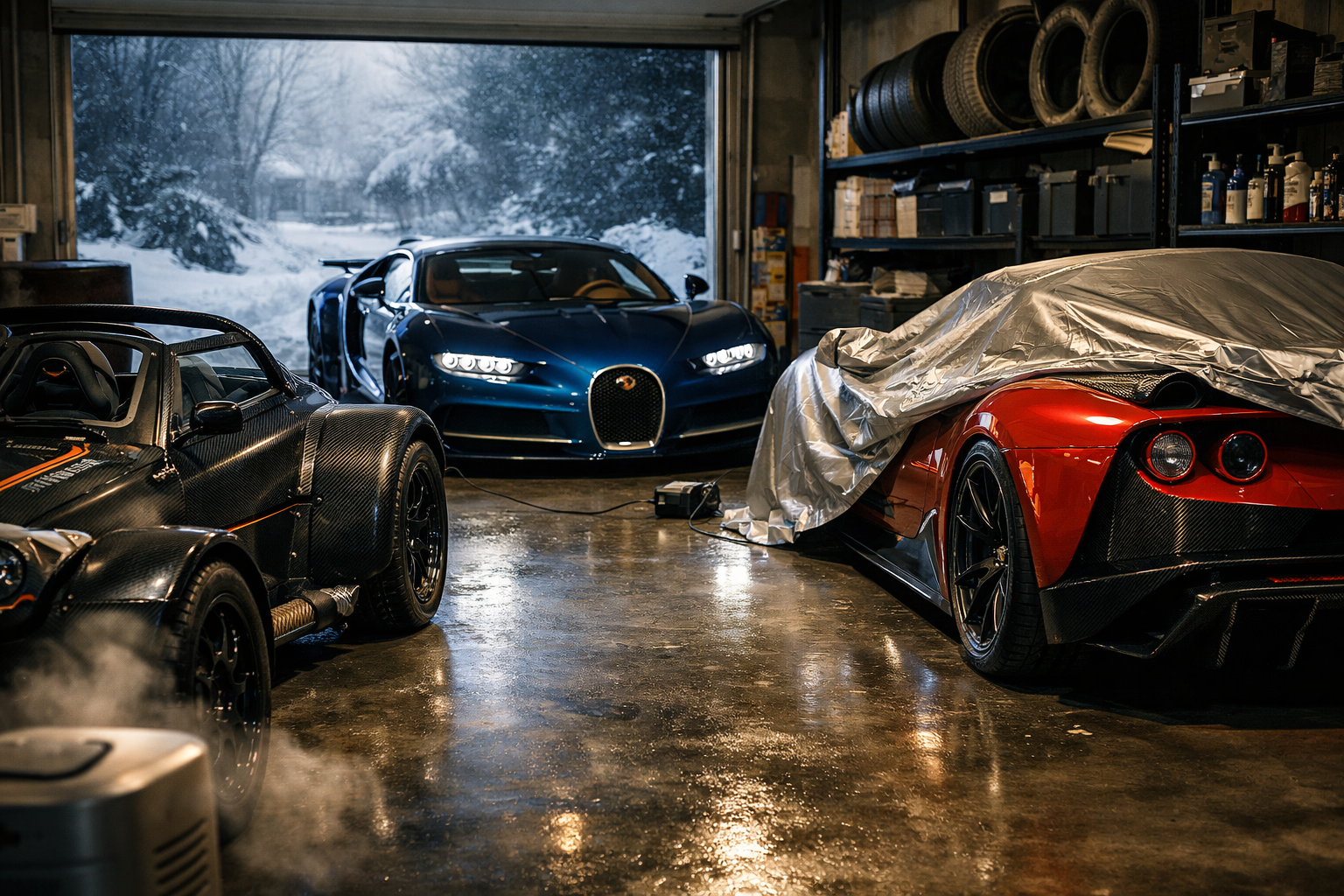
Winter is where million-dollar mistakes are made, quietly, under a breathable car cover while you sip whisky and assume everything’s fine. Exotic car winter storage isn’t about tucking a Bugatti away like a lawn chair; it’s about understanding that a $3 million hypercar hates cold more than a carbureted Alfa hates Mondays. I’ve watched collectors cry over flat-spotted Michelin Pilot Sport Cups that cost more than a used Golf.
This matters right now because modern one-off exotics are rolling science projects with tolerances tighter than a Ferrari PR department. Whether it’s Donkervoort winter care for a 600-hp featherweight, Bugatti storage for a quad-turbo monster, or one-off Ferrari care involving bespoke leather and unobtainium ECUs, winter maintenance supercar mistakes are brutally expensive. Do it right and spring is glorious; do it wrong and you’re calling Europe with your credit card trembling.
I’ve driven dozens of SUVs in blizzards, but storing a bespoke supercar through winter is a different religion entirely. Exotic car winter storage isn’t passive—it’s an active, checklist-driven ritual that separates enthusiasts from speculators. Let’s get this right.
Quick Specs
- Starting Price: Approximately $3,900,000 (check manufacturer website for latest pricing)
- Engine: 8.0L Quad-Turbo W16
- Power: 1,578 hp / 1,180 lb-ft
- 0-60 mph: 2.3 seconds
- Fuel Economy: 9 city / 14 highway mpg
Why Exotic Car Winter Storage Is a Different Game
A Toyota GR86 can sulk through winter on a trickle charger and cheap fuel. A Bugatti Chiron Super Sport will throw a digital tantrum if voltage drops below spec for 48 hours. Low-volume exotics from Pagani, Koenigsegg, and bespoke Ferrari builds aren’t designed for neglect; they’re designed for controlled environments and obsessive owners.
My controversial hot take: if you can’t afford climate-controlled storage, you can’t afford the car. Heated garages at a stable 55–65°F with 40–50% humidity aren’t luxury—they’re baseline requirements. Anything less is just slow mechanical vandalism.
Fluids, Fuel, and the Silent Killers
Fuel is enemy number one during winter maintenance supercar routines. Modern ethanol-blended fuel absorbs moisture faster than a sponge in a pub spill, wreaking havoc on injectors and seals. I always recommend filling with ethanol-free fuel and adding a manufacturer-approved stabilizer before storage.
Oil matters too, especially in dry-sump systems common to Ferrari and Bugatti. Fresh oil before storage removes acidic contaminants, and yes, even if you drove “only 300 miles.” If you’re unsure, call the manufacturer—Bugatti is surprisingly clear about storage intervals.
Battery Management: Where Most Owners Screw Up
Nothing kills springtime joy faster than a dead lithium or AGM battery locked behind a security system that now hates you. Trickle chargers aren’t optional; they’re mandatory. I’ve had excellent results following guidance similar to our recommended battery chargers guide, especially units with voltage conditioning.
Hot take number two: cheap chargers are worse than no charger. Voltage spikes can brick ECUs that cost $20,000 and require factory reprogramming. For one-off Ferrari care, always confirm charger compatibility with Maranello—Ferrari’s own guidance is available at Ferrari’s official site.
Tires, Suspension, and the Myth of “Just Sitting There”
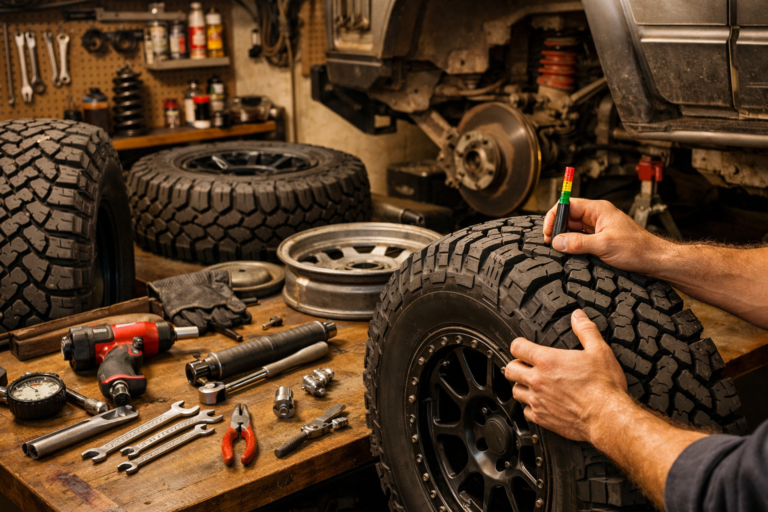
High-performance tires flat-spot like teenagers avoiding chores. If your car sits longer than 30 days, you need tire cradles or increased PSI to around 45–50 psi, depending on manufacturer guidance. Michelin Pilot Sport Cup 2 R tires can permanently deform in sub-freezing temps.
For ultra-lightweight machines like Donkervoort, suspension preload matters too. The P24 RS, which I covered in our Donkervoort P24 RS review, weighs under 1,600 lbs and reacts dramatically to static loads. Rotate wheels monthly or use suspension stands—yes, they exist.
Interior Preservation: Leather Is Alive, Fight Me
Bespoke interiors aren’t upholstery; they’re organic materials pretending to be immortal. Leather shrinks in dry air and molds in damp air, so humidity control is critical. I run small dehumidifiers inside the cabin with doors closed, not cracked—cracked doors invite rodents.
Carbon trim can micro-crack if exposed to rapid temperature swings. This is why proper exotic car winter storage emphasizes slow, stable conditions over “heated sometimes.” Alcantara hates neglect more than it hates greasy hands.
Rodents, Rust, and Other Horrors
Mice love wiring insulation like I love a naturally aspirated V12. Ultrasonic repellents help, but physical barriers and cleanliness matter more. Never store food in the garage, and block exhaust tips with breathable mesh.
Rust isn’t just a classic-car problem. Modern exotics use mixed metals—aluminum, steel, magnesium—which can suffer galvanic corrosion if moisture lingers. Regular inspections during winter storage aren’t paranoia; they’re prudence.
When to Start, When to Wake It Up
Start storage when daily temps stay below 45°F consistently. Starting the engine “once a month” without driving to full operating temperature is actively harmful. Either drive it properly or don’t start it at all.
Spring wake-up should be methodical: visual inspection, battery check, fluid levels, then a gentle heat cycle. For Bugatti storage, the factory recommends a dealer inspection if stored longer than six months—expensive, yes, but cheaper than ignorance.
When to Call a Professional
If your car has active aerodynamics, hydraulic ride systems, or bespoke electronics, call a professional storage facility. Facilities specializing in winter maintenance supercar programs often cost $400–$800 per month, which is pocket change compared to replacing a carbon tub.
My final hot take: DIY pride has no place with $2–$5 million cars. Let experts handle what they’re trained for, and enjoy the drive when the snow melts.
Pros
- Preserves mechanical and cosmetic integrity
- Prevents costly springtime failures
- Maintains resale and provenance value
- Peace of mind for rare, irreplaceable cars
Cons
- Requires discipline and ongoing checks
- Professional storage isn’t cheap
- DIY mistakes are brutally expensive
Exotic car winter storage isn’t glamorous, but it’s the price of admission to springtime perfection. Treat your Donkervoort, Bugatti, or bespoke Ferrari like the mechanical masterpiece it is, and it’ll reward you with fury when the roads clear. Neglect it, and winter will collect its pound of carbon fiber.