
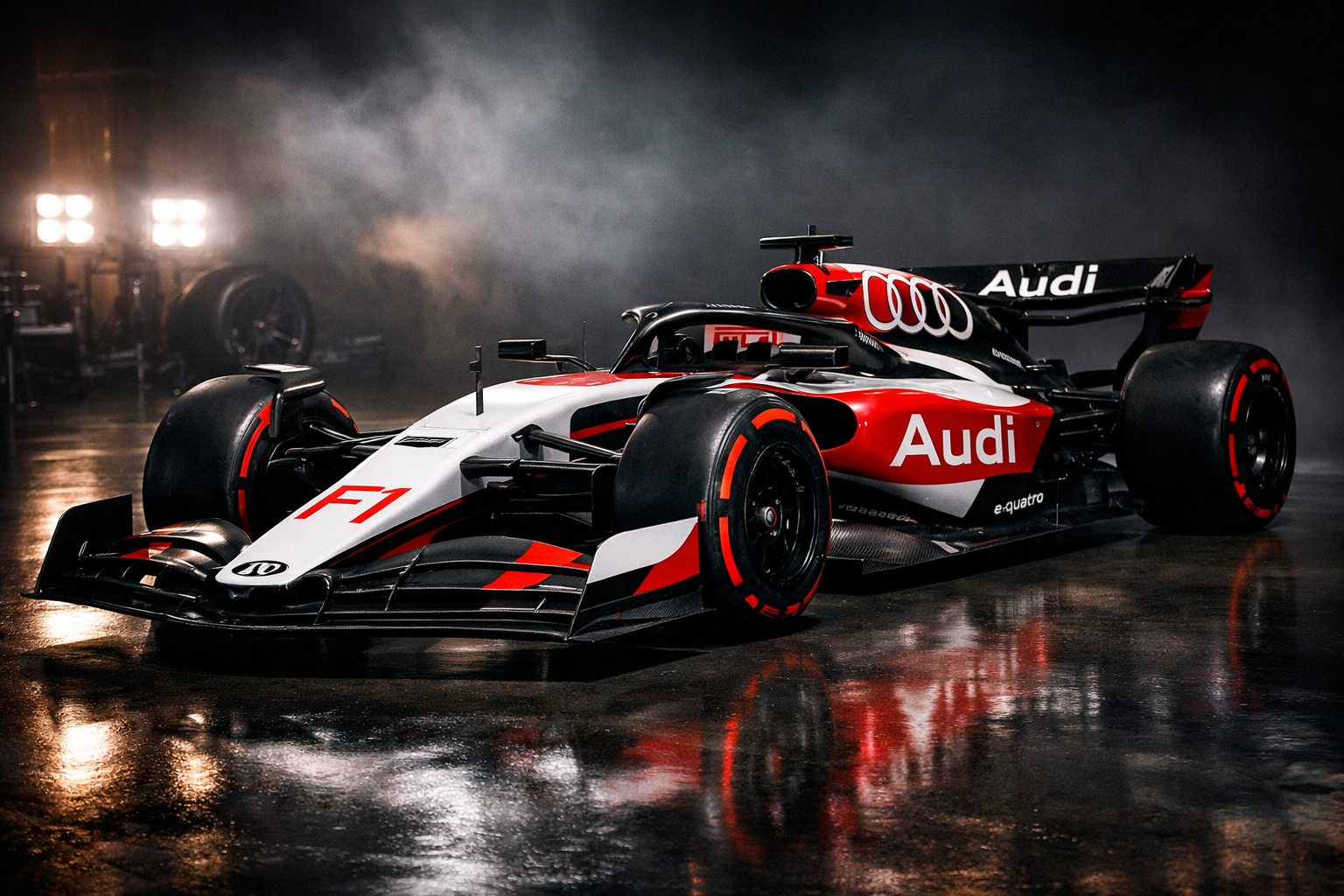
Audi didn’t just peel back some vinyl and call it a day. The Audi R26 livery landed like a pint glass smashing onto a pub table—loud, deliberate, and impossible to ignore—and it tells us far more about Audi’s F1 ambitions than the press release ever will.
Why should you care right now? Because Formula 1 isn’t just about lap times anymore; it’s about brand momentum, tech credibility, and whether Audi can convince buyers that its $80,000 RS cars actually share DNA with something doing 210 mph at Monza. This Audi F1 analysis matters because the R26 isn’t a race car yet—it’s a rolling billboard for Audi’s next decade.
And here’s my hot take upfront: the Audi R26 livery is the most honest piece of motorsport branding Audi has done since the original Quattro rally cars. It’s less corporate PowerPoint, more clenched fist.
Quick Specs
- Starting Price: Approximately $140 million per season (F1 budget cap)
- Engine: 1.6L Turbo V6 Hybrid (F1 2026 regs)
- Power: ~1,000 hp combined (ICE + electric)
- 0-60 mph: ~2.5 seconds (theoretical)
- Fuel Economy: Irrelevant, but 100% sustainable fuel
The Audi R26 Livery: Less Chrome, More Intent
The first thing that hits you is what’s missing: chrome. Audi ditched the shiny nostalgia and went aggressive—matte black, sharp white, and red accents that look like they were cut with a razor blade.
This is a direct visual punch at Mercedes-AMG’s sterile silver arrows and Ferrari’s heritage-heavy red. Audi’s saying, “We’re not here to reminisce; we’re here to disrupt.” And frankly, it suits a brand that built its reputation on upsetting establishment giants.
Why This Design Signals Serious Brand Momentum
Brand momentum in F1 is about coherence. Red Bull looks like Red Bull, Ferrari looks like Ferrari, and Mercedes looks like a high-end appliance—and the Audi R26 livery finally looks like the RS cars we actually lust after.
The sharp contrast lines mirror the RS6 Avant’s visual aggression, a car starting around $125,000 (check manufacturer website for latest pricing). That’s not accidental; Audi wants showroom customers to feel the F1 connection without squinting.
Audi F1 Analysis: Learning From Others’ Mistakes
I’ve watched dozens of manufacturers botch F1 branding by drowning it in buzzwords. Remember BMW’s last F1 stint? Exactly.
Audi appears to have studied the sport’s modern winners, especially Red Bull’s ruthless clarity and Ferrari’s emotional pull. This reminds me of Ford’s approach discussed in our deep dive on Ford F1 hybrid tech—make the racing tech believable, then sell the story downstream.
The 2026 Regulations Change Everything
The 2026 F1 rules are the real villain—or hero—of this story. With a near 50/50 split between electric and combustion power, Audi’s hybrid obsession suddenly looks less like marketing fluff and more like foresight.
This is where Audi can outflank Ferrari and even Mercedes, both of whom are still emotionally tethered to internal combustion dominance. Audi has been training for electrification like Rocky running up those stairs, while others are still tying their shoes.
Motorsport Branding 2026: Selling Tech, Not Nostalgia
Motorsport branding 2026 isn’t about heritage anymore; it’s about relevance. Audi knows its future buyers are cross-shopping a Tesla Model S Plaid, a Porsche Taycan, and a Lucid Air.
The R26 livery leans into that future with a digital, almost industrial aesthetic. Pair this with credible tech transfer—something explored in our analysis of F1 hybrid tech transfer—and Audi suddenly looks less like a latecomer and more like a calculated assassin.
The Elephant in the Garage: Audi’s Reputation
We can’t ignore the elephant-shaped oil stain on the floor. Dieselgate still haunts Audi, and anyone pretending otherwise is sipping corporate Kool-Aid.
That’s why this matters: F1 is Audi’s global apology tour, wrapped in carbon fiber. If you want a refresher on why skepticism is healthy, revisit our Dieselgate follow-up. The R26 livery is bold because Audi has to be.
How This Stacks Up Against Ferrari, Mercedes, and Red Bull
Ferrari’s 2026 car will drip history. Mercedes will arrive with ruthless efficiency and a paint scheme designed by a focus group. Red Bull will continue to look like a caffeinated energy drink can.
Audi, however, looks hungry. The Audi R26 livery doesn’t scream dominance yet, but it whispers intent—and in F1, intent often precedes trophies.
What This Means for Road Cars You Can Actually Buy
If Audi plays this right, expect RS models with sharper hybrid integration and fewer gimmicks. Think 0-60 times dipping below 3.0 seconds, 600+ horsepower plug-in setups, and interiors that feel purposeful instead of touch-screen drunk.
This is where momentum pays dividends, the same way Honda leveraged motorsport credibility into cars like the Civic Si—something we praised in our Civic Si review.
Pros
- Distinct, aggressive visual identity
- Clear alignment with 2026 hybrid regulations
- Strong connection to Audi RS road cars
- Signals long-term commitment, not a marketing stunt
Cons
- No on-track results yet
- Brand trust still recovering post-Dieselgate
- High expectations could backfire fast
The Audi R26 livery isn’t just paint; it’s a promise. If Audi backs this look with performance, the brand’s momentum will surge like a turbo spooling at 12,000 rpm—and I’ll happily buy the next round when that happens.