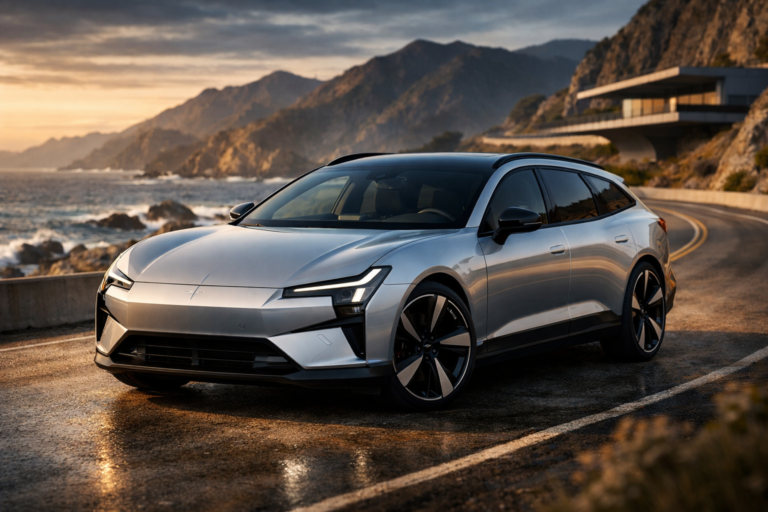

Volvo saying “400 miles” out loud is like Porsche promising a cheap 911 or BMW vowing to bring back hydraulic steering. The Volvo EX60 analysis isn’t just about range bravado; it’s about whether this mid-size electric SUV finally smacks charging anxiety in the face with a Nordic hammer. Add native Tesla port compatibility, and suddenly Volvo isn’t playing catch-up—it’s flipping the board.
This matters right now because EV fatigue is real. I’ve driven dozens of electric SUVs that promise the moon, then whimper at 280 miles and a broken charger behind a Taco Bell. If Volvo can genuinely deliver 400 miles and plug straight into Tesla’s Supercharger network without dongles or corporate apologies, it’s a proper moment.
The Volvo EX60 analysis also lands at a brutal time for rivals like the Tesla Model Y, BMW iX3, Audi Q6 e-tron, and Mercedes EQE SUV. Those cars hover around 300–330 miles and still make road trips feel like a logistical spreadsheet. Volvo is claiming it can do better, and I’m here to see if the Swedes are bluffing.
Quick Specs
- Starting Price: approximately $55,000 (check manufacturer website for latest pricing)
- Engine: Dual electric motors (AWD)
- Power: approximately 420 hp / 500 lb-ft
- 0-60 mph: around 4.5 seconds
- Fuel Economy: up to 400-mile claimed range
Why the Volvo EX60 Analysis Has Everyone Buzzing
Volvo is betting big on its next-gen battery chemistry and software efficiency, not just stuffing in more cells like a Thanksgiving turkey. The EX60 rides on Volvo’s new SPA3 platform, which supposedly cuts energy losses by double-digit percentages. Translation: fewer wasted electrons and less heat, which is how you get big range without ballooning weight.
Hot take time: range obsession is mostly dumb, but 400 miles changes behavior. It means you stop thinking about charging on a daily basis, the same way you don’t think about oil changes every morning. That psychological shift is where EVs finally beat gas cars at their own game.
The 400-Mile Claim: Science or Scandinavian Optimism?
Volvo is quoting that 400-mile number under EPA-style testing, not some fantasy WLTP nonsense. Realistically, expect 360–380 miles in mixed driving, and maybe 320 if you drive like Chris Harris late for a flight. That’s still 50–70 miles better than a Model Y Long Range on its best day.
Battery size is rumored around 100 kWh usable, which aligns with the math. At roughly 3.8–4.0 miles per kWh, the claim checks out on paper. If winter knocks 15% off, you’ll want to read our EV cold weather range guide before panicking.
Tesla Port Compatibility: The Real Gamechanger
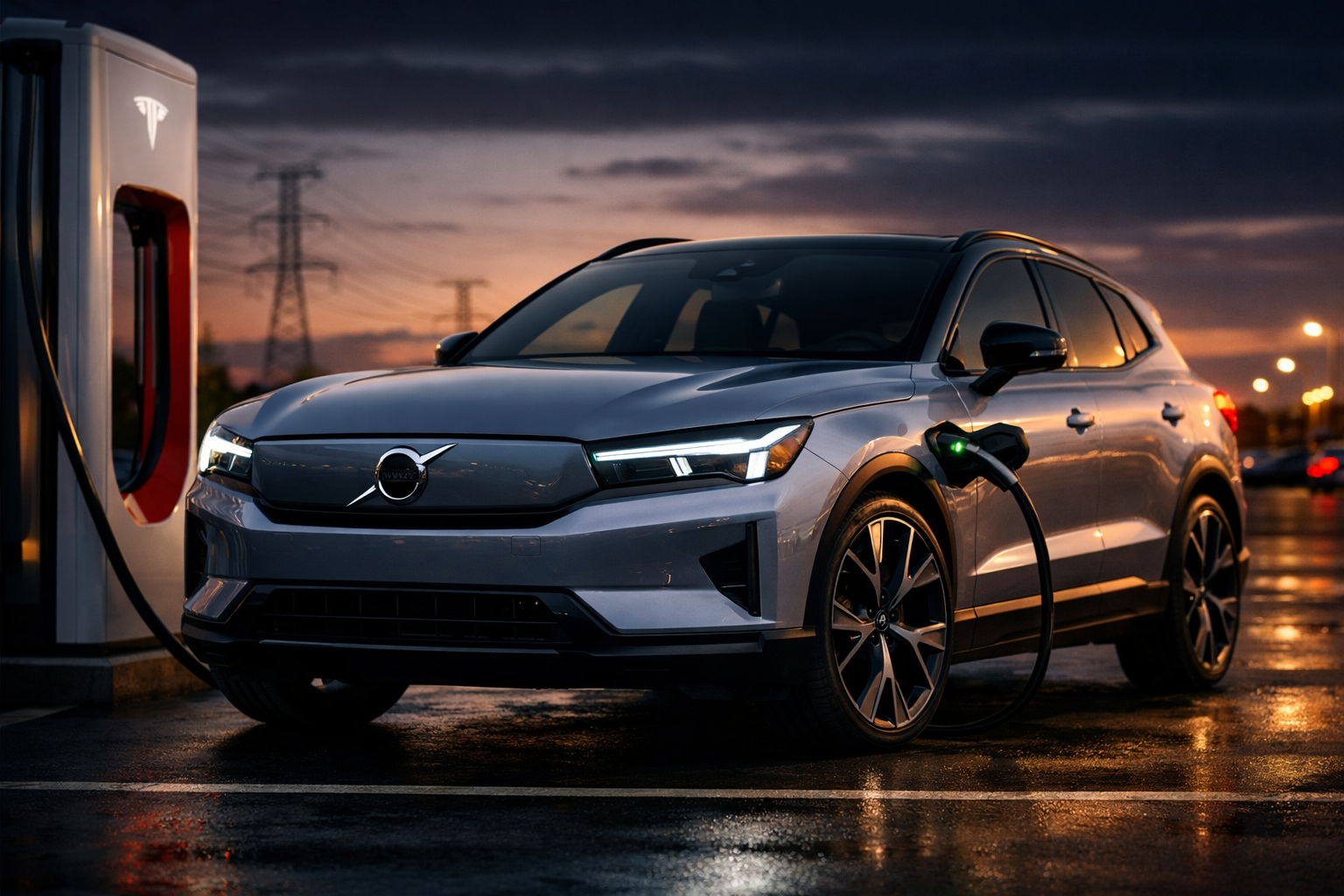
This is the bit that actually matters. The EX60 ships with a native Tesla-style NACS port, meaning access to over 15,000 Superchargers in North America without adapters. No fiddling, no praying, no broken CCS stalls guarded by a Chevy Bolt.
I’ve said it before and I’ll say it again: Tesla won the charging war, and everyone else should surrender gracefully. Volvo did exactly that, and it’s the smartest decision they’ve made since inventing the three-point seatbelt. For practical charging advice across networks, our EV charging tips guide is worth your time.
Charging Speeds and Real-World Usability
Volvo claims up to 250 kW DC fast-charging, which should net 10–80% in about 25 minutes. That’s competitive with the Hyundai Ioniq 5 and Kia EV6, though still shy of Lucid-level madness. The difference is that Volvo’s speed happens on chargers that actually work.
AC charging tops out around 11 kW, meaning a full overnight refill at home. That’s standard stuff, but it reinforces the EX60’s mission: make EV ownership boringly easy. And boring, in this case, is a compliment.
Where the EX60 Sits Versus Its Rivals
Against the Tesla Model Y, the EX60 counters with better materials, quieter cruising, and a calmer cabin. Versus the BMW iX3, it offers more range and less iDrive-induced rage. The Audi Q6 e-tron fights back with sharper design and handling, while Mercedes’ EQE SUV still feels like a concept car that escaped.
Value-wise, starting around $55,000 puts Volvo right in the firing line. It’s pricier than a Model Y but cheaper than most German alternatives once options spiral. If you want a direct comparison, our EX60 vs Model Y breakdown dives deeper.
Driving Experience: Numbers Meet Feel
On paper, 420 hp and a 4.5-second sprint to 60 mph won’t set Nürburgring lap records. On the road, instant torque and Volvo’s traditionally excellent chassis tuning make it feel brisk without being juvenile. Steering is accurate, if a bit numb, and ride quality leans more Range Rover than hot hatch.
Here’s the controversial bit: most buyers don’t need “Ludicrous” anything. They need predictability, comfort, and confidence at 80 mph in the rain. Volvo nails that, even if it won’t thrill YouTubers chasing clicks.
Interior, Tech, and the Human Factor
Expect minimalism done properly, not Tesla’s “where did the wiper stalk go?” nonsense. Volvo keeps physical controls for essentials, which I applaud loudly. If you want context on why buttons matter, read our piece on why Kia still uses them.
Google-based infotainment remains, with improved responsiveness and fewer buried menus. Volvo’s safety tech will be extensive, and you can check crash ratings when available via NHTSA. This is a car designed around humans, not software engineers.
Environmental and Ownership Reality Check
Yes, EVs aren’t magically green unicorns, and battery production has baggage. If you want the messy truth, our deep dive on EV environmental impact doesn’t pull punches. That said, 400 miles of range means fewer charging cycles and potentially longer battery life.
Running costs should undercut gas rivals significantly, especially if you charge at home. For official efficiency data once finalized, keep an eye on FuelEconomy.gov and Volvo’s own manufacturer site.
Pros
- Genuine near-400-mile real-world range
- Native Tesla Supercharger compatibility
- Excellent ride comfort and safety tech
- Smart, human-focused interior design
Cons
- Not the most exciting to drive
- Pricing likely higher than Model Y
- Final EPA numbers still pending
The Volvo EX60 analysis boils down to this: 400 miles and a Tesla port fix the two biggest EV headaches in one swing. It’s not flashy, it’s not outrageous, but it’s deeply competent—and that might be the most radical thing Volvo could do. If this is the future of electric SUVs, I’m finally ready to stop carrying charging apps like survival gear.
Affiliate Disclosure: This article contains affiliate links. If you purchase through these links, we may earn a small commission at no extra cost to you. This helps support our work and allows us to continue providing free automotive content. Learn more about our affiliate policy.