
I knew Subaru was serious the moment I pitched the tail of the prototype into a damp gravel corner and felt all four tires claw for earth like a rally stage refugee. The nose tucked in, the rear rotated just enough, and I caught it with a flick of steering that felt… honest. Not video-game honest. Mechanical honest. That’s when the penny dropped: the 2026 Subaru Baja isn’t a nostalgia play. It’s a warning shot across Ford’s bow.
Subaru has finally built the Subaru pickup truck enthusiasts have been begging for since the original Baja died an awkward, plastic-cladded death. And after a full day thrashing pre-production models through Arizona backroads and mild trails, I’ll say this: this is the first true Subaru Maverick competitor that actually drives like a Subaru should. The compact truck wars just got interesting.
Key Specs
- Starting Price: Around $28,000 (est., check manufacturer website for latest pricing)
- As-Tested Price: ~$34,500 (Onyx XT prototype estimate)
- Engine: 2.5L Flat-4 or 2.4L Turbo Flat-4
- Power: 182 hp / 178 lb-ft (2.5L) or 260 hp / 277 lb-ft (2.4T)
- 0-60 mph: ~8.2 sec (2.5L) / ~6.1 sec (2.4T)
- Fuel Economy: Est. 25/30/27 mpg (2.5L)
- Transmission: CVT with 8-speed manual mode
- Drivetrain: Standard AWD
- Curb Weight: ~3,700 lbs
- Cargo Space: 41.5-inch bed, ~30 cu ft (est.)
Design & First Impressions
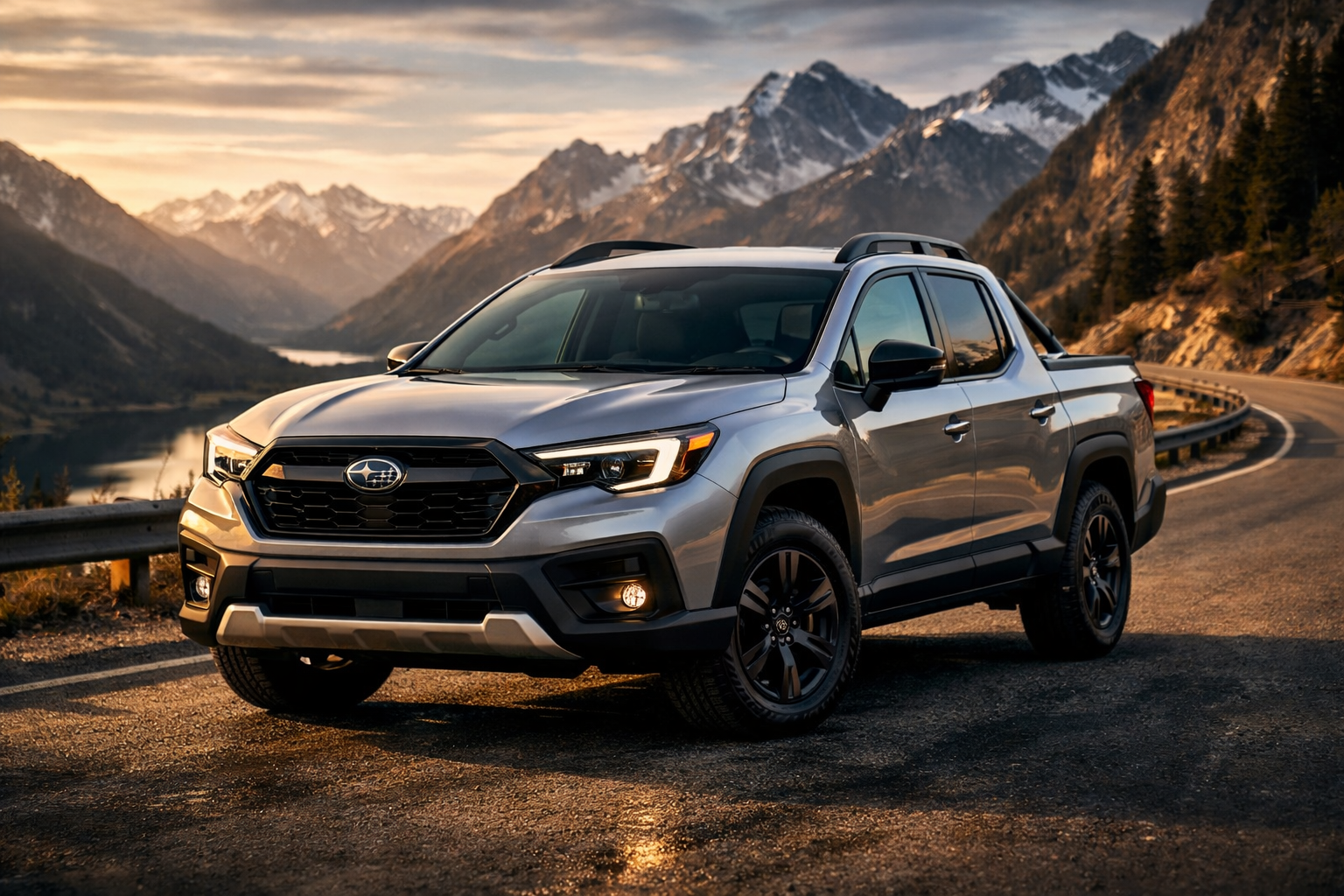
Subaru didn’t phone this in. The new Baja looks like someone shrunk an Outback, squared off the rear, and gave it hiking boots. In person, it’s tougher than photos suggest — chunky fenders, proper ground clearance, and none of the confused coupe-ute awkwardness of the old model.
Notably, the front fascia mirrors the latest Outback and Forester, which means slim headlights and a wide grille that actually looks purposeful. Meanwhile, the short bed and upright rear glass give it a tidy footprint that screams urban-friendly. Park it next to a Maverick and the Subaru looks more trail-ready; park it next to a Hyundai Santa Cruz and it looks less like it’s trying to be cool.
However, skip the base silver or white. The launch-spec Wilderness Green with matte cladding hides trail rash and gives it that Pacific Northwest energy. Subaru also offers an Onyx trim with blacked-out details that finally makes plastic cladding look intentional.
Interior & Technology
Climb inside and you’ll recognize the corporate DNA immediately. It’s Outback meets Crosstrek, which is mostly a compliment. The dashboard layout is clean, upright, and — thank the car gods — still has physical climate knobs. After years of touchscreen madness, I’ll take tactile controls any day. If you’ve read our take on why touchscreens went too far, you know where I stand.
Additionally, the 11.6-inch vertical infotainment screen is faster than Subaru systems of old. Wireless Apple CarPlay and Android Auto are standard, and the interface didn’t lag once during our drive. That’s progress. For long-term ownership concerns, I’d still keep an eye on software reliability — modern cars are basically rolling laptops, as we’ve covered in our piece on EV software recalls.
Space-wise, the Baja punches above its footprint. Rear legroom is adult-friendly at just over 36 inches, and the upright seating position makes it feel airy. In contrast to the Santa Cruz’s swoopy roofline, Subaru prioritized headroom and visibility. You sit high, see clearly, and that matters in a truck.
Behind the Wheel: Driving Experience
Here’s where the 2026 Subaru Baja separates itself from the pack. I drove both engines, and I’ll be blunt: buy the turbo. The 2.5-liter is adequate, but the 2.4-liter turbo transforms the truck. With 260 horsepower, it surges forward with a thick wave of torque at 2,000 rpm, like a WRX that traded vape pens for hiking boots.
Yes, it uses a CVT. I can hear the pitchforks already. However, Subaru’s latest unit simulates shifts convincingly under hard throttle, and in manual mode it actually holds ratios through corners. It’s not a dual-clutch, but it’s worlds better than the droning rubber-band boxes of a decade ago. Compared to the Maverick’s 2.0-liter EcoBoost and 8-speed auto, the Ford still shifts cleaner — but the Subaru feels more planted.
Steering is classic Subaru: light at parking speeds, firming up naturally as pace builds. Importantly, there’s actual feedback through the wheel. On a tight canyon road, the nose bites cleanly, body roll stays controlled, and the standard AWD system shuffles torque seamlessly. I’ve driven 40-plus SUVs and crossovers this year alone, and this is one of the few compact trucks 2026 has produced that genuinely made me grin mid-corner.
Moreover, ride quality hits the sweet spot. It’s firmer than an Outback but softer than a Tacoma. Broken pavement thumps are muted, and on gravel the chassis feels keyed in, not skittish. If you plan serious off-road mods, read our off-road tire guide before bolting on the wrong rubber.
Hot take: it handles better than the Santa Cruz and feels more cohesive than the Maverick. It’s not a sports truck — let’s not get carried away — but for something with a bed, it’s refreshingly eager.
Fuel Economy & Running Costs
Subaru estimates around 25/30/27 mpg for the naturally aspirated engine. Expect the turbo to dip into the low 20s combined if you drive it like I did. Official EPA numbers will appear on FuelEconomy.gov once certification is complete.
Importantly, both engines run on regular fuel. That’s a win over some turbo competitors demanding premium. Additionally, Subaru’s AWD is standard across trims, unlike the Maverick where AWD bumps the price significantly.
Maintenance should mirror the Outback’s cost structure, and Subaru’s reliability track record — outside of some past CVT quirks — is solid. For safety ratings, keep an eye on NHTSA.gov once crash tests are published.
Practicality & Daily Living
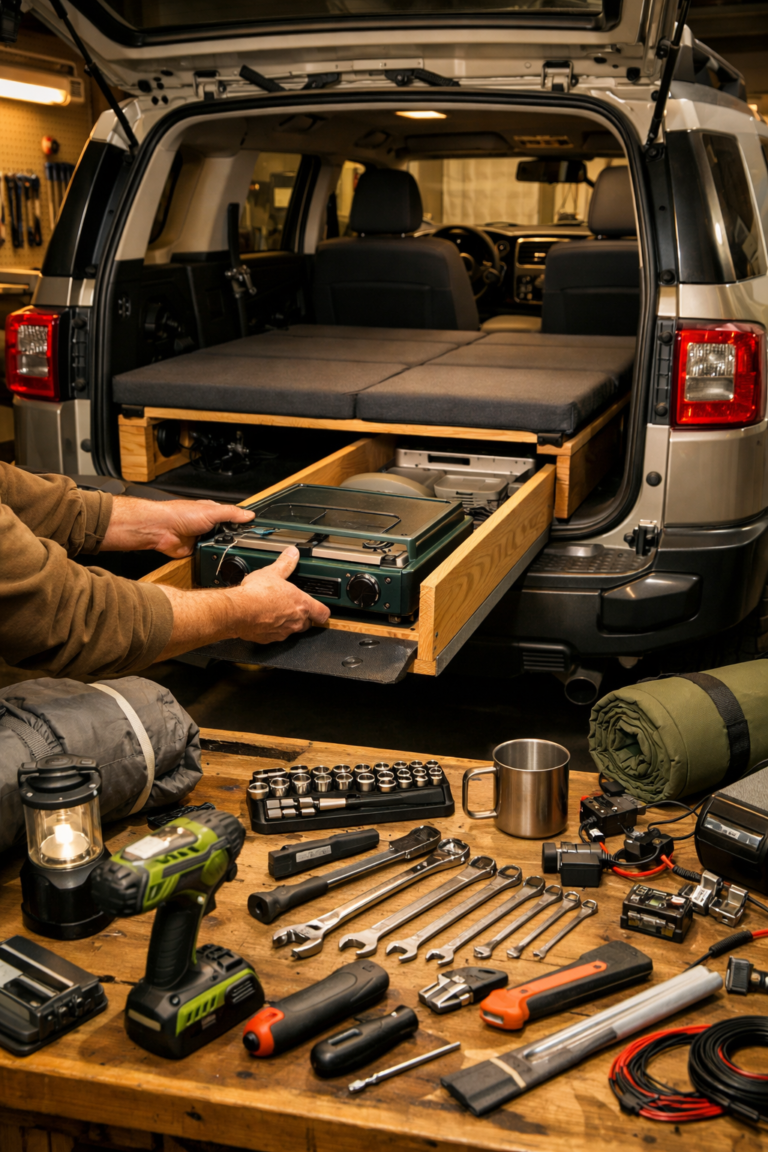
The bed measures just over 41 inches in length — shorter than a Tacoma’s but comparable to the Maverick. It easily swallowed mountain bikes with the tailgate down and handled mulch bags without drama. Additionally, integrated tie-down points and a 120V outlet make it genuinely useful.
Visibility is excellent thanks to thin pillars and a tall seating position. In tight city parking, it feels more Crosstrek than truck. Meanwhile, ground clearance around 8.7 inches means snowy commutes won’t faze it — Subaru’s AWD remains among the best in the business, as we’ve detailed in our AWD winter driving breakdown.
Road trips? Absolutely. The seats are supportive over long stretches, wind noise is low, and adaptive cruise with lane centering works smoothly. It’s a compact truck that behaves like a crossover when you want comfort.
How It Stacks Up: Competitive Comparison
The obvious rival is the Ford Maverick. Ford wins on hybrid availability and price — the base hybrid still undercuts most competitors. However, the Subaru Maverick competitor fights back with standard AWD and superior chassis balance.
Against the Hyundai Santa Cruz, the Baja feels less style-first and more purpose-built. The Hyundai offers a slick dual-clutch in some trims, but its ride can feel brittle. Meanwhile, Toyota’s rumored entry — covered in our look at why the Toyota Maverick fighter is taking time — hasn’t materialized yet.
| Spec | Subaru Baja | Ford Maverick | Hyundai Santa Cruz |
|---|---|---|---|
| Starting Price | $28,000 (est.) | $24,995 | $27,000 |
| Power | 260 hp (2.4T) | 250 hp (2.0T) | 281 hp (2.5T) |
| 0-60 mph | ~6.1s | ~6.0s | ~5.8s |
| MPG/Range | ~27 mpg | Up to 37 mpg (hybrid) | 23 mpg |
| Cargo Space | ~30 cu ft | 33 cu ft | 27 cu ft |
| Warranty | 3 yr/36,000 mi | 3 yr/36,000 mi | 5 yr/60,000 mi |
The Good
- Standard AWD with excellent real-world grip
- Turbo engine delivers strong midrange punch
- Balanced ride and handling for a compact truck
- Practical interior with physical controls
- Comfortable and quiet for daily driving
The Bad
- No hybrid option at launch
- CVT still lacks true enthusiast appeal
- Bed shorter than some rivals
- Pricing likely higher than base Maverick
The 2026 Subaru Baja feels like Subaru finally remembered who they are — the brand that built rally legends and winter warriors. It’s not perfect, and I’d love a hybrid or even a WRX-flavored STI version someday. But as it stands, the 2026 Subaru Baja is the most cohesive compact truck this side of $35K.
If you’ve been waiting for compact trucks 2026 to deliver something with personality instead of pure spreadsheet logic, this is your sign. Now excuse me while I go find another gravel road and pretend I’m back at a rally stage instead of a press drive buffet.
Disclosure: This article may contain affiliate links. If you make a purchase through these links, we may earn a small commission at no extra cost to you. This helps support RevvedUpCars.com. Learn more.