
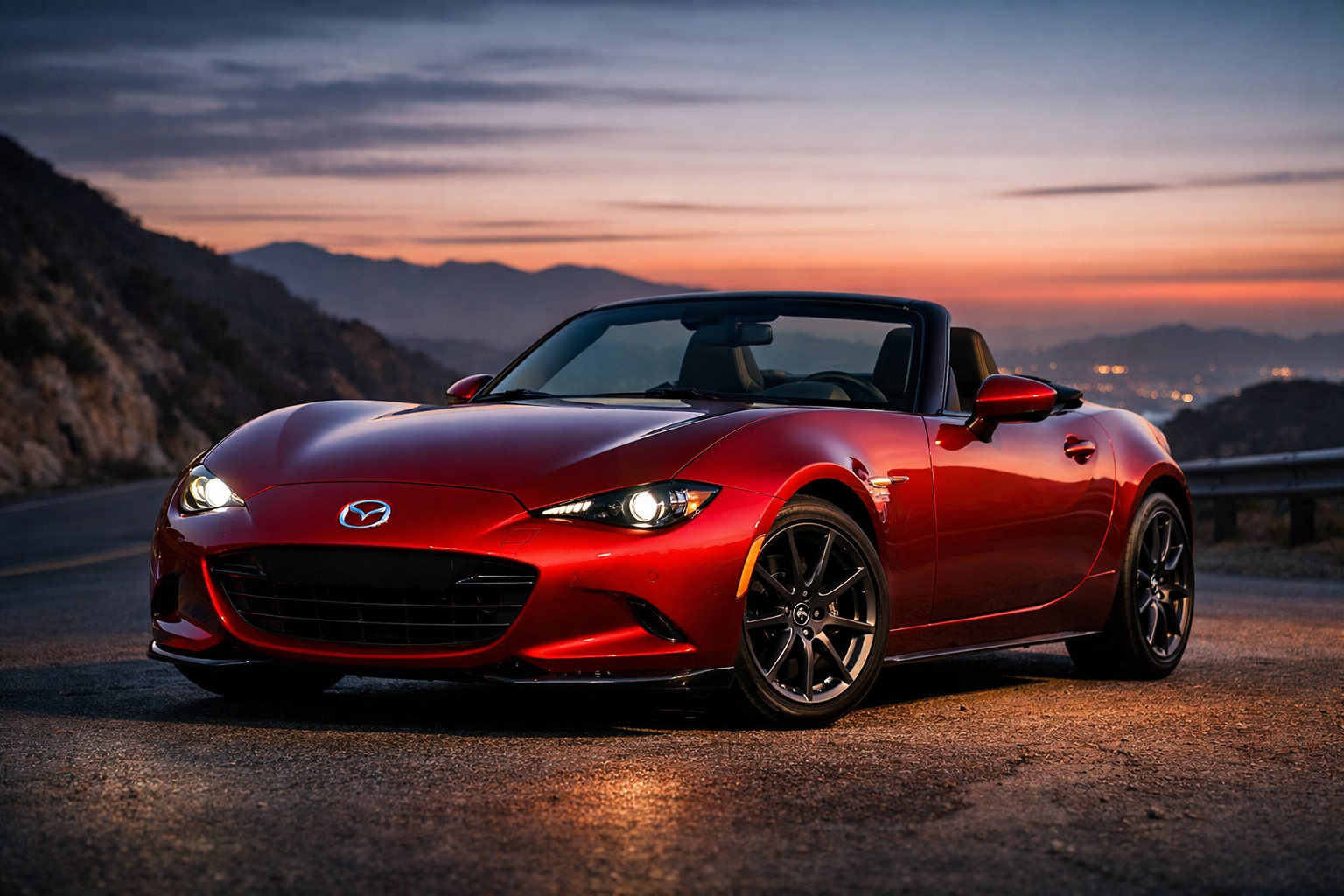
The world keeps telling you sports cars need turbochargers, touchscreens the size of iPads, and a curb weight north of 3,500 pounds. Then the 2026 Mazda MX-5 Miata turns up, weighs barely more than a decent pub lunch tab, and reminds everyone that driving joy doesn’t need a software update. I’ve driven dozens of SUVs this year alone, and none of them made me grin like this little roadster on a damp B-road.
Why does this matter right now? Because affordable sports cars are quietly going extinct, replaced by “sporty” crossovers with throttle response lazier than a cat in a sunbeam. The 2026 Mazda MX-5 Miata is one of the last machines you can buy that prioritizes steering feel over screen resolution, and that’s something worth celebrating with a pint and a long rant.
This is the Miata Sport review you read when you’re wondering if analog fun still exists under $30,000. Spoiler: it does, and it still comes with a manual gearbox and rear-wheel drive.
Quick Specs
- Starting Price: approximately $29,000 (check manufacturer website for latest pricing)
- Engine: 2.0L naturally aspirated inline-four
- Power: 181 hp / 151 lb-ft
- 0-60 mph: about 5.7 seconds
- Fuel Economy: 26 city / 35 highway mpg
Design & First Impressions
The Miata looks like it’s smiling because it knows something the rest of the industry forgot. Long hood, tight hips, wheels pushed to the corners, and zero fake vents pretending to be aggressive. Park it next to a Toyota GR86, Subaru BRZ, or even a Mini Cooper S, and the Mazda still looks the most honest.
My hot take: the MX-5’s design has aged better than most luxury cars loaded with chrome and gimmicks. Mazda resisted the urge to slap on LED eyebrows and call it “dynamic soul motion 4.0,” and I respect that restraint more than any press release.
Interior & Tech
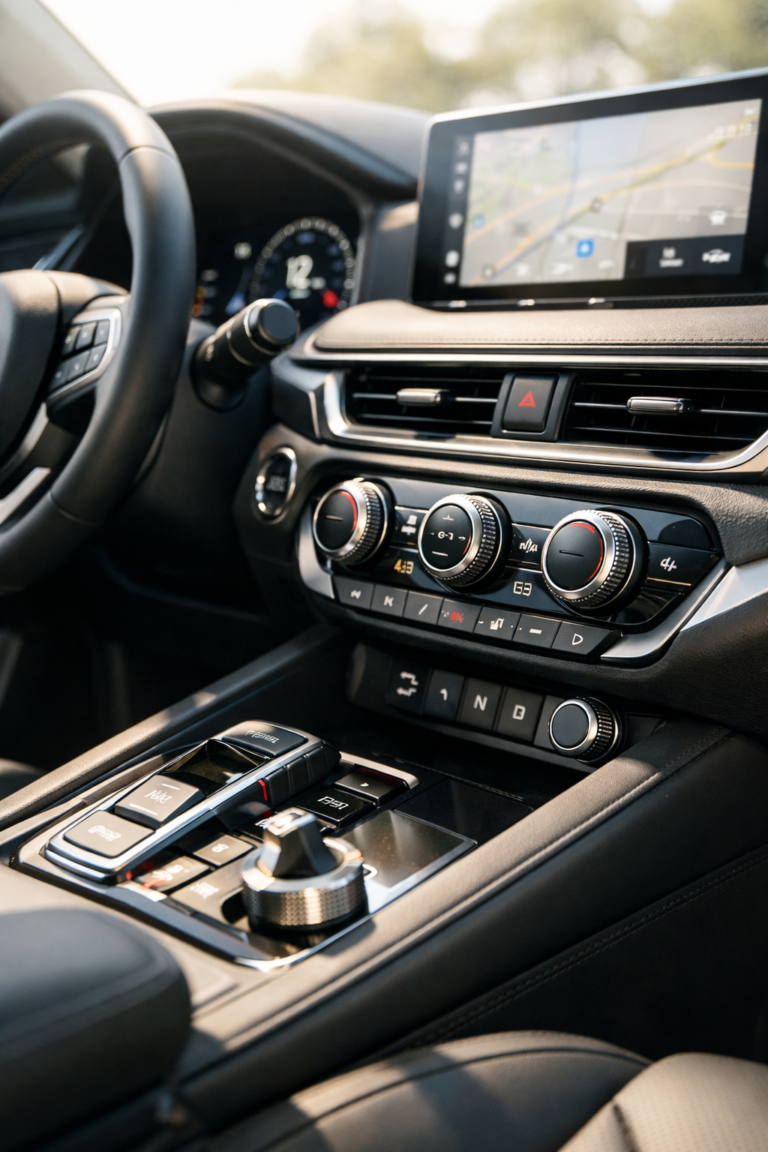
Inside, the Miata Sport is refreshingly spartan, and I mean that as praise. Physical knobs for climate, a modest infotainment screen, and seats that hold you like a reassuring handshake. Doug DeMuro would point out the quirks, like limited storage and cupholders that feel like an afterthought, but that’s part of the charm.
The tech works, doesn’t shout at you, and crucially doesn’t try to replace buttons with menus. If you want a rolling iPad, buy something else; if you agree with the argument in this piece on automotive UX, the Miata will feel like a sanctuary.
Driving Experience
This is where the 2026 Mazda MX-5 Miata earns its keep. The steering is alive, the gearbox snicks between gears like a well-oiled rifle bolt, and the chassis talks to you constantly. Chris Harris would tell you it’s not about outright speed, it’s about how it makes 40 mph feel heroic.
With 181 hp, it’s not going to drag race a Ford Mustang EcoBoost or a Hyundai Elantra N, but it doesn’t need to. The controversial bit: I’d rather drive this flat-out than tiptoe a 400-hp monster on public roads, and I’ll die on that hill.
Fuel Economy & Running Costs
Here’s the sensible bit you tell your partner: 35 mpg on the highway and cheap consumables. Tires are affordable, brakes last forever, and insurance won’t require a second mortgage. According to FuelEconomy.gov, it’s one of the most efficient gas sports cars you can still buy.
Maintenance is classic Mazda simple, and reliability has been stellar over multiple generations. This is a sports car you can daily without budgeting like you own a Porsche.
Practicality (Or Lack Thereof)
Let’s not kid ourselves: the trunk is small, the cabin is cozy, and tall drivers will make friends with the roof. If you need space, look at a GR86, a used BMW 2 Series, or frankly a hot hatch. The Miata makes zero apologies for being focused.
That said, it’s perfectly livable if you pack like an adult. And if you’re worried about winter, read our guide on winter prep for performance cars and buy proper tires.
Value vs Competitors
Starting around $29,000, the Miata Sport undercuts many so-called affordable sports cars. A Toyota GR86 starts slightly higher, the Subaru BRZ is similar money, and the Mini Cooper S quickly balloons past $35,000 with options. None of them feel this pure.
If you want a deeper comparison, check out our MX-5 vs GR86 breakdown. Short version: the Toyota is faster on paper, the Mazda is better on your soul.
Safety & Ownership Reality
Safety tech is present but not intrusive, which I appreciate. For official crash ratings, always check NHTSA.gov, but remember this is a small, low car that rewards attentive driving. It’s not going to save you from stupidity with layers of electronic nannies.
Ownership is refreshingly drama-free, especially compared to turbocharged rivals with complex cooling systems. Mazda’s engineering focus shows in the long-term data.
Pros
- Brilliant steering and chassis balance
- Affordable entry into real sports car ownership
- Excellent fuel economy for a roadster
- Manual gearbox perfection
Cons
- Limited space and practicality
- Not fast in a straight line
- Interior materials are simple, not luxurious
Verdict: Still the Purest Driving Bargain?
The answer is yes, and I don’t say that lightly. The 2026 Mazda MX-5 Miata proves you don’t need massive horsepower or a Nürburgring lap time to have fun. It’s the antidote to bloated, overcomplicated cars that confuse speed with engagement.
If this is the last stand of the lightweight roadster, at least it’s going down swinging. Buy one while you still can, drop the roof, and remind yourself why you fell in love with cars in the first place.