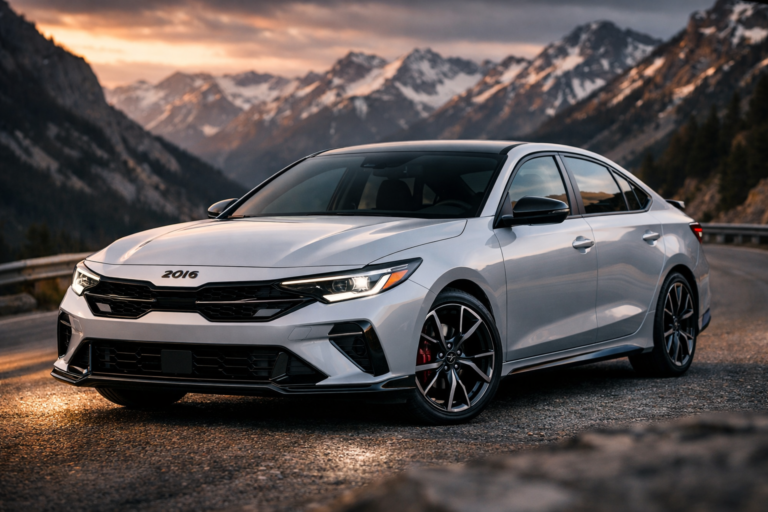

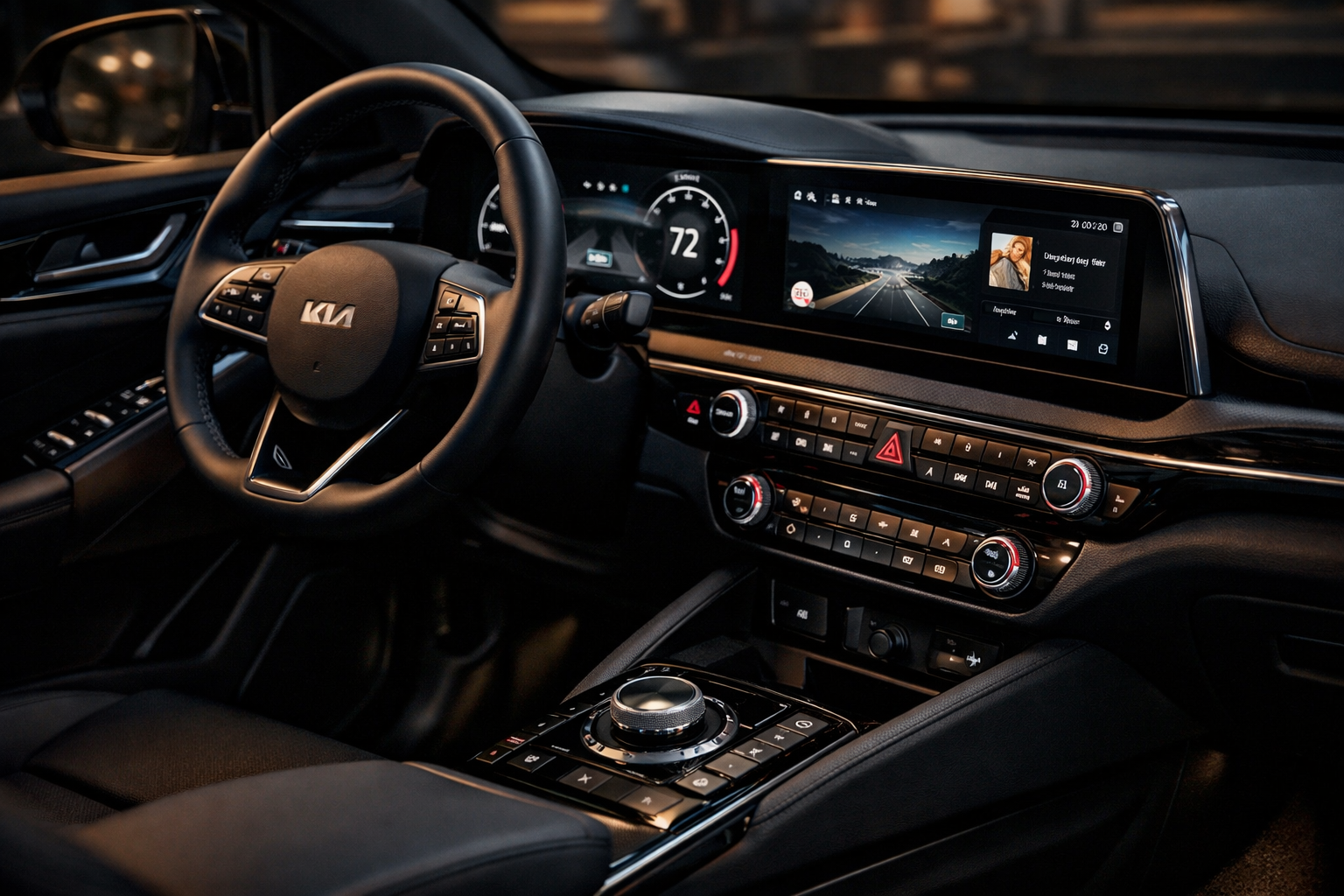
Kia committing the ultimate automotive sin in 2026 isn’t underpowered engines or dodgy styling—it’s refusing to murder physical buttons. Yes, while half the industry is drunk on touchscreen Kool-Aid, the 2026 Kia interior is stubbornly clinging to knobs like a defiant pub landlord refusing contactless payments. And after spending time in everything from a Sportage to a Telluride, I’m here to say: good, because sanity matters more than Silicon Valley buzzwords.
This matters right now because your next car is probably one software update away from making the climate controls a three-menu scavenger hunt. Kia, quietly and without a TED Talk about “human-centric design,” has figured out that drivers like me still want to adjust volume without taking our eyes off a roundabout. The 2026 Kia interior proves you can have big screens, slick graphics, and still respect human fingers.
I’ve driven dozens of SUVs and sedans over the last year—from the screen-obsessed Tesla Model Y to the beautifully indulgent Mercedes S-Class—and Kia’s approach feels refreshingly grown-up. This cabin deep dive is about why Kia keeps buttons, which models benefit most, and why some rivals should feel mildly embarrassed.
Quick Specs
- Starting Price: approximately $28,000 (Sportage; check manufacturer website for latest pricing)
- Engine: 2.5L NA / 1.6L Turbo Hybrid / Electric Motor (model dependent)
- Power: 187 hp – 261 hp (up to 227 lb-ft)
- 0-60 mph: approximately 7.2 seconds (Sportage Hybrid)
- Fuel Economy: up to 42 city / 44 highway mpg (Hybrid)
Design & First Impressions: Buttons Are the New Luxury
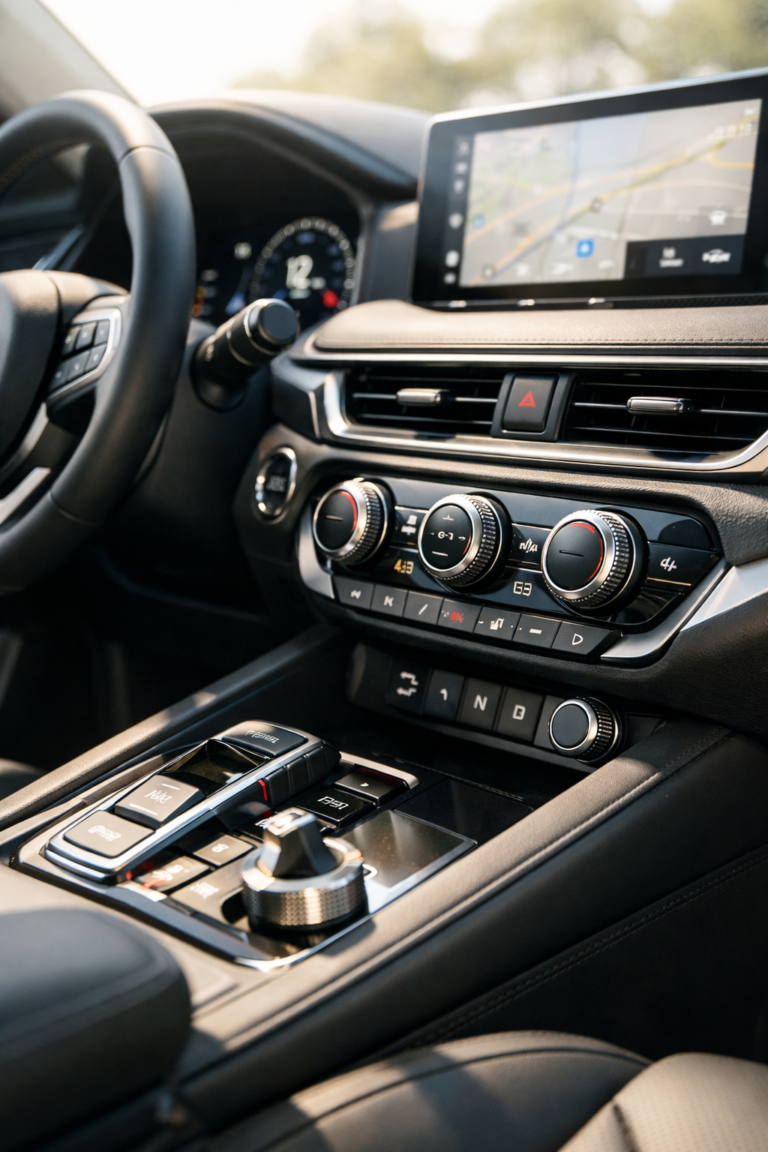
The first thing you notice climbing into a 2026 Kia isn’t the screen—it’s what’s underneath it. Real buttons, real knobs, and toggles that click with purpose instead of vibrating like a nervous smartphone. In the age of Tesla Model 3 minimalism, this feels almost rebellious.
Kia’s designers understand that muscle memory is faster than UI animations. You don’t need a tutorial to change fan speed in a Sorento, unlike the Ford Mustang Mach-E or Volkswagen ID.4, where HVAC feels like a side quest. My controversial hot take: physical buttons are now a luxury feature, and Kia is selling them to the masses.
Interior & Tech: The 2026 Kia Interior Sweet Spot
This is where the 2026 Kia interior really earns its praise. Dual 12.3-inch screens are common across Sportage, Sorento, EV6, and Telluride, but they’re framed by actual controls for climate and audio. The graphics are crisp, response times are quick, and Apple CarPlay doesn’t feel like an afterthought.
Compare this to the Hyundai Tucson or Honda CR-V, both excellent cars that lean harder into touch-sensitive panels. Kia’s setup is faster to use while driving, full stop. If you want to read more about screen overload gone right, our 2026 Mercedes S-Class review shows what happens when tech brilliance meets common sense—Kia just does it for $40,000 less.
Why Kia Keeps Buttons (And Why Rivals Should Panic)
Kia engineers will never admit this in a press release, but buttons are cheaper long-term and better for reliability. Touchscreens fail; knobs just get shiny with age. When your warranty expires at 5 years or 60,000 miles, you’ll thank Kia instead of cursing a $3,000 infotainment replacement.
Manufacturers like Tesla, Volvo, and even BMW swear touch-only interiors are “future-proof.” That’s corporate nonsense. Real future-proofing is usability that doesn’t depend on software updates or distracted driving lawsuits, and Kia knows it.
Which Kia Models Benefit Most
The biggest winners here are the Sportage, Telluride, and EV6. The Sportage Hybrid, starting around $30,000, nails the balance between tech and tactility better than the Toyota RAV4 or Mazda CX-5. Volume knob? Right there. Temperature? One twist, done.
The Telluride remains the king of three-row sanity, especially versus the screen-heavy Jeep Grand Cherokee L and Ford Explorer. Even the EV6, which could’ve gone full Tron, keeps enough physical controls to avoid driver frustration. If only Volkswagen had taken notes.
Driving Experience: Ergonomics Matter at Speed
Chris Harris would tell you that driving fast is about reducing cognitive load, and he’d be right. When hustling an EV6 GT-Line through a back road, I can adjust regen braking and climate without looking down. That matters more than ambient lighting that pulses like a nightclub.
Contrast this with the Tesla Model Y, where adjusting wipers at speed feels like playing Fruit Ninja. Kia’s interiors are designed by people who actually drive, not just UX designers with espresso machines.
Fuel Economy & Running Costs: Simplicity Pays Off
Buttons don’t just improve usability—they reduce ownership headaches. Fewer touch-sensitive panels mean fewer electrical gremlins down the road. Pair that with Kia’s 10-year/100,000-mile powertrain warranty, and running costs stay refreshingly sane.
Hybrid models like the Sportage and Sorento post up to 44 mpg highway, according to FuelEconomy.gov. That’s competitive with Toyota and better than most turbo-only rivals, without forcing you into an EV lifestyle.
Practicality: Family-Friendly Without the Fuss
Kia cabins are designed for actual humans with kids, gloves, and coffee cups. The button layout works even with winter gloves on, something touchscreens still struggle with. If you want a reminder why winter usability matters, our Snow Tires 2026 guide makes the same argument for grip over gimmicks.
Storage is smart, seats are comfortable over long drives, and materials feel a class above price. Kia isn’t chasing Lexus-level luxury; it’s chasing daily livability, and that’s a smarter target.
Value vs Competitors: Kia’s Quiet Flex
Against rivals like the Toyota RAV4, Honda CR-V, Volkswagen Tiguan, and Tesla Model Y, Kia offers more usable tech for less money. Starting prices typically undercut Honda by $1,500–$2,000, with more features standard. Check Kia’s official website for the latest trims and pricing.
Here’s the hot take: Kia interiors are now better thought-out than BMW’s latest iDrive-heavy cabins. BMW still wins on badge snobbery, but Kia wins on everyday happiness, and that’s the battle that actually matters.
Pros
- Physical buttons improve safety and usability
- Excellent tech-to-price ratio
- Comfortable, logical layouts across models
- Long warranty reduces ownership stress
Cons
- Interior design won’t wow minimalism fans
- Some touch panels still used for secondary functions
- Glossy plastics attract fingerprints
Verdict: The Case for the 2026 Kia Interior
The 2026 Kia interior is proof that progress doesn’t mean abandoning common sense. By keeping buttons where they matter and screens where they help, Kia has built cabins that are safer, easier, and frankly more enjoyable to live with. For safety data across models, consult NHTSA.gov.
If you’re shopping for a new car in 2026 and you value usability over buzzwords, Kia should be high on your list. Sometimes the smartest move isn’t reinventing the wheel—it’s remembering why it was round in the first place.